Si apre in una nuova scheda
Soluzioni innovative per la qualità dell'aria

I migliori produttori di filtri d'aria elettrostatici del mondo

Related Products

Looking for electrostatic air filter manufacturers for buying electrostatic air filters? Learn more about this filter and see which manufacturer today excels in making these filters. 

Elenco dei produttori di filtri aria elettrostatici nel mondo

Come già accennato, i filtri dell'aria elettrostatici sono mezzi efficienti per intrappolare allergeni e altri contaminanti. Allo stesso tempo, però, è necessario sottolineare che non tutti sono creati allo stesso modo. Pertanto, alcuni di essi possono dare risultati migliori di altri. Un modo per assicurarsi che questi filtri elettrostatici funzionino è acquistarli da produttori affidabili. 

Le aziende di seguito elencate sono tra i produttori più abili nella produzione di filtri elettrostatici per l'aria di alta qualità. Sono note per l'affidabilità dei loro prodotti e per la tecnologia in essi incorporata. 

  1. HisoAir
  2. Buona azienda di filtri
  3. All-Filter, Inc.
  4. Il Gruppo PNF

4 migliori produttori di filtri d'aria elettrostatici al mondo

Di seguito riportiamo un breve profilo aziendale per ciascuna delle aziende sopra elencate. Dovreste controllare ognuna di esse e vedere se sono o meno una buona scelta per un fornitore di filtri elettrostatici per l'aria. 

1. Electrostatic filter manufacturers HisoAir

Logo HisoAir
Logo HisoAir

Fonte dell'immagine: HisoAir

  • Tipo di attività: Produttore, fornitore di OE/OD/JD
  • Sede centrale: Room 712, Building B1-1, No. 4, Second Road, Songshan Lake Park, Dongguan City, Guangdong Province, China
  • Mercati principali: Globale
  • Anni di esperienza: 19 years
  • Certificati: CE, ROHS, EN1822

When it comes to air purifiers and their accessories, you should really check HisoAir. This is a China-based company that specializes in the creation of medical-grade residential air purifiers and commercial air purifiers. Over a decade in the industry, HisoAir has provided fully effective air purifiers for various institutions. At the same time, it has a tested-and-tried rapport within and outside China. 

HisoAir produce anche filtri di alta qualità, come i filtri pieghettati e i filtri elettrostatici. Inoltre, ha un design proprietario per il suo filtro HEPA, che garantisce che i suoi purificatori d'aria funzionino come ci si aspetta. Per questo motivo, HisoAir offre la garanzia che i suoi prodotti possono migliorare la qualità dell'aria dei vostri spazi interni. Inoltre, questa azienda internazionale accetta anche ordini all'ingrosso a prezzi molto competitivi. Anche la spedizione è abbastanza rapida.

Prodotti chiave

  • Purificatori d'aria di livello medico
  • Filtri

2. Electrostatic filter manufacturers Good Filter Company
Logo della società Good Filter

Fonte dell'immagine: Buona azienda di filtri

  • Tipo di attività: OEM, produttore, fornitore
  • Sede centrale: P.O. Box 1206, Spring Branch, TX 78070, Stati Uniti
  • Mercati principali: Stati Uniti, globale
  • Anni di esperienza: 32 anni

La Good Filter Company è nata nel 1990 come impresa associata a un'azienda di depurazione dell'aria. Da allora, si è evoluta fino a diventare un fornitore di servizi di vari depuratori d'aria associati, in particolare di filtri d'aria. Una delle prime proposte sul mercato è quella dei filtri a carbone/carbonio, efficaci contro i composti organici volatili e altri odori domestici.

Oggi la Good Filter Company è un rinomato produttore di filtri di alta qualità. Il suo filtri elettrostatici in polipropilene sono considerati i migliori del settore. È in grado di personalizzare questi filtri per adattarli alle esigenze dei clienti. Inoltre, questa azienda si è cimentata anche in altri filtri per purificatori d'aria, come i più resistenti filtri in acciaio inox e i filtri a deflettore di grasso. L'azienda offre anche una spedizione rapida. 

Prodotti chiave

3. Electrostatic filter manufacturers All-Filter, Inc.
Logo della società Good Filter

Fonte dell'immagine: All-Filter, Inc.

  • Tipo di attività: Produttore, fornitore
  • Sede centrale: PO BOX 19144 Reno, NV 89511, Stati Uniti
  • Mercati principali: Stati Uniti, globale
  • Anni di esperienza: 32 anni
  • Certificazioni: WQA/NSF 42, US Classe II

All-Filter, Inc. è nata come azienda familiare nel 1990. Nel corso della sua attività, è stata in grado di raccogliere un'ampia base di clienti, grazie ai suoi servizi e prodotti efficienti. L'azienda ha continuamente perfezionato i suoi prodotti di filtrazione sia per l'aria che per l'acqua. Per questo motivo, non sorprende che l'azienda disponga di un'ampia collezione di filtri diversi, in grado di soddisfare le vostre esigenze e richieste. 

Inoltre, All-Filter accetta ordini personalizzati. Attraverso i preventivi, è in grado di soddisfare le esigenze e i requisiti dei clienti. Uno dei tratti distintivi di questa azienda è il prezzo competitivo. Nonostante il vantaggio che ha rispetto ai suoi concorrenti, ha mantenuto i suoi prezzi al livello base, non troppo costosi e non troppo economici. La qualità dei suoi filtri è piuttosto impressionante, in quanto sono durevoli e funzionano meglio delle loro controparti. 

Prodotti chiave

  • Filtri per purificatori d'aria personali
  • Filtri aria HVAC monouso
  • Filtri aria HVAC permanenti
  • Filtri per acqua a osmosi inversa

4. Electrostatic filter manufacturers Le Groupe PNF
Logo del Gruppo PNF

Fonte dell'immagine: Il Gruppo PNF

  • Tipo di attività: Produttore, fornitore
  • Sede centrale: St-Leonard D'aston, QC, Canada
  • Mercati principali: Canada
  • Anni di esperienza: 40 anni

Il Groupe P.N.F. Inc. è un altro produttore impeccabile di filtri di alta qualità per vari sistemi di filtrazione dell'aria. Dalla sua fondazione, è diventato leader nella produzione di filtri dell'aria lavabili. Implementa design e tecnologie innovative sui suoi filtri per prolungarne la durata, anche dopo ripetuti lavaggi. Inoltre, la sua esperienza va oltre la produzione convenzionale di filtri. È stata anche in grado di sviluppare i meccanismi e le attrezzature necessarie per produrre i suoi filtri. 

Questa azienda impiega anche personale esperto e formato nel campo della ventilazione. I suoi esperti sono quelli che gestiscono le domande e le richieste dei clienti. Il Groupe P.N.F. Inc. opera in Canada e fornisce servizi per applicazioni residenziali, industriali e commerciali. L'azienda ha inoltre assicurato che le sue attività sono conformi a diversi standard ambientali.

Prodotti chiave

  • Filtro HEPA
  • Filtro in alluminio
  • Filtro in schiuma di poliuretano
  • Filtro elettrostatico
  • Cornici per filtri

Vale la pena di acquistare un filtro dell'aria elettrostatico?

I filtri dell'aria elettrostatici possono fare alcune cose che i filtri dell'aria convenzionali non possono fare. In poche parole, i filtri dell'aria elettrostatici sono realizzati su misura grazie all'integrazione di strati di polipropilene e poliuretano in un mezzo di filtrazione. L'interazione di questi strati consente di creare elettricità statica. In particolare, ciò avviene quando l'aria li attraversa, provocando un attrito. 

Che cosa fa l'elettricità statica? L'attrito tende a generare ioni positivi e negativi che, a loro volta, creano un campo magnetico. Questo campo magnetico attrae le varie particelle presenti nell'aria mentre passano attraverso il filtro. Ciò significa che il filtro trattiene un maggior numero di contaminanti, migliorando la traspirabilità degli ambienti. 

L'acquisto di un filtro dell'aria elettrostatico è un must. Fortunatamente, numerosi produttori di purificatori d'aria eccellono nella creazione di questi filtri specializzati. 

Conclusione

Nel complesso, i filtri dell'aria elettrostatici forniscono un valore aggiunto ai depuratori d'aria. Con questi filtri, il purificatore d'aria sarà in grado di catturare almeno il 90% di forfora di animali domestici, polline, polvere, batteri e fumo presenti nell'aria. In effetti, la loro capacità è di gran lunga superiore a quella dei filtri convenzionali in fibra di vetro e pieghettati. Pertanto, sono un'ottima aggiunta agli spazi abitativi per chi soffre di allergie. 

Se siete alla ricerca di purificatori d'aria di alta qualità che utilizzano filtri innovativi come questo, dovreste controllare HisoAir. Questa azienda offre una pletora di dispositivi di grado medico per la purificazione dell'aria. Ha una vasta esperienza nel settore ed è conforme ai relativi standard di qualità. Visitate www.hisoair.com e saperne di più!

Consultate anche i seguenti blog!

Condividi:
il fondatore di hisoair, il signor lee
Alwen Lee, an air purification expert with over 10 years of experience, is a devoted father of two and a passionate traveler, having explored more than 30 countries. With a love for public speaking and swimming, he has dedicated his life to the indoor air quality industry. His mission is to ensure that people around the world enjoy the freedom to breathe clean air and lead happy, healthy lives.

Inviaci un messaggio

Related Products

Altro da leggere

Modern living room with a family enjoying a healthy indoor environment monitored by smart devices, natural lighting, and greenery.

After IFA 2026: The Healthy Home Is Moving Beyond Smart Devices

In our previous IFA 2026 column, Air Purification Is Becoming Part of the Healthy-Home Platform, we argued that the next generation of indoor-health products would ...
Notizie
Modern living room and kitchen with smart home air quality devices including an air purifier, humidifier, and water filtration system, connected with visualized blue connectivity lines.

IFA 2026: Air Purification Is Becoming Part of the Healthy-Home Platform

Pre-IFA Industry Perspective | September 4, 2026 This article is based on official announcements and regulatory information available ahead of IFA 2026, which takes place ...
Notizie
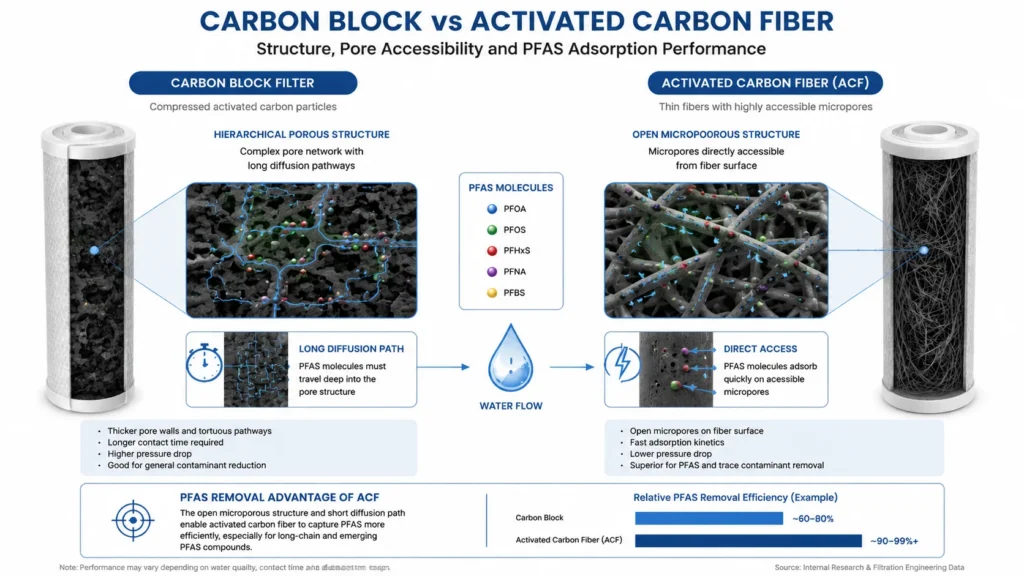
Comparison infographic showcasing the differences between carbon block filter and activated carbon fiber. Detailed diagrams illustrate the hierarchical porous structure of the carbon block with long diffusion paths and the open microporous structure of the activated carbon fiber with direct access for PFAS adsorption.

Carbon Block vs. Activated Carbon Fiber (ACF): Matching Media to Target Contaminants

Two carbon media. Same adsorption chemistry. Very different behaviour in a point-of-use cartridge. If you are specifying a water purifier platform for a PFAS-aware market, ...
Notizie
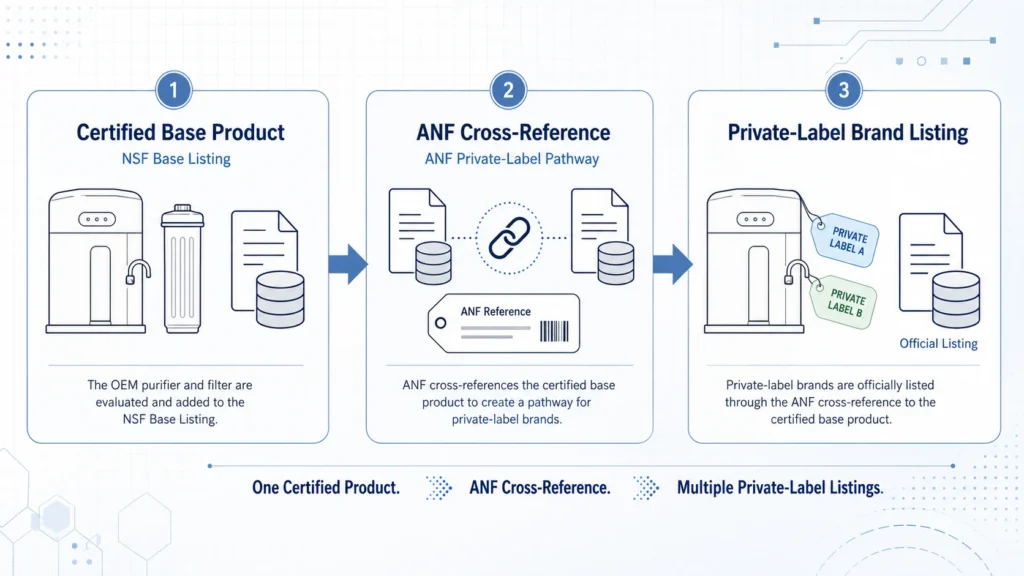
NSF base listing and ANF private-label certification pathway for OEM water filters

What Is an NSF Master Listing? A Guide to Base Listings, ANF Certification and OEM Water Filters

For a brand preparing to launch an OEM water purifier, one of the most common supplier claims is: “We already have an NSF master listing, ...
News, Water Purifiers
Healthy-home brand team reviewing PFAS water filter certification, test data and product engineering

Entering the Water Category Is Easy. Building a Credible PFAS Claim Is Much Harder

For air purification, appliance and healthy-home brands, entering the water category can look surprisingly easy. A company can select an existing undersink system, customize its ...
Notizie
Team in a business meeting discussing a water filtration system with product components and a comparison table displayed on a screen.

5 Leading OEM Water Purifier Manufacturers in China for Private Label Brands

China has thousands of companies selling water filters, reverse osmosis systems and drinking-water appliances. However, only a portion of them are suitable for private-label, OEM ...
Notizie
Contaminant Engineering•3 min read

PFAS Water Filtration Technologies Explained: Carbon, Resin & RO

Key Takeaway:

PFAS reduction depends on the specific compounds present, treatment media, contact time, water chemistry, and system design. Activated carbon, ion exchange, and Reverse Osmosis address PFAS through different mechanisms.

PFAS are a large family of persistent fluorinated compounds that can occur in drinking-water supplies. Their treatment behavior varies significantly by molecular structure, chain length, functional group, concentration, and the chemistry of the source water.

Granular Activated Carbon (GAC) removes PFAS primarily through adsorption. It is generally more effective for many longer-chain PFAS, while shorter-chain compounds tend to break through more quickly. Carbon performance depends on media properties, Empty Bed Contact Time (EBCT), competing organic matter, loading, and replacement frequency.

Ion-exchange resins use charged functional sites to capture many PFAS compounds. Properly selected anion-exchange media can provide high capacity and may perform better than conventional activated carbon for some shorter-chain PFAS, although performance still depends on water chemistry and competing ions.

Reverse Osmosis (RO) uses membrane separation rather than adsorption. Properly designed RO systems can provide broad reduction across many PFAS compounds as well as dissolved salts and other contaminants. Unlike carbon or resin, however, RO also produces a concentrate stream that must be managed.

No single technology should be selected from a PFAS label alone. System design should consider which PFAS compounds are present, their concentrations, required reduction targets, flow rate, media life, and the applicable third-party certification or validation requirements.

HisoAir Water Technical Series
Product Discovery•3 min read

How to Choose an Under-Sink Water Purifier for Modern Kitchens

Key Takeaway:

Match the treatment technology to your water quality first, then evaluate cabinet space, faucet configuration, flow rate, drain and power requirements, and filter replacement needs.

Choosing an under-sink water purifier starts with water chemistry. Carbon filtration is well suited to chlorine, taste, odor, and many organic contaminants, while Reverse Osmosis is more appropriate when dissolved salts, fluoride, nitrates, or broader dissolved contaminants need to be reduced.

For compact kitchens, tankless RO systems eliminate the conventional storage tank and can significantly reduce the space required under the sink. However, membrane capacity stated in GPD does not directly equal faucet flow. When comparing systems, check the actual dispensing flow rate, inlet-pressure requirement, recovery ratio, and whether a booster pump is required.

Installation architecture also matters. Many RO systems require a drain connection, electrical power, and either a dedicated drinking-water faucet or a compatible multi-function faucet. High-flow carbon systems can often connect directly to the existing cold-water line with a simpler installation, but pressure drop and available faucet flow should still be verified.

RO also removes much of the naturally occurring dissolved mineral content. Where taste or mineral balance is a priority, a post-RO remineralization stage can be added. Filter life should be evaluated by both rated capacity and local water quality rather than replacement time alone.

The right system is therefore not simply the smallest or highest-GPD model. It is the configuration that matches the target contaminants, available cabinet space, desired faucet setup, peak dispensing demand, and maintenance expectations.

HisoAir Water Technical Series
Water Quality•2 min read

What Does TDS Mean in Drinking Water? Measurement vs Contaminant Reality

Key Takeaway:

A TDS meter estimates the overall concentration of dissolved ionic substances from electrical conductivity. It cannot identify specific contaminants or determine whether water is chemically safe.

Total Dissolved Solids (TDS) refers to the combined concentration of dissolved substances in water. Most handheld TDS meters do not measure TDS directly. Instead, they measure electrical conductivity (EC) and convert that reading into an estimated parts-per-million (ppm) value.

This means a TDS reading can indicate how much dissolved ionic material is present, but not what that material actually is. Calcium, magnesium, sodium, nitrates, and other dissolved ions can all contribute to conductivity, yet a simple TDS meter cannot distinguish between them.

TDS meters are also not suitable for detecting trace contaminants such as PFAS, many VOCs, pesticides, pharmaceuticals, or disinfection byproducts. These substances may be present at concentrations far below the level needed to noticeably change electrical conductivity.

A low TDS reading therefore does not guarantee safe drinking water, and a higher TDS reading does not automatically indicate contamination. Water-treatment decisions should be based on laboratory testing for specific contaminants of concern rather than TDS alone.

HisoAir Water Technical Series
Technology Selection•2 min read

RO vs UF Water Filtration: Understanding Pore Sizes & Dissolved Minerals

Key Takeaway:

Ultrafiltration can reduce bacteria, turbidity, and suspended particles while retaining most naturally occurring dissolved minerals. Reverse Osmosis provides much broader reduction of dissolved salts and smaller contaminants.

Ultrafiltration (UF) typically uses hollow-fiber membranes with pore sizes in the approximate 0.01–0.1 micron range. These membranes physically retain turbidity, suspended solids, colloids, and many microorganisms while allowing dissolved minerals and salts to remain in the water.

Reverse Osmosis (RO) operates at a much finer separation level. Unlike UF, RO can substantially reduce dissolved ions such as sodium, calcium, fluoride, nitrates, and other contributors to total dissolved solids (TDS). This makes RO more suitable when dissolved-salt reduction is a primary treatment objective.

UF generally requires less system pressure and produces little or no continuous concentrate stream in many point-of-use configurations. RO typically requires greater pressure and produces a reject-water stream, but delivers broader contaminant reduction.

For water with acceptable TDS and mineral content, UF can be a simpler mineral-retaining treatment option. Where dissolved salts, fluoride, nitrates, or broader dissolved contaminants are a concern, RO is generally the more appropriate technology.

HisoAir Water Technical Series
Technology Selection•4 min read

Carbon Block vs Reverse Osmosis: Which Fits Your Need?

Key Takeaway:

Choose RO for dissolved inorganic salts and heavy metals; choose Carbon Block for chemical taste/odor, no wastewater, and high line-pressure flow.

Reverse Osmosis (RO) and Carbon Block filtration represent two fundamentally different treatment methods: membrane separation and adsorption. Understanding these differences helps determine which technology is better suited to a specific water-quality requirement.

Reverse Osmosis uses a semi-permeable membrane with pore sizes of approximately 0.0001 microns. It can significantly reduce dissolved inorganic contaminants such as TDS, fluoride, nitrates, and certain heavy metals. Because water must be forced through the membrane, RO systems require sufficient pressure or a booster pump and generate a concentrated wastewater stream.

Carbon Block filtration relies primarily on adsorption through compressed activated carbon, commonly with nominal pore sizes around 0.5–5 microns. It is highly effective for chlorine, chloramines, VOCs, taste, and odor, while allowing substantially higher direct-flow rates without producing wastewater.

From an operating perspective, Carbon Block systems are generally simpler, require less energy, and avoid the water loss associated with RO. RO involves higher system complexity and operating cost, but provides substantially broader reduction of dissolved contaminants that Carbon Block alone cannot address.

HisoAir Water Technical Series

RICHIEDI UN PREVENTIVO