
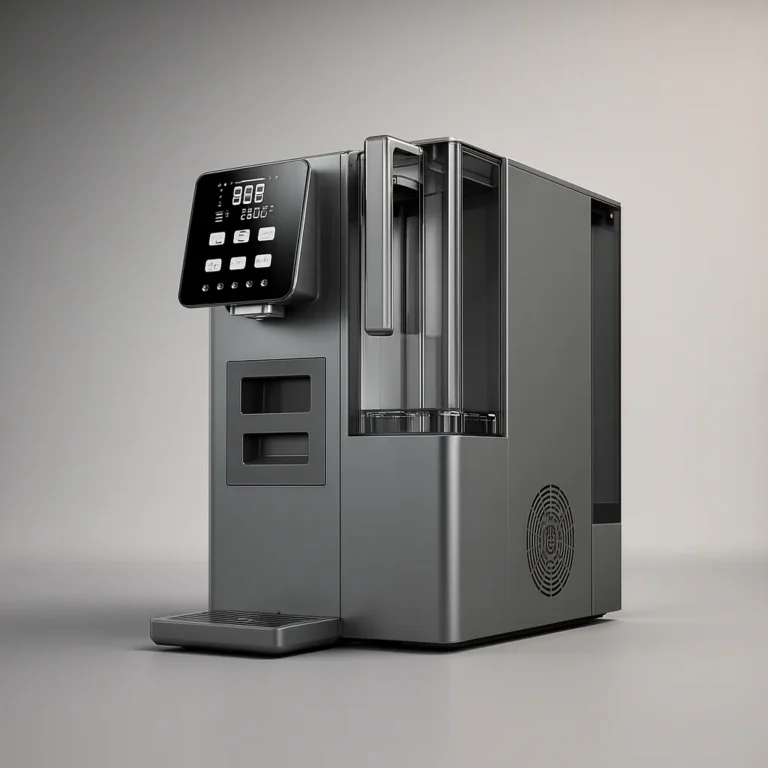
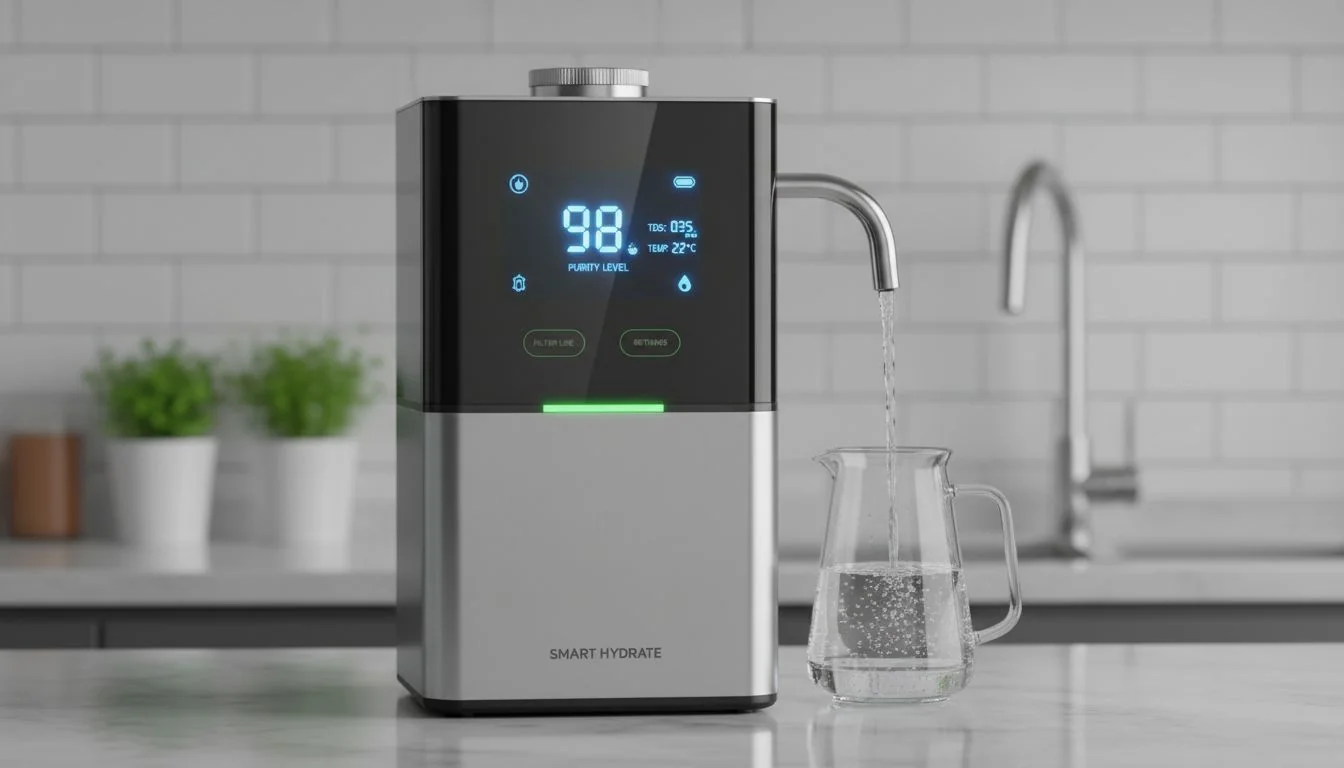
Designing water appliances used to be simple mechanics. Now, consumers demand smart features, leaving traditional designers feeling outdated. Here is how data integration changes everything for product developers.
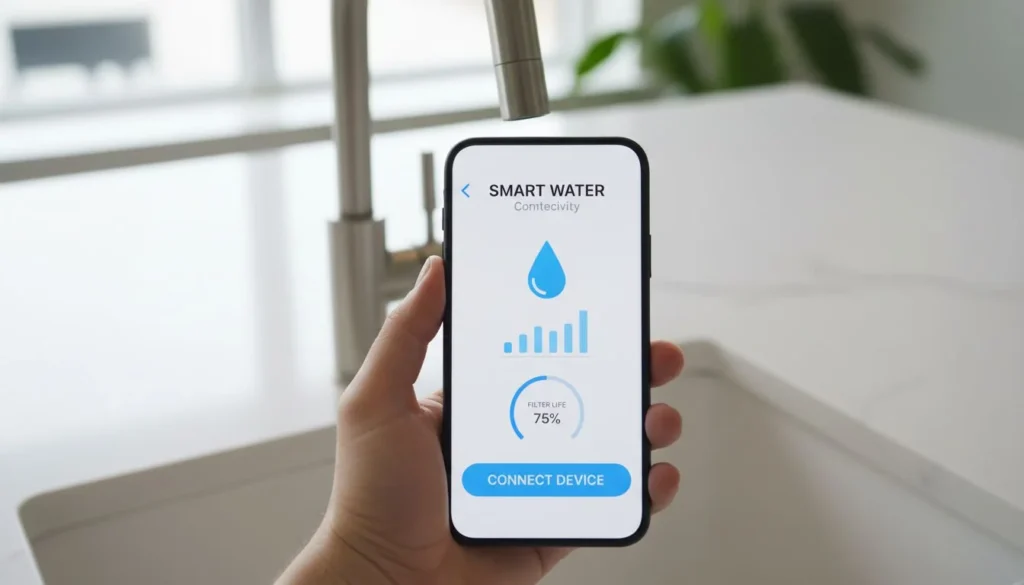
Data and sensors transform water appliances from passive hardware into active service platforms. By integrating TDS sensors1, flow meters, and IoT connectivity, designers can offer real-time purity verification, predictive maintenance, and leak protection, significantly increasing user trust and product lifetime value.
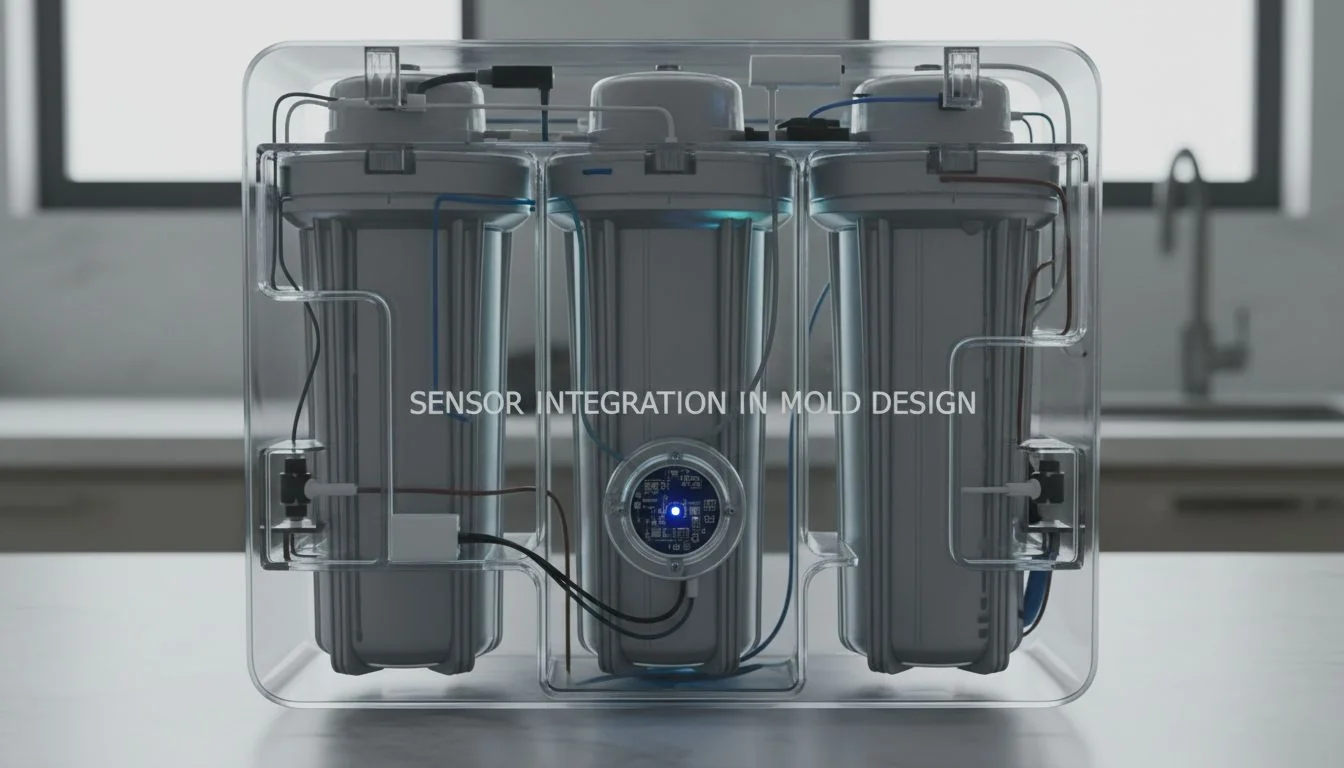
You might think this is just for software engineers, but it impacts mold design too. Let me explain why.
Consumers are willing to pay up to 20% more for appliances with verified performance data.True
Market research indicates that transparency and 'proof of work' features justify higher price points in the wellness sector.
Adding sensors simplifies the mold design process.False
Sensors require precise housing, waterproofing, and cable routing, which adds complexity to the internal mold structure.
Why Must We Move From "Black Box" to "Glass Box" Designs?
Customers used to trust brands blindly. Now, skepticism is high, and hidden mechanics create doubt about water quality.
The "Glass Box" concept means making internal processes visible through data. Instead of hiding filtration, smart appliances display real-time performance, turning invisible functionality into a visible, premium feature that builds consumer confidence.
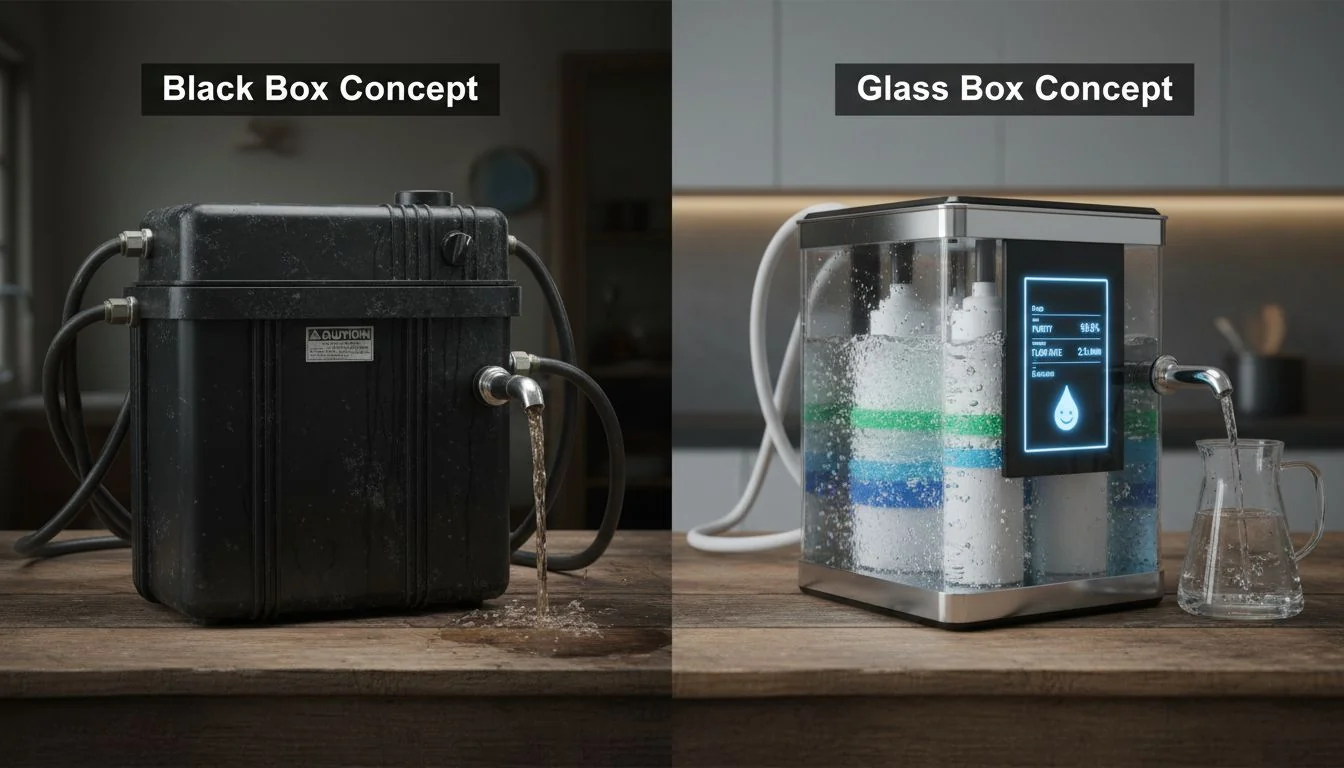
I have seen the industry change rapidly. In the past, we designed "Black Boxes." The user poured water in, and water came out. They had to hope it was clean. Today, hope is not a strategy. Premium buyers are skeptical. They want proof.
As designers, we must shift to "Glass Box" thinking. This does not mean the casing is clear plastic. It means the data makes the process transparent. We need to design interfaces that show the user exactly what is happening inside.
When I advise clients on mold structures for these new devices, we focus on where to place the display panels and how to route the sensor data. This transparency builds trust. If a user can see the filtration working through data, they trust the brand.
| 기능 | "Black Box" Design | "Glass Box" Design |
|---|---|---|
| user trust2 | Based on Brand Name | Based on Real-Time Data |
| Feedback | None / Taste Test | Digital Display / App |
| Value Perception | Commodity Hardware | premium health device3 |
| Design Focus | External Aesthetics | Internal Performance Visibility |
Visualizing data increases user engagement with the device.True
Users interact more frequently with devices that provide feedback, reinforcing the value proposition daily.
Glass Box design requires transparent plastic materials only.False
It refers to data transparency, not physical transparency. The casing can be opaque if the digital interface reveals the internal process.
Can Real-Time Purity Verification Justify Higher Hardware Prices?
High-end clients hesitate to pay premiums for invisible results. They need proof that the machine actually works.
real-time purity verification4 uses Total Dissolved Solids (TDS) sensors to act as a "lie detector" for water quality. Displaying input versus output levels proves the filtration efficiency instantly, justifying a premium price point through tangible evidence.
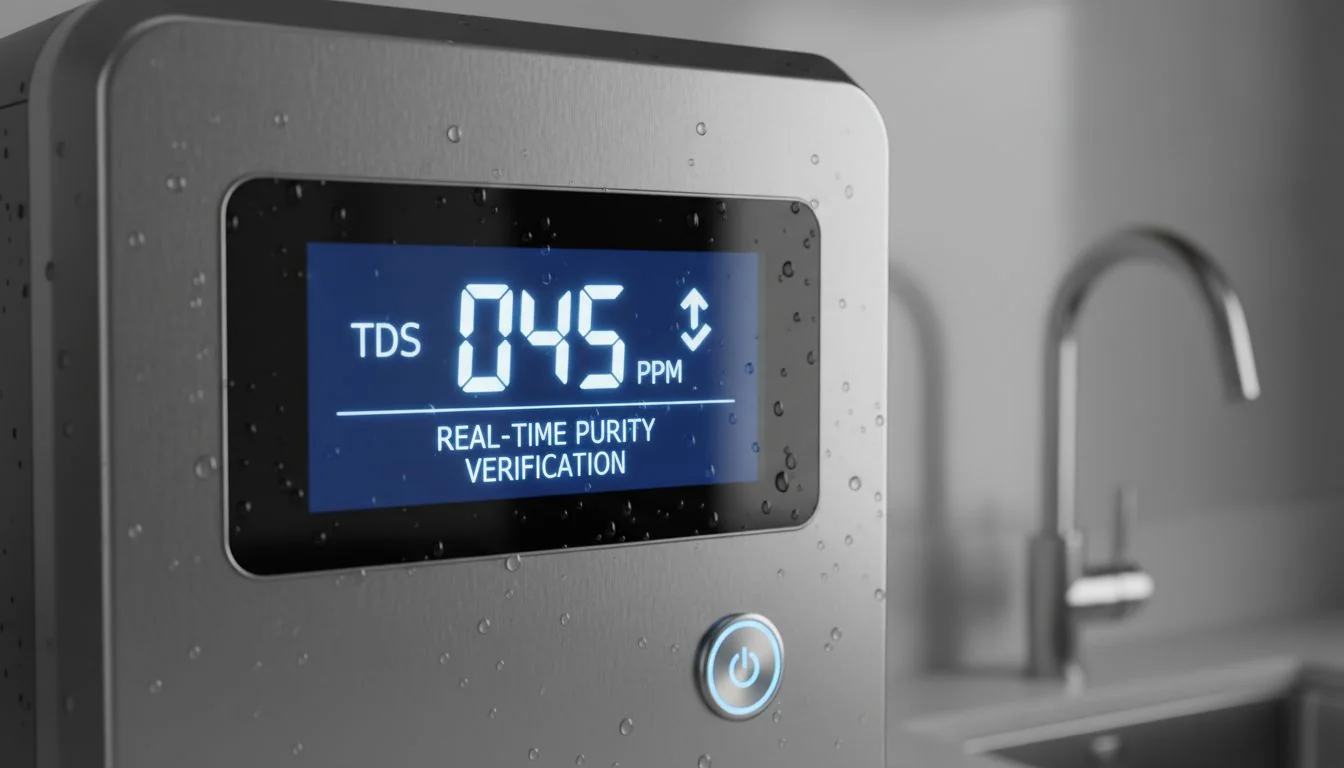
I often tell my clients: do not just sell clean water. Sell "Verified Purity." This is a massive difference.
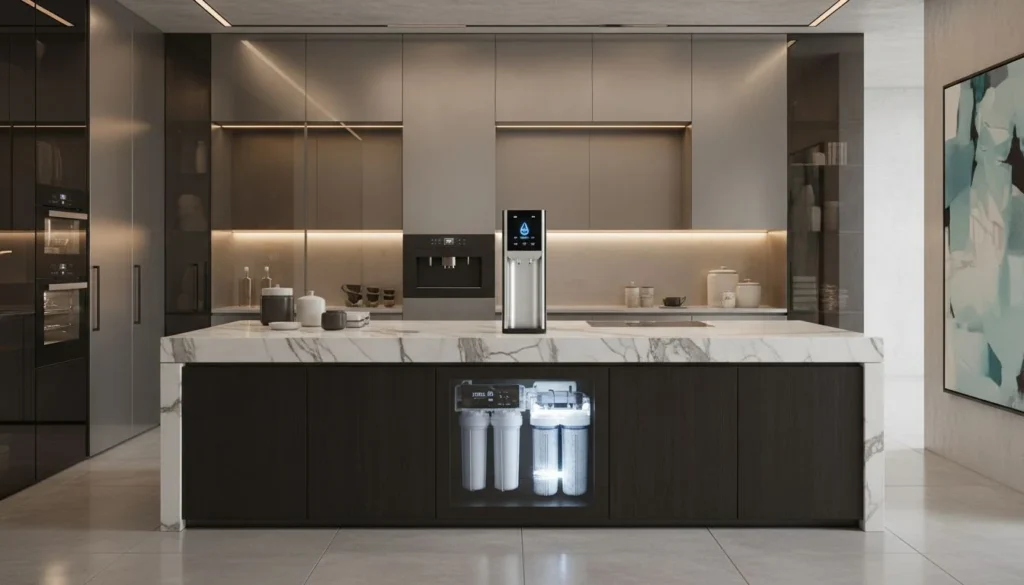
Imagine you are designing a high-end purifier. You put a TDS (Total Dissolved Solids) sensor at the water inlet and another at the outlet. The screen shows "Input: 200 TDS" and "Output: 10 TDS."
This is a "Lie Detector" for water quality. It proves your machine works better than the tap every single second.
From a manufacturing perspective, this changes the mold. We need to create precise ports for these sensors in the flow channels. If the sensor fitting is loose, you get leaks. If it is too tight, you damage the sensor during assembly.
This feature justifies a high hardware price. The customer is not buying a plastic box. They are buying a laboratory-grade testing station for their kitchen.
TDS sensors measure all types of contaminants including bacteria.False
TDS measures dissolved solids like minerals and salts. It does not directly measure bacteria or viruses, though a low TDS often implies effective reverse osmosis filtration.
Real-time verification reduces customer returns.True
When customers can see the device working effectively via data, they are less likely to return it due to perceived lack of performance.
Is the End of the 6-Month Filter Rule Finally Here?
Users hate guessing when to change filters. Fixed timelines are inefficient and often lead to wasted money or dirty water.
예측 유지보수5 utilizes flow data and water quality readings to calculate exact filter life. This replaces arbitrary time-based rules with usage-based accuracy, ensuring optimal performance and driving consistent recurring revenue through auto-replenishment.
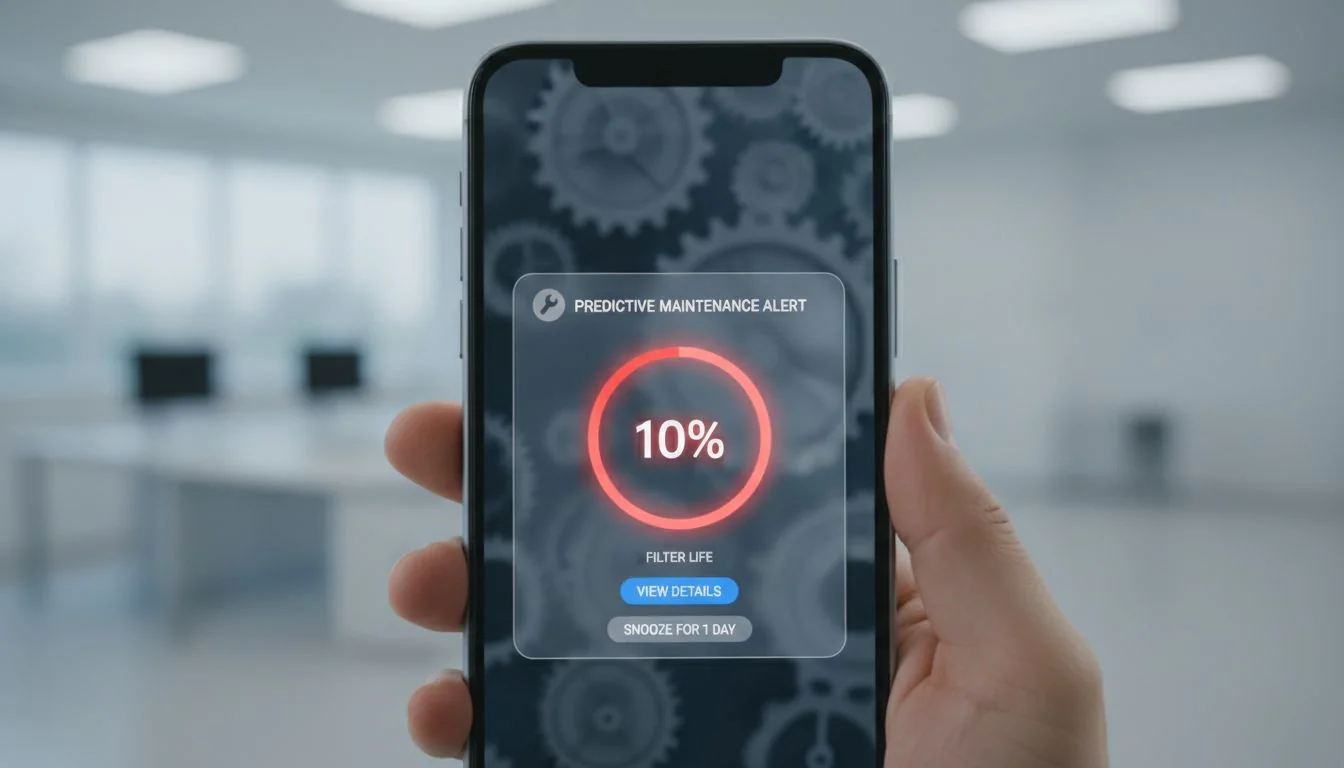
The biggest drop-off in Lifetime Value (LTV) for water companies is users forgetting to buy filters. The old "change every 6 months" rule is flawed. Some families drink 2 liters a day; others drink 20.
We can use sensor data to trigger Automatic Re-ordering6. This is the "Recurring Revenue" engine.
When the flow meter detects the filter is at 10% capacity, the App prompts a "One-Click Buy" or automatically ships a new one. This turns a one-time hardware sale into a consistent subscription business.
For us as designers, this means integrating the PCB (Printed Circuit Board) effectively within the housing. We need to protect these electronics from moisture. I have seen many designs fail because the humidity inside the machine corroded the smart board.
We must design dedicated, sealed compartments for the "brains" of the machine. This ensures the data keeps flowing, and the filter sales keep coming.
Usage-based filter replacement is more eco-friendly than time-based.True
It prevents users from throwing away filters that still have capacity, reducing plastic waste.
Predictive maintenance requires complex AI algorithms.False
Simple logic based on flow volume and water quality readings is sufficient for accurate prediction in most water appliances.
How Does Gamification Create "Sticky" Users for Boring Appliances?
Water pitchers are boring and easily forgotten. To build loyalty, brands need to become part of a user's daily routine.
gamification7 transforms a standard appliance into a "Hydration Coach." By tracking consumption against daily goals via an app, brands keep users engaged daily, creating massive loyalty compared to non-connected devices sitting idle in the fridge.
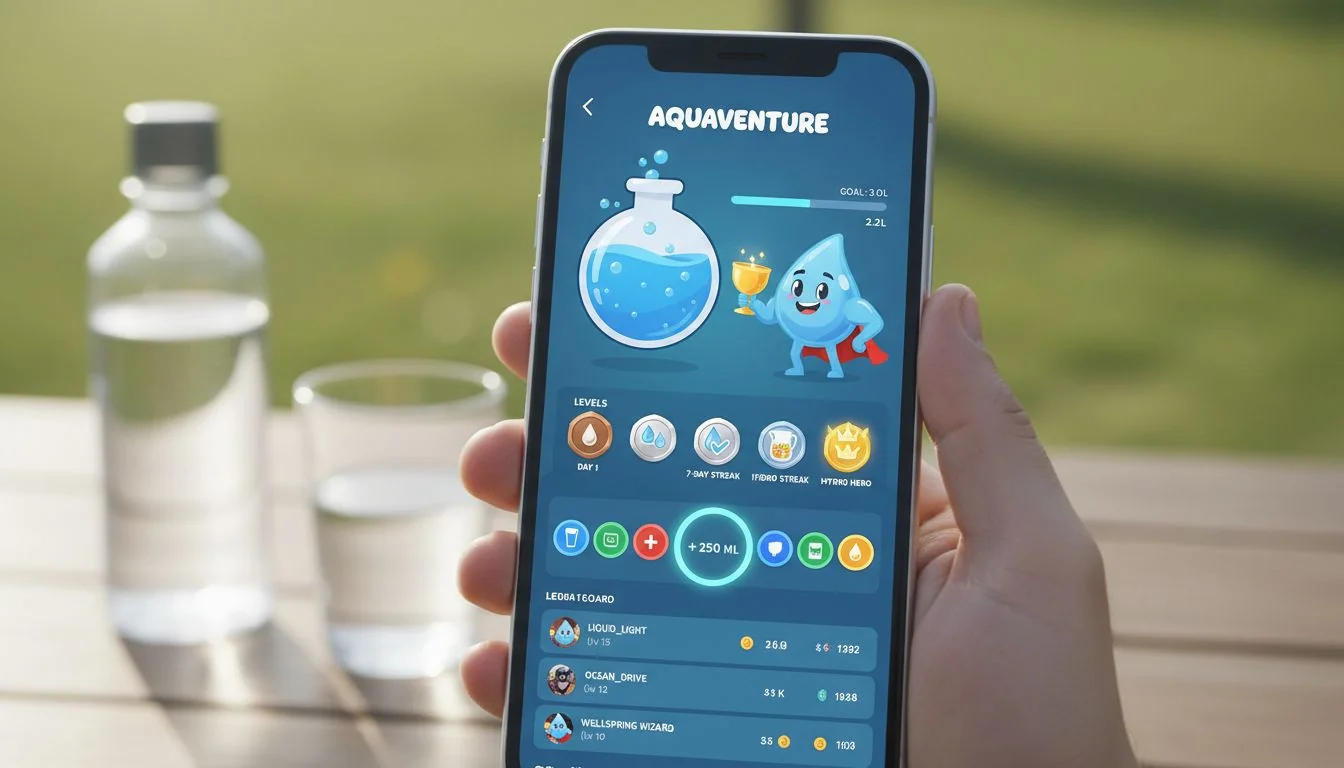
Appliances are usually boring. Health apps are addictive. We need to bridge this gap.
I recommend pitching the "Hydration Coach" feature. If the user is checking your app to see if they hit their "2 Liters Goal," your brand is top-of-mind every day.
This creates massive brand loyalty compared to a "dumb" pitcher sitting in the fridge.
As a mold designer, I look at the user interface. Does the machine have a simple LED ring that lights up when they hit their goal? This requires light guides in the plastic mold.
We need to diffuse the light so it looks premium, not like a cheap toy. The texture of the plastic over the LED matters.
If we design the hardware to support this gamification, we make the user "sticky." They will not switch brands because they do not want to lose their hydration streak data.
Gamification increases daily water consumption for users.True
Tracking and rewards systems psychologically motivate users to meet their health goals.
Gamification features require expensive touchscreens on the device.False
The heavy lifting is done on the smartphone app. The device only needs simple connectivity and basic indicators.
Why Is Leak Defense the Key to Winning B2B Contracts?
Water damage is a nightmare for developers and landlords. A single leak can ruin floors and cost thousands in repairs.
Smart leak defense acts as an insurance policy for real estate projects. By automatically shutting off flow when irregularities are detected, this feature mitigates risk, making these appliances highly attractive to developers fitting out luxury condos.
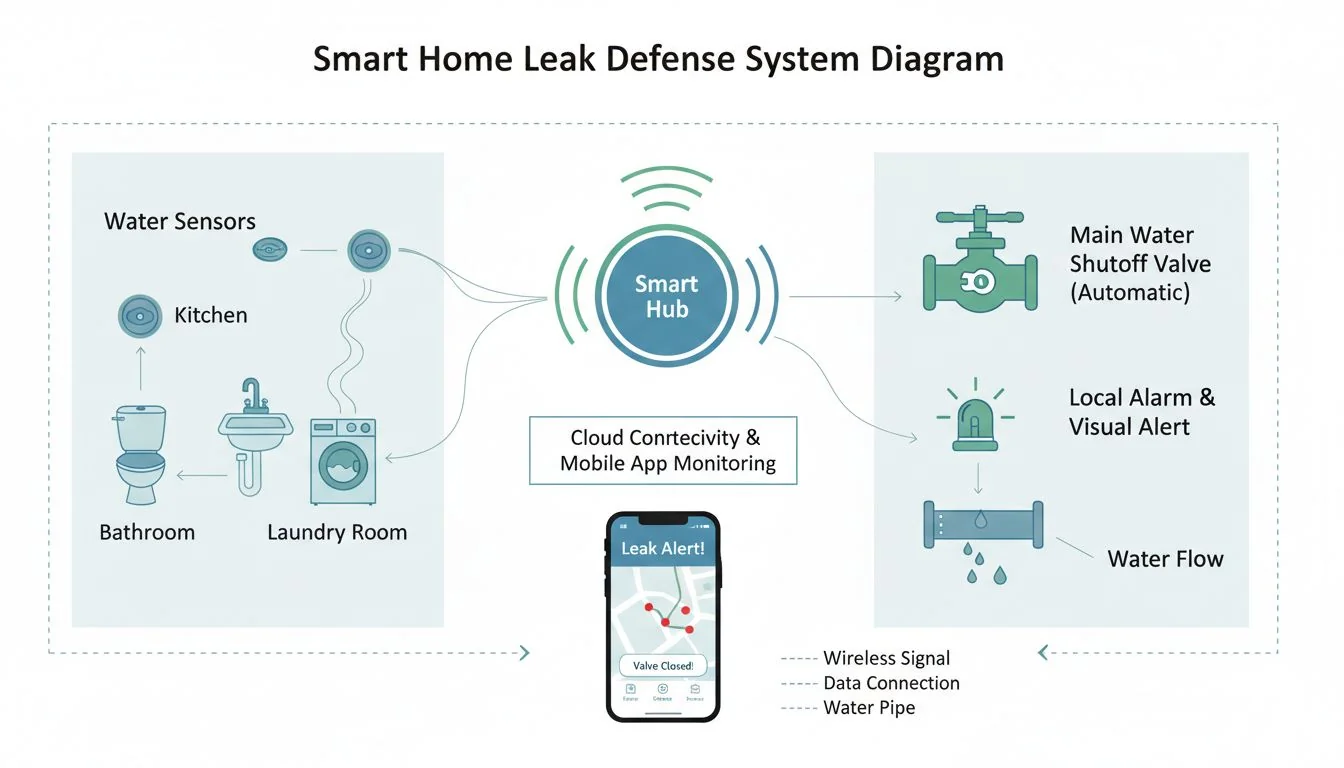
Landlords and developers hate water damage. It is their biggest fear.
Position your Smart leak detection8 as an "Insurance Policy" for luxury condos. This feature alone can win B2B contracts for fitting out entire apartment blocks.
But here is the challenge: most water factories do not know software. They know how to bend metal and mold plastic.
This is where you need an "IoT Integrator" like Hisoair. They act as the Full-Stack Partner. They handle the hardware, the firmware, and the App.
You do not need to hire a software team. You partner with experts who handle the complex Tuya or Matter integration.
This allows the brand founder to focus on marketing. As a designer, knowing you have a partner like Hisoair means you can be ambitious with your features. You can promise leak defense because the tech stack supports it.
Leak detection systems can lower insurance premiums for buildings.True
Many insurance companies offer discounts for properties equipped with active leak prevention technology.
Leak defense is only necessary for industrial equipment.False
Residential leaks are a leading cause of home insurance claims, making it vital for consumer appliances too.
결론
Data is the new brand loyalty. By integrating sensors, we move beyond selling hardware to selling verified trust and peace of mind.
References
-
Understanding TDS sensors is crucial for grasping how they ensure water quality and justify premium pricing. ↩
-
Exploring user trust factors can help brands develop strategies to enhance consumer confidence. ↩
-
Understanding what makes a device premium can guide product development and marketing strategies. ↩
-
Exploring real-time purity verification reveals how it builds consumer trust and justifies higher prices. ↩
-
Learning about predictive maintenance can help optimize filter usage and improve customer satisfaction. ↩
-
Understanding Automatic Re-ordering can help businesses create consistent revenue streams through subscriptions. ↩
-
Discover how gamification can transform mundane tasks into engaging experiences, boosting brand loyalty. ↩
-
Understanding leak detection systems can highlight their importance in preventing costly water damage. ↩

 한국어
한국어  English
  Français
  Español
  Italiano
  Deutsch
  Português
  Русский
  العربية
  日本語
日本語  Tiếng Việt

