Opens in a new tab
Innovative Air Quality Solutions

Stainless Steel Humidifiers: Energy-Efficient & Long-Term Savings

Related Products

In the age of sustainable building operations and intelligent energy management, facility managers and procurement teams are rethinking traditional HVAC choices including their approach to humidification. While many buyers are initially drawn to plastic humidifiers due to their low upfront cost, a growing body of evidence shows that stainless steel humidifiers deliver far superior long-term value especially from an energy efficiency and lifecycle cost perspective.

This article explores why a stainless steel humidifier is not just a premium product but a strategic investment, particularly for industries that prioritize reliability, hygiene, and operational efficiency. Whether you operate in healthcare, data centers, premium commercial real estate, or high-end hospitality, understanding the true energy and economic advantages of stainless steel is essential for making smarter long-term procurement decisions.

Beyond the Price Tag: Why Energy Efficiency Matters in Humidification

Humidifiers don’t operate in isolation. They directly interact with a building’s heating and cooling systems, impacting indoor comfort, system loads, and—most importantly—energy bills. A humidifier that consumes slightly more power on its own can sometimes reduce the overall energy footprint of a building by enabling HVAC efficiencies or preventing costly performance degradation.

From this system-level view, the real question isn't how cheap is the unit, but rather how efficiently can it perform over 10 years or more.
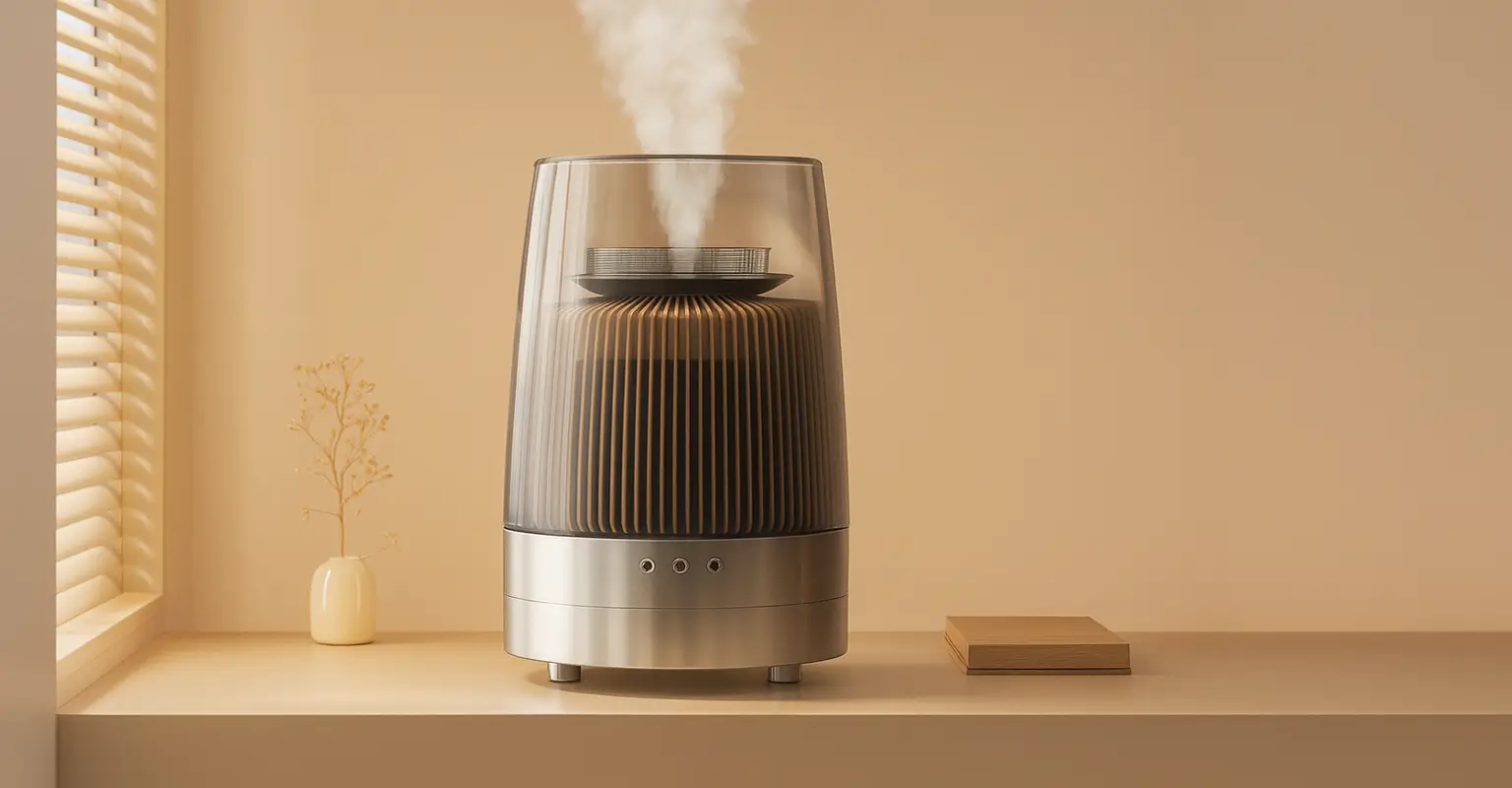
stainless humidifier 16

Stainless Steel vs. Plastic: The Material That Drives Efficiency

The material of construction plays a pivotal role in determining a humidifier’s energy efficiency over time. While plastic models might appear efficient at first glance, their long-term performance typically degrades due to mineral scale buildup, microbial contamination, and mechanical failure. This is where stainless steel units shine.

Key Energy-Saving Advantages of Stainless Steel:

  • Easy to clean surfaces prevent the insulating effect of mineral scale buildup on heating elements.
  • Non-porous construction inhibits microbial growth, reducing the risk of clogged or inefficient operation.
  • Durability means no drop in performance due to aging or material breakdown.
  • Sterilizable and dishwasher-safe parts make maintenance fast and effective, ensuring consistent operation.

Whether in isothermal (steam) or adiabatic (cool mist) systems, stainless steel helps preserve energy efficiency by maintaining optimal heat transfer and airflow over time.

Isothermal Efficiency: Maintaining Peak Performance in Steam Systems

In electric steam humidifiers, energy is used to boil water to produce vapor. Over time, plastic components tend to accumulate mineral deposits (limescale), which insulate the heating elements and require more energy to maintain output. This hidden efficiency loss can increase the system's electricity consumption by as much as 20%–30% over its lifespan.

In contrast, a stainless steel humidifier is easy to clean, allowing maintenance teams to quickly descale and restore peak performance. Some models even feature removable stainless steel tanks that are dishwasher-safe or boilable impossible with most plastic units.

Bottom Line: Stainless steel models retain their rated efficiency for years, while plastic ones degrade quickly quietly inflating your energy bills.
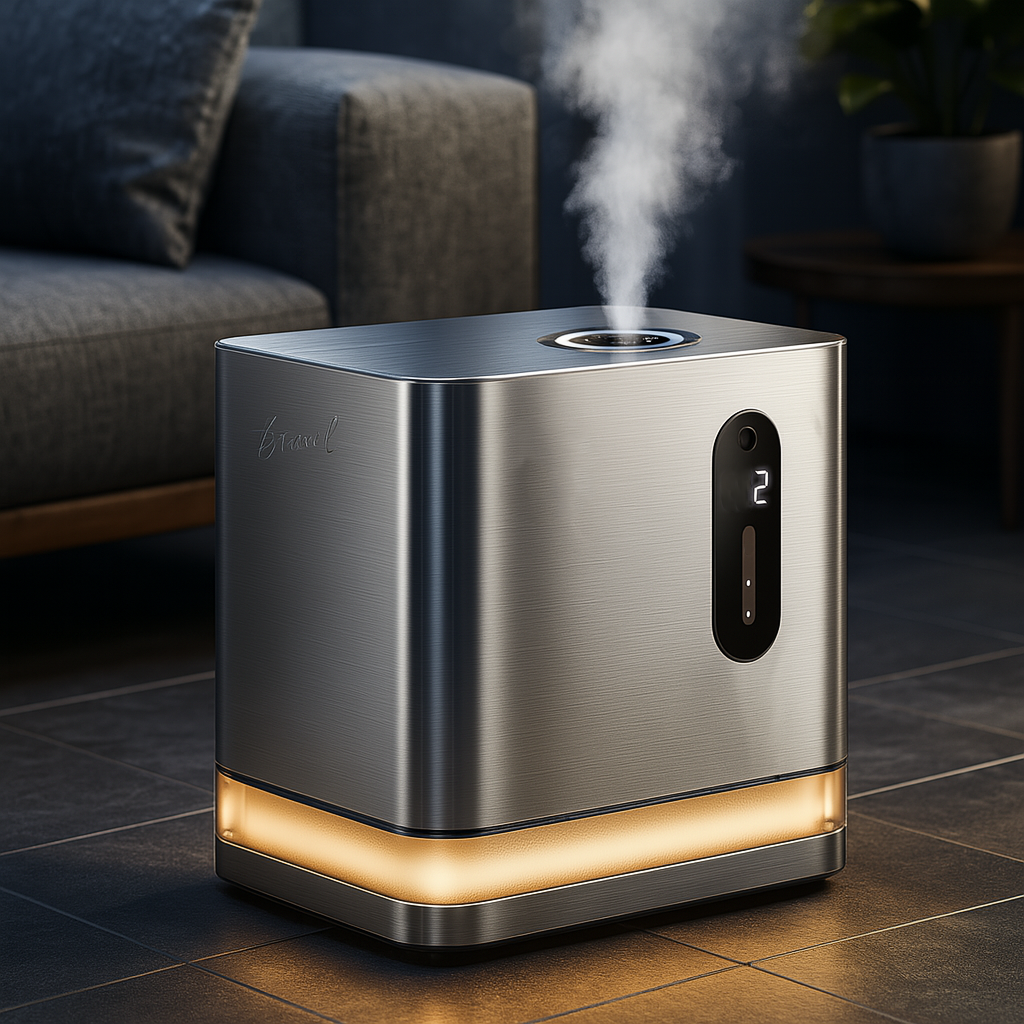
stainless humidifier 13

Adiabatic Systems: Stainless Steel Enables “Free Cooling”

Adiabatic humidifiers, such as ultrasonic or high-pressure mist systems, introduce moisture without heat. The evaporation of water absorbs heat from the air providing a passive “cooling” effect.

In warm climates or facilities with high heat loads (e.g., data centers, manufacturing), this adiabatic cooling can reduce demand on mechanical chillers. Stainless steel ultrasonic humidifiers play a key role here, offering:

  • Precise humidity control with minimal electrical draw (as low as 30W–150W).
  • Reliable performance in 24/7 operations due to robust construction.
  • No filter or wick replacements, lowering maintenance and operating costs.

Facilities that have switched from steam to ultrasonic humidifiers especially stainless steel ultrasonic models—report savings of tens of thousands of dollars annually in electricity alone.

Maintenance Cost = Energy Cost

One often-overlooked component of energy efficiency is how easy a humidifier is to maintain. A dirty or scaled unit uses more energy to do the same job. This is where “stainless steel humidifier easy to clean” becomes more than a convenience it’s a serious efficiency advantage.

  • Stainless steel tanks don’t harbor mold or biofilms.
  • Fewer moving parts mean lower labor time and fewer breakdowns.
  • No consumables like filters or canisters mean consistent airflow and mist output.

In plastic systems, even small inefficiencies add up: clogged filters, scale-covered heaters, or uncleaned tanks slowly reduce output and increase runtime. Over a 10-year period, these marginal losses can amount to thousands of dollars in wasted electricity.
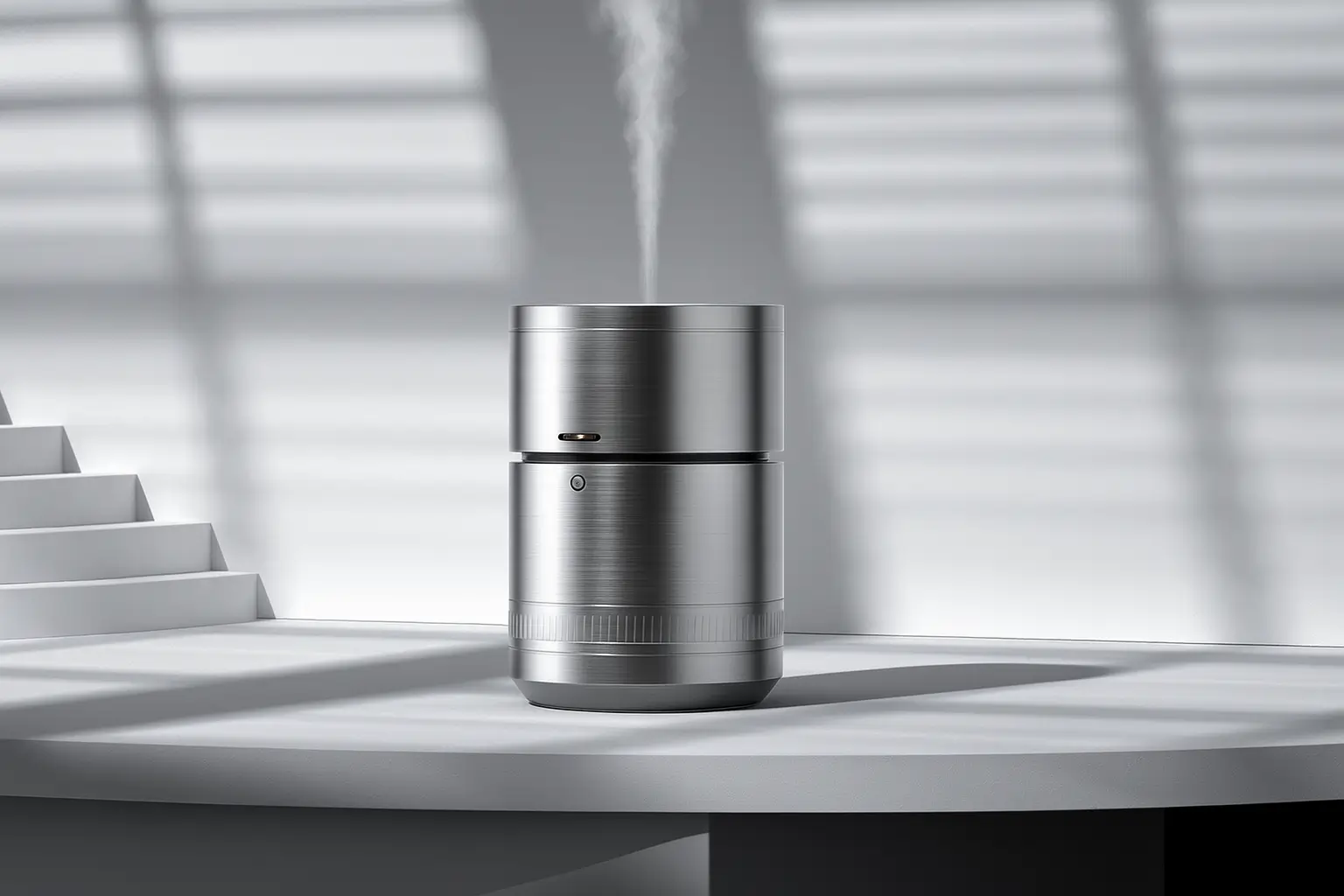
stainless humidifier 11

The Real Cost: Total Cost of Ownership (TCO) Over 10 Years

Let’s compare two typical humidifier types over a 10-year period:

Cost Category Plastic Ultrasonic Stainless Steel Ultrasonic
Initial CapEx \$70 \$275
Annual Energy \$34 \$34
Annual Consumables \$90 (filters) \$0
Maintenance Labor \$75 \$25
Replacement (10 yrs) \$140 (2x) \$0
Total 10-Year Cost \$2,200 \$865

As seen above, the best stainless steel humidifier costs more upfront but pays back that investment rapidly through lower operating, maintenance, and replacement costs.

In steam systems, the advantages are just as striking. A humidifier stainless steel tank avoids costly disposable canisters and minimizes energy penalties from scale, lowering TCO by over 25% compared to plastic alternatives.
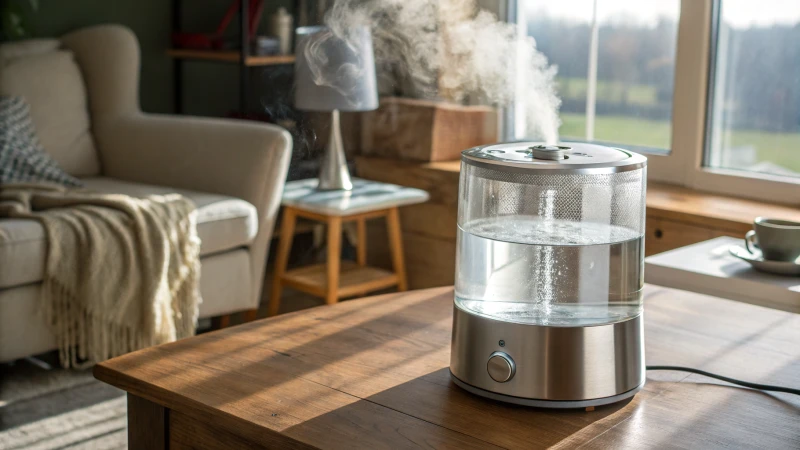
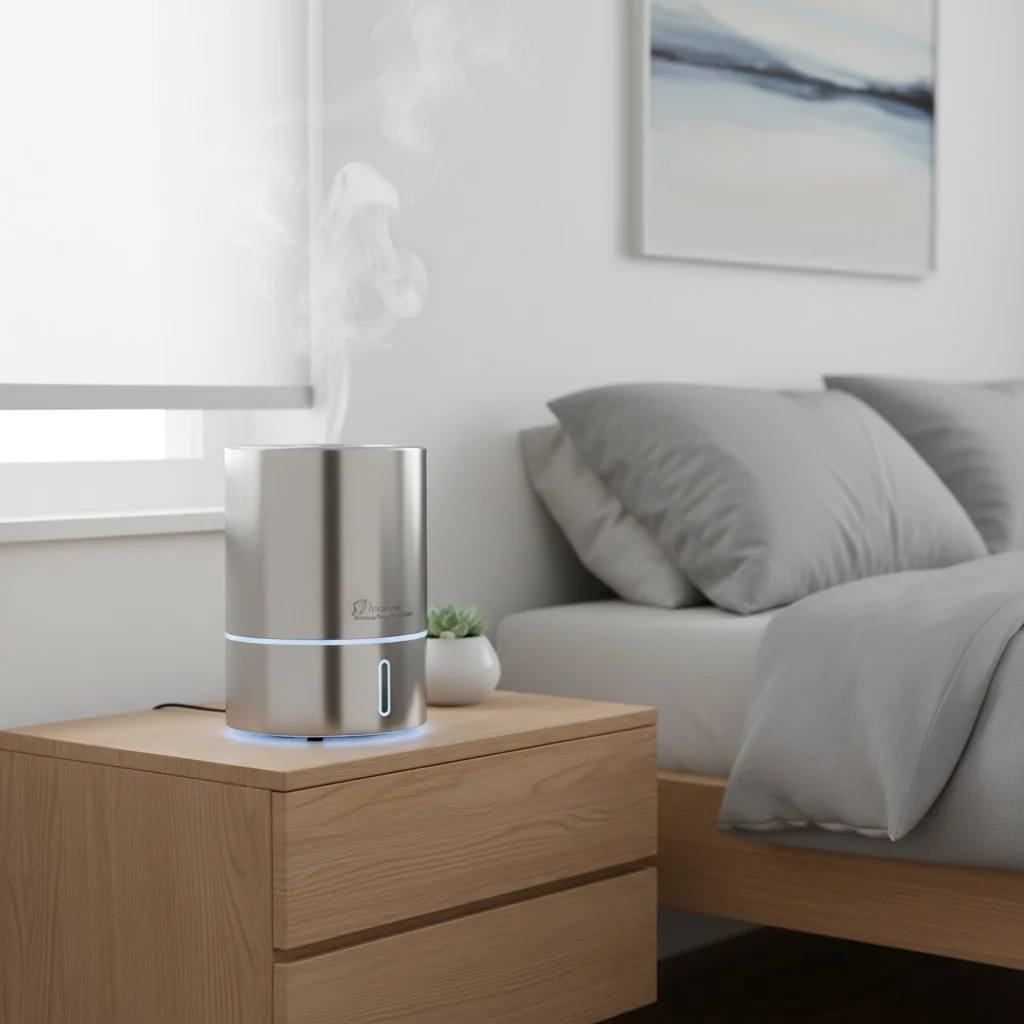
A stainless steel humidifier tank on a wooden table with steam rising from it

Who Should Choose Stainless Steel Humidifiers?

Healthcare Facilities & Cleanrooms:
For sterile, contaminant-free environments, stainless steel steam humidifiers are essential. Their resistance to corrosion even from RO or deionized water and ability to withstand high-heat sterilization make them the only viable choice.

Data Centers & Industrial Operations:
24/7 uptime and energy savings are critical. Ultrasonic stainless steel humidifiers offer reliable operation with massive indirect savings from reduced cooling load.

Premium Offices & Hospitality:
A quiet, stylish, and low-maintenance stainless humidifier enhances indoor comfort and air quality without the burden of constant upkeep or filter changes.

High-End Residential Use:
Eco-conscious homeowners looking for a “buy-it-for-life” solution will find that the best stainless steel humidifier offers both long-term cost savings and better health outcomes.

Sustainability and Market Outlook: The Future Is Stainless

With increased focus on indoor air quality (IAQ), energy efficiency, and environmental responsibility, the market is shifting:

  • Green building certifications (e.g., WELL, LEED) now prioritize IAQ and non-toxic materials.
  • Smart HVAC systems require dependable equipment that won’t fail prematurely.
  • Consumer demand for durability is fueling a rise in “buy-it-for-life” appliances.

Stainless steel humidifiers align perfectly with these trends. They’re recyclable, reliable, hygienic, and efficient everything a modern facility manager or homeowner wants.

Ready to Upgrade? Choose the Best Stainless Steel Humidifier

Whether you're designing a new commercial facility or replacing outdated plastic units, the decision to upgrade to stainless steel is clear.

To explore cutting-edge stainless steel humidifiers built for reliability, energy efficiency, and long-term value, visit HisoAir’s Stainless Steel Humidifier Collection.

You’ll find ultrasonic and steam models engineered for hygiene, ease of maintenance, and low TCO—ideal for healthcare, data centers, offices, or discerning homeowners.
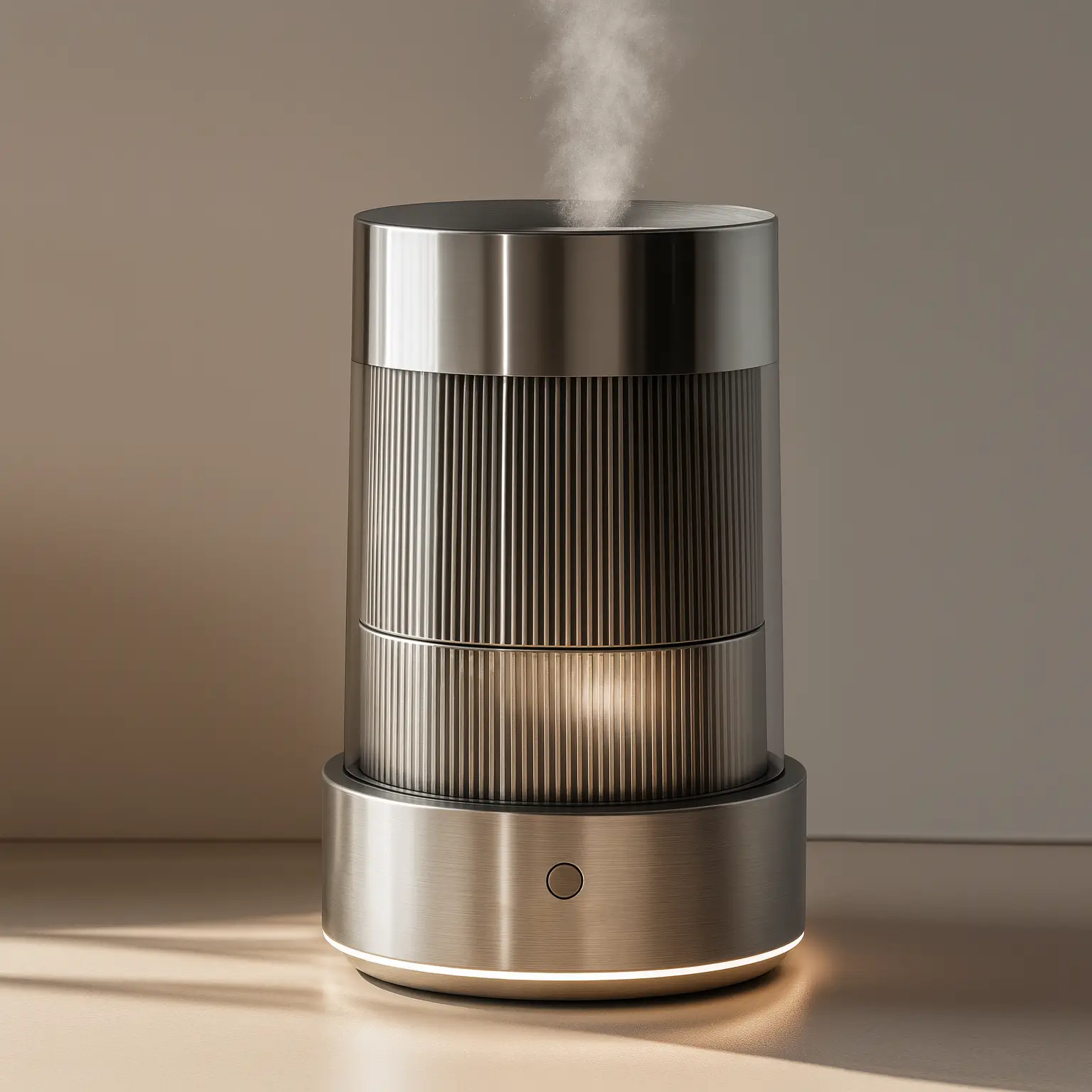
stainless humidifier 14

Conclusion: A Smarter Investment in Energy Efficiency

Cheap plastic humidifiers may win on day one—but they lose every day after. In contrast, a stainless steel humidifier delivers ongoing savings in energy, maintenance, and consumables, while enhancing air quality and building performance.

From a Total Cost of Ownership perspective, stainless steel isn’t just the premium choice—it’s the only intelligent one.

Upgrade your humidification strategy. Choose stainless steel.


Explore HisoAir’s range of commercial-grade stainless steel humidifiers today: https://hisoair.com/stainless-steel-humidifiers/

Share:
hisoair founder mr lee
Alwen Lee, an air purification expert with over 10 years of experience, is a devoted father of two and a passionate traveler, having explored more than 30 countries. With a love for public speaking and swimming, he has dedicated his life to the indoor air quality industry. His mission is to ensure that people around the world enjoy the freedom to breathe clean air and lead happy, healthy lives.

Send Us A Message

Related Products

More to Read

Featured image for What are innovative home wellness products for D2C brands?

What are innovative home wellness products for D2C brands?

Discover AIoT-driven home wellness products. Stand out & boost profit with unique, smart solutions for D2C brands.
Humidifier, News
Featured image for Why Stainless Steel Humidifier Tanks Are Becoming the Gold Standard in Premium Wellness Hardware?

Why Stainless Steel Humidifier Tanks Are Becoming the Gold Standard in Premium Wellness Hardware?

Choose stainless steel for your humidifier. Enjoy luxury, hygiene, and safety over plastic. Discover why it's the premium wellness choice today.
AI Trends, Humidifier, News
dreo humidifier 6

Why Foshan, China Has Become the Global Hub for Humidifier Manufacturing

Discover why top brands choose Foshan for cost-effective, innovative humidifiers. Boost quality and speed up your product launch today!
Humidifier, News
Featured image for Why Zhongshan, China Is the Rising Hub for Global Humidifier Manufacturing

Why Zhongshan, China Is the Rising Hub for Global Humidifier Manufacturing

Discover Zhongshan's supply chain edge, expert talent, and gov incentives for your humidifier production. Act now to cut costs and boost efficiency!
Humidifier, News
hybrid cool & warm mist humidifer hm d0328

Top 5 Humidifier Manufacturers  in UK

In today's world, Indoor Air Quality (IAQ) has become a critical factor for health and well-being. With increasing concerns about air pollution and allergens, the ...
Humidifier
humidifier

Top 5 Humidifier Manufacturers in France

Winter heating can leave the air in our homes feeling dry and uncomfortable, leading to everything from scratchy throats and dry skin to aggravated allergies. ...
Humidifier, News
Contaminant Engineering•3 min read

PFAS Water Filtration Technologies Explained: Carbon, Resin & RO

Key Takeaway:

PFAS reduction depends on the specific compounds present, treatment media, contact time, water chemistry, and system design. Activated carbon, ion exchange, and Reverse Osmosis address PFAS through different mechanisms.

PFAS are a large family of persistent fluorinated compounds that can occur in drinking-water supplies. Their treatment behavior varies significantly by molecular structure, chain length, functional group, concentration, and the chemistry of the source water.

Granular Activated Carbon (GAC) removes PFAS primarily through adsorption. It is generally more effective for many longer-chain PFAS, while shorter-chain compounds tend to break through more quickly. Carbon performance depends on media properties, Empty Bed Contact Time (EBCT), competing organic matter, loading, and replacement frequency.

Ion-exchange resins use charged functional sites to capture many PFAS compounds. Properly selected anion-exchange media can provide high capacity and may perform better than conventional activated carbon for some shorter-chain PFAS, although performance still depends on water chemistry and competing ions.

Reverse Osmosis (RO) uses membrane separation rather than adsorption. Properly designed RO systems can provide broad reduction across many PFAS compounds as well as dissolved salts and other contaminants. Unlike carbon or resin, however, RO also produces a concentrate stream that must be managed.

No single technology should be selected from a PFAS label alone. System design should consider which PFAS compounds are present, their concentrations, required reduction targets, flow rate, media life, and the applicable third-party certification or validation requirements.

HisoAir Water Technical Series
Product Discovery•3 min read

How to Choose an Under-Sink Water Purifier for Modern Kitchens

Key Takeaway:

Match the treatment technology to your water quality first, then evaluate cabinet space, faucet configuration, flow rate, drain and power requirements, and filter replacement needs.

Choosing an under-sink water purifier starts with water chemistry. Carbon filtration is well suited to chlorine, taste, odor, and many organic contaminants, while Reverse Osmosis is more appropriate when dissolved salts, fluoride, nitrates, or broader dissolved contaminants need to be reduced.

For compact kitchens, tankless RO systems eliminate the conventional storage tank and can significantly reduce the space required under the sink. However, membrane capacity stated in GPD does not directly equal faucet flow. When comparing systems, check the actual dispensing flow rate, inlet-pressure requirement, recovery ratio, and whether a booster pump is required.

Installation architecture also matters. Many RO systems require a drain connection, electrical power, and either a dedicated drinking-water faucet or a compatible multi-function faucet. High-flow carbon systems can often connect directly to the existing cold-water line with a simpler installation, but pressure drop and available faucet flow should still be verified.

RO also removes much of the naturally occurring dissolved mineral content. Where taste or mineral balance is a priority, a post-RO remineralization stage can be added. Filter life should be evaluated by both rated capacity and local water quality rather than replacement time alone.

The right system is therefore not simply the smallest or highest-GPD model. It is the configuration that matches the target contaminants, available cabinet space, desired faucet setup, peak dispensing demand, and maintenance expectations.

HisoAir Water Technical Series
Water Quality•2 min read

What Does TDS Mean in Drinking Water? Measurement vs Contaminant Reality

Key Takeaway:

A TDS meter estimates the overall concentration of dissolved ionic substances from electrical conductivity. It cannot identify specific contaminants or determine whether water is chemically safe.

Total Dissolved Solids (TDS) refers to the combined concentration of dissolved substances in water. Most handheld TDS meters do not measure TDS directly. Instead, they measure electrical conductivity (EC) and convert that reading into an estimated parts-per-million (ppm) value.

This means a TDS reading can indicate how much dissolved ionic material is present, but not what that material actually is. Calcium, magnesium, sodium, nitrates, and other dissolved ions can all contribute to conductivity, yet a simple TDS meter cannot distinguish between them.

TDS meters are also not suitable for detecting trace contaminants such as PFAS, many VOCs, pesticides, pharmaceuticals, or disinfection byproducts. These substances may be present at concentrations far below the level needed to noticeably change electrical conductivity.

A low TDS reading therefore does not guarantee safe drinking water, and a higher TDS reading does not automatically indicate contamination. Water-treatment decisions should be based on laboratory testing for specific contaminants of concern rather than TDS alone.

HisoAir Water Technical Series
Technology Selection•2 min read

RO vs UF Water Filtration: Understanding Pore Sizes & Dissolved Minerals

Key Takeaway:

Ultrafiltration can reduce bacteria, turbidity, and suspended particles while retaining most naturally occurring dissolved minerals. Reverse Osmosis provides much broader reduction of dissolved salts and smaller contaminants.

Ultrafiltration (UF) typically uses hollow-fiber membranes with pore sizes in the approximate 0.01–0.1 micron range. These membranes physically retain turbidity, suspended solids, colloids, and many microorganisms while allowing dissolved minerals and salts to remain in the water.

Reverse Osmosis (RO) operates at a much finer separation level. Unlike UF, RO can substantially reduce dissolved ions such as sodium, calcium, fluoride, nitrates, and other contributors to total dissolved solids (TDS). This makes RO more suitable when dissolved-salt reduction is a primary treatment objective.

UF generally requires less system pressure and produces little or no continuous concentrate stream in many point-of-use configurations. RO typically requires greater pressure and produces a reject-water stream, but delivers broader contaminant reduction.

For water with acceptable TDS and mineral content, UF can be a simpler mineral-retaining treatment option. Where dissolved salts, fluoride, nitrates, or broader dissolved contaminants are a concern, RO is generally the more appropriate technology.

HisoAir Water Technical Series
Technology Selection•4 min read

Carbon Block vs Reverse Osmosis: Which Fits Your Need?

Key Takeaway:

Choose RO for dissolved inorganic salts and heavy metals; choose Carbon Block for chemical taste/odor, no wastewater, and high line-pressure flow.

Reverse Osmosis (RO) and Carbon Block filtration represent two fundamentally different treatment methods: membrane separation and adsorption. Understanding these differences helps determine which technology is better suited to a specific water-quality requirement.

Reverse Osmosis uses a semi-permeable membrane with pore sizes of approximately 0.0001 microns. It can significantly reduce dissolved inorganic contaminants such as TDS, fluoride, nitrates, and certain heavy metals. Because water must be forced through the membrane, RO systems require sufficient pressure or a booster pump and generate a concentrated wastewater stream.

Carbon Block filtration relies primarily on adsorption through compressed activated carbon, commonly with nominal pore sizes around 0.5–5 microns. It is highly effective for chlorine, chloramines, VOCs, taste, and odor, while allowing substantially higher direct-flow rates without producing wastewater.

From an operating perspective, Carbon Block systems are generally simpler, require less energy, and avoid the water loss associated with RO. RO involves higher system complexity and operating cost, but provides substantially broader reduction of dissolved contaminants that Carbon Block alone cannot address.

HisoAir Water Technical Series

REQUEST A QUOTE