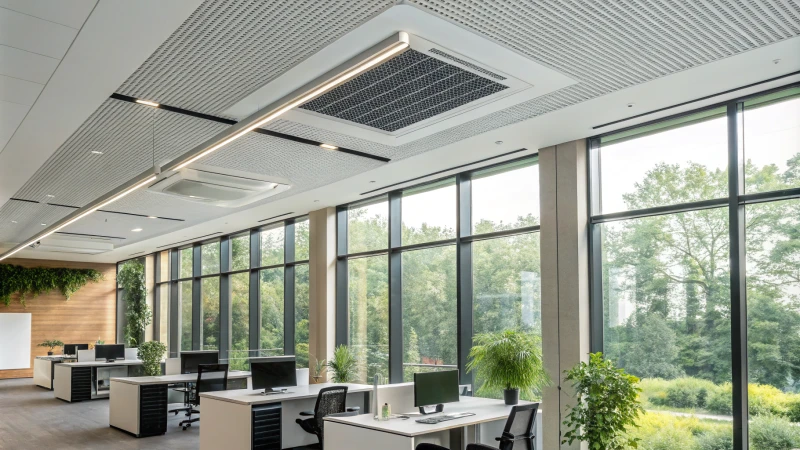
Curious about how fresh the air is in your home? I was, too. That's when I found ceiling air purifiers.
The top five ceiling air purifier companies worldwide are Surgically Clean Air, HisoAir, Fellowes, HealthyAir and Tracs. These brands lead the industry with advanced technologies. They use IOT integration and UVC purification. Their products fit both residential and commercial spaces. They offer diverse solutions.
I remember sitting in my living room one day. I felt the heavy air around me. That moment pushed me to explore ceiling air purifiers deeply. Each brand has its own story and innovations. Dr. Nick, a dentist from Canada, had a big impact. He launched the Cobalt with Surgically Clean Air. It became very popular in dental offices across the US. HisoAir offers technology so advanced that it feels like living in the future. Their storm motor technology allows maximum purification. It operates with very little noise.
Exploring brands like Fellowes has been enlightening. Fellowes adds family values to their high-end products made in China. HealthyAir focuses on commercial needs. Tracs uses cutting-edge UVC technology. Each company offers something special for anyone interested in better indoor air quality. If you want to breathe easily at home or work, these options are very worth checking out!
Surgically Clean Air uses IOT technology in purifiers.True
Surgically Clean Air integrates IOT technology for enhanced control.
All top manufacturers use UVC purification technology.True
The top manufacturers incorporate UVC purification to eliminate pathogens.
Why is HisoAir a leader in air purification technology?
People often ask why HisoAir is popular in air cleaning. This brand catches attention with smart technology. Their products are eco-friendly and help the planet. As someone who cares about quiet and green living, I find their mix very impressive. They are leaders in the field. HisoAir stays ahead.
HisoAir stands out in air purification with advanced innovations. Decibel Cancellation™ and IoT integration are their specialties. They focus on user comfort and eco-friendliness. These special features set them apart in the competitive market.

New Technology and Features
When I first heard about HisoAir's Decibel Cancellation™1, I thought back to when I searched for a quiet place to read at home. This technology greatly lowers noise, making HisoAir purifiers perfect when you need peace and quiet. Their focus on noise reduction2 really makes them unique.
As a tech fan, IoT-enabled systems thrilled me. Imagine checking and adjusting your home's air quality from your smartphone. This seamless process3 fits well with smart home setups, adding convenience for people like me who love tech.
Promise of Sustainability
HisoAir cares about the environment beyond just their products. They focus on sustainable manufacturing and materials, which is very important as I try to reduce my ecological impact. Their eco-friendly solutions are a major reason4 to choose them if you care about our planet.
Founder Alwen values energy efficiency, ensuring that their products purify air while using less energy. This dual focus on performance and sustainability5 makes HisoAir stand out for me.
Global Impact and Market Presence
HisoAir's reach is global with strategic partnerships and a strong distribution network. They can adapt to local needs while keeping high-quality standards. Their ceiling air purifiers with many sensors are popular in spaces where air quality is very important.
This product line shows they offer specialized solutions for different settings, which is key when picking an air purifier.
| Feature | HisoAir | Competitors |
|---|---|---|
| Noise Reduction | Yes (Decibel Tech) | Limited |
| IoT Integration | Yes | Partial |
| Sustainability Focus | High | Variable |
| Global Availability | Extensive | Moderate |
These aspects show why HisoAir leads in air purification. I've explored many brands, and their commitment to innovation and sustainability truly makes them a top choice.
HisoAir uses Decibel Cancellation™ for noise reduction.True
HisoAir employs Decibel Cancellation™ to minimize noise in their products.
HisoAir lacks IoT integration in its air purifiers.False
HisoAir's air purifiers are IoT-enabled for remote monitoring and control.
What Makes Surgically Clean Air's Innovations Truly Unique?
I never really considered air quality. My perspective changed when I began working in healthcare. I realized its crucial importance. Air quality is very important.
Surgically Clean Air is unique because it has advanced multi-stage filters. It uses medical-grade HEPA filters and modern ionizing technology. These features deliver excellent air purification. This system works well in many places.

Multi-Stage Filtration System
When I first saw Surgically Clean Air's filtration system, I felt truly amazed by how it worked. It's like having a small team of air-cleaning experts right in your room. This system really knows its job. It starts with pre-filters to catch big particles like dust and hair. Then, medical-grade HEPA filters step in and capture tiny particles - 99.97% of them, to be precise. Finally, the activated carbon filter grabs odors and harmful gases. The air ends up fresher than a meadow.
| Feature | Description |
|---|---|
| Pre-Filter | Captures large particles like dust and hair. |
| HEPA Filter | Traps 99.97% of airborne particles. |
| Carbon Filter | Absorbs odors and harmful gases. |
Medical-Grade HEPA Filters
I first saw these medical-grade HEPA filters6 in a dental office. They reminded me of what astronauts might use to breathe in space! They're made to meet strict healthcare rules, making them perfect for places where cleanliness is very important, like hospitals and clinics.
Innovative Ionizing Technology
A friend told me about this amazing ionizing technology7 that releases negative ions to clean the air. At first, it seemed like science fiction! But I saw how well it reduced allergens and pollutants. This technology makes a big difference, especially where pollution is high.
User-Centric Design
The ease of use really impressed me about Surgically Clean Air. I'm not very tech-savvy, so I was relieved to find their devices simple to use with little maintenance needed. Plus, they hum softly and don't disturb my work or relaxation time.
Comparison with Competitors
I checked out other brands like HisoAir and Fellowes while searching for the best air purifiers. These brands have strengths like HisoAir's IoT features and Fellowes' smart pricing. But Surgically Clean Air stands out with its medical-grade filtration and ionization technology.
| Brand | Key Feature |
|---|---|
| HisoAir | IoT connectivity and energy efficiency. |
| Fellowes | High retail pricing with smart features. |
| Surgically Clean Air | Medical-grade filtration and ionization technology. |
From these comparisons, Surgically Clean Air shows its unique ability to offer unmatched solutions for clean air in busy offices or quiet healthcare facilities.
Surgically Clean Air uses a three-stage filtration system.True
The system includes pre-filters, HEPA filters, and activated carbon.
Surgically Clean Air's ionizing technology reduces noise levels.False
Ionizing technology enhances purification but doesn't affect noise levels.
Why Should You Consider Fellowes for Air Purification?
Feeling the refreshing relief of entering a room with crisp, clean air is wonderful. Fellowes air purifiers offer this feeling daily. These devices could be the perfect choice for your home.
Fellowes air purifiers are great because of their HEPA filters. These filters are really good at catching dust and germs. Smart sensors in these purifiers detect changes in air quality. The design is easy to use for everyone. They reduce pollutants and allergens in the air. They also lower the number of airborne viruses. This helps create a healthier indoor environment. A healthier atmosphere is very important.

Advanced Filtration Technology
I remember when I first noticed how important clean air is. It was a really bad allergy season. I felt like I was fighting nature inside my house. Then, I found Fellowes air purifiers with HEPA filters. These filters catch 99.97% of particles down to 0.3 microns. Imagine saying goodbye to dust, pollen and pet hair!
To further enhance filtration, activated carbon filters were also very helpful. They removed household smells and volatile organic compounds (VOCs) that stuck to everything, making breathing easy again.
| Feature | Description |
|---|---|
| HEPA Filters | Captures 99.97% of particles down to 0.3 microns |
| Activated Carbon | Reduces odors and VOCs |
| Antimicrobial Treatment | Inhibits the growth of odor-causing bacteria |
These features make them highly effective for individuals with allergies or asthma.
Intelligent Sensing and Control
Fellowes stands out with their smart sensing technology, which feels like having a personal air helper. Once, after cooking a very spicy dinner, the purifier adjusted speed on its own and cleared the cooking smells quickly.
The AeraSmart sensor8 checks air quality continuously and changes the settings quickly, ensuring optimal air purification without manual adjustments.
User-Friendly Design
Simplicity matters, especially when life is busy. I like that Fellowes designs their purifiers with touch controls; filters are easy to replace - no hassle at all.
Beyond functionality, many models feature quiet operation for late-night reading or relaxing moments without disturbance.
The sleek design blends seamlessly into any room environment as a stylish addition9, while significantly improving indoor air quality.
All these features together really show how good Fellowes air purifiers are. If you need an air purifier that combines efficiency with ease, choose Fellowes. Once you experience the difference, life before this purifier seems hard to imagine.
Fellowes HEPA filters capture 99.97% of particles.True
Fellowes air purifiers use HEPA filters that capture 99.97% of particles as small as 0.3 microns.
Fellowes air purifiers lack intelligent sensors.False
Fellowes air purifiers include smart sensors that adjust fan speed based on air quality.
What Unique Solutions Does TRACS Offer for Clean Air?
Have you ever thought about what makes TRACS unique in air purification? I find their method truly interesting. I have tried many systems. TRACS stands out.
TRACS provides unique clean air solutions with purifiers mounted in the ceiling. These purifiers use UVC technology to remove airborne germs effectively. The systems work efficiently. They are very quiet. Integration into different spaces is smooth and easy.

The Power of UVC Technology
The first time I learned about UVC technology, it felt like finding a secret weapon against germs. TRACS uses this technology to destroy pesky microorganisms such as bacteria and viruses. It is very helpful in places where cleanliness is crucial like hospitals and dental offices10. I have seen UVC turn places into much safer and cleaner environments. Importantly, it does this without increasing the energy costs, making it a sustainable choice11.
Ceiling Mounted Design
TRACS's ceiling-mounted purifiers changed my world. My office was very cluttered, and fitting a traditional purifier was a struggle. The ceiling design saves precious floor space and circulates clean air evenly throughout the room. It feels like enjoying a gentle breeze that never ends. A comparison with other brands12 shows TRACS' advantage in noise reduction because of their special motor technology, which is impressive.
Integration with Smart Technology
I love technology, so TRACS purifiers connecting with IoT systems excited me. This lets me check and control air quality remotely. It's perfect for smart homes and offices. Picture adjusting your air purifier while you’re relaxing on the couch or even when you're not at home!
Here's a table summarizing key features:
| Feature | Description |
|---|---|
| UVC Technology | Kills airborne pathogens effectively |
| Ceiling Design | Saves space and ensures even airflow |
| IoT Integration | Remote monitoring and control |
These features emphasize how TRACS meets many different air purification needs. The solutions are effective, friendly for users, and adaptable in various settings.
TRACS uses UVC technology for air purification.True
TRACS leverages UVC technology to inactivate microorganisms effectively.
TRACS purifiers are only floor-mounted.False
TRACS purifiers feature a ceiling-mounted design to save space.
Conclusion
Explore the top five ceiling air purifier manufacturers: Surgically Clean Air, HisoAir, Fellowes, HealthyAir, and Tracs, known for their innovative technologies and effective air purification solutions.
-
Learn how Decibel Cancellation™ enhances user comfort by reducing noise pollution. ↩
-
Discover more about top-performing noise reduction air purifiers on the market. ↩
-
Explore the benefits of IoT-enabled air purifiers for smart home integration. ↩
-
Identify which air purifier brands prioritize sustainability in their products. ↩
-
Compare energy-efficient air purifiers to make informed purchase decisions. ↩
-
Explore why medical-grade HEPA filters are essential for capturing minute airborne contaminants. ↩
-
Understand how ionizing technology enhances air purification by eliminating airborne particles. ↩
-
Discover how smart sensors enhance the functionality of air purifiers by adapting to real-time air quality changes. ↩
-
Explore how modern air purifier designs can complement your interior while providing clean air. ↩
-
Discover how UVC technology enhances cleanliness and safety in dental offices. ↩
-
Explore the energy-efficient aspects of UVC technology and its benefits for sustainable practices. ↩
-
See how TRACS compares to competitors in terms of noise reduction and efficiency. ↩
 English
 Français
 Español
 Italiano
 Deutsch
 Português
 Русский
 العربية
 日本語
 한국어
 Tiếng Việt

