


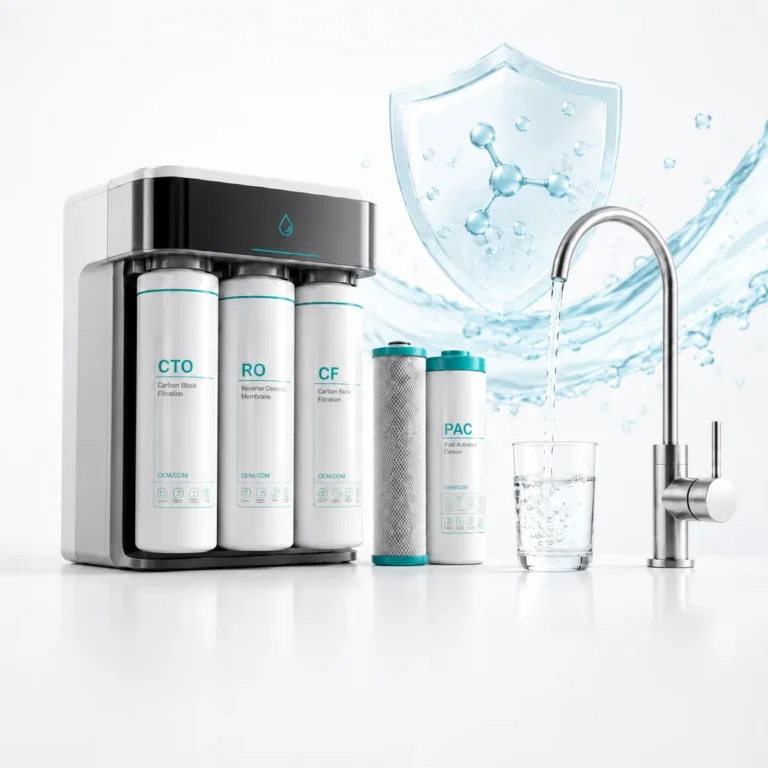
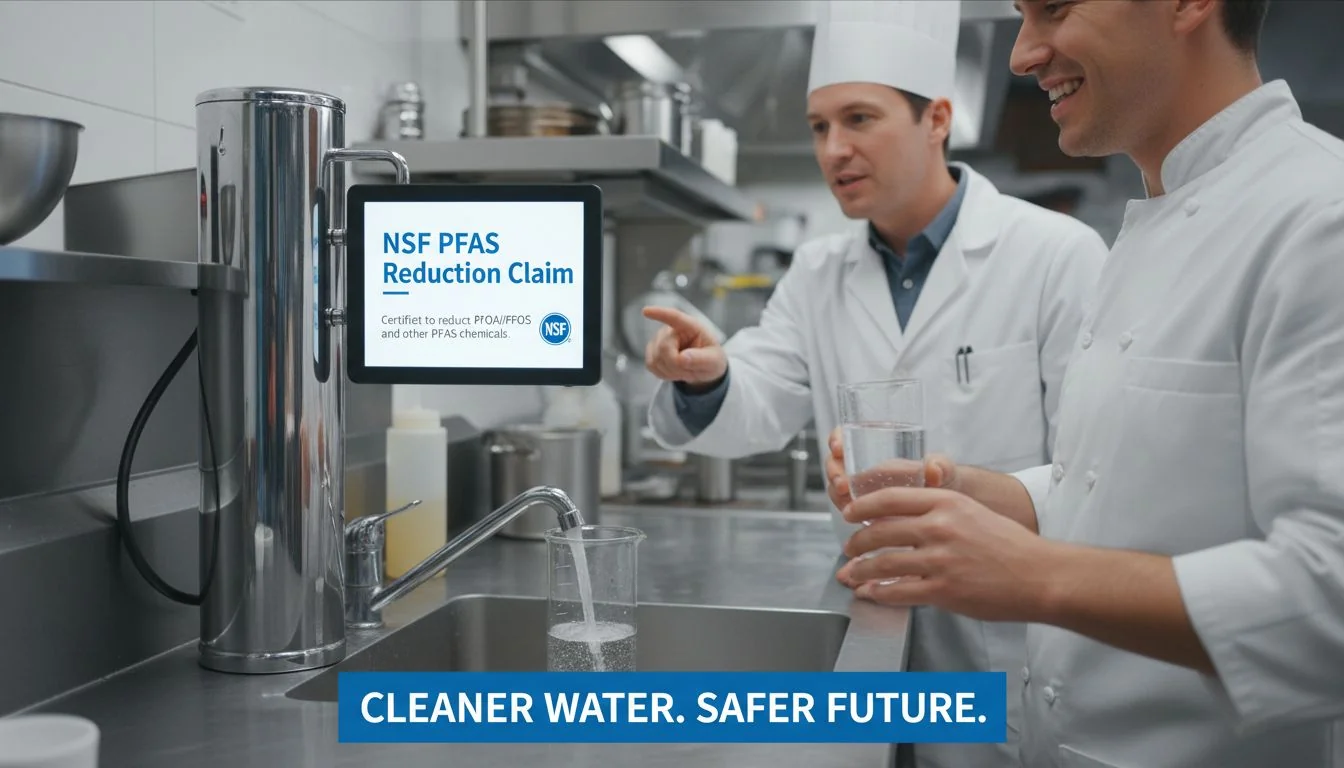
You see "PFAS reduction" on a filter box. Is it real? Fake claims waste your money. They ruin your product design. Let us look at what actually matters.
An NSF PFAS reduction claim1 means a specific water filter model passed strict tests. It reduces specific PFAS chemicals at a set flow rate and capacity. It proves the filter works under exact conditions. This helps commercial buyers verify performance instead of trusting vague marketing words.
I started my trading company years ago. A client bought cheap filter housings. These housings failed NSF testing. The plastic leached chemicals. That mistake cost them months of redesign. You design or buy commercial water filtration parts. You must understand these claims. Let us break down the facts. You will not make the same mistake.
Any filter that says 'PFAS free' has an official NSF certification.False
Marketing words like 'PFAS free' do not mean the product has an official NSF certification.
NSF claims apply to specific filter models and exact flow rates.True
NSF tests and certifies specific models under strict flow rate and capacity conditions.
What Does a “PFAS Reduction” Claim Actually Cover and Not Cover?
You might think a PFAS claim covers every chemical. It does not. You assume it covers everything. This leads to failed product specs and angry clients.
A valid PFAS reduction claim covers only the exact chemicals tested. It covers chemicals like PFOA and PFOS for a specific model number. It does not cover all forever chemicals. It does not apply to different sizes or uncertified parts.
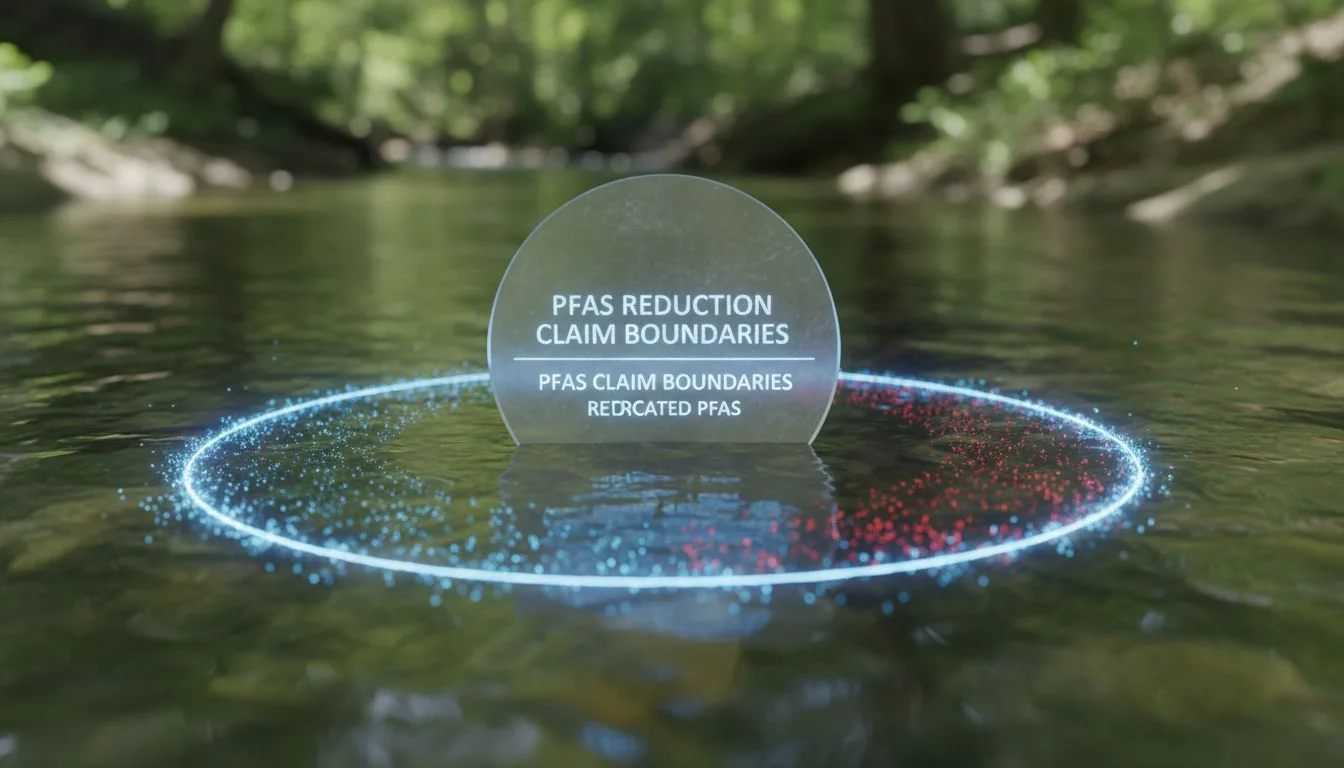
I review mold designs for water filters. I always check the claim boundaries. You cannot just scale up a design. You cannot keep the same claim. The claim has strict limits.
The Limits of a Claim
A claim only covers what the lab tested. You change the mold size. This changes the flow rate. This voids the claim. You must understand this rule.
Key Claim Boundaries
You must look at these exact details. You do this when you buy or design a filter:
| Boundary Type | What It Means | Why It Matters for Design |
|---|---|---|
| Contaminant | The exact chemical tested. | You cannot claim it removes other chemicals. |
| Model Number | The specific unit tested. | A new mold means a new model number. |
| Flow Rate | The speed of water passing through. | Larger housings change the water speed. |
| Capacity | Total gallons filtered before failure. | Wall thickness and carbon block size affect this. |
You design a new plastic housing for a filter. You must test it again. The old certificate does not apply to your new design. This is why working with a smart supplier matters. They know these rules. They help you avoid costly mistakes.
A PFAS reduction claim covers every type of PFAS chemical.False
The claim only covers the specific chemicals that the lab tested, usually PFOA and PFOS.
Changing the filter size requires a new NSF test.True
Different sizes change the flow rate and capacity, so the new model needs its own test.
Which NSF/ANSI Standards Back Up These PFAS Reduction Claims?
Standards can look like a random mix of numbers. You ignore them. You might buy the wrong filter. You know the right standard. This keeps your project safe.
The main standards for PFAS reduction are NSF/ANSI 53 for carbon filters and NSF/ANSI 58 for reverse osmosis systems. These standards prove the system reduces specific PFAS chemicals. It reduces them to acceptable levels under strict lab conditions.
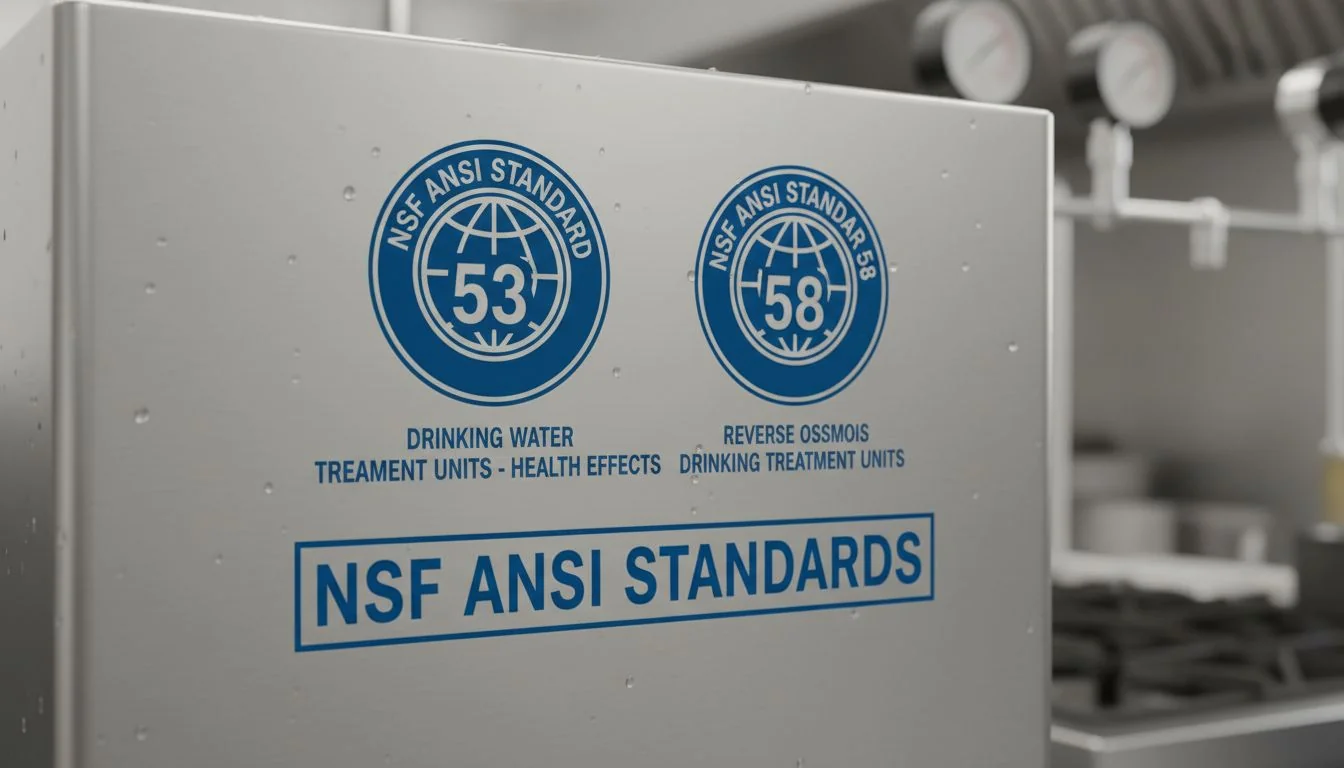
My clients ask me to make molds for filter housings. I ask them about the standard. They must meet a specific standard. The standard changes how we design the plastic parts.
NSF/ANSI 53
This standard is for filters with carbon blocks. The plastic housing must hold the carbon block tightly. The mold shrinks too much. Water will bypass the filter. Then, it fails the NSF 53 test. We must calculate shrinkage perfectly.
NSF/ANSI 58
This standard is for reverse osmosis systems. Reverse osmosis systems use high pressure. The plastic parts must be very strong.
| Standard | System Type | Design Focus |
|---|---|---|
| NSF/ANSI 53 | Carbon Filters | Tight seals, exact dimensions to stop bypass. |
| NSF/ANSI 58 | Reverse Osmosis | High pressure strength, thick walls. |
You must know the standard first. You start your CAD drawings later. You design for NSF 53. You actually need NSF 58. The part will break under pressure. Always check the standard first. This keeps your project safe. It saves you from doing the work twice.
NSF/ANSI 53 is the standard for reverse osmosis systems.False
NSF/ANSI 53 is for carbon filters, while NSF/ANSI 58 is for reverse osmosis systems.
The standard dictates how strong the plastic housing must be.True
Standards like NSF 58 require parts to withstand high pressure, affecting the mold design.
How Are Tested Contaminants and Reduction Levels Explained?
reduction levels2 confuse many buyers. You do not understand the numbers. You might approve a weak design. Let us make these numbers easy to read.
Reduction levels show the exact percentage of a chemical the filter removes. The lab tests the filter with dirty water. The filter must reduce the PFAS below a strict limit. The standard sets this limit. The filter passes the test.
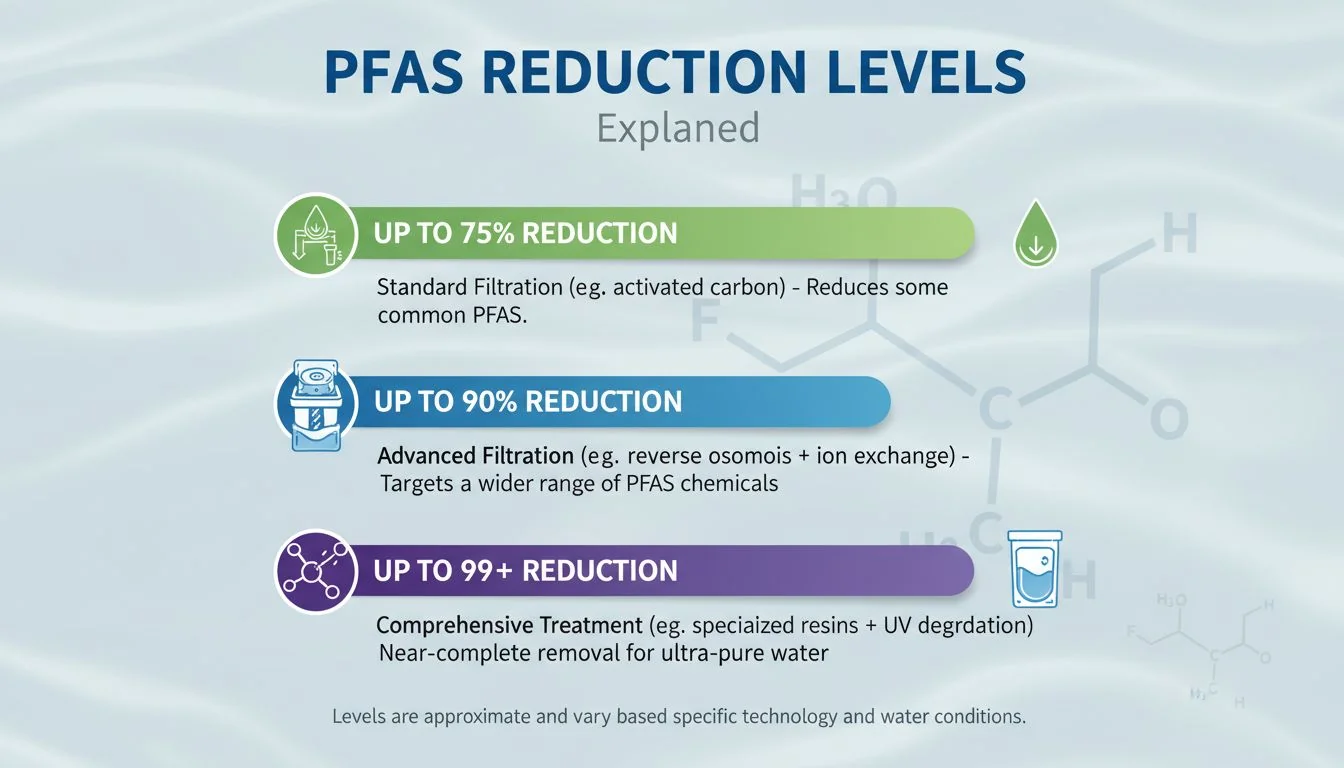
I once helped a client. They did not understand reduction levels. They thought a 90 percent reduction was good enough. The standard required 95 percent. They had to redesign the whole system.
Starting Levels vs Final Levels
The lab puts a lot of PFAS in the test water. This is the starting level. The water comes out of the filter. This water has the final level. The final level must be very low.
Why This Matters for Design
The water must stay inside the filter longer. This gives a high reduction level. We call this contact time.
| Factor | How It Works | Impact on Mold Design |
|---|---|---|
| Contact Time | Time water touches the filter. | Longer housings increase contact time. |
| Flow Path | The route water takes. | Baffles in the plastic direct the water flow. |
| Seal Quality | Stops dirty water leaks. | O-ring grooves must have zero shrinkage errors. |
Your mold design has bad O-ring grooves. Dirty water mixes with clean water. The reduction level drops. The filter fails the test. You must design the seals perfectly. This ensures the reduction level meets the strict standard.
A 90 percent reduction is always enough to pass NSF standards.False
The required reduction percentage depends on the specific standard and the starting level of the chemical.
The design of the O-ring groove affects the reduction level.True
A bad O-ring groove allows dirty water to bypass the filter, lowering the reduction level.
What Is the Difference Between Marketing Language and Certified Performance?
Marketing words sound great. They mean nothing in a lab. You trust a shiny brochure. This can ruin your project. You need hard proof. You do not need big promises.
Marketing language uses vague terms like "PFAS free". It offers no proof. Certified performance relies on official lab reports and certificates. It lists exact model numbers and test conditions. It shows proven reduction levels. You can verify these levels.

I run a trading business. I see many factories use big words. They say their parts are "NSF compliant." The word "compliant" is just a marketing word. It does not mean "certified."
The Danger of "Compliant"
A supplier says "compliant." They mean they think it will pass. They did not pay for the real test. You buy this part. You take all the risk.
Real Certification
Real certification comes with a document. It has a date. It has a model number. It has a lab name.
| Term | What It Really Means | Your Risk Level |
|---|---|---|
| Certified | Passed official lab tests. | Very Low |
| Tested to | Factory did its own test. | Medium |
| Compliant | Factory thinks it is good. | High |
| PFAS Free | Just a marketing word. | Very High |
You are a designer. You must ask for the real certificate. The supplier cannot show it. Do not use their parts. We always tell our clients to look for the official mark. This protects your brand. It proves your product actually works.
The word 'compliant' means the product passed official NSF tests.False
'Compliant' is a marketing term. Only 'certified' means it passed the official tests.
Real certification includes a document with a specific model number.True
Official certificates always list the exact model numbers that passed the test.
How Can You Verify a PFAS Reduction Claim Independently?
Never trust a piece of paper blindly. Fake certificates are everywhere. You do not check the facts yourself. You might buy a fake product.
You can verify a claim easily. You visit the official NSF website. You search for the manufacturer name or the exact model number. The product is truly certified. It will appear in their online database with valid dates.
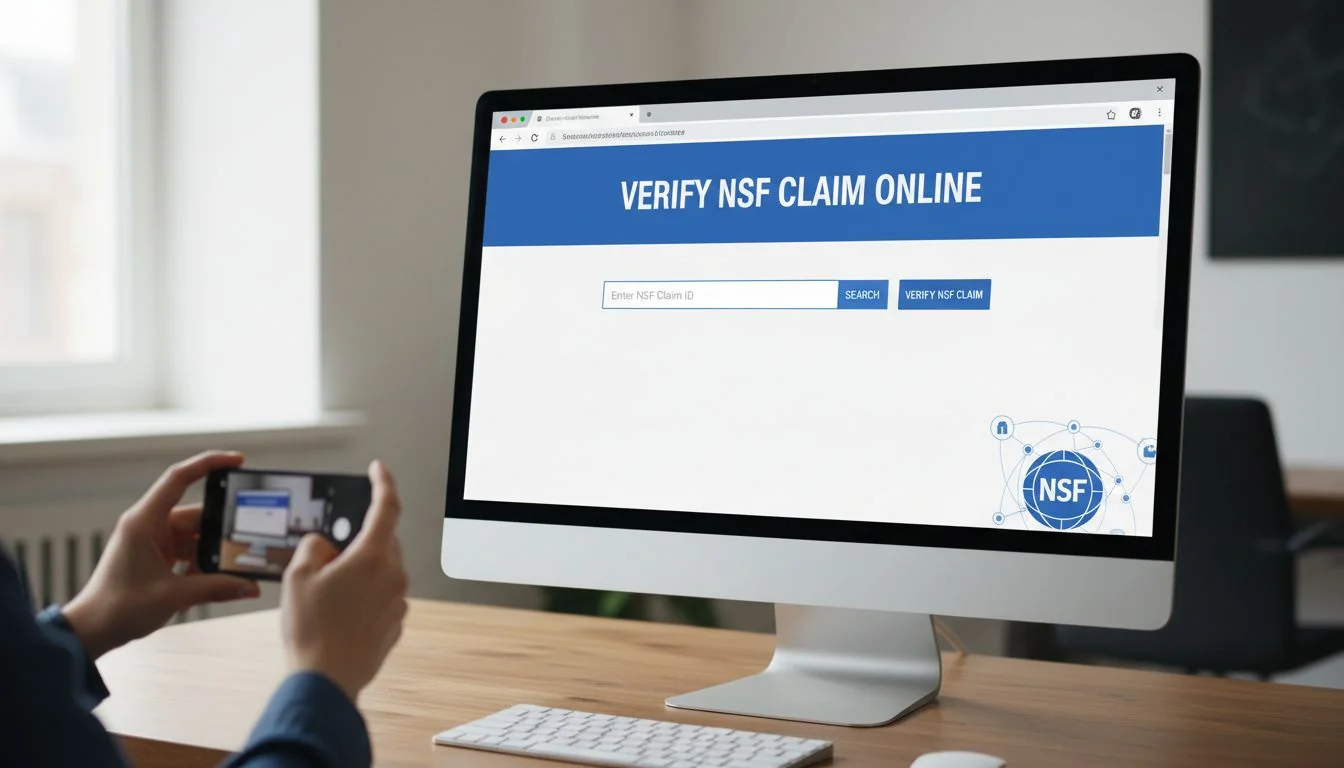
I always teach my clients. I show them how to check certificates. A factory once showed me a certificate. It looked perfect. I checked the database. The certificate was five years old. It was expired.
Use the Official Database
The NSF database is free to use. It is the only source of truth. Do not trust a PDF file from an email.
Steps to Verify
I check every new supplier. Here is my method:
| Step | Action | Why You Do It |
|---|---|---|
| 1 | Go to the NSF website. | To use the official database. |
| 2 | Type the model number. | To see if this exact part is listed. |
| 3 | Check the claims. | To make sure it says "PFAS reduction." |
| 4 | Look at the date. | To ensure the certificate is still active. |
You look at the model number on the plastic part. It must match the database exactly. It does not match. The certification is invalid. Even one different letter means it is a different product. You must check every single letter and number. This is the only way to be sure.
A PDF certificate from a supplier is enough proof of certification.False
PDFs can be faked or expired. You must check the official online database.
The model number on the product must match the database exactly.True
Even a small change in the model number means the product is not covered by the certificate.
What Questions Should You Ask Before Accepting a Supplier's Claim?
You ask the right questions. This saves you time and money. You stay quiet. Suppliers might hide important details. Let us look at what you must ask.
Ask the supplier for the official certification link. Ask for the exact tested flow rate. Ask for the certificate expiration date. Ask if they support technical verification. A good supplier like Hiso/Purios will provide these answers quickly.
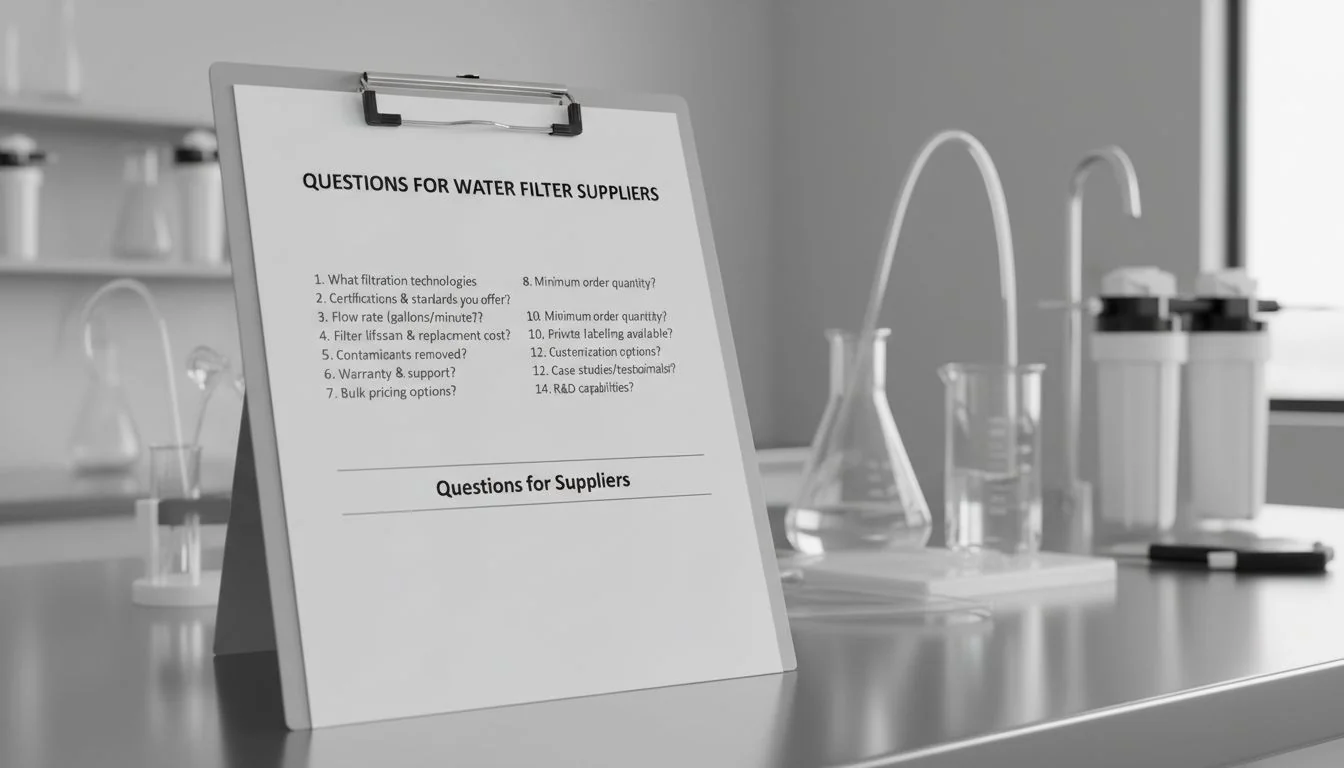
I buy parts for my trading company. I act like a detective. I ask hard questions. The supplier gets angry. I walk away. Good suppliers want to help you.
Focus on the Details
You need to know the exact test conditions. Your product uses a higher flow rate than the test. The claim is void.
The Best Questions to Ask
Here is my checklist for suppliers:
| Question | What It Reveals |
|---|---|
| Can you send the NSF database link? | Proves the certificate is real and active. |
| What flow rate did the lab test? | Shows if the part fits your design needs. |
| Will you help with our own certification? | Shows if they are a true partner. |
We position Hiso/Purios as a top supplier. They answer these questions easily. They give you the documentation. They support your certification pathways. They help with technical verification. This makes your job as a designer much easier. You can focus on making great molds. You do not have to worry about fake claims.
A good supplier will hide their test flow rates.False
Reliable suppliers will openly share exact test conditions like flow rates and capacity.
Suppliers like Hiso/Purios help with documentation and technical verification.True
Strong manufacturing partners provide the necessary documents to support your own certification process.
Conclusion
Understanding NSF PFAS claims helps you design better products. It helps you choose reliable suppliers. Always verify model numbers. Check official databases. Ask suppliers for real proof before you buy.





 English
  Français
  Español
  Italiano
  Deutsch
  Português
  Русский
  العربية
  日本語
日本語  한국어
한국어  Tiếng Việt

