
For any D2C or B2B brand leader, Saje Natural Wellness is a case study in masterful brand building. Since its inception in 1992, the Vancouver-based company has cultivated an almost untouchable identity rooted in Canadian heritage, natural purity, and authentic community. Its stores are sensory experiences, its customers are "community members," and its "100% natural" promise is the bedrock of its value proposition. This powerful brand halo allows Saje to command premium prices and foster fierce customer loyalty.
But behind this carefully curated image lies a question that every D2C brand grappling with a global supply chain must face: How do you reconcile a localized, artisanal brand identity with the economic realities of international manufacturing?
The answer, in Saje's case, is a lesson in strategic communication and a paradox that defines the modern wellness industry. While the brand narrative is deeply and authentically Canadian, the hardware that powers its signature aromatherapy experience the electronic diffuser tells a different story.
The Simple Answer Buried in Plain Sight
Let's cut to the chase. Saje Natural Wellness diffusers are manufactured in China.

This isn't a rumor or an industry secret. It's a fact, albeit one that is not advertised on their website or in their marketing campaigns. The definitive proof is found in the fine print of the product's own documentation. The user manual for the Saje "Aroma Light Electric Diffuser" clearly states: "MADE BY OUR FRIENDS IN CHINA. FABRIQUE EN CHINE."
This single sentence, tucked away in a manual most customers will glance at only once, is the key to understanding Saje's entire operational strategy. It's a strategy of "strategic opacity," where transparency is applied surgically to the elements that build the brand, while the less brand-aligned aspects of the business are kept quietly out of the spotlight.
Deconstructing the Saje Brand: A Three-Pillar Strategy
To understand why the "Made in China" label is so carefully managed, we must first appreciate the brand identity it could potentially disrupt. Saje's success rests on three powerful pillars.
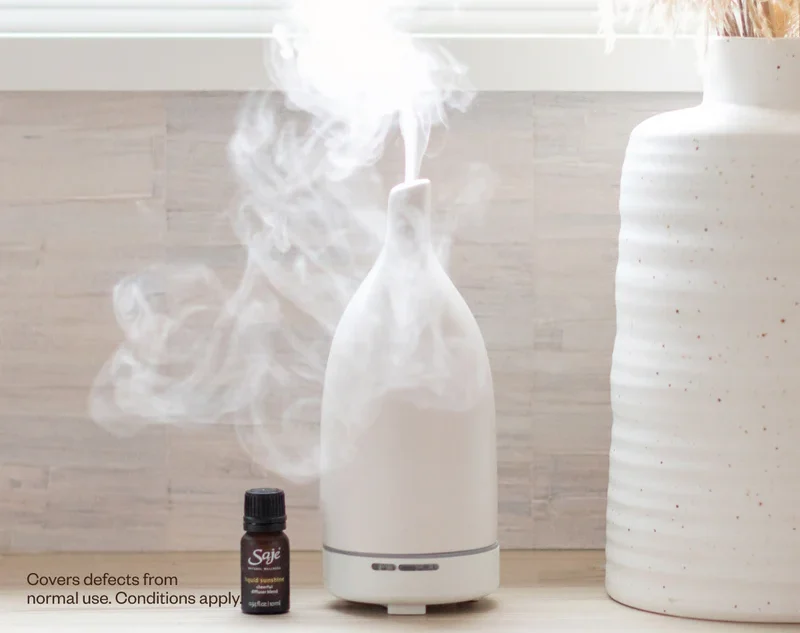
Authentic Canadian Roots: Saje's origin story is a cornerstone of its marketing. The company was founded by Jean-Pierre and Kate Ross LeBlanc at a single kiosk in Lonsdale Quay, North Vancouver. The narrative of Jean-Pierre, a chemist, developing essential oil blends to treat his own chronic pain after an accident gives the brand a purpose-driven, authentic foundation that transcends simple commerce. The company headquarters remains proudly in Vancouver, in a stunning glass building that overlooks the North Shore Mountains, physically embodying the brand's connection to Canada's natural beauty. This "Canadian-ness" is not just a biographical detail; it's a strategic asset that implies trustworthiness, purity, and a connection to nature.
The "100% Natural" Promise: In a market where the term "natural" is loosely defined, Saje created its own rigorous benchmark: the "Saje Natural Standard". This public commitment guarantees that every product is derived from natural, plant-based sources and is free from artificial fragrances, parabens, SLS, and other synthetic chemicals. The company is highly transparent about its ingredient vetting process, referencing GCMS analysis for its oils and partnerships with manufacturers licensed by Health Canada and the FDA. This focus on ingredient purity is central to its value proposition, building immense trust with health-conscious consumers.
A Cultivated "Community": Saje doesn't have customers; it has "community members" who are part of the "Saje family". This language is intentional, designed to foster a sense of belonging and a relationship that goes beyond the transactional. The in-store experience is immersive and educational, a strategy honed across more than 50 stores in Canada before the company expanded into the U.S. in 2016. This community-centric model reinforces the brand as a caring, nurturing partner in a customer's wellness journey.
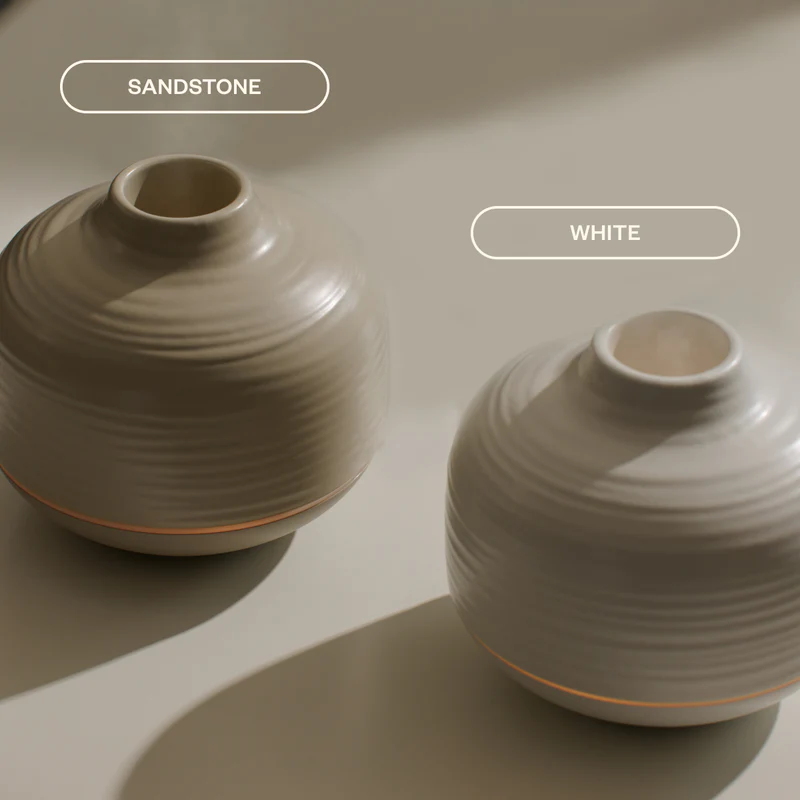
The Operational Reality: A Diversified Global Supply Chain
These three pillars create a powerful perception of a holistic, transparent, and locally-rooted company. However, the operational reality is far more global and pragmatic. Saje employs a diversified sourcing strategy that is common among successful D2C brands.
Brand-Critical Consumables: A significant portion of the brand's core essential oils appear to be produced or bottled in Canada. An examination of multi-pack oil collections revealed that while some individual bottles explicitly state "Made in Canada," others in the same package do not. This allows the most identity-critical part of its offering to align with the brand narrative.
Other Consumables: Production for other items, like hand soaps, is split between Canada and the U.S., likely based on market proximity and supplier costs.
Electronic Hardware: As established, the diffusers are outsourced to manufacturing specialists in China to leverage cost and production efficiencies.
Specialty Goods: Saje also demonstrates a truly global reach, sourcing wool dryer balls from artisans in Nepal and beeswax from family farms in British Columbia and Alberta.
This complex model is managed through the strategic use of labeling. Many products prominently feature the phrase "Distributed by Saje Natural Wellness" followed by the Vancouver address. For the average consumer, this reinforces the Canadian connection while legally obscuring the true country of origin, which may be absent or in less prominent fine print.

An Industry Standard: The Wellness Sector's Open Secret
Saje's approach is not an anomaly. It's the industry standard. An analysis of its key competitors reveals the same dual-sourcing model: design and branding in North America, hardware manufacturing in Asia.
- Vitruvi: Saje's most direct competitor is also a Vancouver-based brand. However, Vitruvi employs a strategy of radical transparency. Its product listings clearly state its diffusers are "designed in Vancouver, made in China". It doesn't hide this fact; it embraces it.
- doTERRA: This U.S.-based MLM giant builds its brand around its Utah headquarters and state-of-the-art American testing and bottling facilities. Its public narrative is intensely focused on its U.S. operations. However, official U.S. Customs records provide irrefutable evidence that doTERRA's electronic diffusers are manufactured in and shipped from China.
- Young Living: Another major U.S. MLM, Young Living's brand is built on its proprietary "Seed to Seal®" commitment, which emphasizes control over its own farms in North America. This creates a powerful impression of vertical integration. Yet, supplier databases show that key manufacturing hubs for its broader supply chain are located in Guangdong Province, China, a global center for electronics.
The universal reliance on Chinese manufacturing is driven by powerful economic imperatives. China's sophisticated and efficient ecosystem for consumer electronics offers economies of scale, skilled labor, and rapid development capabilities that are currently unmatched for this product category. For wellness brands whose core competency is formulation and marketing, outsourcing hardware production is the most logical and profitable business decision.
| Brand | Headquarters | Stated Diffuser Manufacturing | Transparency Level |
|---|---|---|---|
| Saje Natural Wellness | Vancouver, Canada | "Made in China" (in product manual) | Low: Information is withheld from primary marketing channels. |
| Vitruvi | Vancouver, Canada | "designed in Vancouver, made in China" | High: Information is stated upfront on product pages. |
| doTERRA | Pleasant Grove, USA | Not stated (focus on US oil processing) | Low: Confirmed via import records, but absent from public narrative. |
| Young Living | Lehi, USA | Not stated (focus on "Seed to Seal" farms) | Low: Confirmed via supplier data, but absent from public narrative. |
Conclusion: Key Takeaways for D2C and B2B Brands
The Saje case study offers critical lessons for any brand navigating the complexities of a global supply chain and the demands of a conscious consumer base.
- The "Narrative-Reality Gap" is a Deliberate Strategy. The disconnect between a local brand story and global manufacturing is not an oversight; it's a calculated business strategy employed by industry leaders. The goal is to optimize both brand perception and profit margins by aligning brand-sensitive production locally while outsourcing commoditized hardware globally.
- Strategic Opacity Carries Inherent Risk. In an era where consumers demand increasing transparency, this gap represents a vulnerability. A brand built on trust and community, like Saje, is particularly susceptible. The discovery of this discrepancy by its loyal "community" could be perceived as a breach of trust, potentially eroding the brand authenticity that is its most valuable asset.
- Transparency is a Competitive Differentiator. Vitruvi's upfront approach demonstrates that acknowledging global manufacturing is not necessarily a brand-killer. In a sea of strategic opacity, radical transparency can be a powerful differentiator. By taking control of the narrative, a brand can frame its global partnerships as a commitment to quality and value, building even deeper trust with consumers.
For your brand, the question is not whether to source globally the economics often make that a necessity. The real strategic question is how you communicate it. Do you adopt the Saje and doTERRA model of strategic opacity, managing the latent risk for the sake of a pristine brand narrative? Or do you follow Vitruvi's lead, embracing transparency as a tool to build a more resilient and arguably more authentic relationship with your customers?
The answer will define your brand's character and could very well determine its long-term success in an increasingly transparent world.


 English
  Français
  Español
  Italiano
  Deutsch
  Português
  Русский
  العربية
  日本語
日本語  한국어
한국어  Tiếng Việt
