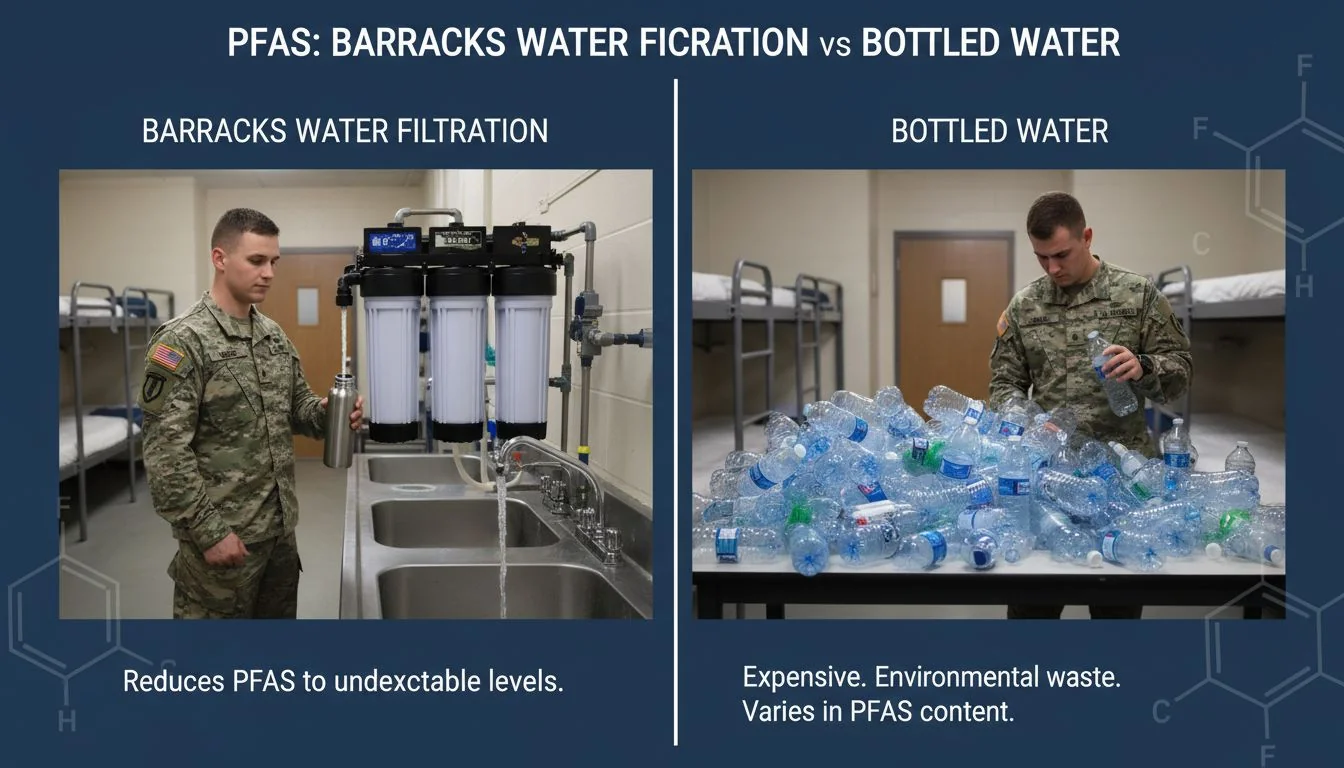
PFAS in barracks water is a huge problem. You need a fast fix, but picking the wrong option drains your budget. Let us find the best way to fix this.
Filtration systems1 are better than bottled water for PFAS interim mitigation. Bottled water works for a few days, but filtration offers lower long-term costs, easier logistics, and a clear path to permanent upgrades. The right choice depends on your budget, timeline, and site needs.
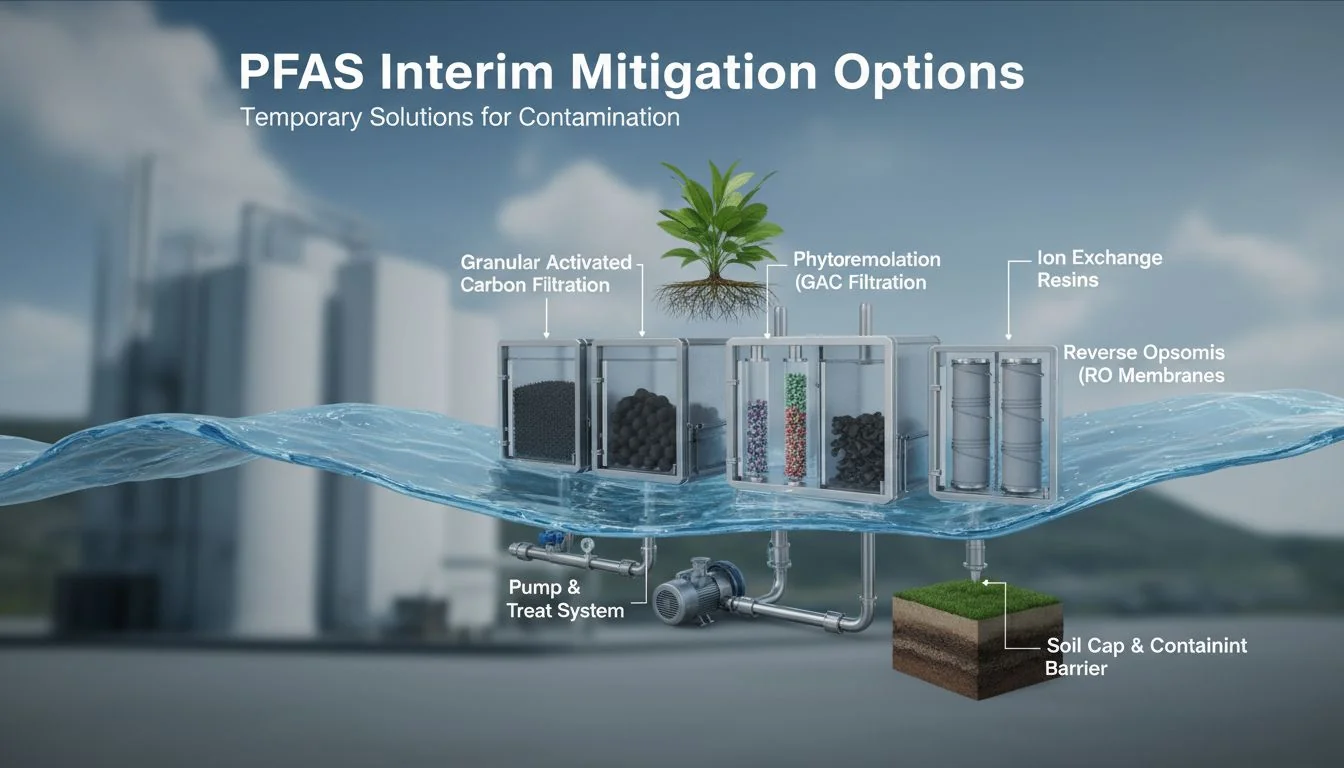
When I ran my trading company, I saw how bad procurement choices ruined good projects. You might think buying pallets of water is the safest bet right now. But if you look at the real numbers, you will see a different story. Let us break down the facts so you can make a smart choice for your next big project.
Bottled water is the most cost-effective long-term solution for PFAS mitigation.False
Bottled water costs multiply quickly over time due to recurring purchase, delivery, and waste disposal fees.
Point-of-use filtration systems can be transitioned into permanent solutions.True
Many interim filtration systems use standard plumbing connections, making them easy to upgrade or keep as permanent fixtures.
Why Does Interim Mitigation Become a Procurement Question?
You have a strict deadline to provide safe water. Delays cause panic. You must buy a solution fast, turning a safety issue into a complex purchasing task.
Interim mitigation becomes a procurement question because you must balance fast deployment with budget limits. You are not just buying water. You are buying logistics, storage, and labor. You must choose a system that meets immediate needs without ruining your long-term financial plan.
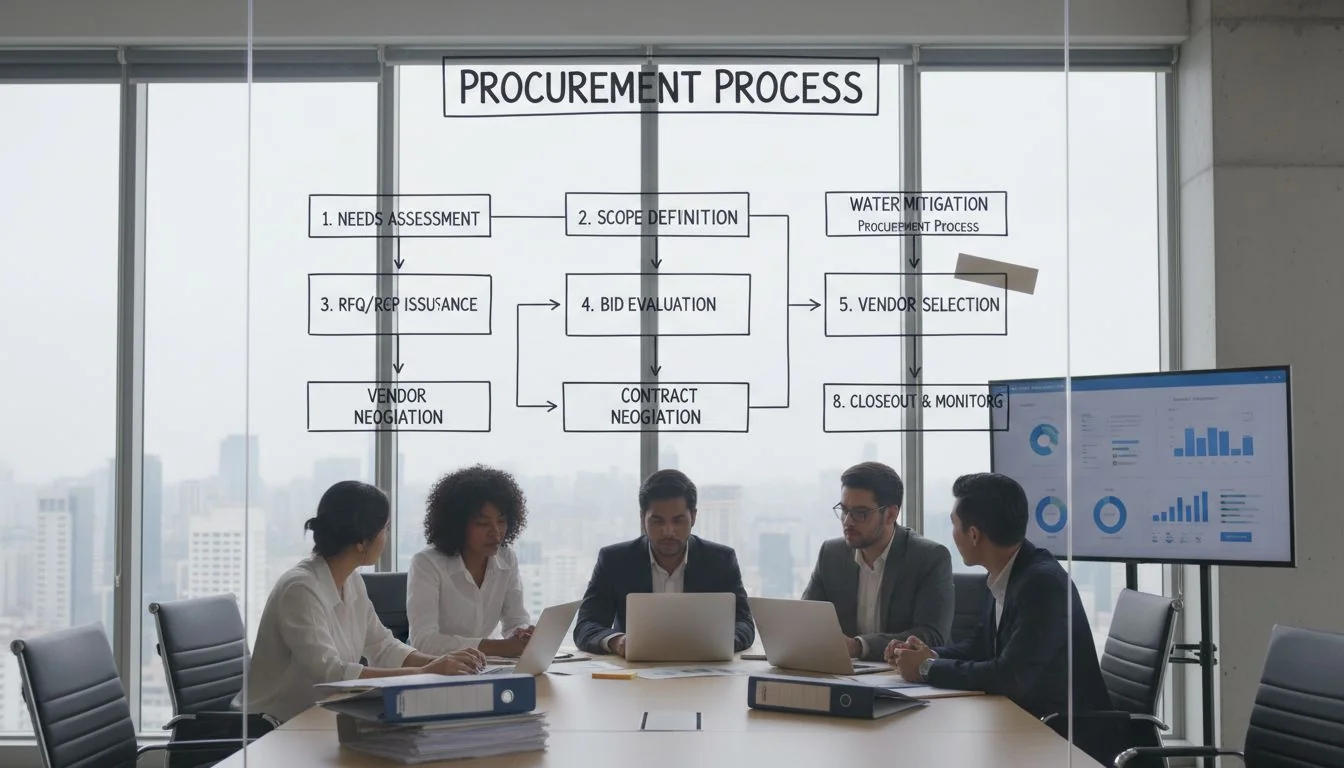
The Hidden Costs of Rushed Buying
When you face a sudden PFAS issue, your first thought is speed. But speed often hides the real cost. In my years of managing large-scale manufacturing and trading, I learned that rushed buying leads to waste. You must look at the Total cost of ownership2. This is just like designing a plastic mold. If you only look at the upfront tooling cost, you miss the maintenance costs later.
Comparing the Procurement Focus
You need to look at how each option affects your daily operations. Here is a simple breakdown of what you are actually buying.
| Procurement Factor | Bottled water3 | Filtration Systems |
|---|---|---|
| Upfront Cost | Low | High |
| Recurring Cost | Very High | Low |
| Labor Needs | Daily moving and handing | Occasional filter changes |
| Space Needed | Large storage rooms | Minimal space at the sink |
You must think about execution complexity. Buying bottles seems easy today. But next month, you will spend hours managing deliveries. Filtration takes more planning upfront. However, it gives you long-term operability. You must plan your procurement to match your project timeline.
Procurement decisions only involve the initial purchase price.False
Procurement must account for total cost of ownership, including labor, storage, and maintenance.
Filtration systems require more upfront planning than buying bottled water.True
Installing filters requires assessing plumbing and sizing the units, whereas bottled water only requires placing an order.
What Is the True Cost and Logistics of Bottled Water at Scale?
Buying a few bottles is cheap. Buying thousands of bottles every week drains your funds. The hidden costs of moving and storing water will ruin your budget.
The true cost of bottled water at scale includes daily delivery fees, massive storage space, and high labor costs to move pallets. While the unit price is low, the logistics create severe budget pressure and waste management problems over time.
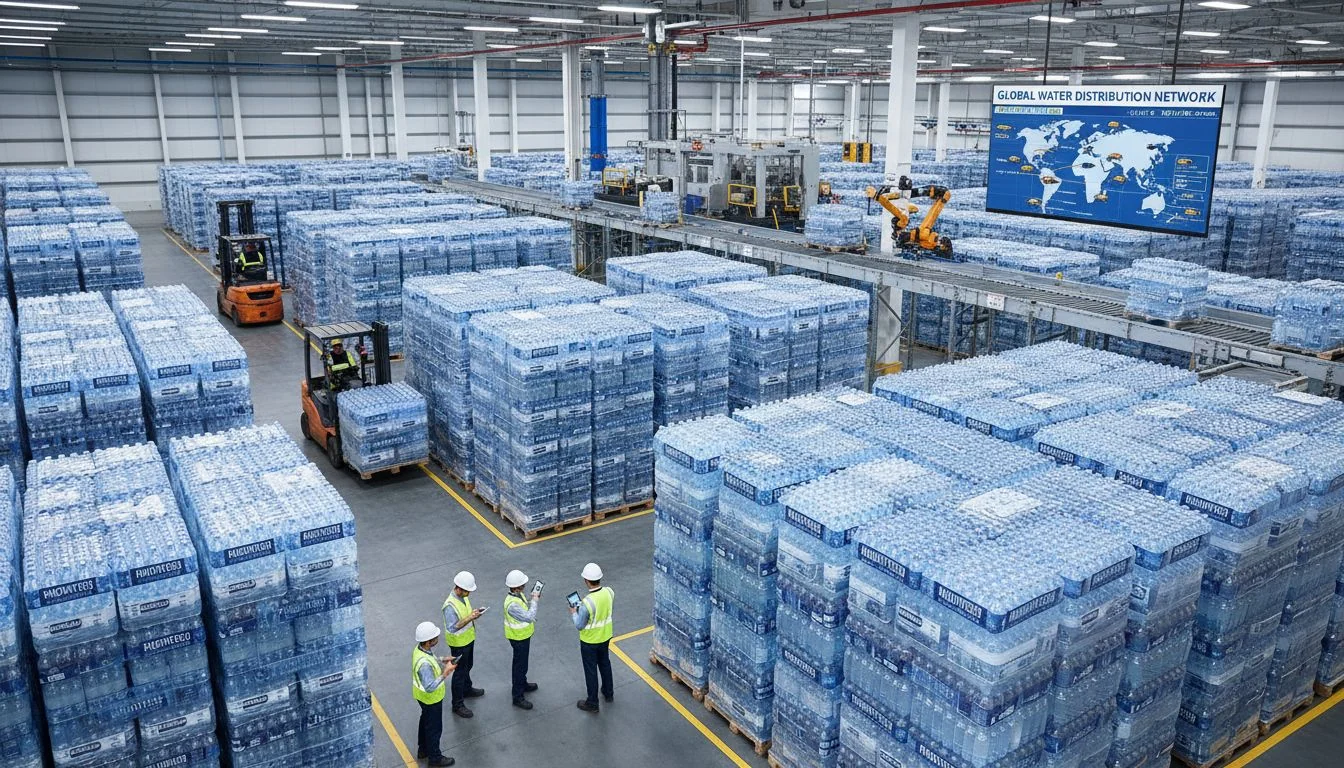
The Nightmare of Daily Logistics
Let me tell you a story from my early days in the factory. We once had a water shutoff and bought bottled water for 200 workers. Within three days, our warehouse was full of empty plastic bottles. Now, imagine doing this for a whole barracks. The logistics are a nightmare. You need forklifts, storage space, and staff just to hand out water.
Breaking Down the Scale Problem
When you scale up, the problems multiply. You are not just paying for water. You are paying for fuel, trucks, and trash removal.
| Logistics Factor | Small Scale (10 people) | Large Scale (500+ people) |
|---|---|---|
| Storage | One small closet | Multiple large warehouses |
| Waste | One trash bag | Daily dumpster pickups |
| Labor | None | Dedicated staff needed |
As a designer, you know that scaling a product changes everything. A design that works for 10 units might fail at 10,000 units. Bottled water is the same. It is a short-term fix that breaks down at scale. It creates too much waste and takes up too much time.
Bottled water logistics become easier as the number of people increases.False
Scaling up bottled water requires exponentially more storage, labor, and waste management.
Disposing of empty plastic bottles adds a hidden cost to the bottled water option.True
Large volumes of plastic waste require frequent and costly commercial trash pickups.
Can Point-of-Use and Point-of-Entry Filtration Work as an Interim Option?
Installing huge water plants takes years. You cannot wait that long. You need a fast, reliable system that works right now without tearing down the building.
Yes, Point-of-Use (POU) and Point-of-Entry (POE) filtration work perfectly as interim options. They deploy quickly, connect to existing plumbing, and provide immediate safe water. They offer high deployment efficiency and can easily transition into permanent retrofits later.
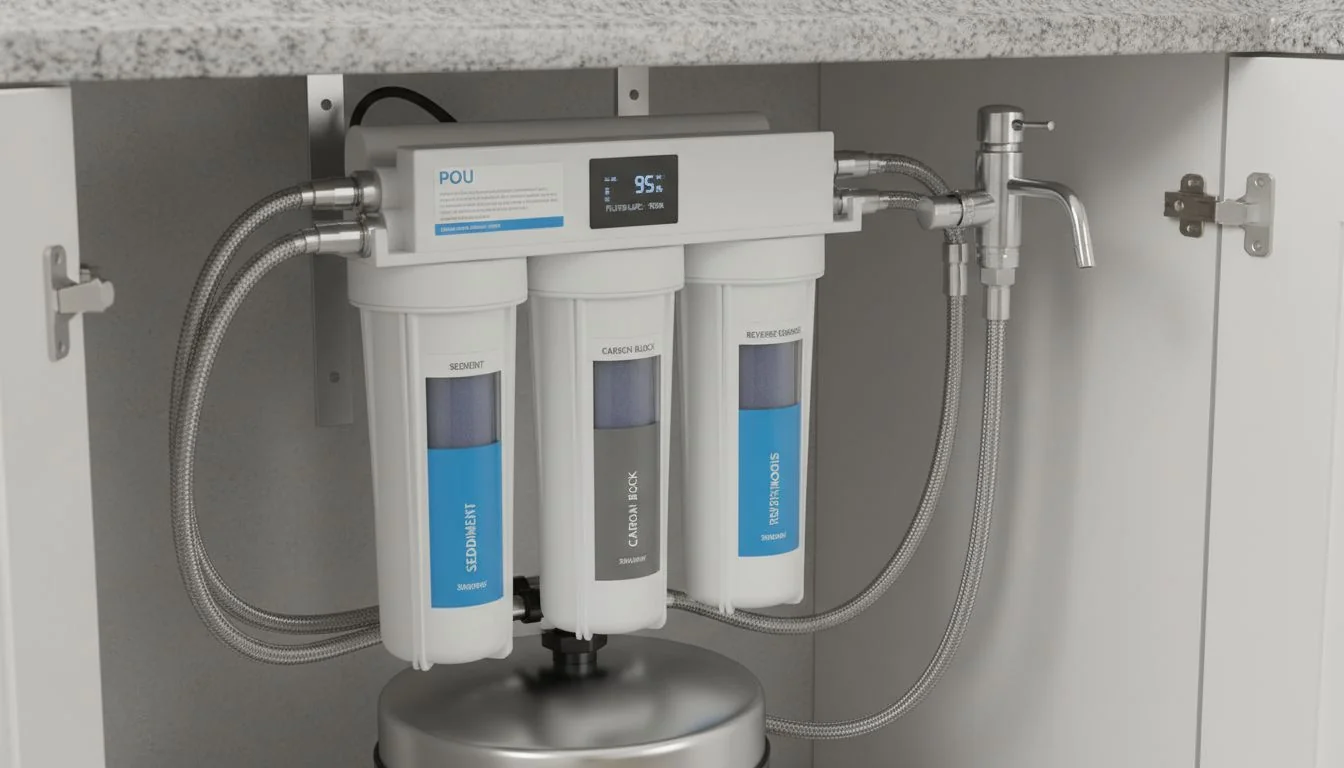
Fast Deployment with High Efficiency
When you need to fix a problem fast, you need modular solutions. POU systems go right under the sink. POE systems attach to the main water line. Both options are fast to install. In my trading business, we always preferred modular designs because they save time. You do not need to rebuild the whole barracks to install these filters.
POU vs POE: Which to Choose?
You must look at your specific site needs to choose the right system.
| System Type | Installation Speed | Best Use Case |
|---|---|---|
| Point-of-Use (POU) | Very Fast (Hours) | Single sinks, drinking fountains |
| Point-of-Entry (POE) | Fast (Days) | Whole buildings, shared showers |
These systems show real value through Lifecycle planning4. You install them quickly as a temporary response. Later, when you have more budget, you can keep them as a permanent retrofit. You do not throw them away like empty plastic bottles. They give you a practical transition path. This is smart engineering and smart buying.
Point-of-Entry systems treat water for an entire building.True
POE systems are installed at the main water line, filtering all water that enters the facility.
Point-of-Use systems require you to rebuild the building's plumbing.False
POU systems easily attach to existing fixtures like sinks without major plumbing changes.
How Do Costs Compare Over a 12 to 24 Month Timeline?
Short-term budgets often ignore long-term pain. If you only look at month one, you will lose money. You must see how costs grow over two years.
Over a 12 to 24 month timeline, filtration systems cost much less than bottled water. Bottled water has low start costs but high, endless monthly fees. Filtration requires a higher upfront investment, but the low maintenance costs save massive amounts of money over two years.
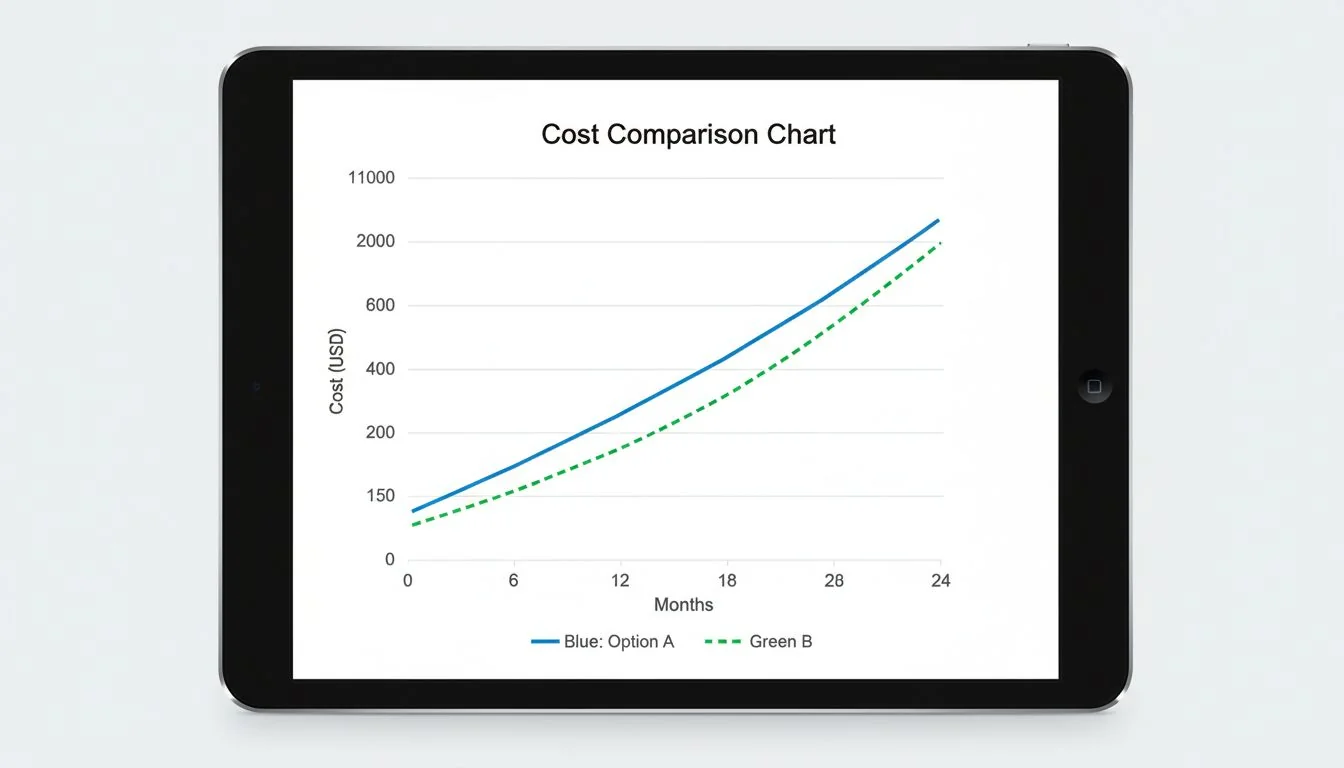
The Math Behind the Timeline
Let us look at the numbers. When I help clients optimize their mold designs, we always look at the 24-month production run. If a cheap mold breaks after six months, it costs more in the end. Water mitigation is exactly the same. Bottled water is a trap. You pay for it every single day.
24-Month Cost Breakdown
Here is how the costs stack up over time.
| Time Period | Bottled Water Cost | Filtration Cost |
|---|---|---|
| Month 1 | Low | High (Installation) |
| Month 6 | High | Very Low |
| Month 12 | Very High | Low (Filter Change) |
| Month 24 | Extreme | Low (Filter Change) |
By month six, the cost lines cross. The money you spend on daily water deliveries will surpass the cost of installing POU or POE systems. Over 12 to 24 months, filtration proves its value. You stop paying for transport and waste. You only pay for occasional filter changes. This keeps your budget safe and predictable.
Filtration systems have a higher upfront cost than a single delivery of bottled water.True
Purchasing and installing filtration equipment requires more initial capital than buying pallets of water.
Bottled water becomes cheaper the longer you use it.False
Bottled water costs accumulate linearly or exponentially over time due to continuous purchasing needs.
What Are the Operational Burdens and Sustainability Issues?
Your staff is already busy. Forcing them to manage water deliveries causes burnout. Plus, the massive plastic waste hurts your green goals and creates a mess.
Bottled water creates a huge Operational burden5. Your team must unload trucks, track inventory, and manage tons of plastic waste. Filtration systems remove this burden. They operate quietly in the background, require zero daily storage, and offer a highly sustainable solution with very little waste.
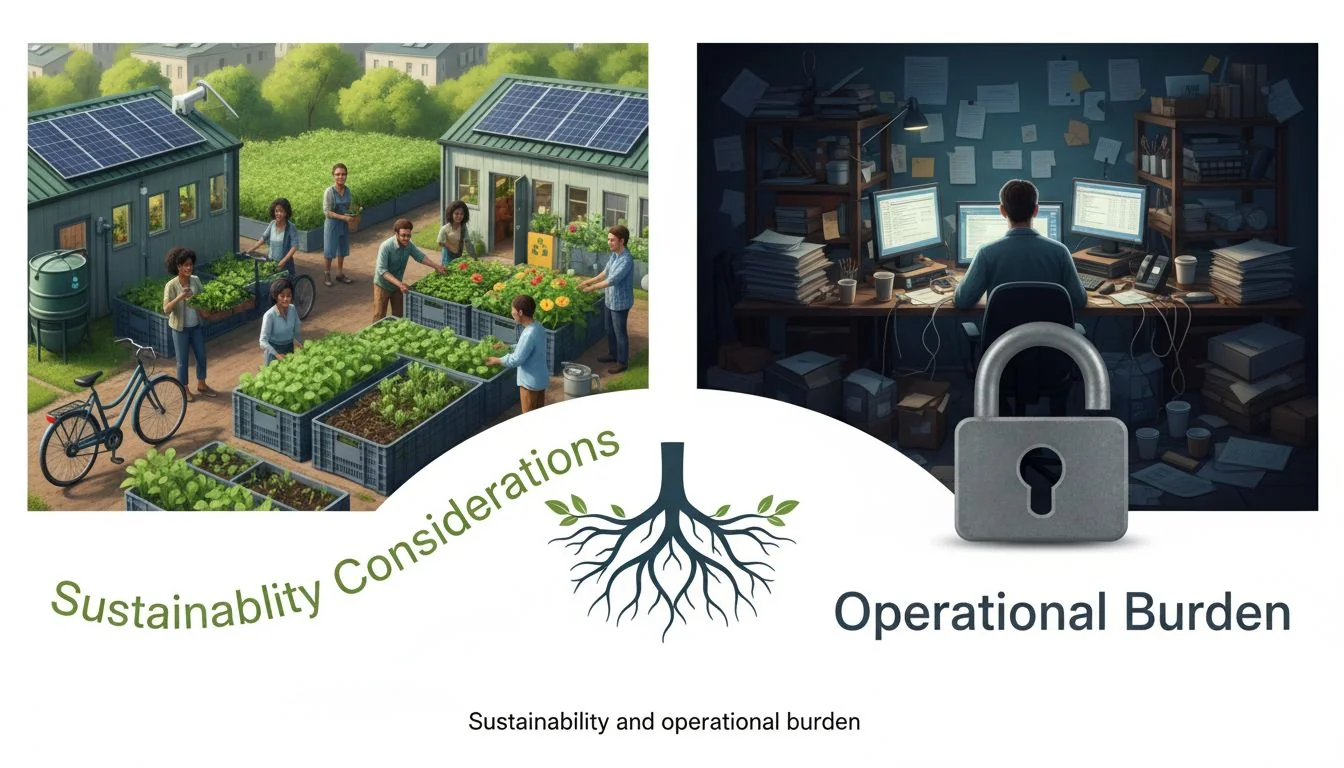
Freeing Up Your Team
In any operation, labor is your most valuable asset. I learned this early in my CNC trading company. If my team spent hours moving boxes, they could not do their real jobs. Bottled water forces your staff to become warehouse workers. They must move pallets, stock fridges, and clean up empty bottles. This is a huge operational burden.
Storage and Sustainability Facts
Filtration systems solve these problems completely. Let us compare the daily impact.
| Impact Area | Bottled Water | Filtration Systems |
|---|---|---|
| Daily Labor | High (Moving boxes) | Zero |
| Storage Space | Massive (Pallets) | None (Under sink) |
| Sustainability | Poor (Plastic waste) | Excellent (Long-life filters) |
Filtration systems give you long-term operability. You do not need to worry about delivery trucks arriving late. You do not need to worry about plastic waste filling your dumpsters. You get a sustainable system that works automatically. This makes your daily operations smooth and keeps your team focused on their actual work.
Filtration systems require daily labor to operate.False
Once installed, filtration systems operate automatically and only need maintenance every few months.
Bottled water generates significant plastic waste that impacts sustainability goals.True
Thousands of single-use plastic bottles create massive waste that is difficult and costly to recycle at scale.
How Do You Build the Case in a Procurement Memo?
Your boss will reject your plan if the numbers are not clear. You feel stressed because you know what to do, but you cannot prove it on paper.
To build a strong procurement memo, focus on deployment efficiency, lifecycle costs, and logistics. Show that bottled water is a 30-day emergency fix. Prove that filtration provides a practical transition path to a permanent retrofit, saving labor, storage space, and money over a 24-month period.
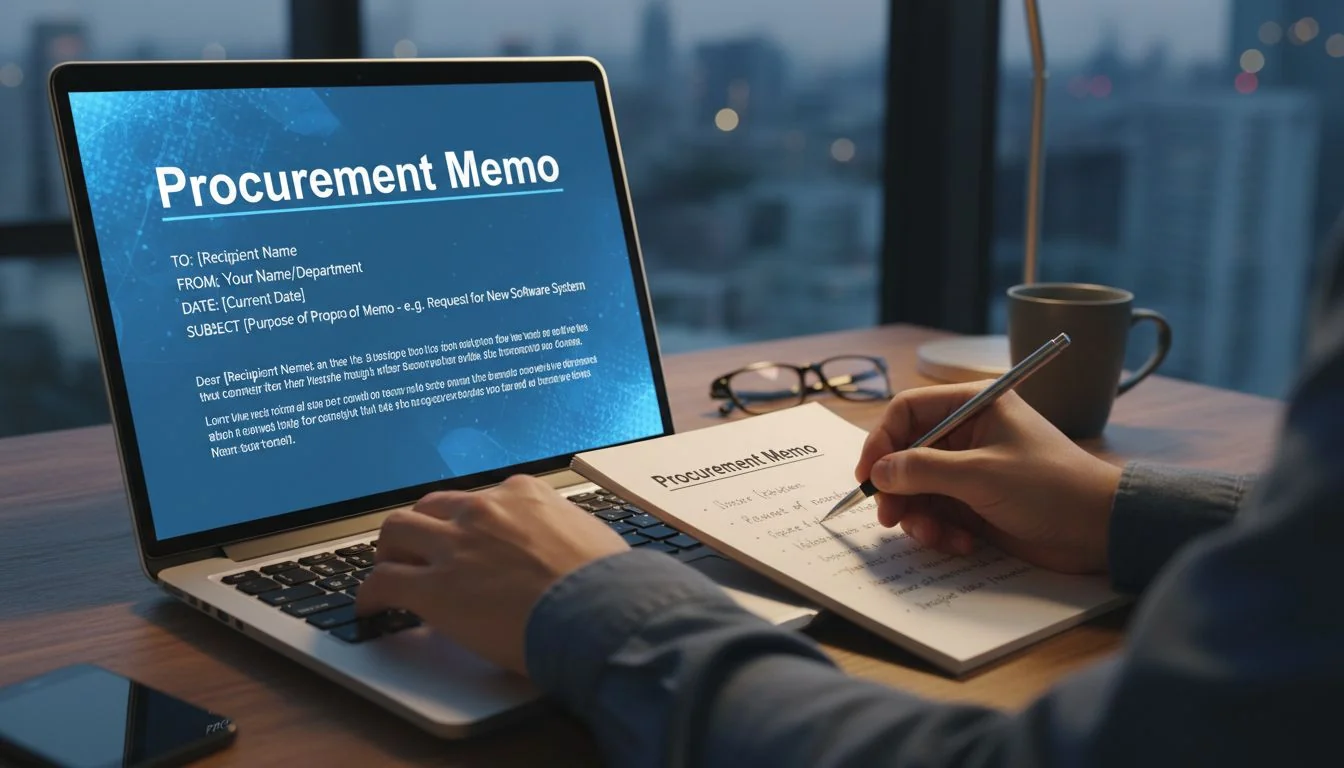
Structuring Your Argument
When I pitch a new mold design to a client, I do not just talk about the steel. I talk about the return on investment. Your procurement memo must do the same. You must show the buyers exactly why filtration is the better choice. Do not make health-effect claims. Focus strictly on operations, budget, and logistics.
Key Points for Your Memo
Use this structure to build a winning case for your buyers.
| Memo Section | What to Include | Goal |
|---|---|---|
| Immediate Action | Bottled water for the first 14 days | Show you have a fast emergency response |
| Interim Plan | Install POU/POE filtration systems | Show deployment efficiency and cost savings |
| Long-Term Vision | Keep filters as permanent retrofits | Show a practical transition path |
You must explain that bottled water creates budget pressure at scale. Show them the 24-month cost comparison. Highlight the lack of storage space for pallets of water. By focusing on execution complexity and long-term operability, you will give your buyers the confidence to approve the filtration project.
A procurement memo should focus heavily on health-effect claims to get approved.False
Procurement memos should focus on cost, logistics, and operational efficiency, leaving health claims to medical experts.
Showing a transition path from temporary to permanent solutions strengthens a procurement case.True
Buyers prefer investments that offer long-term value rather than sunk costs on temporary fixes.
Conclusion
Filtration systems beat bottled water for PFAS mitigation. They lower costs, fix logistics, and offer a clear path to permanent solutions. Make the smart choice for your next project.
References
-
Explore how filtration systems provide long-term cost savings and efficiency for PFAS mitigation. ↩
-
Find out why considering the total cost of ownership is crucial in water procurement decisions. ↩
-
Understand the hidden costs and sustainability issues associated with bottled water for PFAS. ↩
-
Discover the importance of lifecycle planning in choosing effective water filtration solutions. ↩
-
Explore the operational challenges and inefficiencies associated with bottled water. ↩


 English
  Français
  Español
  Italiano
  Deutsch
  Português
  Русский
  العربية
  日本語
日本語  한국어
한국어  Tiếng Việt
