يفتح في علامة تبويب جديدة
حلول مبتكرة لجودة الهواء
شعار هيسو-أير-لوجو
استفسر الآن

استبدال الفلتر: فلتر الهواء الكهروستاتيكي مقابل فلتر الهواء HEPA

Related Products

فلاتر الهواء مثل تلك المثبتة على الحائط مثل الأنواع الكهروستاتيكية وأنواع HEPA المصنوعة لمكافحة ملوثات الهواء مثل حبوب اللقاح ووبر الحيوانات الأليفة والغبار وما إلى ذلك. يكمن الفرق الرئيسي بين هذين النوعين في كفاءتهما في الأداء وسهولة الاستخدام المنزلي.

المستشفيات والأماكن التجارية والسكنية هي أماكن تتطلب أنواعًا مختلفة من أجهزة تنقية الهواء. تعمل أجهزة HEPA والكهروستاتيكية بشكل جيد إذا تم إقرانها بالإعدادات التي تتوافق معها.

يحتاج هواء الجسيمات عالي الكفاءة أو HEPA إلى الاستبدال لمدة عام أو حسب تكرار الاستخدام. وهي مثالية للأماكن التجارية والمستشفيات. ويمكنه إزالة الجسيمات والكائنات الدقيقة المحمولة في الهواء التي توجد عادةً في هذه الأماكن.

فلتر الهواء الكهروستاتيكي لا تحتاج إلى تبديل لملائماتها ولكنها تتطلب صيانة روتينية. هذا الخيار مثالي للأماكن السكنية حيث تكون ملوثات الهواء حوالي 1-10 مساءً.

هيسو إير كـ الشركة المصنعة لجهاز تنقية الهواء توفر مجموعة كبيرة من المنتجات للاختيار من بينها عندما يتعلق الأمر بمكافحة ملوثات الهواء. اتصل بهم الآن للاطلاع على مجموعتهم الكاملة لجميع احتياجاتك في مجال تعقيم الهواء. علاوةً على ذلك، تعرّف على المزيد عن الفرق بين أجهزة تنقية الهواء HEPA وفلاتر الهواء الكهروستاتيكية أدناه.

ما هو فلتر الهواء الكهروستاتيكي?
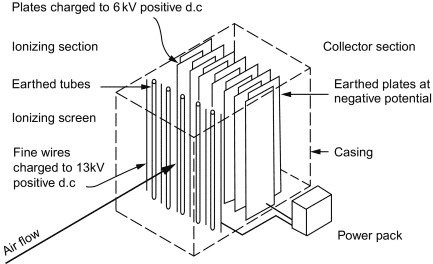
رسم تخطيطي لمرشح الهواء الكهروستاتيكي

المصدر: ساينس دايركت

The Electrostatic Air Filter is a permanent filter with low resistance. The pad is made of electrostatic media and expanded aluminum. This pad is securely riveted at one corner and enclosed in a heavy aluminum frame. They are made of filter media that has been "charged" to create that appealing quality.
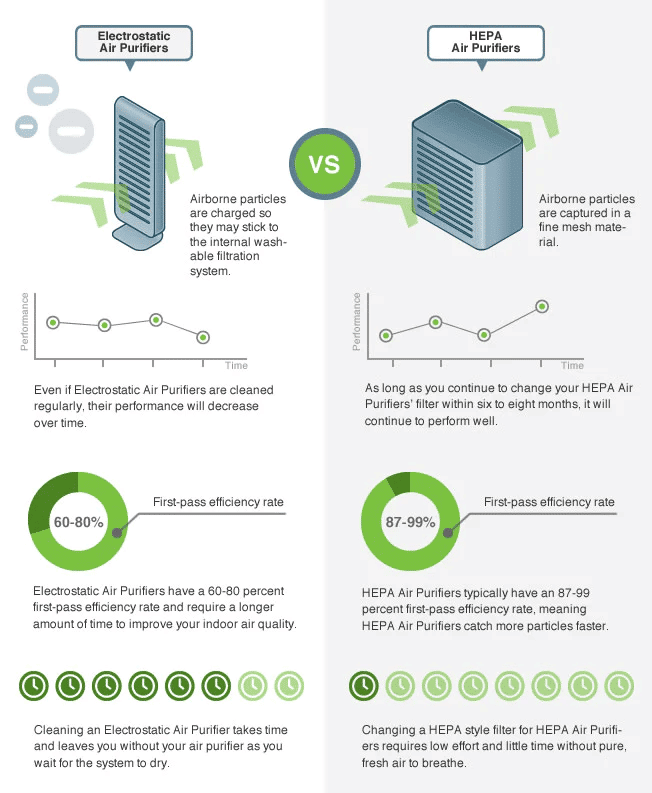
الفرق بين فلتر الهواء الكهروستاتيكي وفلتر الهواء HEPA.

المصدر: ألين

كيف يعمل فلتر الهواء الكهروستاتيكي؟

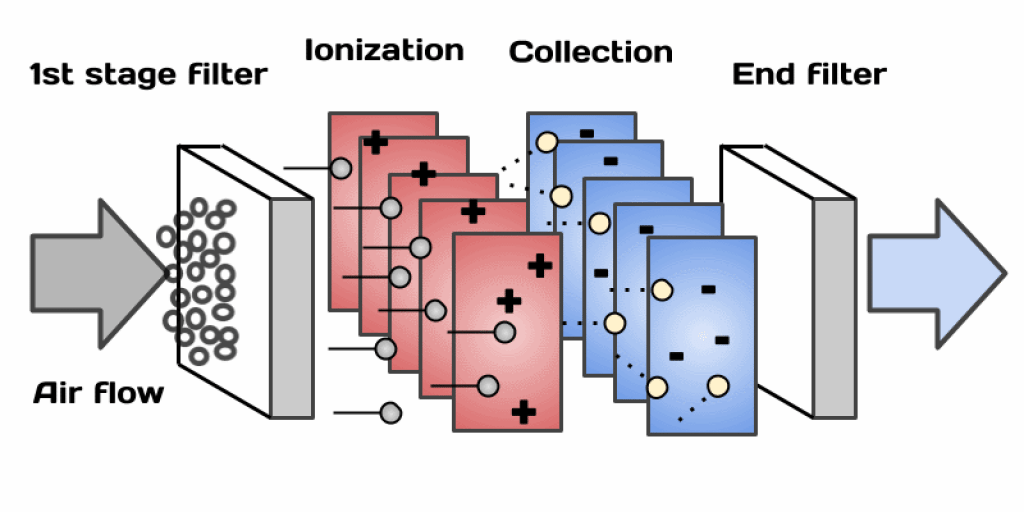
في المنشور كيف يعمل جهاز تنقية الهواء فقد أخبرتنا أن استخدام الكهرباء الساكنة لشحن الجسيمات أثناء دخولها المرشح. يتم تحرير هذه الشحنة أثناء مرور الهواء عبر طبقات الفلتر المتتالية، مما يؤدي إلى احتجاز الجسيمات. لالتقاط جسيمات الهواء، تستخدم آليتها ظاهرة الكهرباء الساكنة التي تحدث بشكل طبيعي. وتستخدم هذه المرشحات طبقات البولي يوريثين والبولي بروبيلين، بالإضافة إلى وسائط الترشيح، لتوليد الكهرباء الساكنة أثناء مرور الهواء عبر المرشح.
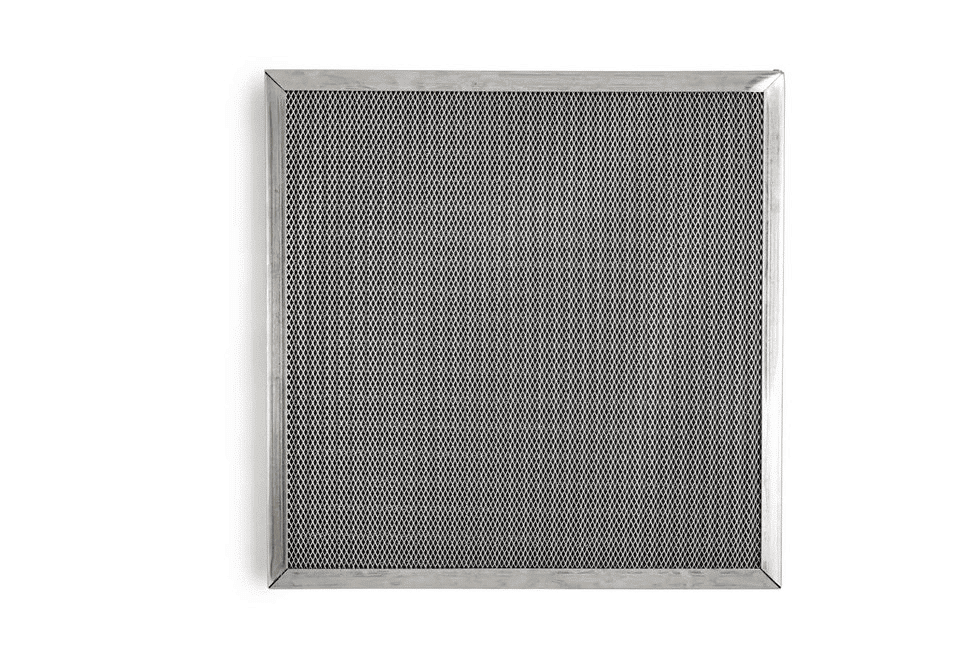
فلتر الهواء الكهروستاتيكي

المصدر: مرشح سميث

Are electrostatic air filters worth it?

في حين أن الفلاتر الكهروستاتيكية القابلة للغسل هي من بين الخيارات الأكثر فعالية من حيث التكلفة في السوق، إلا أنها عادةً ما تكون أقل تصنيف MERV. وفقًا ل واحة الهواء تلتقط الفلاتر الكهروستاتيكية، في المتوسط، أقل من 201 تيرابايت 3 تيرابايت من جزيئات الغبار ويمكنها فقط التقاط الجسيمات الأكبر حجمًا. نظرًا لأن المنازل السكنية عادةً ما تحتوي على هذه الأنواع من ملوثات الهواء، فإن مرشحات الهواء الكهروستاتيكية تستحق العناء في المنازل.

How long do electrostatic air filters last?

إذا كان لديك فلاتر قابلة للغسل أو إلكتروستاتيكية، فيجب غسلها وتجفيفها وإعادة تركيبها مرة واحدة في الشهر. تعتبر الفلاتر القابلة للغسل صديقة للبيئة ويمكن أن تدوم من 5 إلى 10 سنوات إذا تم تنظيفها وإعادة استخدامها بشكل صحيح.

ما هي تكلفة فلاتر الهواء الكهروستاتيكية؟

Washable air filters are relatively inexpensive ($50-60), and you should only need to buy one for the life of the equipment! Consider it a "permanent filter," because you don't need to replace it until you're ready to replace your entire system.

Electrostatic air filters pros

A جهاز تنقية هواء عالي الجودة يضمن تحسين صحة الفرد. فيما يلي الإيجابيات الشائعة عند وجود جهاز لتنقية الهواء في منزلك.

  • كفاءة التكلفة: لا تتطلب الفلاتر الإلكتروستاتيكية الاستبدال. فهي تأتي مع النظام بالكامل. على عكس أجهزة تنقية الهواء HEPA، لن تقلق بشأن تغيير الفلاتر بشكل روتيني
  • خالٍ من المتاعب: إن عدم الحاجة إلى استبدال الفلاتر بشكل روتيني يضيف المزيد من الراحة إلى راحة جهاز تنقية الهواء الكهروستاتيكي. قد تشكل الفلاتر التي تتطلب الاستبدال صداعًا آخر لأن هناك الكثير من الأنواع التي يجب البحث عنها.
  • عالية الأداء: تتمتع أجهزة تنقية الهواء الكهروستاتيكية بتصنيفات MERV جيدة تتراوح بين 5 و6.
  • تنقية هواء عالية الجودة: مرشحات الهواء الكهروستاتيكية مناسبة للأماكن السكنية مثل المنزل، على عكس جهاز تنقية الهواء HEPA الذي قد يكون مبالغاً فيه في مثل هذا المكان.

Electrostatic air filters cons

  • الصيانة الشهرية: قد لا تتطلب مرشحات الهواء الكهروستاتيكية الاستبدال ولكنها تتطلب تعقيمًا روتينيًا. ولضمان طول عمرها، فإن القاعدة العامة هي تعقيمها بانتظام.
  • قد تكون هناك خيارات أفضل: اعتماداً على جودة الهواء، قد تعمل مرشحات الهواء الكهروستاتيكية في أماكن معينة فقط. إذا كان موقعك يميل إلى جودة هواء أسوأ، فقد يكون من الحكمة اختيار أجهزة تنقية الهواء HEPA.
  • بالنسبة للأشخاص الذين يعانون من مشاكل في الجهاز التنفسي، قد تكون هناك خيارات أفضل من فلتر الهواء الكهروستاتيكي. تميل الفلاتر القابلة للغسل إلى الأداء الجيد مع جزيئات الغبار الصغيرة أكثر من الأحجام الكبيرة.
  • قد يصبح ضعف تدفق الهواء مشكلة إذا لم تتم صيانتها بشكل جيد.

Are electrostatic air filters safe?

الفلاتر الكهروستاتيكية آمنة، خاصة في التخلص من الجسيمات الصغيرة الموجودة في الهواء. فميزتها القابلة للغسل تجعلها تعمل بشكل أفضل في إزالة هذه الملوثات. ويشمل ذلك وبر الحيوانات الأليفة والغبار وغيرها من المواد المسببة للحساسية التي قد تجعل المنزل مليئاً بالأوساخ.

هل يمكن أن تعمل أجهزة تنقية الهواء الكهروستاتيكية ضد كوفيد-19؟
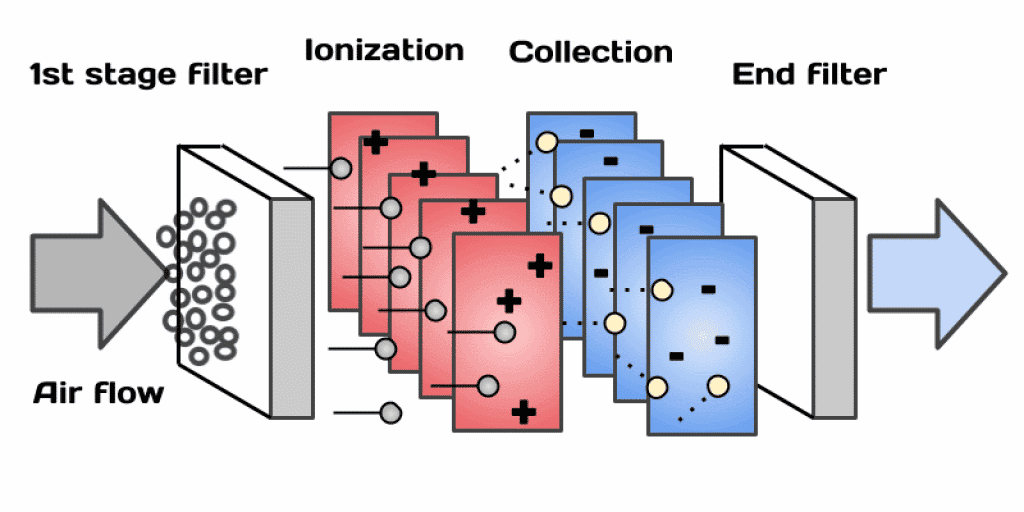
رسم تخطيطي لكيفية عمل فلتر الهواء الكهروستاتيكي

المصدر: هوك للبيئة

تساعد فلاتر الهواء الكهروستاتيكية في تقليل احتمالية انتقال العدوى. وذلك بفضل ميزة الفلتر القابل للغسل. فهو يعمل بشكل جيد مع الجسيمات الأصغر من متوسط ملوثات الهواء. هل تريد معرفة المزيد عن كيفية قتل أجهزة تنقية الهواء للفيروسات؟ إليك بعض من طرق كيفية قتل أجهزة تنقية الهواء للفيروسات.

هل تحد أجهزة تنقية الهواء الكهروستاتيكية من تدفق الهواء؟

لا تحد أجهزة تنقية الهواء الكهروستاتيكية من تدفق الهواء عندما تتم صيانة المرشحات بشكل صحيح. يحدث تدفق الهواء العالي عندما لا توجد عوائق على الفلتر. يمكن أن تكون هذه العوائق عبارة عن جزيئات غبار صغيرة مثل وبر الحيوانات الأليفة وحبوب اللقاح وما إلى ذلك. لهذا السبب، من المهم تعقيم الفلاتر بانتظام حتى يعمل تدفق الهواء بشكل جيد.
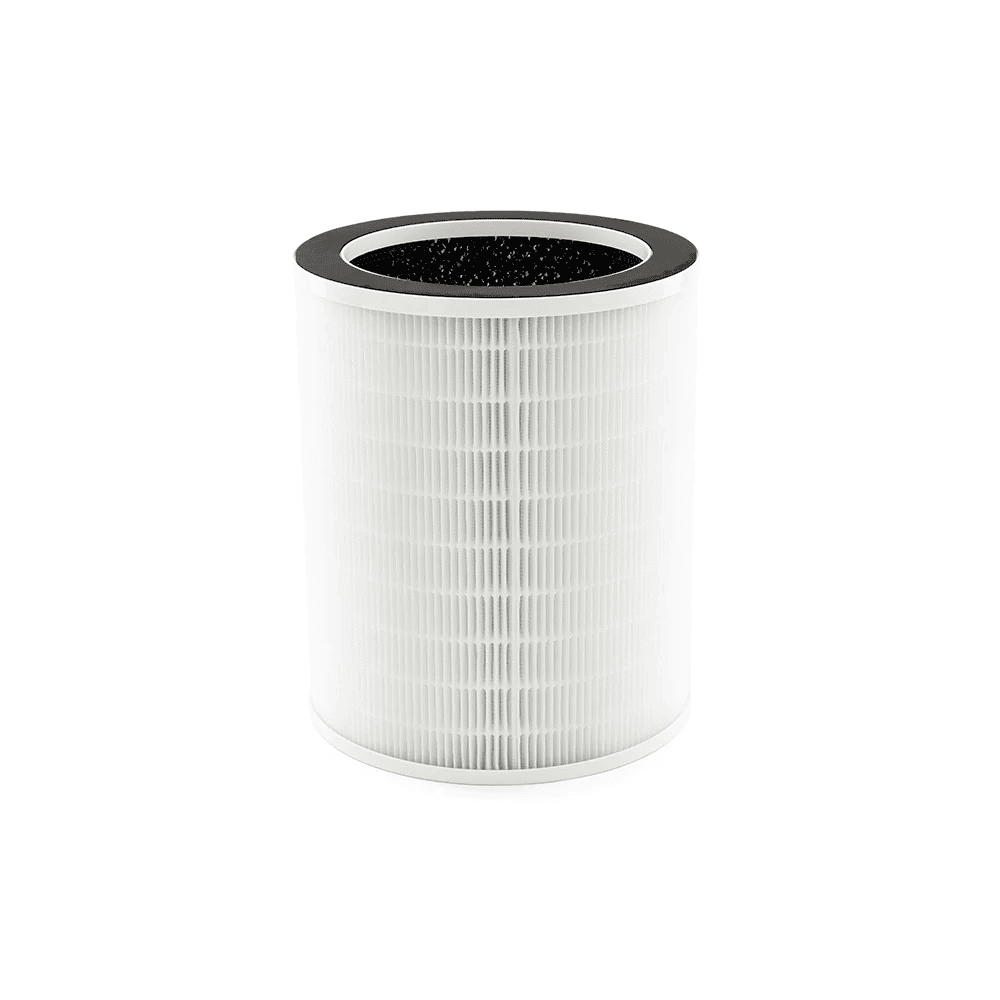
فلتر HEPA
فلتر HEPA

المصدر: كيوا

ما مدى فعالية فلاتر الهواء الكهروستاتيكية؟

يتمثل الفرق بين مرشحات الهواء الكهروستاتيكية ومرشحات الهواء غير الكهروستاتيكية في أدائها في التخلص من الملوثات المحمولة في الهواء. تعمل مرشحات الهواء الكهروستاتيكية بشكل جيد مع الملوثات ذات أحجام معينة، وعادةً ما تكون غير قادرة على إزالة الجسيمات الأصغر حجمًا. من ناحية أخرى، يمكن لمرشحات الهواء غير الكهروستاتيكية مثل HEPA القيام بذلك.

Electrostatic air filter vs HEPA filter (disposable)

وفقاً ل بحيرة الهواء، تم تصميم الفلاتر الكهروستاتيكية (القابلة لإعادة الاستخدام) ومرشحات HEPA (التي تستخدم لمرة واحدة) بهذه الطريقة لمعالجة ملوثات الهواء مع زيادة ميزاتها إلى أقصى حد. تُصنع المرشحات التي تستخدم لمرة واحدة مثل HEPA للمستشفيات حيث من المحتمل أن تنتشر الفيروسات الخطيرة. في الأماكن التجارية والسكنية، تكفي الفلاتر القابلة لإعادة الاستخدام مثل الأنواع الكهروستاتيكية لتعقيم الهواء.

فلتر الهواء الكهروستاتيكي مقابل فلتر الألياف الزجاجية المسطحة (يمكن التخلص منه)

وفقاً ل التدفئة الإجمالية، مرشحات الألياف الزجاجية المسطحة ذات الألواح المسطحة لها تصنيف MERV أقل نسبيًا من مرشحات الهواء الكهروستاتيكية. وهذا يعني أن فلاتر الهواء الكهروستاتيكية تعمل بشكل أفضل من الأولى، حيث يمكنها إزالة عدد أقل من ملوثات الهواء.

مرشح الهواء الكهروستاتيكي مقابل مرشح الوسائط المطوية

وفقًا لـ Gross Heating، تعمل مرشحات الوسائط المطوية وفقًا للجودة؛ وبالتالي قد يختلف تصنيف أدائها. تعمل تلك ذات الجودة العالية بشكل أفضل من مرشحات الهواء الكهروستاتيكية وعادةً ما تستخدم في الأماكن التجارية والمستشفيات.

Electrostatic air filter vs standard air purifier: which air filter type is better for use?

أجهزة تنقية الهواء مطلوبة لأنه ينظف الهواء الذي نتنفسه ويحسن صحتنا. يساعد الهواء المعقّم الذي يدور في نظامنا أجسامنا على أداء وظائفها بشكل صحيح حيث تقل المهيجات التي يجب أن نبحث عنها. قد يكون أداء فلاتر الهواء الكهروستاتيكية مقابل جهاز تنقية الهواء القياسي جيداً في بيئة سكنية. لذا، إذا كنت تعيش في المنزل وتبحث عن جهاز تنقية هواء عالي الجودة، فقد ترغب في الاطلاع على ماركات أجهزة تنقية الهواء.

تشتهر هذه العلامة التجارية بتاريخها العريق في مجال تصنيع أجهزة تنقية الهواء من OEM وأجهزة تنقية الهواء ODM. لذا، سواءً كنت ترغب في تحسين جودة الهواء في بيئة تجارية أو سكنية، فالأفضل أن تكون هذه العلامة التجارية مجهزة بكل ما تحتاج إليه. للتواصل مع هيسو إير الآن لمزيد من المعلومات


شارك:
السيد لي مؤسس شركة هيسواير
Alwen Lee, an air purification expert with over 10 years of experience, is a devoted father of two and a passionate traveler, having explored more than 30 countries. With a love for public speaking and swimming, he has dedicated his life to the indoor air quality industry. His mission is to ensure that people around the world enjoy the freedom to breathe clean air and lead happy, healthy lives.

أرسل لنا رسالة

Related Products

المزيد للقراءة

Modern living room with a family enjoying a healthy indoor environment monitored by smart devices, natural lighting, and greenery.

After IFA 2026: The Healthy Home Is Moving Beyond Smart Devices

In our previous IFA 2026 column, Air Purification Is Becoming Part of the Healthy-Home Platform, we argued that the next generation of indoor-health products would ...
الأخبار
Modern living room and kitchen with smart home air quality devices including an air purifier, humidifier, and water filtration system, connected with visualized blue connectivity lines.

IFA 2026: Air Purification Is Becoming Part of the Healthy-Home Platform

Pre-IFA Industry Perspective | September 4, 2026 This article is based on official announcements and regulatory information available ahead of IFA 2026, which takes place ...
الأخبار
A modern office room with a gray wall-mounted air purifier, large wooden desk, office chairs, indoor plants, and glass windows offering a city view.

Luftreiniger gegen Staub: HEPA-Luftreinigung für Büro, Gewerbe und Industrie

Kurz gesagt: Ein Luftreiniger entfernt Staub aus der Luft – nicht vom Schreibtisch. Er reduziert die Konzentration schwebender Partikel und damit auch die Menge an ...
Air purifier, Filter
Comparison infographic showcasing the differences between carbon block filter and activated carbon fiber. Detailed diagrams illustrate the hierarchical porous structure of the carbon block with long diffusion paths and the open microporous structure of the activated carbon fiber with direct access for PFAS adsorption.

Carbon Block vs. Activated Carbon Fiber (ACF): Matching Media to Target Contaminants

Two carbon media. Same adsorption chemistry. Very different behaviour in a point-of-use cartridge. If you are specifying a water purifier platform for a PFAS-aware market, ...
الأخبار
NSF base listing and ANF private-label certification pathway for OEM water filters

What Is an NSF Master Listing? A Guide to Base Listings, ANF Certification and OEM Water Filters

For a brand preparing to launch an OEM water purifier, one of the most common supplier claims is: “We already have an NSF master listing, ...
News, Water Purifiers
Healthy-home brand team reviewing PFAS water filter certification, test data and product engineering

Entering the Water Category Is Easy. Building a Credible PFAS Claim Is Much Harder

For air purification, appliance and healthy-home brands, entering the water category can look surprisingly easy. A company can select an existing undersink system, customize its ...
الأخبار
Contaminant Engineering•3 min read

PFAS Water Filtration Technologies Explained: Carbon, Resin & RO

Key Takeaway:

PFAS reduction depends on the specific compounds present, treatment media, contact time, water chemistry, and system design. Activated carbon, ion exchange, and Reverse Osmosis address PFAS through different mechanisms.

PFAS are a large family of persistent fluorinated compounds that can occur in drinking-water supplies. Their treatment behavior varies significantly by molecular structure, chain length, functional group, concentration, and the chemistry of the source water.

Granular Activated Carbon (GAC) removes PFAS primarily through adsorption. It is generally more effective for many longer-chain PFAS, while shorter-chain compounds tend to break through more quickly. Carbon performance depends on media properties, Empty Bed Contact Time (EBCT), competing organic matter, loading, and replacement frequency.

Ion-exchange resins use charged functional sites to capture many PFAS compounds. Properly selected anion-exchange media can provide high capacity and may perform better than conventional activated carbon for some shorter-chain PFAS, although performance still depends on water chemistry and competing ions.

Reverse Osmosis (RO) uses membrane separation rather than adsorption. Properly designed RO systems can provide broad reduction across many PFAS compounds as well as dissolved salts and other contaminants. Unlike carbon or resin, however, RO also produces a concentrate stream that must be managed.

No single technology should be selected from a PFAS label alone. System design should consider which PFAS compounds are present, their concentrations, required reduction targets, flow rate, media life, and the applicable third-party certification or validation requirements.

HisoAir Water Technical Series
Product Discovery•3 min read

How to Choose an Under-Sink Water Purifier for Modern Kitchens

Key Takeaway:

Match the treatment technology to your water quality first, then evaluate cabinet space, faucet configuration, flow rate, drain and power requirements, and filter replacement needs.

Choosing an under-sink water purifier starts with water chemistry. Carbon filtration is well suited to chlorine, taste, odor, and many organic contaminants, while Reverse Osmosis is more appropriate when dissolved salts, fluoride, nitrates, or broader dissolved contaminants need to be reduced.

For compact kitchens, tankless RO systems eliminate the conventional storage tank and can significantly reduce the space required under the sink. However, membrane capacity stated in GPD does not directly equal faucet flow. When comparing systems, check the actual dispensing flow rate, inlet-pressure requirement, recovery ratio, and whether a booster pump is required.

Installation architecture also matters. Many RO systems require a drain connection, electrical power, and either a dedicated drinking-water faucet or a compatible multi-function faucet. High-flow carbon systems can often connect directly to the existing cold-water line with a simpler installation, but pressure drop and available faucet flow should still be verified.

RO also removes much of the naturally occurring dissolved mineral content. Where taste or mineral balance is a priority, a post-RO remineralization stage can be added. Filter life should be evaluated by both rated capacity and local water quality rather than replacement time alone.

The right system is therefore not simply the smallest or highest-GPD model. It is the configuration that matches the target contaminants, available cabinet space, desired faucet setup, peak dispensing demand, and maintenance expectations.

HisoAir Water Technical Series
Water Quality•2 min read

What Does TDS Mean in Drinking Water? Measurement vs Contaminant Reality

Key Takeaway:

A TDS meter estimates the overall concentration of dissolved ionic substances from electrical conductivity. It cannot identify specific contaminants or determine whether water is chemically safe.

Total Dissolved Solids (TDS) refers to the combined concentration of dissolved substances in water. Most handheld TDS meters do not measure TDS directly. Instead, they measure electrical conductivity (EC) and convert that reading into an estimated parts-per-million (ppm) value.

This means a TDS reading can indicate how much dissolved ionic material is present, but not what that material actually is. Calcium, magnesium, sodium, nitrates, and other dissolved ions can all contribute to conductivity, yet a simple TDS meter cannot distinguish between them.

TDS meters are also not suitable for detecting trace contaminants such as PFAS, many VOCs, pesticides, pharmaceuticals, or disinfection byproducts. These substances may be present at concentrations far below the level needed to noticeably change electrical conductivity.

A low TDS reading therefore does not guarantee safe drinking water, and a higher TDS reading does not automatically indicate contamination. Water-treatment decisions should be based on laboratory testing for specific contaminants of concern rather than TDS alone.

HisoAir Water Technical Series
Technology Selection•2 min read

RO vs UF Water Filtration: Understanding Pore Sizes & Dissolved Minerals

Key Takeaway:

Ultrafiltration can reduce bacteria, turbidity, and suspended particles while retaining most naturally occurring dissolved minerals. Reverse Osmosis provides much broader reduction of dissolved salts and smaller contaminants.

Ultrafiltration (UF) typically uses hollow-fiber membranes with pore sizes in the approximate 0.01–0.1 micron range. These membranes physically retain turbidity, suspended solids, colloids, and many microorganisms while allowing dissolved minerals and salts to remain in the water.

Reverse Osmosis (RO) operates at a much finer separation level. Unlike UF, RO can substantially reduce dissolved ions such as sodium, calcium, fluoride, nitrates, and other contributors to total dissolved solids (TDS). This makes RO more suitable when dissolved-salt reduction is a primary treatment objective.

UF generally requires less system pressure and produces little or no continuous concentrate stream in many point-of-use configurations. RO typically requires greater pressure and produces a reject-water stream, but delivers broader contaminant reduction.

For water with acceptable TDS and mineral content, UF can be a simpler mineral-retaining treatment option. Where dissolved salts, fluoride, nitrates, or broader dissolved contaminants are a concern, RO is generally the more appropriate technology.

HisoAir Water Technical Series
Technology Selection•4 min read

Carbon Block vs Reverse Osmosis: Which Fits Your Need?

Key Takeaway:

Choose RO for dissolved inorganic salts and heavy metals; choose Carbon Block for chemical taste/odor, no wastewater, and high line-pressure flow.

Reverse Osmosis (RO) and Carbon Block filtration represent two fundamentally different treatment methods: membrane separation and adsorption. Understanding these differences helps determine which technology is better suited to a specific water-quality requirement.

Reverse Osmosis uses a semi-permeable membrane with pore sizes of approximately 0.0001 microns. It can significantly reduce dissolved inorganic contaminants such as TDS, fluoride, nitrates, and certain heavy metals. Because water must be forced through the membrane, RO systems require sufficient pressure or a booster pump and generate a concentrated wastewater stream.

Carbon Block filtration relies primarily on adsorption through compressed activated carbon, commonly with nominal pore sizes around 0.5–5 microns. It is highly effective for chlorine, chloramines, VOCs, taste, and odor, while allowing substantially higher direct-flow rates without producing wastewater.

From an operating perspective, Carbon Block systems are generally simpler, require less energy, and avoid the water loss associated with RO. RO involves higher system complexity and operating cost, but provides substantially broader reduction of dissolved contaminants that Carbon Block alone cannot address.

HisoAir Water Technical Series

طلب عرض أسعار