يفتح في علامة تبويب جديدة
حلول مبتكرة لجودة الهواء
شعار هيسو-أير-لوجو
استفسر الآن

Air purifier vs Air humidifier: Which is better?

Related Products

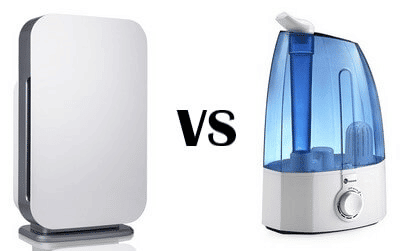
جهاز تنقية الهواء مقابل جهاز ترطيب الهواء في 2022

مصدر الصورة: مستشار الهواء المنزلي

تعد أجهزة تنقية الهواء وأجهزة ترطيب الهواء من الأدوات المنزلية النموذجية اليوم. لكلا الجهازين تطبيقات عملية، ويحسنان جودة الهواء الداخلي. لكن جهاز تنقية الهواء يختلف عن جهاز ترطيب الهواء. فأجهزة ترطيب الهواء تضيف الرطوبة؛ أما أجهزة تنقية الهواء فتزيل الملوثات الضارة. وتساعد أجهزة تنقية الهواء الأشخاص الذين يعانون من اضطرابات الجهاز التنفسي الناجمة عن الهواء الجاف أكثر من أجهزة ترطيب الهواء. نفضح سوء الفهم ونقارن بين الجهازين.

ميزات جهاز تنقية الهواء مقابل جهاز ترطيب الهواء
.

جهاز تنقية الهواء مرطب الهواء
الحجم المقترح يكون جهاز تنقية الهواء فعالاً بقدر فعالية الفلتر الخاص به، بما في ذلك مساحة سطحه وجودة الفلتر. يجب أخذ حجم الغرفة في الاعتبار عند اختيار جهاز ترطيب الهواء.
مستوى الضوضاء جهاز تنقية هواء قياسي: 36 ديسيبل أهدأ جهاز ترطيب الهواء: 30 ديسيبل
الأنواع تقنية HEPA، تقنية HEPA، تقنية الأشعة فوق البنفسجية، الأيونات السالبة، الأوزون مبخرات مركزية وفوق صوتية ودافعة ومبخرات ومبخرات بخارية
التطبيق مفيد للأفراد الذين يبحثون عن هواء نقي. مفيد أيضاً للأشخاص الذين يعانون من الحساسية أو الربو. مفيد للأشخاص الذين يعانون من الربو وتهيج الجهاز التنفسي الناجم عن الهواء الجاف
الميزة تُستخدم الفلاتر لالتقاط الملوثات المحمولة في الهواء والتخلص منها. يزيد من رطوبة الغلاف الجوي لتقليل الانزعاج الناجم عن الظروف الجافة

فوائد جهاز تنقية الهواء مقابل جهاز ترطيب الهواء

جهاز تنقية الهواء:

  • تنقية الشوائب العالقة في الهواء.
  • مثالي لمرضى الربو والحساسية.
  • قابلة للاستخدام على مدار العام.
  • باهظة الثمن

مرطب الهواء:

  • يقلل ترطيب الهواء من التهيج الناتج عن الجفاف.
  • لانسداد الأنف والمرض.
  • يُستخدم في الظروف الجافة فقط.
  • رخيصة

لا يقتصر الأمر على الرطوبة التي تحافظ على مرونة بشرتك وترطيبها ونعومتها فحسب، بل تساعدك الرطوبة أيضًا على النوم بشكل أفضل من خلال إراحة ذهنك لاستعادة الهدوء والراحة النفسية مع توفير البرودة في الداخل أثناء الحرارة المفرطة، مع الإشارة إلى أن الرطوبة تقلل من الحساسية الطفحية. ومثله مثل أجهزة الترطيب، يستغرق الأمر بضعة أيام حتى يعمل.

الفرق بين جهاز تنقية الهواء وجهاز ترطيب الهواء

ما الفرق بين جهاز تنقية الهواء وجهاز ترطيب الهواء؟ يختلفان في كيفية استخدامهما.

جهاز تنقية الهواء

  • الحماية من الفيروسات/البكتيريا
  • يزيل الروائح الكريهة
  • فلتر، HEPA

مرطب الهواء

  • خصائص مضادة للبكتيريا.
  • تشغيل هادئ
  • جودة متينة

صيانة جهاز تنقية الهواء مقابل جهاز ترطيب الهواء

الفلاتر هي أهم صيانة لجهاز تنقية الهواء. فهذا يحافظ على جهاز تنقية الهواء ويطيل عمره. قم بتنظيف القاعدة والخزان وتجفيفهما يومياً لجهاز تنقية الهواء. قم بإزالة المعادن المتراكمة أسبوعياً باستخدام الخل أو محلول مشابه موصى به من الشركة المصنعة وطهّر جهاز الترطيب باستخدام مبيض 10%.

جهاز تنقية الهواء مقابل مستوى رطوبة جهاز ترطيب الهواء

تتغير الرطوبة بتغير الموسم والطقس وموقع إقامتك. بشكل عام، تكون مستويات الرطوبة في الصيف أعلى من مستويات الرطوبة في الشتاء. تتراوح مستويات الرطوبة الداخلية المثالية بين 30% إلى 50%. قد تكون الرطوبة قليلة جداً أو كثيرة جداً مشكلة. (https://www.mayoclinic.org/diseases-conditions/common-cold/in-depth/humidifiers/art-20048021)

وظائف جهاز تنقية الهواء مقابل جهاز ترطيب الهواء واستخداماته

كيف يعمل جهاز تنقية الهواء? تقوم أجهزة تنقية الهواء بتنقية الهواء. تعمل أجهزة تنقية الهواء على إزالة العفن والحساسية والروائح الكريهة. قد يستفيد منها الأطفال والبالغون المصابون بالحساسية والربو. أجهزة ترطيب الهواء؟ لا، فأجهزة ترطيب الهواء تطلق بخار الماء الساخن أو البارد. يساعد الترطيب الأطفال والبالغين المصابين بالاحتقان. قد تساعد الرطوبة البشرة الجافة في الشتاء والممرات الأنفية. تعمل أجهزة تنقية الهواء على التخلص من الغبار والدخان والروائح والبكتيريا والفيروسات. أجهزة تنقية الهواء يمكن أن يعالج ويمنع الأمراض مثل مرضى الربو ومرضى الحساسية وأولئك الذين يرغبون في تقليل الملوثات والروائح الكريهة. يمنع جهاز الترطيب الجفاف الذي يمكن أن يهيج العديد من مناطق الجسم. تساعد أجهزة الترطيب على علاج جفاف الجلد والأنف والحلق والشفاه. كما أنها تقلل من أعراض الإنفلونزا ونزلات البرد. يمكن استخدام كلا الجهازين معاً خلال موسم الحساسية، وغالباً ما يكون ذلك في أوائل الربيع في فبراير وحتى أوائل الصيف في يونيو. سواء كان ذلك في غرفتك أو في مكان معيشتك.

العمر الافتراضي لجهاز تنقية الهواء مقابل مرطب الهواء

تدوم أجهزة ترطيب الهواء من 10 إلى 15 سنة، حسب الصيانة وجودة المياه. يجب استبدال فلاتر هيسواير كل 6-12 شهراً، حسب جودة الهواء والظروف المحيطة. اعتماداً على جودة الهواء والظروف المحيطة، قم بتغيير مرشحات الكربون المسبقة كل ثلاثة أشهر.

تكلفة جهاز تنقية الهواء مقابل تكلفة جهاز ترطيب الهواء

أجهزة تنقية الهواء مكلفة نسبياً. ومع ذلك، فإن أجهزة ترطيب الهواء ميسورة التكلفة بسهولة. يمكن أن يكلف جهاز تنقية الهواء عالي الجودة مئات أو حتى آلاف الدولارات، في حين أن جهاز ترطيب الهواء غالباً ما يكون سعره أقل من $100.

جهاز تنقية الهواء أم جهاز ترطيب الهواء: أيهما أفضل للمشاكل الصحية؟

تحارب أجهزة تنقية الهواء الحساسية بشكل أفضل. تعمل أجهزة ترطيب الهواء على زيادة رطوبة الهواء فقط، وليس الغبار أو حبوب اللقاح أو غيرها من مسببات الحساسية. يمكن استخدام أجهزة ترطيب الهواء مع أجهزة تنقية الهواء.

هل جهاز تنقية الهواء أم جهاز ترطيب الهواء أفضل للأطفال؟

أجهزة تنقية الهواء المحمولة تساعد الحضانات. اختر جهاز تنقية هواء مزود بمقياس CADR عالي الكفاءة لتنظيف مساحة واسعة بشكل أسرع. تجمع فلاتر الهواء عالية الكفاءة المثبتة على الجهاز 99.97% من الجسيمات المحمولة في الهواء. قم بتغيير الفلتر حسب العبوة الخاصة به. تساعد أضواء مؤشر عمر الفلتر الإلكترونية في تغيير الفلاتر في أجهزتنا.

ما الأفضل للحساسية: جهاز ترطيب الهواء أم جهاز تنقية الهواء؟

كلاهما له مزايا؛ جهاز تنقية الهواء الفعال هو الخيار الأفضل فيما يتعلق بالحساسية. جهاز تنقية الهواء مقابل جهاز ترطيب الهواء للحساسية، يمكن لأجهزة ترطيب الهواء أن تساعد جسمك على التحكم في الأعراض وتقليلها. من ناحية أخرى، يمكن لأجهزة تنقية الهواء أن تقضي على الحساسية من الهواء الذي تتنفسه في المنزل.

أيهما أفضل للربو، جهاز ترطيب الهواء أم جهاز تنقية الهواء؟

جهاز ترطيب الربو أم جهاز تنقية الهواء؟ تساعد أجهزة تنقية الهواء مرضى الربو. تحكم في مسببات الربو في المنزل لأن تلوث الهواء يسبب الربو. تعمل أجهزة ترطيب الهواء على تسهيل التنفس ولكنها لا تعالج الحساسية أو الربو. استخدم مرطب الهواء باعتدال لتجنب العفن وعث الغبار. فهذه تزيد الربو سوءًا.

جهاز تنقية الهواء مقابل جهاز ترطيب الهواء لعلاج الأكزيما: أيهما أفضل؟

Eczema is caused by skin dryness, further worsened by dry air. Air humidifier is the most effective way to keep the air in your environment "wet" and prevent your skin from drying out.

جهاز تنقية الهواء مقابل جهاز ترطيب الهواء للجيوب الأنفية: أيهما أفضل؟

يمكن لأجهزة ترطيب الهواء أن تخفف من مشاكل الجيوب الأنفية الناتجة عن فصل الشتاء. يمكن أن يتأثر إنتاج المخاط بالهواء الجاف. ويتبع ذلك جفاف الحلق والأنف والفم. إن استخدام جهاز ترطيب الهواء سيساعد أنظمة الأنف الرائعة على العمل بشكل صحيح. قد يساعد مرطب الهواء الجيوب الأنفية أكثر من جهاز تنقية الهواء.

جهاز تنقية الهواء مقابل جهاز ترطيب الهواء لفيروس كوفيد 19: أيهما أفضل؟

يمكن لأجهزة تنقية الهواء أن تقلل من الملوثات المحمولة جواً في المنازل والأماكن الضيقة، بما في ذلك الفيروسات. لا يمكن لمنظف الهواء المحمول وحده الوقاية من كوفيد-19. يمكن أن تساعد منظفات الهواء في حمايتك وحماية عائلتك عند استخدامها مع الاحتياطات الأخرى التي يوصي بها مركز مكافحة الأمراض والوقاية منها.

منقي الهواء مقابل مرطب الهواء لعلاج الالتهاب الرئوي: أيهما أفضل؟

الغرض من جهاز ترطيب الهواء هو إضافة الرطوبة إلى الهواء، مما يسهل التنفس بسهولة وترطيب الممرات الأنفية. يمكن أن يقلل بشكل كبير من أعراض الالتهاب الرئوي، مثل السعال والغثيان والقيء.

هل يمكنني استخدام أجهزة تنقية الهواء وأجهزة ترطيب الهواء معًا؟

أبعديهما عن بعضهما البعض. فهذا يمنع قطرات ماء جهاز ترطيب الهواء من إتلاف فلتر جهاز تنقية الهواء. لزيادة وظائف الوحدة إلى أقصى حد، ضعها على جوانب متقابلة من الغرفة.

هل يمكنني استخدام جهاز ترطيب الهواء وجهاز تنقية الهواء في الغرفة نفسها؟

أين هو أفضل مكان لتنقية الهواء؟? قد يكون لديك نفس السؤال حول جهاز ترطيب الهواء. استخدم جهاز ترطيب الهواء وجهاز تنقية الهواء معًا لخدمة أغراض مختلفة ويكمل أحدهما الآخر. ومع ذلك، فإن وضعهما بالقرب من بعضهما البعض قد يؤدي إلى مشاكل لأن رطوبة جهاز ترطيب الهواء يمكن أن تسد فلتر جهاز تنقية الهواء وتقلل من كفاءته.

هل يمكنني استخدام جهاز تنقية الهواء وجهاز ترطيب الهواء في الوقت نفسه؟

نعم، يمكنك استخدام جهاز تنقية الهواء في 7/24مثل مرطب الهواء في الوقت نفسه. يعمل جهاز ترطيب الهواء على رفع مستويات الرطوبة في الغرفة. وفي الوقت نفسه، يعمل جهاز تنقية الهواء كمنظف لإزالة الشوائب من الهواء، مما يحسّن جودة الهواء الداخلي في منزلك ويجعله مكاناً ممتازاً للعيش فيه.

جهاز تنقية الهواء مقابل جهاز ترطيب الهواء: أيهما أفضل؟

هل أحتاج إلى جهاز تنقية الهواء أو جهاز ترطيب الهواء؟ تعمل أجهزة تنقية الهواء على تحسين جودة الهواء الداخلي على مدار العام. على عكس جهاز ترطيب الهواء، يمكن استخدام جهاز تنقية الهواء يومياً للقضاء على الحساسية والملوثات الأخرى. إذا قررت شراء جهاز جهاز تنقية الهواء، يوصيك المستخدمون النهائيون بالاختيار من بين هذه العلامات التجارية لتنقية الهواء. للمحترفين، يمكنك الذهاب إلى www.hisoair.com مُصنِّع أجهزة تنقية الهواء من الصين للحصول على الاستشارات والاستفسارات.

شارك:
السيد لي مؤسس شركة هيسواير
Alwen Lee, an air purification expert with over 10 years of experience, is a devoted father of two and a passionate traveler, having explored more than 30 countries. With a love for public speaking and swimming, he has dedicated his life to the indoor air quality industry. His mission is to ensure that people around the world enjoy the freedom to breathe clean air and lead happy, healthy lives.

أرسل لنا رسالة

Related Products

المزيد للقراءة

Modern living room with a family enjoying a healthy indoor environment monitored by smart devices, natural lighting, and greenery.

After IFA 2026: The Healthy Home Is Moving Beyond Smart Devices

In our previous IFA 2026 column, Air Purification Is Becoming Part of the Healthy-Home Platform, we argued that the next generation of indoor-health products would ...
الأخبار
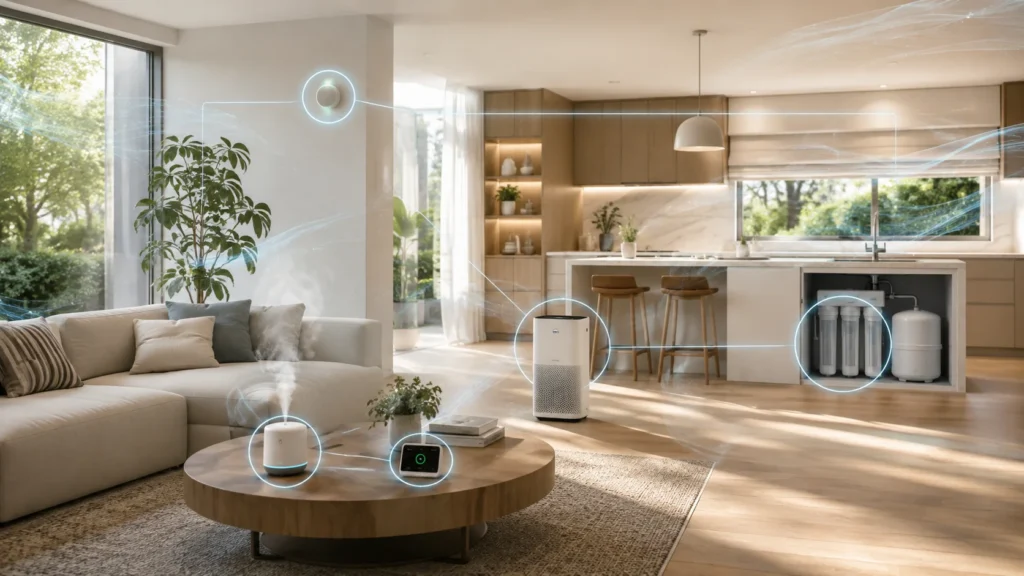
Modern living room and kitchen with smart home air quality devices including an air purifier, humidifier, and water filtration system, connected with visualized blue connectivity lines.

IFA 2026: Air Purification Is Becoming Part of the Healthy-Home Platform

Pre-IFA Industry Perspective | September 4, 2026 This article is based on official announcements and regulatory information available ahead of IFA 2026, which takes place ...
الأخبار
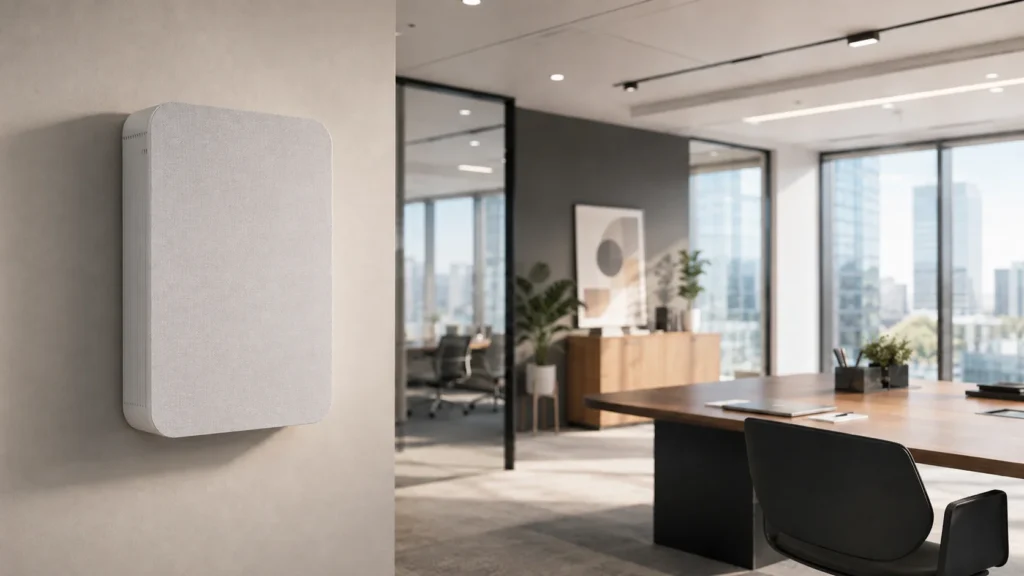
A modern office room with a gray wall-mounted air purifier, large wooden desk, office chairs, indoor plants, and glass windows offering a city view.

Luftreiniger gegen Staub: HEPA-Luftreinigung für Büro, Gewerbe und Industrie

Kurz gesagt: Ein Luftreiniger entfernt Staub aus der Luft – nicht vom Schreibtisch. Er reduziert die Konzentration schwebender Partikel und damit auch die Menge an ...
Air purifier, Filter
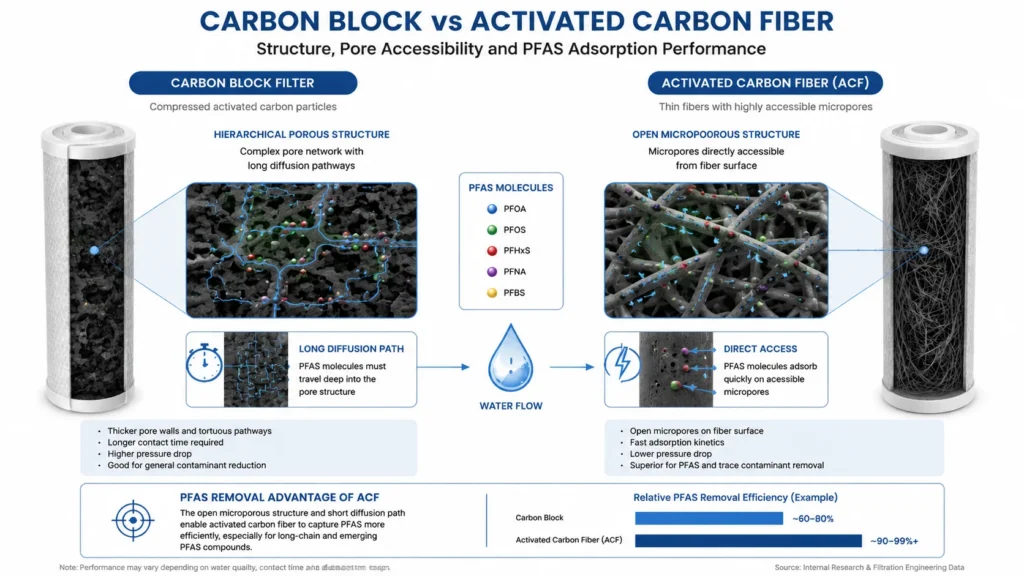
Comparison infographic showcasing the differences between carbon block filter and activated carbon fiber. Detailed diagrams illustrate the hierarchical porous structure of the carbon block with long diffusion paths and the open microporous structure of the activated carbon fiber with direct access for PFAS adsorption.

Carbon Block vs. Activated Carbon Fiber (ACF): Matching Media to Target Contaminants

Two carbon media. Same adsorption chemistry. Very different behaviour in a point-of-use cartridge. If you are specifying a water purifier platform for a PFAS-aware market, ...
الأخبار
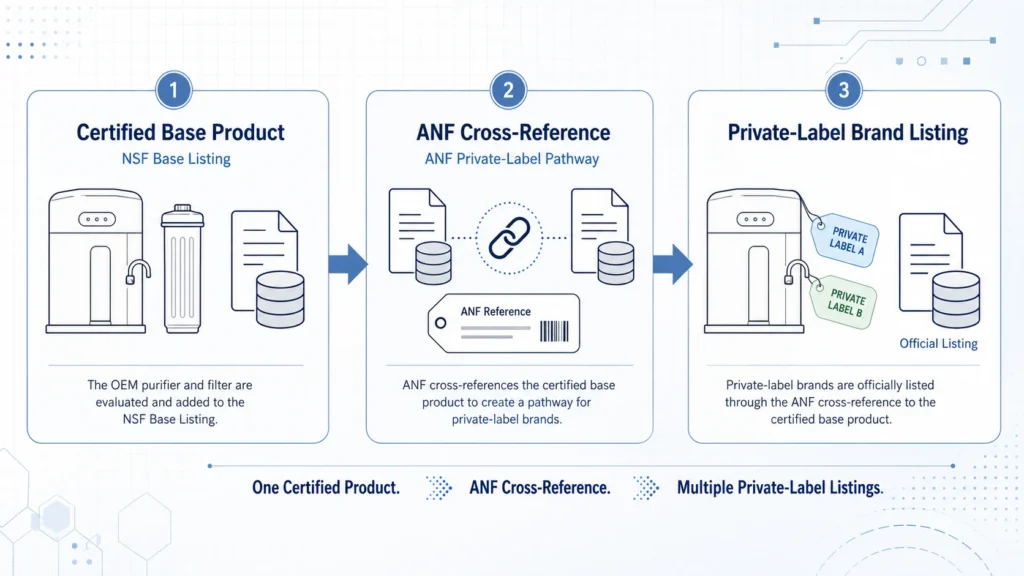
NSF base listing and ANF private-label certification pathway for OEM water filters

What Is an NSF Master Listing? A Guide to Base Listings, ANF Certification and OEM Water Filters

For a brand preparing to launch an OEM water purifier, one of the most common supplier claims is: “We already have an NSF master listing, ...
News, Water Purifiers
Healthy-home brand team reviewing PFAS water filter certification, test data and product engineering

Entering the Water Category Is Easy. Building a Credible PFAS Claim Is Much Harder

For air purification, appliance and healthy-home brands, entering the water category can look surprisingly easy. A company can select an existing undersink system, customize its ...
الأخبار
Contaminant Engineering•3 min read

PFAS Water Filtration Technologies Explained: Carbon, Resin & RO

Key Takeaway:

PFAS reduction depends on the specific compounds present, treatment media, contact time, water chemistry, and system design. Activated carbon, ion exchange, and Reverse Osmosis address PFAS through different mechanisms.

PFAS are a large family of persistent fluorinated compounds that can occur in drinking-water supplies. Their treatment behavior varies significantly by molecular structure, chain length, functional group, concentration, and the chemistry of the source water.

Granular Activated Carbon (GAC) removes PFAS primarily through adsorption. It is generally more effective for many longer-chain PFAS, while shorter-chain compounds tend to break through more quickly. Carbon performance depends on media properties, Empty Bed Contact Time (EBCT), competing organic matter, loading, and replacement frequency.

Ion-exchange resins use charged functional sites to capture many PFAS compounds. Properly selected anion-exchange media can provide high capacity and may perform better than conventional activated carbon for some shorter-chain PFAS, although performance still depends on water chemistry and competing ions.

Reverse Osmosis (RO) uses membrane separation rather than adsorption. Properly designed RO systems can provide broad reduction across many PFAS compounds as well as dissolved salts and other contaminants. Unlike carbon or resin, however, RO also produces a concentrate stream that must be managed.

No single technology should be selected from a PFAS label alone. System design should consider which PFAS compounds are present, their concentrations, required reduction targets, flow rate, media life, and the applicable third-party certification or validation requirements.

HisoAir Water Technical Series
Product Discovery•3 min read

How to Choose an Under-Sink Water Purifier for Modern Kitchens

Key Takeaway:

Match the treatment technology to your water quality first, then evaluate cabinet space, faucet configuration, flow rate, drain and power requirements, and filter replacement needs.

Choosing an under-sink water purifier starts with water chemistry. Carbon filtration is well suited to chlorine, taste, odor, and many organic contaminants, while Reverse Osmosis is more appropriate when dissolved salts, fluoride, nitrates, or broader dissolved contaminants need to be reduced.

For compact kitchens, tankless RO systems eliminate the conventional storage tank and can significantly reduce the space required under the sink. However, membrane capacity stated in GPD does not directly equal faucet flow. When comparing systems, check the actual dispensing flow rate, inlet-pressure requirement, recovery ratio, and whether a booster pump is required.

Installation architecture also matters. Many RO systems require a drain connection, electrical power, and either a dedicated drinking-water faucet or a compatible multi-function faucet. High-flow carbon systems can often connect directly to the existing cold-water line with a simpler installation, but pressure drop and available faucet flow should still be verified.

RO also removes much of the naturally occurring dissolved mineral content. Where taste or mineral balance is a priority, a post-RO remineralization stage can be added. Filter life should be evaluated by both rated capacity and local water quality rather than replacement time alone.

The right system is therefore not simply the smallest or highest-GPD model. It is the configuration that matches the target contaminants, available cabinet space, desired faucet setup, peak dispensing demand, and maintenance expectations.

HisoAir Water Technical Series
Water Quality•2 min read

What Does TDS Mean in Drinking Water? Measurement vs Contaminant Reality

Key Takeaway:

A TDS meter estimates the overall concentration of dissolved ionic substances from electrical conductivity. It cannot identify specific contaminants or determine whether water is chemically safe.

Total Dissolved Solids (TDS) refers to the combined concentration of dissolved substances in water. Most handheld TDS meters do not measure TDS directly. Instead, they measure electrical conductivity (EC) and convert that reading into an estimated parts-per-million (ppm) value.

This means a TDS reading can indicate how much dissolved ionic material is present, but not what that material actually is. Calcium, magnesium, sodium, nitrates, and other dissolved ions can all contribute to conductivity, yet a simple TDS meter cannot distinguish between them.

TDS meters are also not suitable for detecting trace contaminants such as PFAS, many VOCs, pesticides, pharmaceuticals, or disinfection byproducts. These substances may be present at concentrations far below the level needed to noticeably change electrical conductivity.

A low TDS reading therefore does not guarantee safe drinking water, and a higher TDS reading does not automatically indicate contamination. Water-treatment decisions should be based on laboratory testing for specific contaminants of concern rather than TDS alone.

HisoAir Water Technical Series
Technology Selection•2 min read

RO vs UF Water Filtration: Understanding Pore Sizes & Dissolved Minerals

Key Takeaway:

Ultrafiltration can reduce bacteria, turbidity, and suspended particles while retaining most naturally occurring dissolved minerals. Reverse Osmosis provides much broader reduction of dissolved salts and smaller contaminants.

Ultrafiltration (UF) typically uses hollow-fiber membranes with pore sizes in the approximate 0.01–0.1 micron range. These membranes physically retain turbidity, suspended solids, colloids, and many microorganisms while allowing dissolved minerals and salts to remain in the water.

Reverse Osmosis (RO) operates at a much finer separation level. Unlike UF, RO can substantially reduce dissolved ions such as sodium, calcium, fluoride, nitrates, and other contributors to total dissolved solids (TDS). This makes RO more suitable when dissolved-salt reduction is a primary treatment objective.

UF generally requires less system pressure and produces little or no continuous concentrate stream in many point-of-use configurations. RO typically requires greater pressure and produces a reject-water stream, but delivers broader contaminant reduction.

For water with acceptable TDS and mineral content, UF can be a simpler mineral-retaining treatment option. Where dissolved salts, fluoride, nitrates, or broader dissolved contaminants are a concern, RO is generally the more appropriate technology.

HisoAir Water Technical Series
Technology Selection•4 min read

Carbon Block vs Reverse Osmosis: Which Fits Your Need?

Key Takeaway:

Choose RO for dissolved inorganic salts and heavy metals; choose Carbon Block for chemical taste/odor, no wastewater, and high line-pressure flow.

Reverse Osmosis (RO) and Carbon Block filtration represent two fundamentally different treatment methods: membrane separation and adsorption. Understanding these differences helps determine which technology is better suited to a specific water-quality requirement.

Reverse Osmosis uses a semi-permeable membrane with pore sizes of approximately 0.0001 microns. It can significantly reduce dissolved inorganic contaminants such as TDS, fluoride, nitrates, and certain heavy metals. Because water must be forced through the membrane, RO systems require sufficient pressure or a booster pump and generate a concentrated wastewater stream.

Carbon Block filtration relies primarily on adsorption through compressed activated carbon, commonly with nominal pore sizes around 0.5–5 microns. It is highly effective for chlorine, chloramines, VOCs, taste, and odor, while allowing substantially higher direct-flow rates without producing wastewater.

From an operating perspective, Carbon Block systems are generally simpler, require less energy, and avoid the water loss associated with RO. RO involves higher system complexity and operating cost, but provides substantially broader reduction of dissolved contaminants that Carbon Block alone cannot address.

HisoAir Water Technical Series

طلب عرض أسعار