
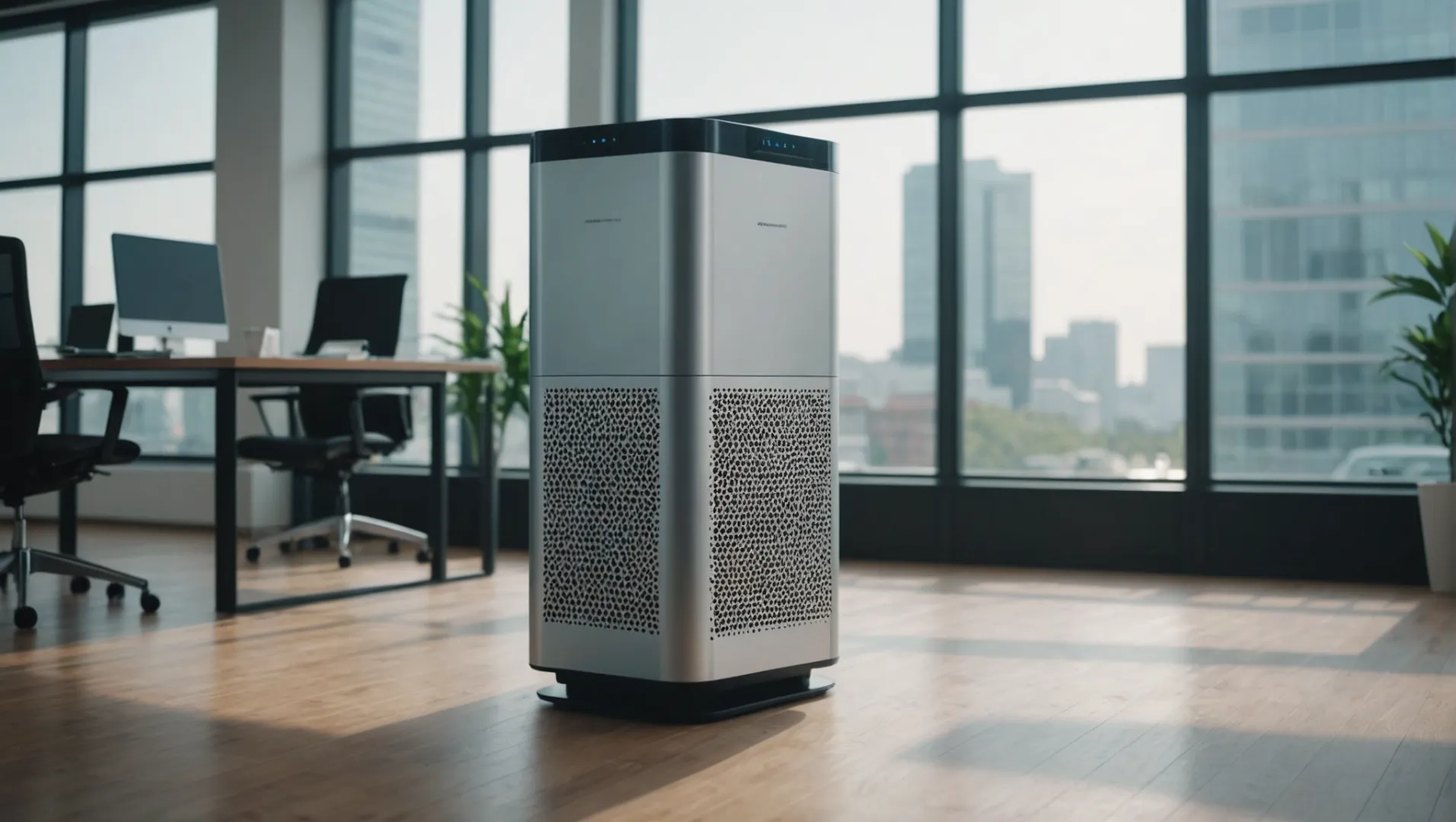
Important clarification: OSHA does not have specific standards dedicated to air purifiers. Instead, OSHA provides general guidelines related to indoor air quality (IAQ) and workplace safety that may influence how employers select, install, and maintain air purification systems in commercial environments.
This article explores the relationship between commercial air purifiers and relevant OSHA guidelines, helping employers understand how to maintain workplace compliance while improving indoor air quality. We'll examine applicable OSHA provisions, industry standards, and best practices for selecting and maintaining air purification systems that support workplace health and safety.
OSHA and Indoor Air Quality in Commercial Spaces
While OSHA doesn't have a dedicated indoor air quality standard for general industry, several provisions address aspects of air quality in the workplace.
Key OSHA Provisions Related to Indoor Air Quality
The most relevant OSHA provisions that may affect air purification decisions include:
-
General Duty Clause (Section 5(a)(1)): Requires employers to provide a workplace "free from recognized hazards that are causing or are likely to cause death or serious physical harm." Poor indoor air quality could potentially be considered such a hazard in certain circumstances.
-
Ventilation Standards (29 CFR 1910.94): Establishes requirements for ventilation in specific operations, though these focus primarily on industrial processes rather than general office environments.
-
Permissible Exposure Limits (PELs): Sets maximum allowable concentrations for specific air contaminants. Air purification may be one method to help maintain levels below these limits in environments where such contaminants are present.
-
Hazard Communication Standard (29 CFR 1910.1200): Requires proper labeling, safety data sheets, and employee training for hazardous chemicals, which may include certain cleaning agents used with air purification systems.
OSHA's Approach to Indoor Air Quality
OSHA acknowledges the importance of indoor air quality but takes a performance-based approach rather than prescribing specific equipment or technologies. As stated in OSHA's Indoor Air Quality FAQ:
"While OSHA does not have IAQ standards, it does have standards about ventilation and standards on some of the air contaminants that can be involved in IAQ problems... The OSH Act's General Duty Clause provides for the protection of workers from serious and recognized hazards."
This means employers have flexibility in how they address indoor air quality, including whether and how to implement air purification systems.
Air Purifier Performance Metrics and Industry Standards
Since OSHA doesn't specify performance requirements for air purifiers, industry standards and guidelines become important references for selecting appropriate equipment.
Key Performance Indicators
When evaluating commercial air purifiers, consider these important performance metrics:
| Performance Indicator | Description | Relevant Industry Standards |
|---|---|---|
| Taux de livraison d'air pur (CADR) | Measures the volume of filtered air delivered by an air purifier | AHAM AC-1 |
| Efficacité de la filtration | Indicates the percentage of particles captured by the filter | ASHRAE 52.2, MERV ratings |
| Zone de couverture | The recommended room size for effective operation | Manufacturer specifications |
| Efficacité énergétique | Power consumption relative to performance | ENERGY STAR |
Industry Standards and Certifications
While not required by OSHA, these voluntary standards and certifications can help ensure air purifiers meet recognized performance benchmarks:
-
ASHRAE Standard 62.1: Establishes minimum ventilation rates and other measures for acceptable indoor air quality.
-
AHAM AC-1: The Association of Home Appliance Manufacturers' standard for measuring CADR.
-
UL 867: Safety standard for electrostatic air cleaners, addressing electrical safety and ozone emissions.
-
ENERGY STAR: Certification for energy-efficient air purifiers.
These standards help employers select air purifiers that effectively improve indoor air quality while meeting safety and efficiency benchmarks.
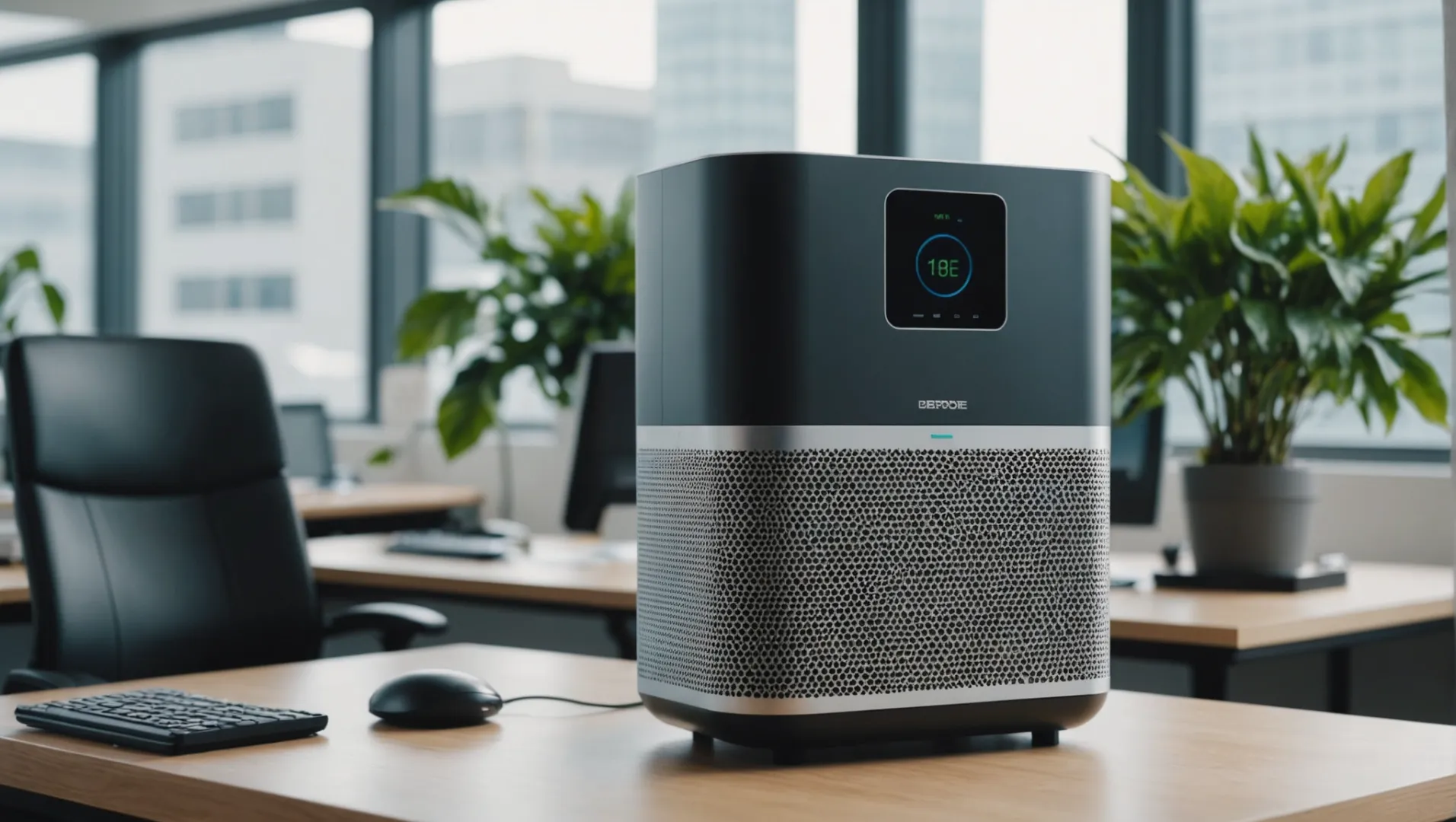
Noise Considerations for Workplace Air Purifiers
OSHA's noise standards focus on overall workplace noise exposure rather than individual equipment specifications. This is an important distinction when selecting air purifiers.
Understanding OSHA's Noise Standards
OSHA's Occupational Noise Exposure standard (29 CFR 1910.95) sets limits on the total noise employees can be exposed to during a workday:
- The permissible exposure limit (PEL) is 90 dBA for an 8-hour time-weighted average (TWA)
- The action level is 85 dBA for an 8-hour TWA, requiring a hearing conservation program
Important clarification: OSHA does not set specific decibel limits for individual pieces of equipment like air purifiers. Rather, the standard addresses the cumulative noise exposure from all sources in the workplace.
Selecting Air Purifiers with Noise in Mind
When choosing air purifiers for commercial spaces:
- Consider the ambient noise level of the environment
- Select units with appropriate noise levels for the setting (e.g., quieter units for office environments)
- Position units to minimize noise impact on employees
- Remember that higher fan speeds typically generate more noise but may provide better air circulation
By selecting appropriately quiet air purifiers, employers can help ensure that these devices don't contribute to excessive workplace noise levels that might approach OSHA's limits.
Safety Requirements for Commercial Air Purifiers
While OSHA doesn't have specific safety standards for air purifiers, general electrical safety and hazardous location requirements apply to these devices as they would to any electrical equipment in the workplace.
Electrical Safety Considerations
Commercial air purifiers must comply with general electrical safety practices, which may include:
-
National Electrical Code (NEC): Published by the National Fire Protection Association (NFPA), not OSHA, but widely adopted in building codes.
-
Nationally Recognized Testing Laboratory (NRTL) Certification: OSHA recognizes certain laboratories (like UL, ETL, CSA) to test and certify equipment for electrical safety.
Air purifiers with appropriate NRTL certification (such as UL listing) demonstrate compliance with consensus safety standards, though this is distinct from OSHA regulations.
Explosion Prevention Requirements
Important clarification: Explosion-proof requirements apply only to air purifiers installed in hazardous locations as defined by OSHA standard 29 CFR 1910.307, not to all commercial air purifiers.
Hazardous locations include areas where:
- Flammable gases or vapors may be present
- Combustible dust may accumulate
- Easily ignitable fibers or flyings are present
Standard office environments and most commercial spaces are not classified as hazardous locations and therefore do not require explosion-proof air purifiers.
Maintenance and Compliance Recommendations
Regular maintenance of air purifiers helps ensure continued effectiveness and safety, though specific maintenance schedules are not mandated by OSHA.
Recommended Maintenance Practices
-
Regular Filter Replacement: Follow manufacturer guidelines for filter replacement schedules.
-
Equipment Inspection: Periodically check for damage to electrical components, housing, and filters.
-
Performance Verification: Confirm that the unit continues to operate as expected and provides adequate air movement.
-
Documentation: While not specifically required by OSHA for air purifiers, maintaining records of maintenance activities represents good practice for demonstrating due diligence.
-
Staff Training: Ensure that maintenance personnel understand proper procedures for servicing air purification equipment, including safe handling of filters that may contain captured contaminants.
-
System Integration: Coordinate air purifier maintenance with overall HVAC system maintenance to ensure complementary operation and avoid conflicts between systems.
Voluntary Air Quality Monitoring
Although OSHA doesn't generally require routine indoor air quality monitoring (except in specific circumstances involving regulated substances), voluntary monitoring can help:
- Establish baseline air quality conditions
- Verify the effectiveness of air purification systems
- Identify potential issues before they become significant problems
- Demonstrate commitment to employee health and safety
Such monitoring aligns with the intent of OSHA's General Duty Clause by proactively addressing potential air quality hazards.
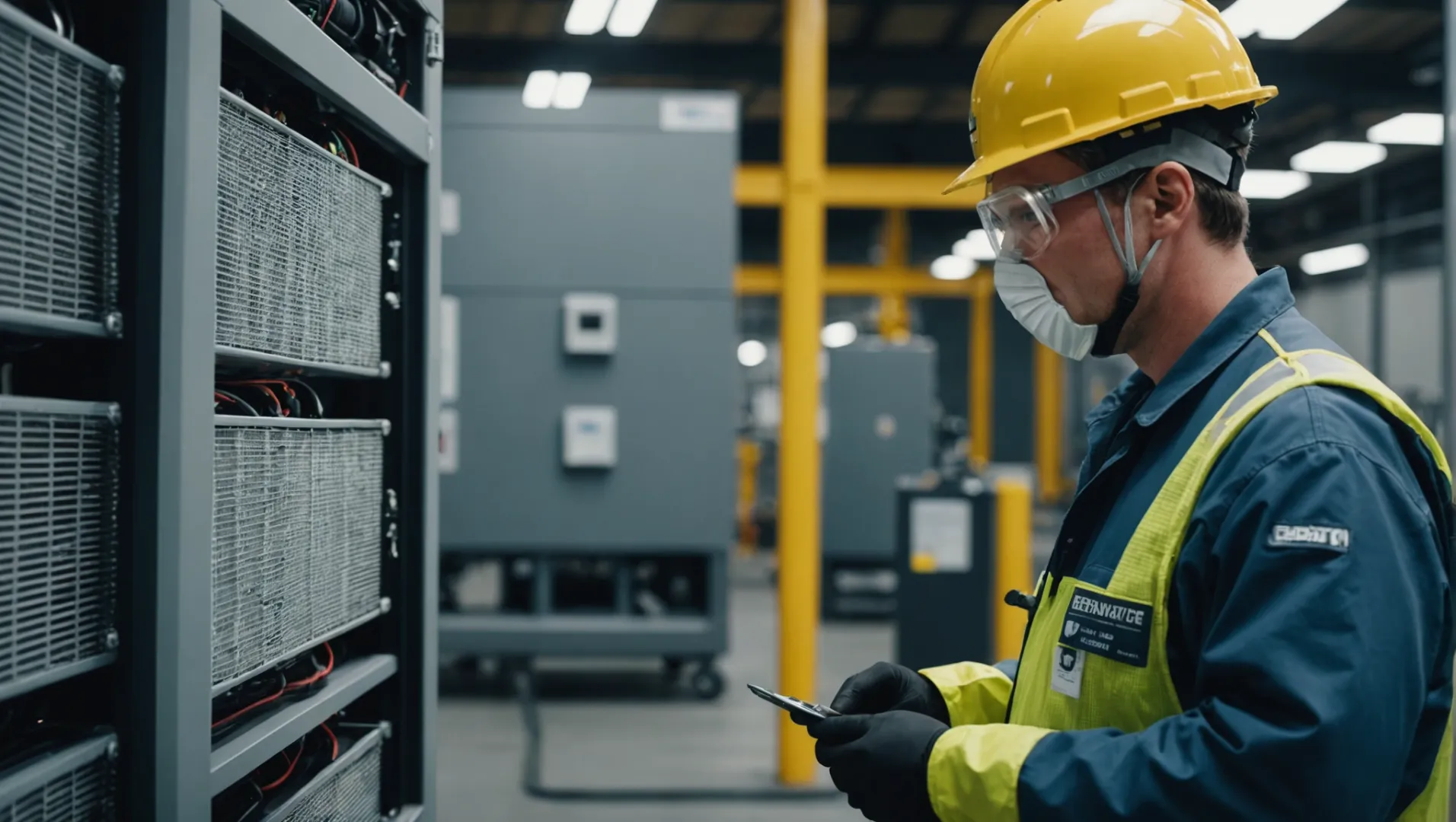
Industry-Specific Considerations
Different commercial environments have unique air quality challenges that may influence air purifier selection and implementation:
Office Environments
In typical office settings, the primary concerns often include:
- Particulate matter from building materials, office equipment, and outdoor air
- Volatile organic compounds (VOCs) from furnishings, cleaning products, and office supplies
- Biological contaminants such as mold spores and bacteria
For these environments, HEPA filtration combined with activated carbon is often appropriate, with an emphasis on quiet operation to maintain a productive work environment.
Healthcare Facilities
Healthcare settings have more stringent requirements due to infection control concerns:
- Higher filtration efficiency may be necessary (HEPA or better)
- UV-C or other germicidal technologies might be appropriate in certain areas
- Compliance with additional standards such as those from the Centers for Disease Control and Prevention (CDC) or the American Society for Health Care Engineering (ASHE) may be necessary
Manufacturing and Industrial Settings
In industrial environments where specific contaminants are generated:
- Air purifiers may need to be designed for specific pollutants (e.g., welding fumes, chemical vapors)
- Integration with local exhaust ventilation systems may be required
- More robust construction and possibly explosion-proof designs may be necessary in certain areas
Case Study: Implementing Air Purification in a Commercial Setting
A manufacturing company with both office and production areas implemented a comprehensive air quality management program that included air purification systems. Their approach demonstrates how to align with OSHA guidelines while improving workplace air quality:
-
Assessment: They began with a thorough assessment of air quality throughout their facility, identifying specific contaminants and areas of concern.
-
Targeted Solutions: Rather than using the same air purifiers throughout, they selected different units based on the specific needs of each area:
- HEPA and activated carbon units for offices
- Industrial-grade filtration systems with higher CADR ratings for common areas
- Specialized units designed for specific contaminants in production areas
-
Integration with Ventilation: The air purifiers were implemented as part of a comprehensive approach that included improvements to the general ventilation system.
-
Documentation and Training: The company maintained detailed records of air quality assessments, equipment selection rationale, maintenance schedules, and employee training.
-
Results: The company reported improved employee comfort, reduced absenteeism, and better alignment with OSHA's General Duty Clause requirements.
Ensuring Your Air Purifiers Support Workplace Compliance
To select and maintain air purifiers that align with OSHA's workplace safety approach:
Understanding Applicable Guidelines
Start by identifying which OSHA provisions might apply to your specific workplace environment:
- General industry workplaces fall under 29 CFR 1910
- Construction sites are covered by 29 CFR 1926
- Specific industries may have additional requirements
Assessing Your Workplace Needs
Consider these factors when selecting air purification systems:
-
Specific Contaminants: Identify particular airborne contaminants present in your workplace that need to be addressed.
-
Space Characteristics: Account for room size, occupancy, ventilation systems, and existing air quality.
-
Industry-Specific Concerns: Some industries (healthcare, manufacturing, etc.) may have unique air quality challenges.
Implementing a Comprehensive Approach
Remember that air purifiers are just one component of a complete indoor air quality strategy:
- Ensure adequate ventilation according to ASHRAE standards
- Control pollutant sources when possible
- Maintain HVAC systems properly
- Consider air purifiers as a supplement to these fundamental practices
Questions fréquemment posées
Does OSHA require air purifiers in commercial spaces?
No, OSHA does not specifically require air purifiers in commercial spaces. OSHA focuses on performance-based requirements for indoor air quality rather than mandating specific equipment. Employers must provide a workplace "free from recognized hazards," which may be achieved through various means including, but not limited to, air purification.
Are there specific OSHA standards for air purifier noise levels?
No, OSHA does not have standards specifically for air purifier noise levels. Instead, OSHA's Occupational Noise Exposure standard (29 CFR 1910.95) addresses the total noise exposure of employees from all sources combined, with limits based on 8-hour time-weighted averages.
Do all commercial air purifiers need to be explosion-proof?
No, only air purifiers installed in locations classified as hazardous under 29 CFR 1910.307 need to be explosion-proof. Standard office environments and most commercial spaces do not require explosion-proof equipment.
Is air quality testing required by OSHA?
OSHA does not generally require routine indoor air quality testing except in specific circumstances involving regulated substances. However, voluntary testing is often recommended as a best practice to verify air quality and demonstrate due diligence.
How often should air purifier filters be changed to maintain OSHA compliance?
OSHA does not specify filter replacement schedules for air purifiers. Filters should be changed according to manufacturer recommendations, which may vary based on the specific model and environmental conditions. Regular maintenance helps ensure effective operation and contributes to overall workplace air quality.
Conclusion
While OSHA doesn't have specific standards for air purifiers, these devices can play an important role in supporting overall workplace air quality and helping employers meet their general duty to provide a safe workplace. By understanding the relevant OSHA provisions, industry standards, and best practices outlined in this article, employers can make informed decisions about implementing air purification systems that contribute to workplace health and safety compliance.
Remember that air purifiers should be part of a comprehensive approach to indoor air quality that includes proper ventilation, source control, and regular maintenance of all systems that affect air quality. By taking a holistic approach to indoor air quality management, employers can create healthier work environments while aligning with OSHA's workplace safety expectations.

 English
 Français
 Español
 Italiano
 Deutsch
 Português
 Русский
 العربية
 日本語
 한국어
 Tiếng Việt


