

You've designed a great water purifier, but the US market is a maze of rules. A single missed test can block your product, leading to a costly and failed launch.
To sell water purifiers in the US, you need a core set of certifications. This includes ETL or UL1 for electrical safety, NSF/ANSI standards for performance claims like lead reduction, and FDA compliance for food-grade materials. These prove your product is safe and effective.
When I first helped clients move from air purifiers to water purifiers, I noticed a huge mistake they were making. They thought the process was the same. For air purifiers, the big concerns are electrical safety and ozone. But for water purifiers, the game changes completely. You are no longer just protecting a home from a fire; you are making a direct promise to protect a person's body from invisible poisons like lead. This is a conversation about health, and that means it's a conversation about trust. Getting this right is the difference between a successful brand and a product that never even makes it to the shelf. Let's break down exactly what you need to build that trust and win in the US market.
All water purifiers sold in the US are required by federal law to have NSF certification.Faux
While NSF certification is the industry standard and often required by retailers and certain states, there is no single federal law mandating it for all water purifiers. However, selling without it is nearly impossible.
The US market for water purifiers is primarily driven by consumer concerns over health-related contaminants like lead and PFOA/PFOS.Vrai
Events like the Flint water crisis have made US consumers highly aware of and concerned about specific health contaminants, making certifications that prove reduction of these substances a key purchasing factor.
Why is water purifier testing really about building trust?
You believe in your product, but customers are skeptical. They see dozens of purifiers all claiming the same thing. How do you prove that yours actually protects their family's health?
Water purifier testing isn't just about a pass/fail grade; it's about earning a customer's trust. Certifications from respected third parties act as undeniable proof that your product delivers on its health promises. This trust is your most valuable asset in the competitive US market.
In my years of helping companies launch products, I've seen that the most successful ones understand one thing: you aren't just selling a piece of hardware. You are selling peace of mind. When a customer buys a water purifier, they are placing the health of their children in your hands. They are trusting that the water coming out of your device is free from lead, mercury, and other harmful things.
This is why I tell my clients that water purifier compliance is a higher-stakes conversation than air purifier compliance. With my air purifier projects, we focus on ETL for electrical safety and CARB for ozone safety. Those are important, but they are about preventing harm from the device. With water purifiers, the focus shifts to proving the product's health benefit. This is where you establish yourself not just as a manufacturer, but as an expert in home wellness.
Consumers are willing to pay more for products with trusted third-party certifications.Vrai
Studies and market data consistently show that certifications from bodies like NSF act as a powerful signal of quality and safety, directly influencing purchasing decisions and justifying a premium price.
A product's packaging claims are more important to US consumers than third-party certifications.Faux
Educated US consumers have grown skeptical of marketing claims. They actively look for independent certification marks like NSF or WQA on the packaging to verify a product's performance.
Is ETL or UL certification enough for your water purifier?
Your purifier uses electricity, so you know it needs a safety mark. But simply getting any certification isn't enough. Choosing the right one and understanding its limits is key to avoiding rejection.
No, ETL or UL alone is not enough. These marks are absolutely essential for electrical safety and are required by major retailers like Amazon and Walmart. However, they only prove the appliance won't cause a fire or electrical shock. They say nothing about the water quality.
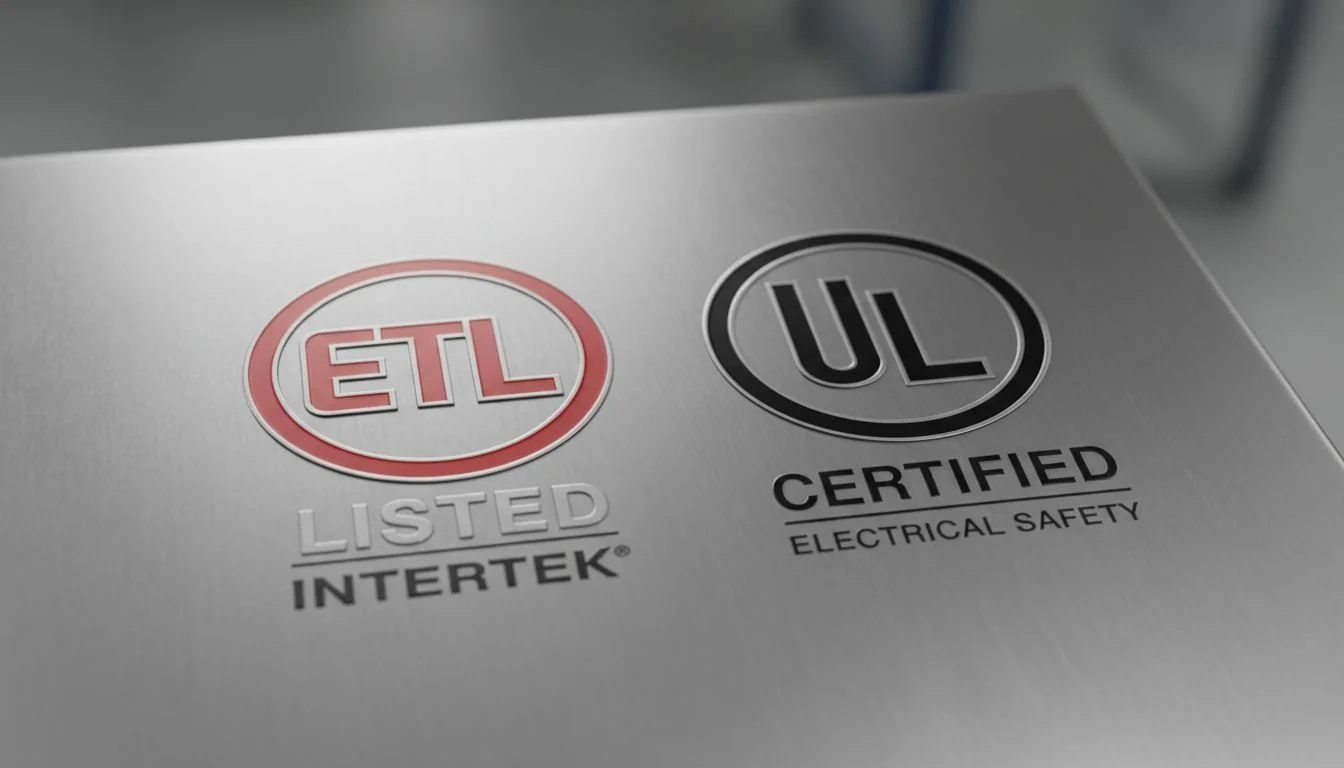
Think of electrical safety certification as the ticket you need just to enter the stadium. You can't play the game without it, but it doesn't help you score any points with the customer. Both UL (Underwriters Laboratories) and ETL (Intertek) are Nationally Recognized Testing Laboratories (NRTLs). This means they are both accepted by retailers and regulatory bodies across the US. From a compliance standpoint, they are functionally equivalent. I've had clients use both successfully. The choice often comes down to the lab's speed, cost, and customer service.
Here’s a simple breakdown:
| Certification | What It Covers | What It Doesn't Cover |
|---|---|---|
| ETL/UL | Electrical shock, fire hazards, basic mechanical safety. | Water filtration performance, contaminant reduction, material safety of wetted parts2. |
This is the absolute baseline. It shows you've done the bare minimum to ensure your product is not a danger in someone's home. But to win, you need to prove it's a benefit.
ETL and UL are competing standards, and one is officially considered 'better' than the other in the US.Faux
Both ETL and UL are marks from Nationally Recognized Testing Laboratories (NRTLs) and are recognized as equivalent for proving compliance with US electrical safety standards.
Major US retailers like Amazon or Walmart can remove listings for powered appliances that lack an NRTL mark like UL or ETL.Vrai
These retailers have strict safety policies that require electrical products to be certified by an NRTL to protect consumers and limit their own liability.
Why is NSF/ANSI 53 the one certification you can't ignore?
You claim your filter removes lead, but how do you prove it? In a market flooded with false promises, educated consumers look for one specific standard to verify health claims.
NSF/ANSI 53 is the non-negotiable standard for "Health Effects." It provides third-party verification that your purifier effectively reduces specific contaminants like lead, mercury, and cysts. For US consumers, this certification is the ultimate proof that your product protects their health.
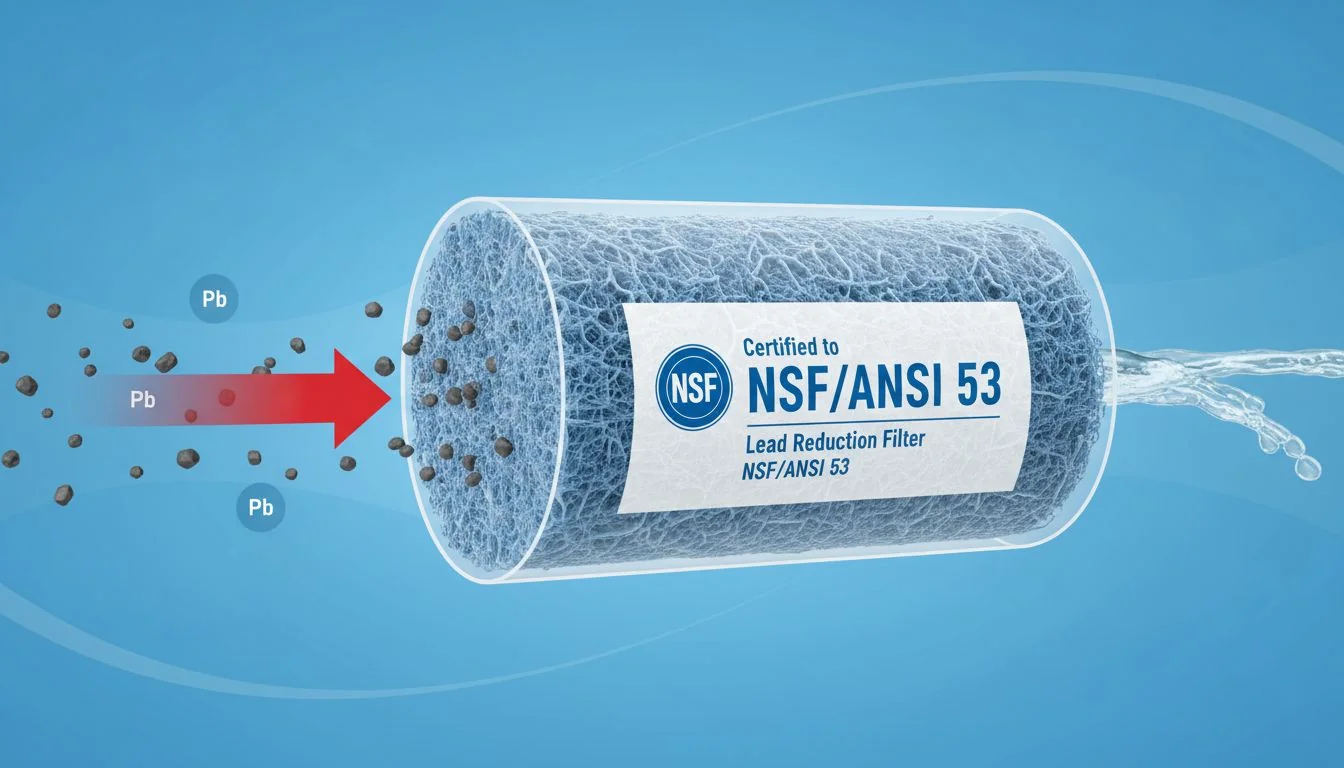
I tell every client this: NSF/ANSI 53 is the new CARB. For air purifiers, having California Air Resources Board (CARB) certification is the key that unlocks the market and proves safety. For water purifiers, that key is NSF/ANSI 53. This is the standard that separates serious products from the cheap imitators. It allows you to legally and ethically claim that your product reduces lead. Without it, you are just making an empty promise.
Many people get confused between the different NSF standards. It's simple when you break it down:
| Standard | Nom | What It Proves | Exemple |
|---|---|---|---|
| NSF/ANSI 42 | Aesthetic Effects | Reduces things you can taste or smell. | Chlorine, bad odors. |
| NSF/ANSI 53 | Health Effects | Reduces specific health-related contaminants3. | Lead, mercury, asbestos, cysts. |
| NSF/ANSI 401 | Emerging Contaminants | Reduces trace amounts of certain pharmaceuticals or chemicals. | Some prescription drugs, herbicides. |
A few years ago, a client came to me with a water purifier design. He only got NSF/ANSI 42 certification to save money. His marketing claimed "cleaner, better-tasting water." He failed. Customers wanted to know about lead. We went back, did the rigorous testing for NSF/ANSI 53, and relaunched. This time, the box proudly displayed the NSF 53 mark and "Reduces 99% of Lead." The product took off. That's the power of this one standard.
NSF/ANSI 42 certification allows you to claim your product removes lead.Faux
NSF/ANSI 42 covers aesthetic claims like chlorine taste and odor, not health-related contaminants. Only NSF/ANSI 53 certification can be used to substantiate lead reduction claims.
NSF/ANSI 53 is a mandatory federal law for all water purifiers sold in the US.Faux
While not a federal law, it is the industry gold standard and a practical necessity. Some states, like California, Iowa, and Wisconsin, do have laws that require it for making certain health claims.
Could your purifier's plastic be poisoning the water it cleans?
You've certified the filter and the electronics. But what about the plastic parts the water touches? Using the wrong material can add new toxins, completely destroying customer trust and your brand's reputation.
Yes, it's a huge risk. All "wetted parts"—any component that touches the water—must be made from FDA-compliant, food-grade materials. This ensures no harmful chemicals from the plastic, tubing, or tank leach back into the purified water. It's a critical detail many overlook.
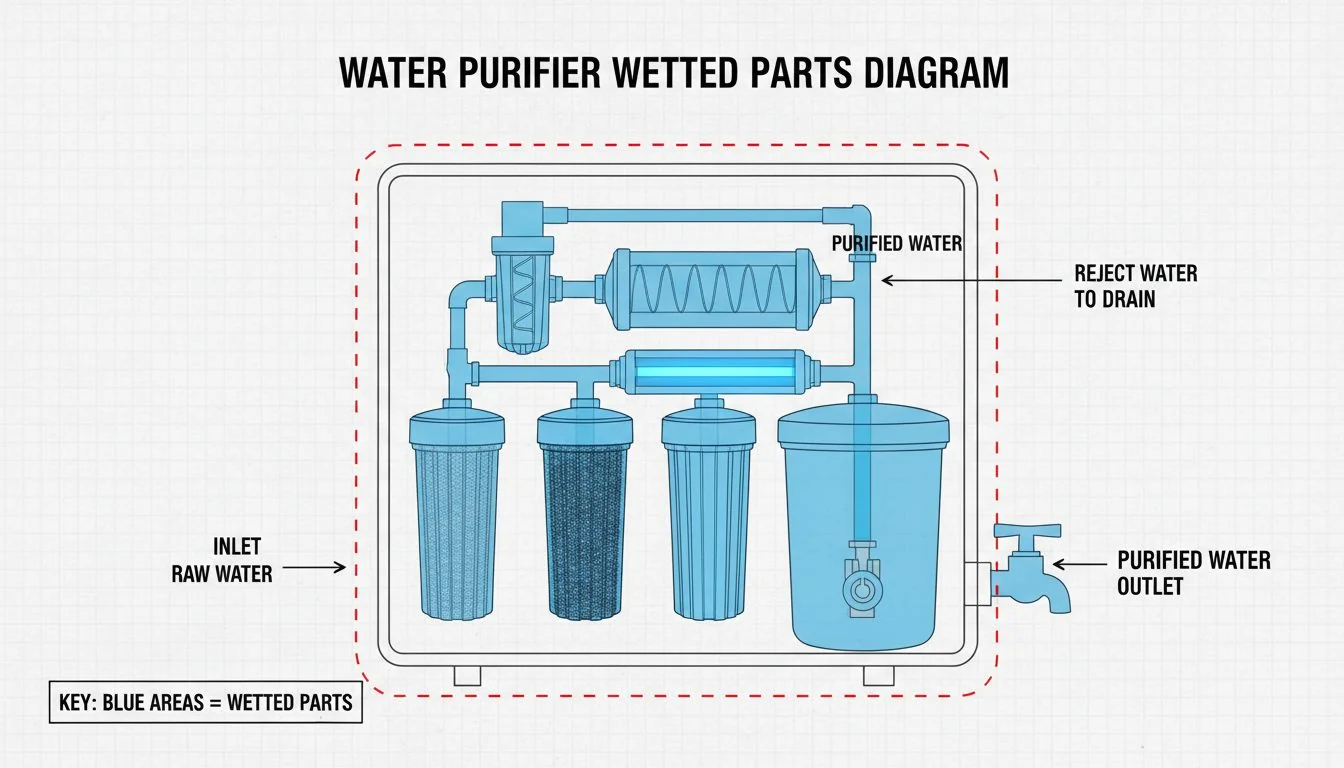
This is where my background in mold design and manufacturing becomes so important. I've seen firsthand how factories cut corners. A client might specify a high-quality, food-grade polymer for their design. But an unscrupulous factory might substitute a cheaper, industrial-grade plastic to save a few cents per unit. That cheap plastic could contain BPA or other plasticizers that can leach into the water. Your product, designed to make water safer, could end up making it more dangerous.
This is a "gotcha" that inexperienced buyers fall for all the time. When you work with a reputable manufacturing partner, they understand this. They provide material certifications and ensure that every part in the water path—from the inlet tube to the storage tank to the faucet—is made from materials that are certified as safe for contact with drinking water under FDA regulations (e.g., 21CFR). This isn't just about compliance; it's about fundamental product integrity. Highlighting "BPA-Free" and "FDA Food-Grade Materials" on your packaging is another way to build that critical trust with consumers.
As long as a water purifier has an NSF-certified filter, the materials used for the housing and tubes don't matter.Faux
If non-food-grade materials are used for parts that touch the water after filtration, they can re-contaminate the water with harmful chemicals like BPA or phthalates.
The FDA regulates the materials used in components that come into contact with food and drinking water.Vrai
The FDA's Code of Federal Regulations (CFR), specifically Title 21, outlines the requirements for polymers and other substances intended for use in contact with food, which includes drinking water.
How do you avoid legal trouble with state laws and marketing claims?
Your product is certified, but your marketing copy could still land you in hot water. Specific states have their own rules, and the Federal Trade Commission (FTC) is always watching for deceptive advertising.
You must comply with state-specific laws, like those in California, which have unique registration and certification requirements for water treatment devices. Furthermore, all your marketing claims must be truthful and substantiated to meet FTC guidelines4, or you risk facing severe penalties and lawsuits.
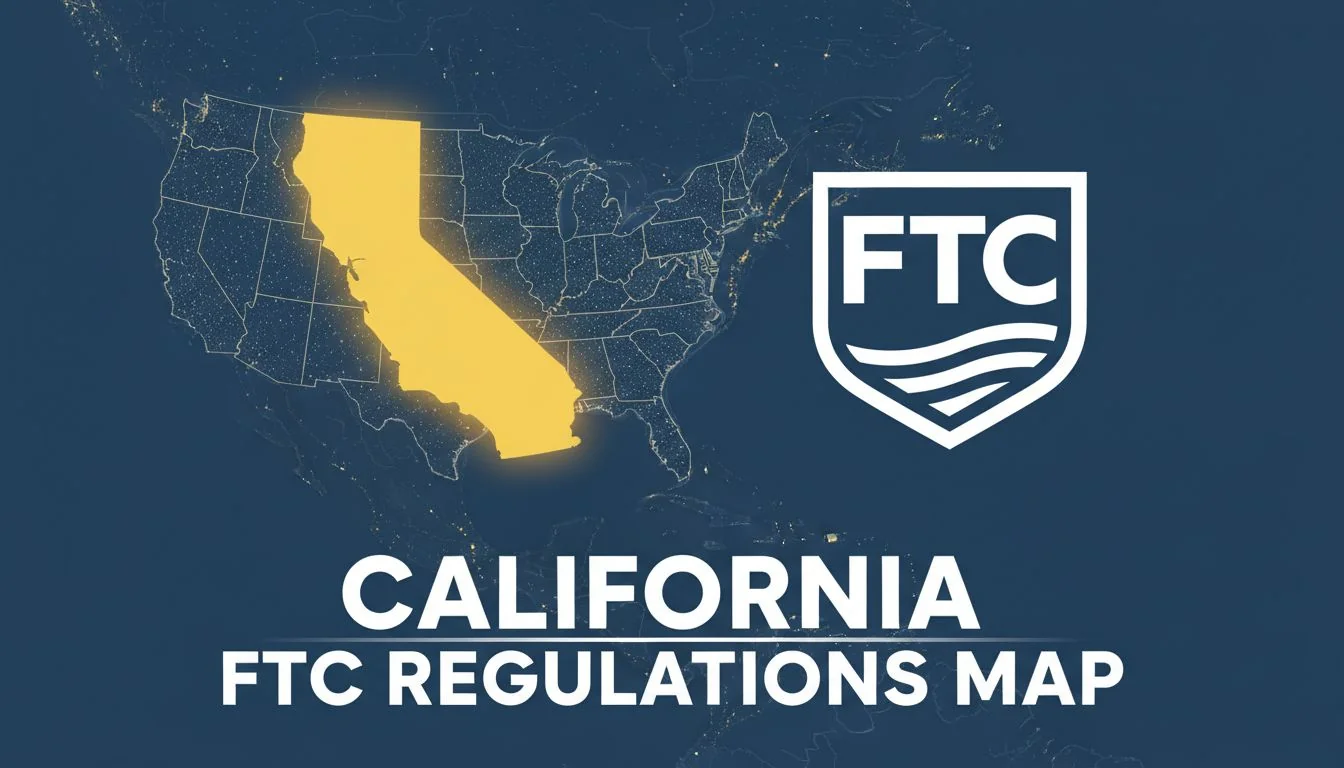
Getting the core certifications is only part of the battle. You also have to navigate a patchwork of local laws. California, for example, is famously strict. To sell a water purifier there and make health claims, your device must be certified by an approved third-party agency and registered with the state. Other states like Wisconsin, Iowa, and Massachusetts also have their own specific programs. Ignoring these can get your product banned in those key markets.
Then there's the Federal Trade Commission (FTC). The FTC's job is to protect consumers from deceptive advertising. This is where your NSF/ANSI 53 certification becomes your legal shield. If you claim your product "removes 99% of lead," the FTC can demand you prove it. Your NSF/ANSI 53 test report is that proof. If you make a claim that isn't specifically supported by your certification, you are opening yourself up to legal action. For example, if your filter is certified for lead but not for PFOA, you cannot mention PFOA in your marketing. Be precise, be honest, and let your certifications do the talking.
The Federal Trade Commission (FTC) requires pre-approval of all advertising for water purifiers.Faux
The FTC does not pre-approve advertising. It monitors the market and takes action against companies after they have made what the FTC considers false or unsubstantiated claims.
California has its own set of laws for the sale of water treatment devices that make health claims.Vrai
California's Health and Safety Code requires that any water treatment device sold in the state that makes health claims must be certified by an independent, third-party organization and registered with the state.
How can you bundle all these requirements into one simple solution?
Juggling multiple certifications, suppliers, and legal rules is a nightmare. It delays your launch, inflates your budget, and creates endless stress. There has to be a faster, more reliable way.
The solution is a "US-Market-Ready Water Purifier5" package from an expert manufacturing partner. This bundles all the necessary certifications—ETL, NSF/ANSI 53, and FDA-grade materials—into a single, streamlined process. It removes the risk and dramatically accelerates your time to market.
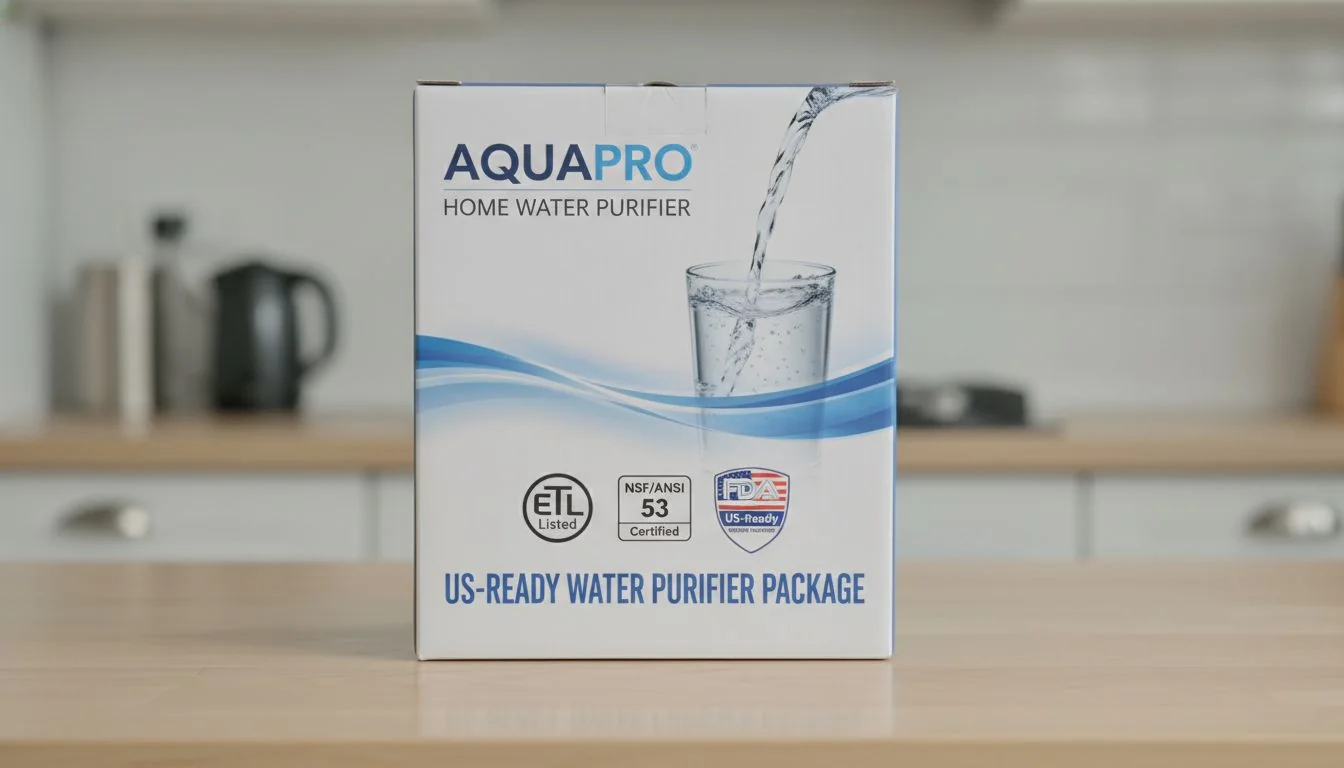
After guiding so many clients through this complex process, I've realized the goal isn't to sell them a water purifier. The goal is to sell them a complete solution that guarantees US market access. It's about removing risk and providing speed. That’s why I help my clients build a "US-Ready Water" package. This isn't just a product; it's a checklist for success.
Here is what the package includes:
- ETL/UL Certification: The baseline for electrical safety, ensuring your product is accepted by every major retailer without question.
- NSF/ANSI 53 Certification: The non-negotiable proof of health performance. This is your license to make the lead-reduction claims that educated consumers demand.
- FDA Food-Grade Materials: The guarantee of material integrity. This proves that every part touching the water is safe and won't re-contaminate it.
When you approach a manufacturing partner with this framework, you change the conversation. You are no longer just a designer looking for a factory. You are a savvy business person looking for a compliance partner. This package is your smart-cut, bundling all the complexity into a single, deliverable solution that gets you to market faster and safer.
Bundling certifications through a single manufacturing partner is always more expensive.Faux
Experienced manufacturing partners often have established relationships with testing labs and streamlined processes, which can actually reduce the overall time and cost compared to managing each certification separately.
A 'US-Ready' package removes the need for a brand to understand compliance themselves.Faux
While it streamlines the process, the brand owner must still understand the basics of compliance to market the product correctly and ensure the partner is delivering on their promises.
Conclusion
Entering the US water purifier market is about proving health claims. Focus on the complete package—ETL, NSF/ANSI 53, and food-grade materials—to build trust, remove risk, and ensure your success.
References
-
Understanding the differences between ETL and UL certifications can help you choose the right safety mark for your water purifier. ↩
-
Knowing about wetted parts is crucial for ensuring that all components in contact with water are safe and compliant. ↩
-
Understanding health-related contaminants will help you address consumer concerns and improve your product's appeal. ↩
-
Understanding FTC guidelines is essential to avoid legal issues and ensure truthful marketing of your water purifier. ↩
-
Learning about US-Market-Ready packages can streamline your product launch and ensure compliance with necessary certifications. ↩










 English
  Français
  Español
  Italiano
  Deutsch
  Português
  Русский
  العربية
  日本語
日本語  한국어
한국어  Tiếng Việt

