
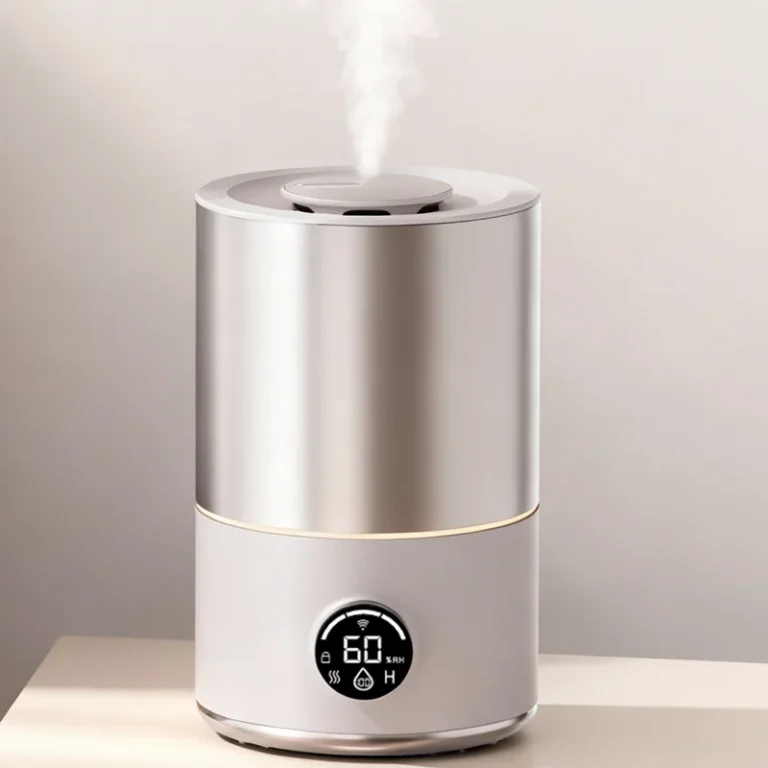
As a product development partner in the Indoor Air Quality (IAQ) industry, we’ve observed a consistent challenge across humidifier programs: customers expect stable humidity performance, durable materials, and low-maintenance ownership — without increasing return rates or post-sale support workload. One of the most underestimated decisions influencing these outcomes is tank material selection.
For years, plastic tanks have dominated due to tooling speed and cost efficiency. However, premium and long-lifecycle product strategies are increasingly shifting toward food-grade stainless steel architectures. This movement is driven by durability expectations, cleanability-by-design requirements, and stronger premium positioning in North American and EU retail channels. Material choice now represents a strategic platform decision impacting TCO (Total Cost of Ownership), warranty exposure, and long-term brand perception.
This guide compares plastic and stainless steel humidifier tank approaches from a commercial engineering perspective. While plastic can offer advantages in BOM cost and manufacturing agility, stainless steel often delivers stronger performance across five evaluation dimensions: cleanability, material stability, lifecycle economics, environmental positioning, and user experience consistency. For product teams developing new SKUs or refining roadmap platforms, these criteria provide a practical decision framework.
For OEM/ODM buyers evaluating tank material strategy, HisoAir can provide engineering samples, cost modeling, and manufacturability consultation aligned with your target segment. Contact our team to request technical specifications or platform development support.
Reason 1: Hygiene-by-Design — Cleanability and Surface Performance
Can a humidifier tank be easier to maintain over time?
Humidifier tanks operate in warm, moisture-rich environments where mineral buildup and residue accumulation are unavoidable. From a product engineering perspective, the meaningful question is not whether buildup occurs, but how easily users can perform effective cleaning.
Maintenance friction strongly influences ownership satisfaction, review ratings, and product return triggers. Material selection and structural geometry therefore play a critical role in lifecycle performance.
Stainless Steel Advantage — Surface Durability and Cleaning Tolerance
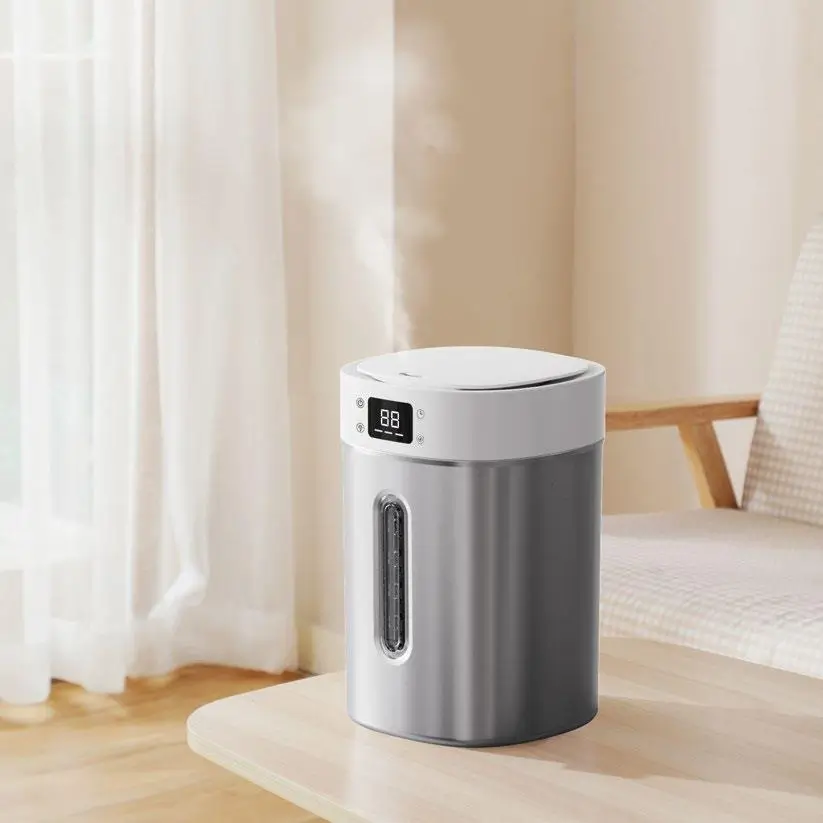
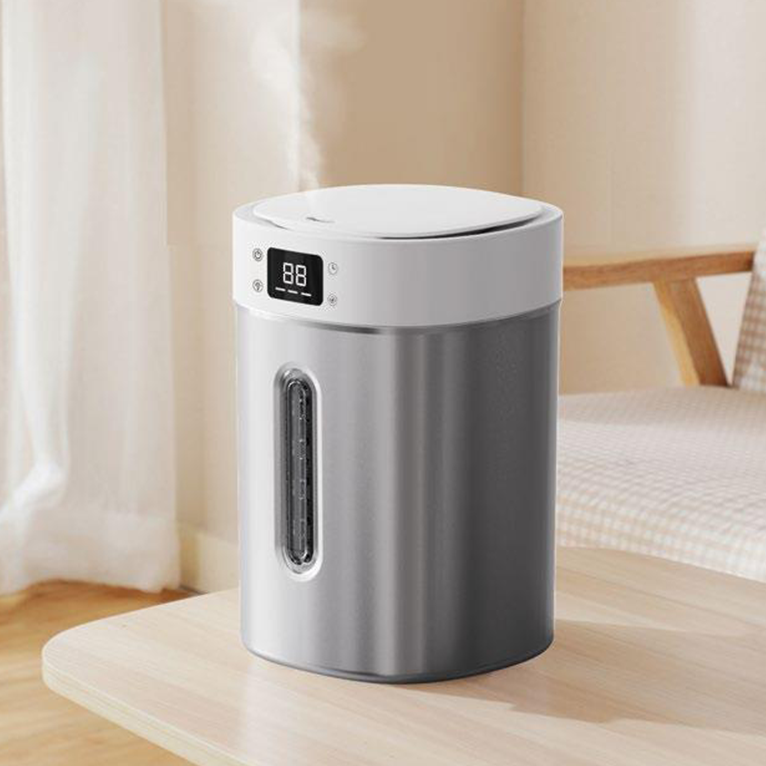
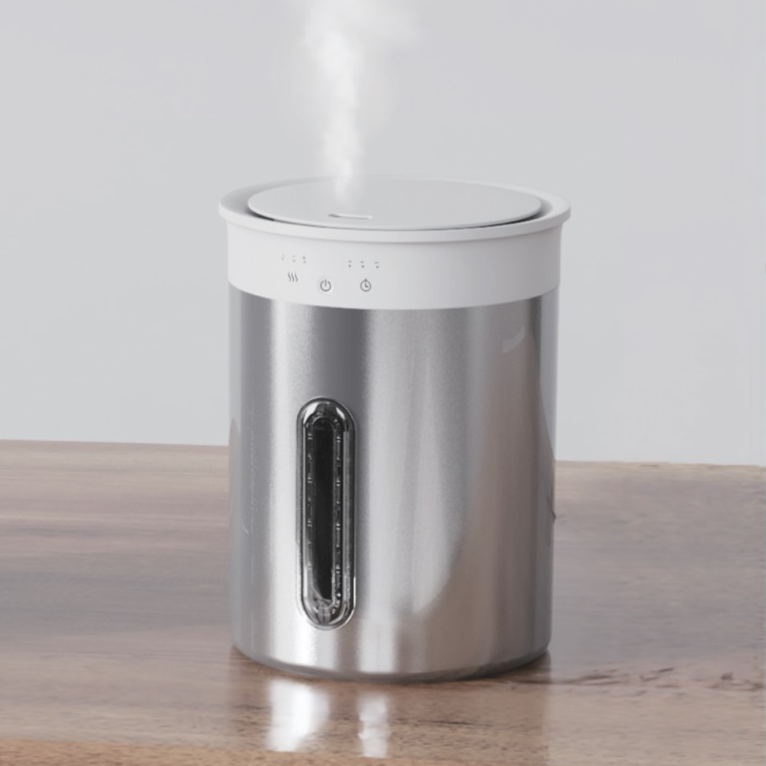
Stainless steel provides a smooth, mechanically robust surface resistant to visible wear during routine cleaning. When combined with open-access tank geometry and reduced seam complexity, it enables efficient maintenance workflows and long-term cosmetic stability.
Depending on product configuration, stainless components may tolerate broader cleaning approaches including hot-water rinsing, mechanical scrubbing, or dishwasher cycles. This flexibility reduces ownership friction and supports consistent user maintenance behavior.
Plastic Considerations — Resin and Geometry Dependent
Plastic tank performance varies based on resin specification, wall thickness, and industrial design. Repeated cleaning cycles or mineral exposure may result in surface wear or visual aging over time. These outcomes can be mitigated through disciplined material selection and geometry optimization.
Well-engineered plastic tanks remain viable for cost-sensitive segments when lifecycle expectations are aligned with target positioning.
Strategic Takeaway for Product Teams
Stainless steel architectures typically support premium positioning through easier maintenance and appearance retention. Plastic remains effective for entry-level SKUs when engineering discipline ensures durability targets are met.
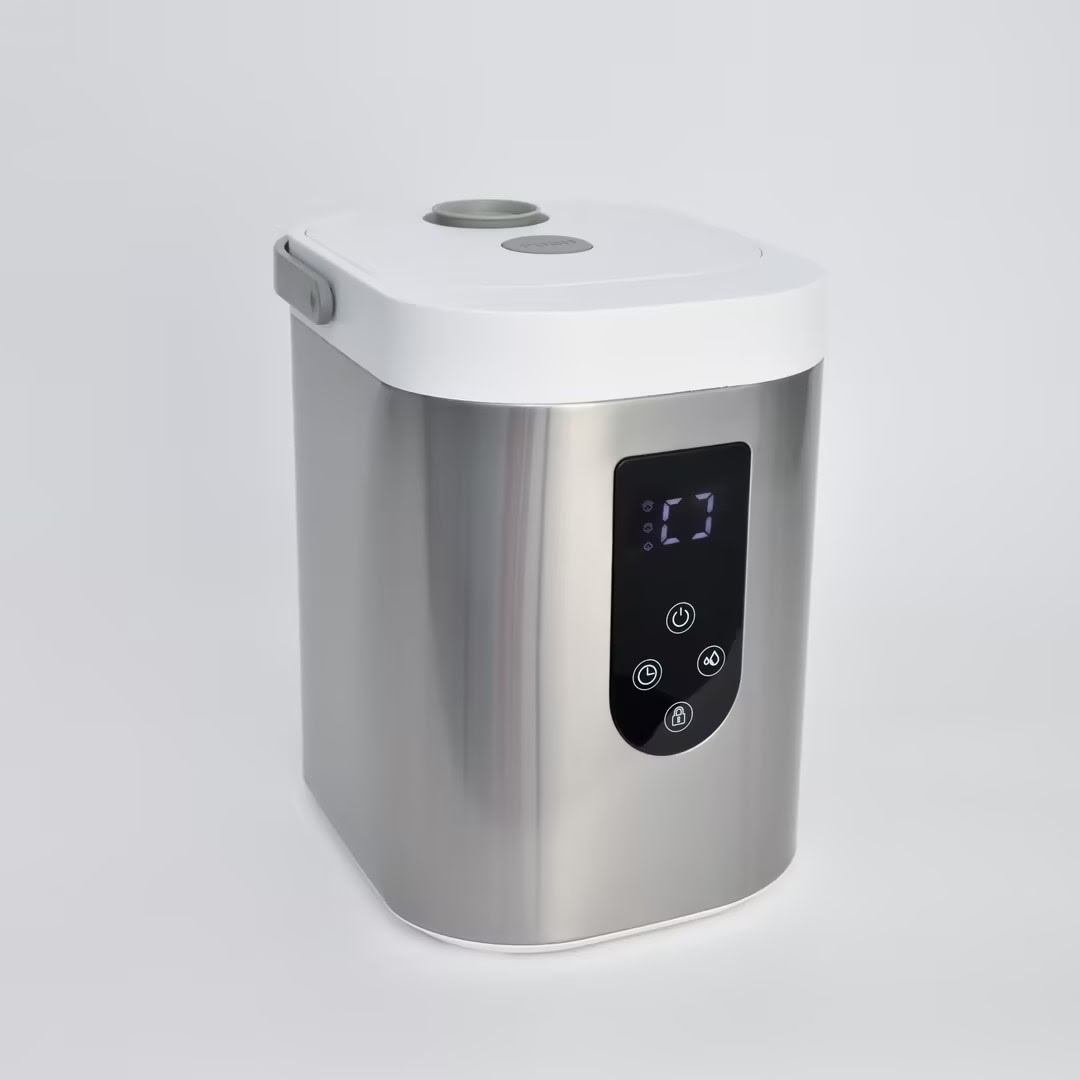
Reason 2: Material Stability — Lifecycle Performance in the Water Path
Why material behavior over time matters
Tank materials influence performance consistency through temperature tolerance, structural stability, and compatibility with maintenance practices. Lifecycle predictability is often more important than theoretical material comparison.
Plastic — Flexible but Specification Sensitive
Plastic enables lightweight construction and complex geometries. However, performance consistency depends heavily on resin selection and manufacturing quality control. Supplier documentation and validation testing are critical to ensure long-term reliability.
Stainless Steel — Structural Predictability
Food-grade stainless steel is widely adopted in water-contact applications due to dimensional stability and resistance to structural fatigue. These characteristics contribute to consistent performance perception across extended ownership periods.
Strategic Takeaway
Plastic offers cost and flexibility advantages, while stainless steel simplifies lifecycle predictability and premium positioning narratives.
Reason 3: Lifecycle Value — Evaluating Total Cost of Ownership
Looking beyond initial unit cost
Product success is often determined by downstream costs including returns, customer support demand, and replacement cycles. Tank material directly affects these variables.
Plastic Systems — Competitive Entry Pricing
Plastic architectures support aggressive pricing targets and fast tooling iteration. However, lifecycle perception factors such as cosmetic aging or maintenance complexity may influence channel feedback depending on segment expectations.
Stainless Steel — Durability-Oriented Economics
Stainless steel supports longer lifecycle positioning and reduced ownership friction. Durable materials and simplified cleaning workflows often translate into lower support burden and stable brand perception within higher-value channels.
Strategic Takeaway
When assessed through TCO rather than BOM cost alone, stainless steel frequently strengthens commercial outcomes in mass-premium and premium segments.
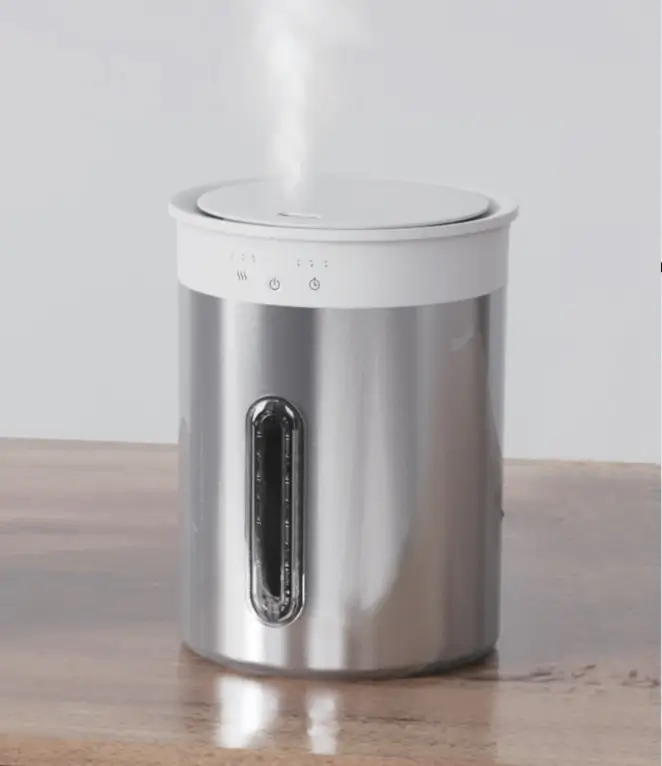
Reason 4: Environmental Positioning — Lifecycle Narrative and Material Strategy
Sustainability messaging as a market differentiator
Material selection shapes environmental storytelling and retailer acceptance across many markets.
Plastic — Efficiency with Responsibility Requirements
Plastic offers transportation efficiency and manufacturing flexibility. Sustainability positioning requires clear resin strategy, durability targets, and transparency in material sourcing.
Stainless Steel — Longevity-Based Narrative
Stainless steel aligns naturally with long-lifecycle messaging due to durability and recyclability characteristics. Extended product lifespan reduces replacement frequency, supporting environmentally conscious positioning.
Strategic Takeaway
Both materials can support responsible narratives, but stainless steel simplifies alignment with longevity-driven sustainability positioning.
Ownership experience drives brand perception
Customer experience in humidifier categories is heavily influenced by maintenance effort and perceived product quality retention.
Plastic — Geometry-Sensitive Usability
Complex structural details may increase cleaning effort in some designs. Visual aging can affect perceived quality despite functional operation. Careful industrial design mitigates these risks.
Stainless Steel — Consistent Premium Interaction
Stainless steel pairs effectively with simplified design language and visual durability. Accessible cleaning surfaces and stable aesthetics support premium ownership perception and channel differentiation.
Strategic Takeaway
Reduced maintenance friction and sustained visual quality strengthen product positioning in competitive retail environments.
Conclusion: Strategic Alignment for Product Roadmap Decisions
Positioning material choice within product strategy
Having explored the practical differences between plastic and stainless steel humidifier architectures, the conclusion from a product development and commercial perspective becomes clear. Material selection should align with lifecycle objectives, channel positioning, and ownership experience — not merely initial unit cost.
Stainless steel consistently supports stronger outcomes across several strategic dimensions:
-
Maintenance Simplicity — Non-porous surfaces and durable construction enable easier cleaning workflows and improved long-term cosmetic stability
-
Material Stability — Chemically stable structures maintain consistency across extended usage cycles
-
Lifecycle Economics — Durable construction and filter-independent architectures can improve total cost of ownership
-
Environmental Positioning — Longevity and recyclability align with sustainability-driven product narratives
-
User Experience Consistency — Premium visual retention and accessible maintenance support positive ownership perception
At HisoAir., we approach humidifier development as an engineering and platform discipline rather than a commodity manufacturing exercise. Our stainless steel programs reflect a commitment to durability, manufacturability, and market differentiation. We collaborate with appliance brands, IAQ companies, distributors, and commercial buyers seeking products that perform reliably while supporting premium positioning.
Guidance for platform selection
When evaluating tank material for upcoming SKUs or roadmap upgrades, consider prioritizing:
-
Verified material grade (such as 304 stainless steel for durability-focused applications)
-
Maintenance accessibility within industrial design
-
Filter architecture impact on lifecycle economics
-
Alignment with target segment expectations
Organizations planning next-generation humidifier platforms or exploring stainless migration are encouraged to engage with HisoAir engineering teams for feasibility review and prototyping support.
Choose strategically. Build for lifecycle performance. Position for market differentiation. Choose HisoAir.

 English
  Français
  Español
  Italiano
  Deutsch
  Português
  Русский
  العربية
  日本語
日本語  한국어
한국어  Tiếng Việt

