


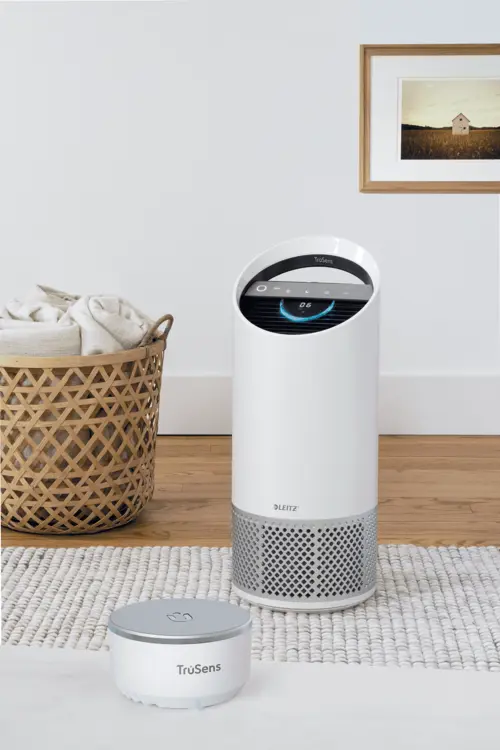
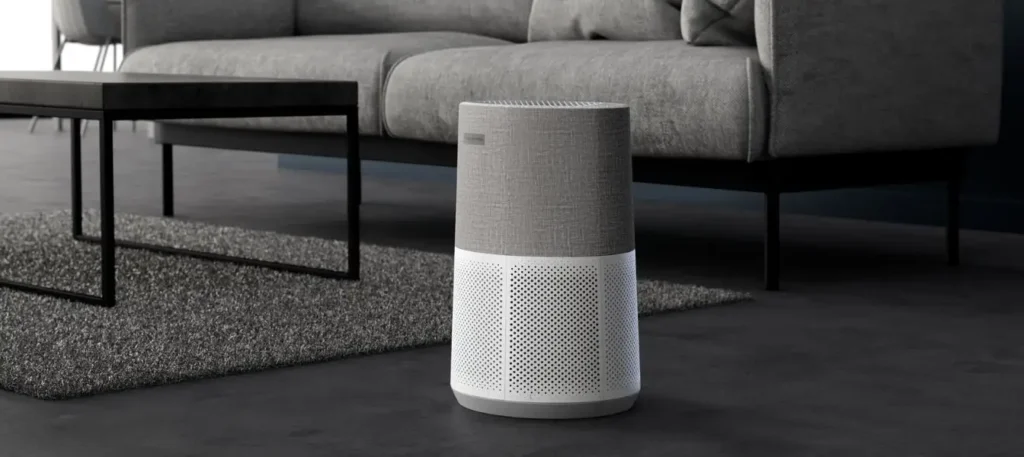
In today's world, clean air isn't just a luxury; it's a necessity for health, productivity, and peace of mind. Whether you're a homeowner seeking a healthier environment for your family or a business owner striving to provide optimal air quality for your employees and customers, the choice of an air purifier is a significant one. TruSens has emerged as a prominent player in this vital market, recognized for its sleek design, innovative features like the remote SensorPod™, and advanced DuPont™ filtration. But beyond the appealing aesthetics and cutting-edge technology, a fundamental question often arises: Where do these sophisticated air purifiers truly come from?
The straightforward answer, as with many global brands, is China. However, this single geographical point only tells a fraction of the story. The journey of a TruSens air purifier is a compelling narrative of international collaboration, strategic branding, and a modern manufacturing model that underpins much of the consumer electronics industry. It involves a major American corporation, a deep-rooted German legacy, and a global supply chain designed for efficiency and quality.
Au HisoAir, we believe in transparency and empowering our customers with comprehensive knowledge. This deep dive will unravel the complete story behind TruSens' manufacturing process, exploring the corporate ownership, the influential German connection, and the strategic rationale behind its global production. Understanding this intricate journey will not only answer your questions but also provide valuable insights into the quality, accessibility, and reliability of TruSens air purifiers, whether you're making a personal investment or a strategic business decision.
The Corporate Powerhouse: Behind the TruSens Brand
The story of TruSens doesn't begin on a factory floor, but in the corporate offices of Lake Zurich, Illinois. TruSens is a brand proudly owned and launched by ACCO Brands Corporation, a formidable American company publicly traded on the New York Stock Exchange (NYSE: ACCO). ACCO Brands is a global leader in the design, manufacturing, and marketing of academic, consumer, and business products. Their extensive portfolio includes a myriad of household names you've likely encountered, such as Swingline® staplers, Mead® and Five Star® notebooks, Kensington® computer accessories, and Quartet® whiteboards.
In April 2019, ACCO Brands strategically entered the burgeoning health and wellness market with the introduction of TruSens. This move was a calculated expansion, leveraging ACCO's vast global expertise to create a product that seamlessly blended "exceptional functionality with a contemporary, minimalist design." For both B2C consumers and D2C businesses, this corporate backing is a significant indicator of reliability and stability. It means that your TruSens air purifier isn't just a standalone product; it's part of a larger ecosystem supported by a well-established, publicly-traded entity with a long history of delivering quality products across diverse categories. This foundation provides assurance of ongoing product development, customer support, and a commitment to market presence.
The German Connection: Deconstructing the "Leitz TruSens" Brand
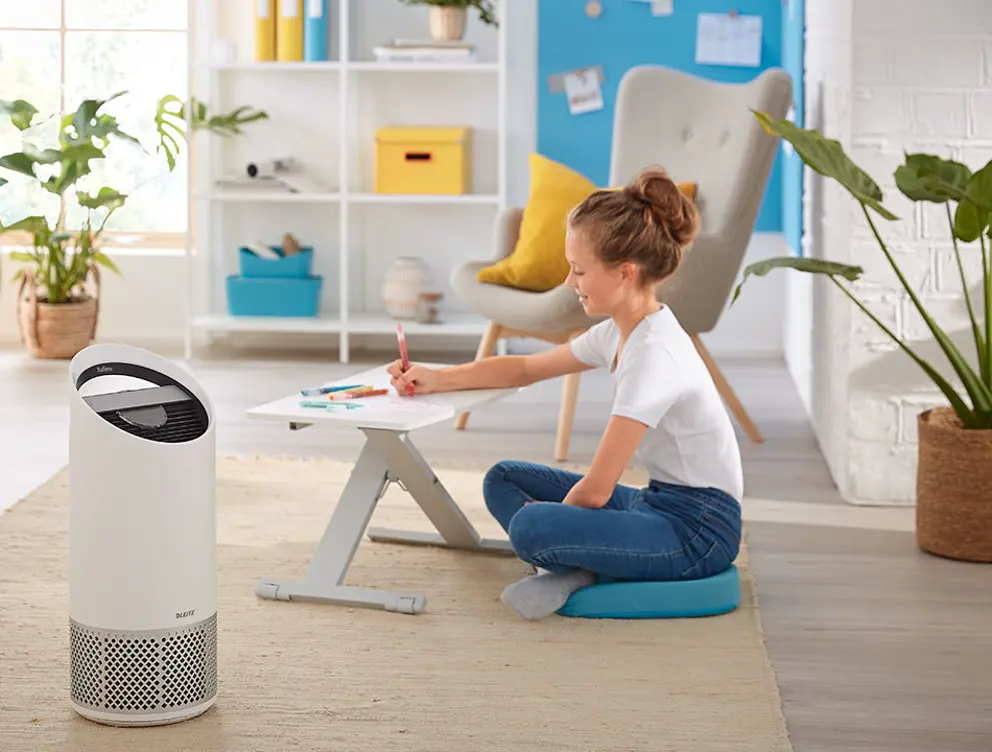
This is where the narrative often takes an interesting turn, leading many to believe in a direct German manufacturing origin. One of the most powerful brands within ACCO Brands' portfolio is Leitz, a German company with a long-standing reputation for precision, durability, and high-quality office equipment. ACCO Brands has strategically leveraged this heritage through a sophisticated co-branding initiative.
In numerous markets, particularly across Europe, TruSens air purifiers are explicitly marketed as "Leitz TruSens." This isn't merely a naming convention; it's a shrewd marketing strategy that capitalizes on the "Country of Origin Effect." This psychological phenomenon suggests that consumers often associate products from certain countries (like Germany, known for engineering excellence) with superior quality and craftsmanship. The success of this strategy is evident: a product description from one UK-based retailer even mistakenly described the TruSens Z-3000 as "German-made flagship." While factually inaccurate regarding the manufacturing location, this anecdote powerfully illustrates the effectiveness of the branding.
However, the collaboration extends beyond mere marketing. The prestigious iF Design Award, which the TruSens purifiers won in 2022, provides crucial insight. The award credits are shared between "LEITZ ACCO Brands GmbH & Co KG, Stuttgart, DE" and "ACCO Brands USA LLC, Lake Zurich, US." This detail unequivocally confirms that the product's design and development were a collaborative international effort, drawing on the expertise of both the German and American teams. For B2C customers, this means you're benefiting from world-class design principles. For D2C businesses, it signifies a product developed with a global perspective, ensuring broad appeal and adherence to high design standards.

The Definitive Answer: Manufacturing in China and the Modern Global Supply Chain
Despite the American ownership and the significant German design influence, the physical production and assembly of TruSens air purifiers and their components primarily occur in Chine. This conclusion is not based on speculation but is consistently supported by unambiguous evidence from multiple independent sources across the globe.
Evidence of Manufacturing Location:
- Purifier Units: A detailed product specification sheet for the TruSens Z-3000AP model, available from a U.S. business solutions retailer, clearly lists the "Country of Origin" as China. This is further corroborated by an in-depth Australian review of the same model, which explicitly states, "Country of origin: China."
- Filters and Components: The supply chain for consumable parts, which are crucial for the ongoing performance of an air purifier, tells the same story. A U.S. product listing for the 3-in-1 HEPA replacement filter for the Z-3000AP specifies its Country of Origin as China. Similarly, a separate listing for the disposable carbon layer replacement also identifies its origin as China.
The consistency of this data across different models, essential components, and international retail markets provides definitive proof. While the design and engineering are conceived in the West, the final assembly and production are strategically located in the East.
The Modern Global Supply Chain: A Strategic Advantage
The TruSens production strategy where design and branding are separated from physical manufacturing is not an anomaly; it is the prevailing operating model for the vast majority of the global consumer electronics industry. Major American and European companies routinely conduct research, development, and design in their home countries, then partner with specialized manufacturing facilities in Asia. The air purifier market is no exception; many leading brands, including competitors like Levoit, follow this model, with primary manufacturing often in China or South Korea.
This approach offers significant strategic advantages for a company like ACCO Brands:
- Cost Efficiencies: Manufacturing in established production hubs like China allows companies to leverage economies of scale, access specialized labor, and benefit from mature supply chains, leading to reduced production costs. This translates into more competitive pricing for the end consumer and better margins for businesses.
- Access to Expertise and Infrastructure: China has developed a sophisticated manufacturing ecosystem for electronics, with extensive infrastructure, skilled labor, and a vast network of component suppliers. This allows for efficient production, quality control, and rapid scaling.
- Focus on Core Competencies: For ACCO Brands, whose historical core manufacturing expertise lies in paper products and office supplies, building new, state-of-the-art electronics factories from scratch would be an enormous and inefficient investment. Instead, they wisely leverage their global sourcing capabilities to partner with expert manufacturers who can produce their U.S.- and German-designed purifiers to their exact specifications.
- Supply Chain Resilience and Scalability: By outsourcing production, ACCO Brands can maintain flexibility and scalability in their supply chain, adapting to market demands without the burden of owning and operating large-scale electronics manufacturing facilities. Their 2021 annual report explicitly states, "Using a combination of our own manufacturing and third-party sourcing enables us to reduce costs and effectively manage our production assets by lowering capital investment and working capital requirements." Financial filings also acknowledge the company's reliance on "outsourcing production of certain of our products."
In essence, the "Made in China" label for TruSens air purifiers reflects a deliberate and well-reasoned business decision. It allows ACCO Brands to combine the brand equity and design oversight of a trusted Western corporation with the production capacity and cost-effectiveness of a global manufacturing hub. This model ensures that high-performance air purification solutions are reliably available and affordably priced for both individual consumers and large-scale business deployments.

What This Means for Your Home or Business: Value Beyond the Label
Understanding this global manufacturing process is crucial for making an informed purchasing decision. The "Made in China" label, in the context of TruSens, is not a simple indicator of quality; rather, it signifies a strategic business decision that ultimately benefits the end-user, whether you are a direct-to-consumer (D2C) home buyer or a business-to-business (B2B) client.
For the Home Consumer (B2C):
As a direct consumer, your primary concerns are likely performance, design, and value. The fact that TruSens air purifiers are manufactured in China, under the stringent quality controls and design specifications of ACCO Brands (USA) and Leitz (Germany), means you are getting a product that embodies world-class engineering and aesthetic principles at a competitive price point. The quality, performance, and design of your TruSens purifier are dictated by the rigorous standards set by its American and German design teams. This allows ACCO Brands to offer advanced technology—such as the remote SensorPod™ that provides real-time air quality data and the multi-layer DuPont™ filtration system—making sophisticated air purification accessible for your home. You are investing in a product conceived and engineered by Western experts, produced in a way that makes it attainable for a wider audience. The focus on quality is evident in the product's features and performance, which are a direct result of the initial design and engineering phases, not solely the final assembly location. This model ensures that innovation and high standards are maintained while keeping the product affordable for the everyday household.
For the Business Client (B2B/D2C):
For businesses, schools, healthcare facilities, or any organization requiring robust air purification solutions, the TruSens strategy signifies a reliable, scalable, and cost-effective supply chain. ACCO Brands is a stable, publicly-traded U.S. corporation with a vast global distribution network. By leveraging established high-volume manufacturing capabilities in China, they can ensure consistent product availability and cost-effectiveness for large-scale deployments. This model combines the brand equity and design oversight of a trusted Western corporation with the production capacity of a global manufacturing hub. It's a smart, modern approach that ensures you can source high-performance air purification solutions reliably and affordably for your professional spaces. This is particularly important for D2C businesses that might be reselling or integrating TruSens products, as it guarantees a steady supply and a product that meets international quality expectations, backed by a reputable parent company.
Conclusion: A Truly Global Product for a Global Need
The story of a TruSens air purifier is a compelling illustration of 21st-century global commerce. It is a product born from the vision of an American corporation, meticulously engineered with German design expertise, and efficiently manufactured in China. The definitive answer to "Where are TruSens air purifiers manufactured?" is indeed China, but this simple fact belies a much richer and more complex narrative.
The powerful association with Germany, particularly through the Leitz co-branding, is the result of a deliberate and highly successful branding strategy. This strategy effectively conveys a legacy of quality, precision, and reliability qualities that are ultimately delivered through meticulous design, rigorous engineering oversight, and a commitment to performance, regardless of the final point of assembly. In today's interconnected world, a product's true value lies in the sum of its global parts: the strategic vision of its parent company, the ingenuity of its designers, and the skill of its manufacturers. Understanding this comprehensive journey allows both home consumers and business clients to look beyond a single label and appreciate the global effort that culminates in the clean, healthy air in your home or workplace.
By choosing TruSens, you are not just acquiring an air purifier; you are investing in a product that represents the best of global collaboration, designed to meet the universal need for cleaner indoor air with efficiency, innovation, and accessibility.

 English
  Français
  Español
  Italiano
  Deutsch
  Português
  Русский
  العربية
  日本語
日本語  한국어
한국어  Tiếng Việt

