
新しいタブで開きます
革新的な空気品質ソリューション

カナダの空気清浄機メーカー ベスト4

空気清浄機は、人が吸ったり吐いたりするものをきれいにするという唯一の理由で求められている。空気清浄機は間違いなく、空気汚染物質によって引き起こされる潜在的な健康問題を解決してくれる。この記事でカナダの空気清浄機トップメーカーをチェックしよう!
多くの人が空気清浄機を選ぶのは、潜在的なウイルス感染やアレルギー反応など、健康への懸念があるからだ。実際、空気清浄機は高度なろ過技術を採用し、人々が吸い込む可能性のある粒子や汚染物質が確実に除去されるようになっている。
をお探しなら 信頼できる空気清浄機サプライヤー またはプロジェクト、あなたは正しいページに来ました!この記事では、カナダの空気清浄機メーカーベスト4をリストアップしました。各メーカーの会社概要やその他の関連情報をご覧いただき、パートナーサプライヤーを選ぶ際にお役立てください。

カナダの空気清浄機メーカー・ベスト4のリスト

以下のリストは、私たちの条件を満たしたメーカーの概要です。各メーカーの長年の経験、製品の品質、業界全体の評判を慎重に考慮し、ピックアップしました。

  1. オースティン・エア・システムズ
  2. パナソニックカナダ社
  3. エアプラ
  4. アレルエア

カナダの空気清浄機メーカー ベスト4

協力する企業を選ぶ際には、その企業の生産能力や提供できる技術について知ることが重要です。この点に関して、私たちは各メーカーについて、それぞれのセクションで簡単ではあるが包括的なプロフィールを作成した。以下、各メーカーの情報をご覧ください。

1.オースティンエアシステムズ
オースティン・エア・システムズのロゴ
オースティン・エア・システムズのロゴ

画像ソースオースティン・エア・システムズ

ビジネスタイプ:ディーラー, メーカー
本社:415 Dobbie Drive, Cambridge, ON N1T 1S8, Canada(オースティン・エア・カナダ)
主な市場 アメリカ、カナダ、中国、韓国、マレーシア、イスラエル
経験年数 30年以上

オースチン・エア・システムズは1990年、わずか1000台あまりの空気清浄機で設立された。現在では、480,000平方フィートに及ぶ生産拠点を誇り、100カ国以上でトップクラスのサプライヤーとなっている。オースチン・エア・カナダをはじめ、海外にも多くの販売店がある。
オースチンエアシステムズの空気清浄機は、以下のテストにより、99.97%の粒子除去率を実現します。 バテル研究所.また、ジョンズ・ホプキンス大学をはじめとする医療機関による臨床試験にも合格している。同製品はニューヨーク州バッファローで製造されている。

主要製品

  • 空気清浄機
  • エアフィルター

2.パナソニックカナダ社

パナソニックのロゴ
パナソニックのロゴ

画像ソースパナソニック

ビジネスタイプ メーカー
本社 5770 Ambler Dr, Mississauga, ON L4W 2T3, カナダ
主な市場 グローバル
経験年数 55年
証明書 ISO9001、ISO14001、ISO45001、IATF16949

パナソニックは日本発の世界的に有名なブランドである。1918年に設立され、エレクトロニクス産業におけるその広範な事業は、成熟した技術と、品質管理、環境影響管理、労働安全などの面でさまざまな国際認証によく反映されている。
一方、パナソニック・カナダ社は、日本のコングロマリット企業の傘下にある。基本的には、親会社が提供するものと同じ技術と製品を使用している。1967年に設立され、カナダ市場に2000以上の製品を提供している。したがって、この空気清浄機メーカーに期待することは多い。

主要製品

  • 空気清浄機
  • 視聴覚技術
  • コンピュータ
  • その他のエレクトロニクス製品

3.エアプラ

エアプラのロゴ
エアプラのロゴ

画像ソースエアプラ

ビジネスタイプメーカー
本社:5510 Bd des Rossignols, Laval, QC H7L 5W6, カナダ
主な市場 アメリカ、カナダ、韓国、中国
経験年数 18年

エアピュラは2004年にスタートし、現在では600シリーズ以上の空気清浄機を製造している。その歩留まりは、99.97%の粒子除去率と 0.3ミクロンまでろ過可能.この記事で紹介する他のメーカーの中では比較的若いメーカーだが、主要市場には100を超える巨大な販売代理店の基盤を持っている。
特筆すべきは、エアピュラがハーバード大学をはじめとする有名企業と提携していることだ。同社の製品はEコマース・ウェブサイトを通じてエンドユーザーが入手可能で、このメーカーは家庭、オフィス、学校などの大きなスペースに設置可能な空気清浄システムも提供している。

主要製品

  • 空気清浄機
  • SARS-CoV-2用空気清浄機
  • 交換用フィルター

4.アレルエア

アレルエアのロゴ
アレルエアのロゴ

画像ソースアレルエア

ビジネスタイプ メーカー
本社住所:6634 rue Abrams, Saint-Laurent, QC H4S 1Y1, Canada
主な市場 アメリカ、カナダ
経験年数 26年

AllerAir社は、カナダと北米で幅広い製品ラインナップを誇るメーカーのひとつで、100種類以上の空気清浄機モデルを提供している。この会社の最も優れた点はカーボンベッドの技術で、製品には最大40種類のカーボンがブレンドされている。
1996年以来、家庭用および業務用に適した空気清浄機の製造を専門としている。AllerAir社はまた、フィードバックやカスタマイズされたユニットの製造のために利用できる優れたディーラー基盤を持っている。

主要製品

  • 空気清浄機
  • UVC滅菌器
  • 交換用フィルター

中国のトップ空気清浄機メーカー

中国は世界の製造大国であり、世界中の製品のほぼ3分の1を供給しています。この国のトップ空気清浄機メーカーとお知り合いになりたいとお考えなら、今すぐヒソエアにご相談ください!

ヒソエア

ヒソエアのロゴ
ヒソエアのロゴ

画像ソース ヒソエア

ビジネスタイプ OE/OD/JDメーカー、サプライヤー
本社 新世代インフォ.テック中国深圳市宝安区工業園区
主な市場 グローバル
経験年数 19 years
証明書 ce、ros、en1822

HisoAir specializes in manufacturing air purifiers that can be used in a medical setting. It was founded in 2003. It had achieved phenomenal success over its short eleven years in the industry with its more than a hundred accomplished projects all over the globe.
同社は50以上の設計特許を取得し、空気中に存在する粒子の99.99%を除去できる空気浄化システムを開発した。SGSはまた、同社の製品がコロナウイルス・ファミリーの99.8%を除去できることを検証しており、これはCOVID-19パンデミックが猛威を振るっている現在の社会では有益であろう。

主要製品

  • 医療用空気清浄機

結論

世界中の汚染は、人々が呼吸する空気が原因で病気や疾患を発症する可能性があるところまで達している。家庭や施設内の空気を清浄化することで、ほとんどの汚染物質を除去し、人々の健康をより良いものにすることができます。空気清浄機は、そのようなタスクのための優れたソリューションです。

この記事では、カナダ産の空気清浄機をお探しの方に、検討に値する様々なメーカーについてご紹介しました。一方、中国を拠点とする空気清浄機メーカーが気になるのであれば、HisoAirがベストパートナーとなるでしょう。ただ ヒソエアのウェブサイトへ そしてその専門家と話をする!

以下の記事も興味を引くかもしれない:

シェアする
ヒソエア創設者のリー氏
Alwen Lee, an air purification expert with over 10 years of experience, is a devoted father of two and a passionate traveler, having explored more than 30 countries. With a love for public speaking and swimming, he has dedicated his life to the indoor air quality industry. His mission is to ensure that people around the world enjoy the freedom to breathe clean air and lead happy, healthy lives.

メッセージを送る

もっと読む

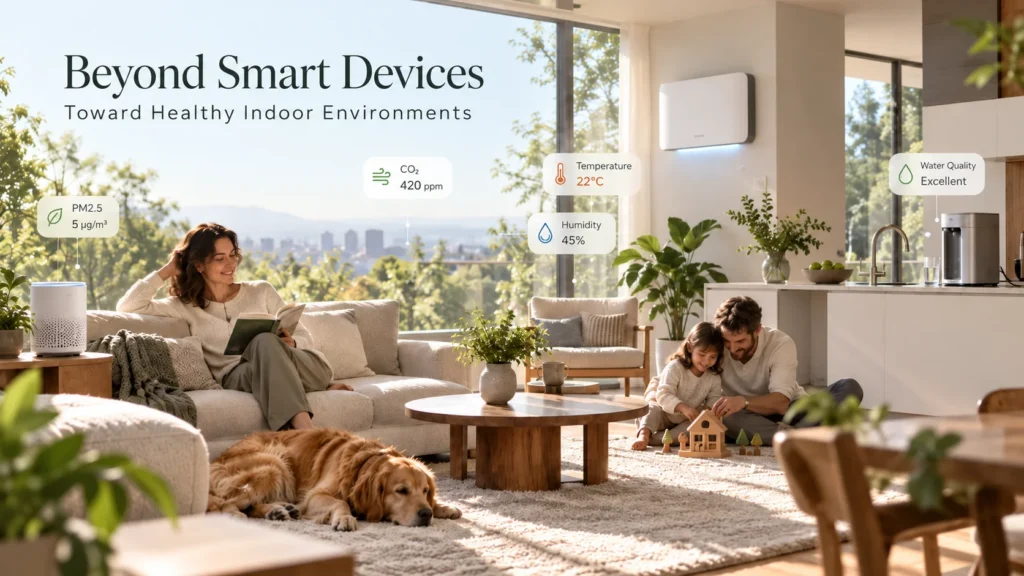
Modern living room with a family enjoying a healthy indoor environment monitored by smart devices, natural lighting, and greenery.

After IFA 2026: The Healthy Home Is Moving Beyond Smart Devices

In our previous IFA 2026 column, Air Purification Is Becoming Part of the Healthy-Home Platform, we argued that the next generation of indoor-health products would ...
ニュース
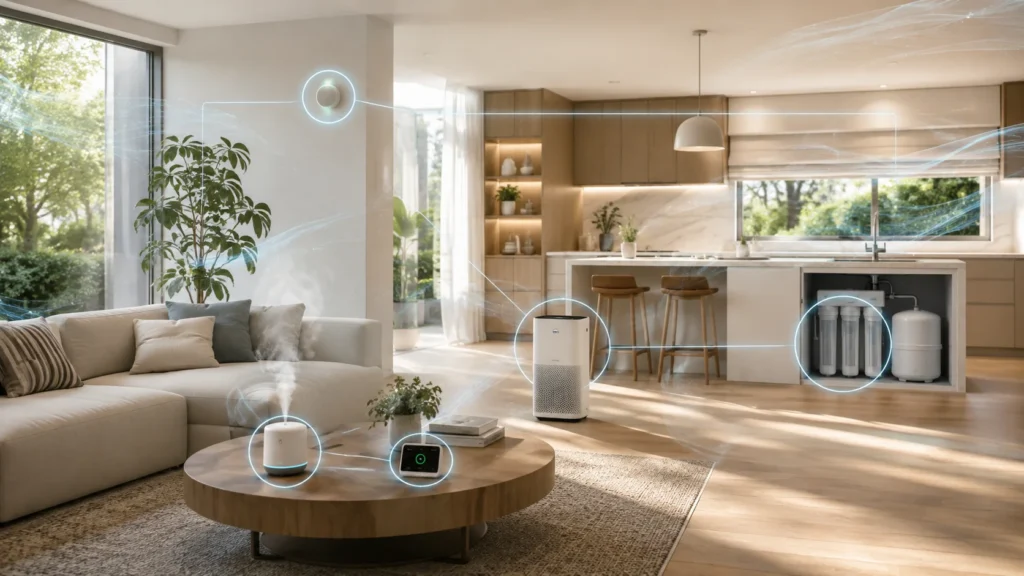
Modern living room and kitchen with smart home air quality devices including an air purifier, humidifier, and water filtration system, connected with visualized blue connectivity lines.

IFA 2026: Air Purification Is Becoming Part of the Healthy-Home Platform

Pre-IFA Industry Perspective | September 4, 2026 This article is based on official announcements and regulatory information available ahead of IFA 2026, which takes place ...
ニュース
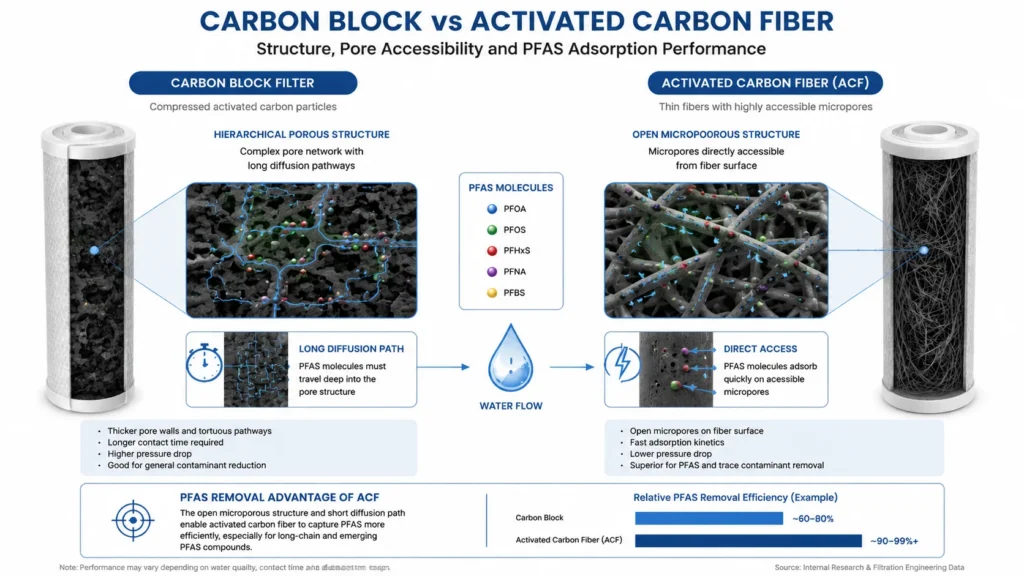
Comparison infographic showcasing the differences between carbon block filter and activated carbon fiber. Detailed diagrams illustrate the hierarchical porous structure of the carbon block with long diffusion paths and the open microporous structure of the activated carbon fiber with direct access for PFAS adsorption.

Carbon Block vs. Activated Carbon Fiber (ACF): Matching Media to Target Contaminants

Two carbon media. Same adsorption chemistry. Very different behaviour in a point-of-use cartridge. If you are specifying a water purifier platform for a PFAS-aware market, ...
ニュース
NSF base listing and ANF private-label certification pathway for OEM water filters

What Is an NSF Master Listing? A Guide to Base Listings, ANF Certification and OEM Water Filters

For a brand preparing to launch an OEM water purifier, one of the most common supplier claims is: “We already have an NSF master listing, ...
News, Water Purifiers
Healthy-home brand team reviewing PFAS water filter certification, test data and product engineering

Entering the Water Category Is Easy. Building a Credible PFAS Claim Is Much Harder

For air purification, appliance and healthy-home brands, entering the water category can look surprisingly easy. A company can select an existing undersink system, customize its ...
ニュース
Team in a business meeting discussing a water filtration system with product components and a comparison table displayed on a screen.

5 Leading OEM Water Purifier Manufacturers in China for Private Label Brands

China has thousands of companies selling water filters, reverse osmosis systems and drinking-water appliances. However, only a portion of them are suitable for private-label, OEM ...
ニュース
Contaminant Engineering•3 min read

PFAS Water Filtration Technologies Explained: Carbon, Resin & RO

Key Takeaway:

PFAS reduction depends on the specific compounds present, treatment media, contact time, water chemistry, and system design. Activated carbon, ion exchange, and Reverse Osmosis address PFAS through different mechanisms.

PFAS are a large family of persistent fluorinated compounds that can occur in drinking-water supplies. Their treatment behavior varies significantly by molecular structure, chain length, functional group, concentration, and the chemistry of the source water.

Granular Activated Carbon (GAC) removes PFAS primarily through adsorption. It is generally more effective for many longer-chain PFAS, while shorter-chain compounds tend to break through more quickly. Carbon performance depends on media properties, Empty Bed Contact Time (EBCT), competing organic matter, loading, and replacement frequency.

Ion-exchange resins use charged functional sites to capture many PFAS compounds. Properly selected anion-exchange media can provide high capacity and may perform better than conventional activated carbon for some shorter-chain PFAS, although performance still depends on water chemistry and competing ions.

Reverse Osmosis (RO) uses membrane separation rather than adsorption. Properly designed RO systems can provide broad reduction across many PFAS compounds as well as dissolved salts and other contaminants. Unlike carbon or resin, however, RO also produces a concentrate stream that must be managed.

No single technology should be selected from a PFAS label alone. System design should consider which PFAS compounds are present, their concentrations, required reduction targets, flow rate, media life, and the applicable third-party certification or validation requirements.

HisoAir Water Technical Series
Product Discovery•3 min read

How to Choose an Under-Sink Water Purifier for Modern Kitchens

Key Takeaway:

Match the treatment technology to your water quality first, then evaluate cabinet space, faucet configuration, flow rate, drain and power requirements, and filter replacement needs.

Choosing an under-sink water purifier starts with water chemistry. Carbon filtration is well suited to chlorine, taste, odor, and many organic contaminants, while Reverse Osmosis is more appropriate when dissolved salts, fluoride, nitrates, or broader dissolved contaminants need to be reduced.

For compact kitchens, tankless RO systems eliminate the conventional storage tank and can significantly reduce the space required under the sink. However, membrane capacity stated in GPD does not directly equal faucet flow. When comparing systems, check the actual dispensing flow rate, inlet-pressure requirement, recovery ratio, and whether a booster pump is required.

Installation architecture also matters. Many RO systems require a drain connection, electrical power, and either a dedicated drinking-water faucet or a compatible multi-function faucet. High-flow carbon systems can often connect directly to the existing cold-water line with a simpler installation, but pressure drop and available faucet flow should still be verified.

RO also removes much of the naturally occurring dissolved mineral content. Where taste or mineral balance is a priority, a post-RO remineralization stage can be added. Filter life should be evaluated by both rated capacity and local water quality rather than replacement time alone.

The right system is therefore not simply the smallest or highest-GPD model. It is the configuration that matches the target contaminants, available cabinet space, desired faucet setup, peak dispensing demand, and maintenance expectations.

HisoAir Water Technical Series
Water Quality•2 min read

What Does TDS Mean in Drinking Water? Measurement vs Contaminant Reality

Key Takeaway:

A TDS meter estimates the overall concentration of dissolved ionic substances from electrical conductivity. It cannot identify specific contaminants or determine whether water is chemically safe.

Total Dissolved Solids (TDS) refers to the combined concentration of dissolved substances in water. Most handheld TDS meters do not measure TDS directly. Instead, they measure electrical conductivity (EC) and convert that reading into an estimated parts-per-million (ppm) value.

This means a TDS reading can indicate how much dissolved ionic material is present, but not what that material actually is. Calcium, magnesium, sodium, nitrates, and other dissolved ions can all contribute to conductivity, yet a simple TDS meter cannot distinguish between them.

TDS meters are also not suitable for detecting trace contaminants such as PFAS, many VOCs, pesticides, pharmaceuticals, or disinfection byproducts. These substances may be present at concentrations far below the level needed to noticeably change electrical conductivity.

A low TDS reading therefore does not guarantee safe drinking water, and a higher TDS reading does not automatically indicate contamination. Water-treatment decisions should be based on laboratory testing for specific contaminants of concern rather than TDS alone.

HisoAir Water Technical Series
Technology Selection•2 min read

RO vs UF Water Filtration: Understanding Pore Sizes & Dissolved Minerals

Key Takeaway:

Ultrafiltration can reduce bacteria, turbidity, and suspended particles while retaining most naturally occurring dissolved minerals. Reverse Osmosis provides much broader reduction of dissolved salts and smaller contaminants.

Ultrafiltration (UF) typically uses hollow-fiber membranes with pore sizes in the approximate 0.01–0.1 micron range. These membranes physically retain turbidity, suspended solids, colloids, and many microorganisms while allowing dissolved minerals and salts to remain in the water.

Reverse Osmosis (RO) operates at a much finer separation level. Unlike UF, RO can substantially reduce dissolved ions such as sodium, calcium, fluoride, nitrates, and other contributors to total dissolved solids (TDS). This makes RO more suitable when dissolved-salt reduction is a primary treatment objective.

UF generally requires less system pressure and produces little or no continuous concentrate stream in many point-of-use configurations. RO typically requires greater pressure and produces a reject-water stream, but delivers broader contaminant reduction.

For water with acceptable TDS and mineral content, UF can be a simpler mineral-retaining treatment option. Where dissolved salts, fluoride, nitrates, or broader dissolved contaminants are a concern, RO is generally the more appropriate technology.

HisoAir Water Technical Series
Technology Selection•4 min read

Carbon Block vs Reverse Osmosis: Which Fits Your Need?

Key Takeaway:

Choose RO for dissolved inorganic salts and heavy metals; choose Carbon Block for chemical taste/odor, no wastewater, and high line-pressure flow.

Reverse Osmosis (RO) and Carbon Block filtration represent two fundamentally different treatment methods: membrane separation and adsorption. Understanding these differences helps determine which technology is better suited to a specific water-quality requirement.

Reverse Osmosis uses a semi-permeable membrane with pore sizes of approximately 0.0001 microns. It can significantly reduce dissolved inorganic contaminants such as TDS, fluoride, nitrates, and certain heavy metals. Because water must be forced through the membrane, RO systems require sufficient pressure or a booster pump and generate a concentrated wastewater stream.

Carbon Block filtration relies primarily on adsorption through compressed activated carbon, commonly with nominal pore sizes around 0.5–5 microns. It is highly effective for chlorine, chloramines, VOCs, taste, and odor, while allowing substantially higher direct-flow rates without producing wastewater.

From an operating perspective, Carbon Block systems are generally simpler, require less energy, and avoid the water loss associated with RO. RO involves higher system complexity and operating cost, but provides substantially broader reduction of dissolved contaminants that Carbon Block alone cannot address.

HisoAir Water Technical Series

見積依頼