新しいタブで開きます
革新的な空気品質ソリューション

双極式イオン導入とHEPA空気清浄機の比較:どちらがより効果的か?

Related Products

バイポーライオン化とHEPA空気清浄機の比較
空気清浄機の比較

バイポーラ・イオンを使うかどうか ヘパ 空気清浄機は、岩と岩の間から選ぶようなものだ。

ヘパ 空気清浄機はとてもよく働く。ホコリや粒子、ウイルスなど、空気中の小さなものを99.97%捕集します。バイポーラ・イオン化システムは、VOCなどの特定の汚染物質に焦点を当てます。有害なオゾンを発生させることもある。これにより ヘパ 清浄機はより安全な選択だ。信頼性も高い。

ヘパ 清浄機には利点がある。両方の技術の詳細を理解することで、自分に合ったものを選ぶことができます。それぞれの仕組み、長所、短所を知る。私自身、これらの技術を試してみた。その変化に驚きました。 ヘパ を我が家にもたらした。長年悩まされていたアレルゲンが消えたのです。双極性イオン化も私の興味を引いた。商業的な場所で使用されているもので、複雑さやリスクもあります。空気浄化について学ぶことで、知ることが本当に大切だということがわかりました。知識は力です。

HEPAフィルターは空気中の汚染物質を99.97%捕集します。真

HEPAフィルターは、0.3ミクロンの粒子を捕獲するように設計されています。

バイポーライオン化はオゾンを発生させない。偽

バイポーラ・イオナイゼーションはオゾンを発生させる可能性があり、健康被害をもたらす恐れがある。

双極性イオン化の仕組み

空気清浄機は、単に空気を動かすだけではありません。ここでは、二極イオン化の魅力的な科学を探求し、それがどのように私たちの空気を清浄に保つのかを見てみましょう。

バイポーライオン化は、プラスとマイナスのイオンを送り出すことで空気を浄化します。これらのイオンは、ホコリやバクテリアなどの浮遊粒子に付着する。粒子は重くなり、地面に落下します。この作用により、汚染物質が減少します。室内の空気の質が大幅に向上します。

室内環境における両極性イオン化プロセスの図解
バイポーライオン化プロセス

双極性イオン化を理解する

私が初めてバイポーラ除電のことを知ったときのことを思い出す。私は居住空間をより健康に保つ方法を模索していた。一般的な空気清浄機よりも優れた空気清浄ソリューションについて調べているうちに、このテクノロジーは有望に思えたのです。バイポーライオン化は、空気中にプラスとマイナスのイオンを放出します。これらのイオンは、ホコリや花粉、細菌などに付着し、集まってくる。一旦塊になると、空気中に留まるには重すぎるため、落下します。空気がきれいになるのだ。

電離の科学

二極イオン化は磁石を思い出させる。磁石が互いに引っ張り合うように、プラスイオンとマイナスイオンが空気中の粒子を見つけるのだ。そのプロセスはこうだ:

コンポーネント 機能
正イオン マイナス粒子に付着し、クラスターを形成する
マイナスイオン プラス粒子と結合し、中和する
空気中の微粒子 ほこり、バクテリア、ウイルス、VOC

これらのイオンは、ウイルスやバクテリアのタンパク質を壊し、有害な細菌を阻止する可能性がある。しかし リスク1 この技術には、呼吸器を刺激するオゾンが発生する可能性がある。

空気浄化への応用

私は、多くの市販製品がバイポーライオン化を使用していることに気づいた。 ヘパ フィルター。この混合により、汚染物質、特に揮発性有機化合物(VOC)と細菌の除去が向上する。以下のようなシステム アイソエアー2 両方を組み合わせることで、よりクリーンな空気が得られる。

その利点とは裏腹に、バイポーライオン化は慎重に使用する必要がある。オゾン濃度を安全にコントロールするためには、UL2998などの規格に適合した機器が必要です。空気清浄機を選ぶ際には、以下の点を考慮する必要があります。 メリットが上回る3 潜在的な欠点

との比較 ヘパ ろ過

空気清浄機について調べているうちに、バイポーラ除電は、多くの場合、次のような組み合わせになることを発見した。 ヘパ フィルターA ヘパ フィルターは0.3ミクロン以上の粒子を99.97%まで捕集します。しかし、バイポーライオン化は、より小さな粒子と特定の化学物質に焦点を当てます。

ここで比較してみよう:

特徴 ヘパ ろ過 バイポーラ電離
粒子除去 99.97%(0.3ミクロン)効率 より小さな粒子をターゲット
病原体の中和 限定 ウイルスを不活性化できる
オゾン生成 なし リスクの可能性

ヘパ 一方、バイポーライオン化は、標準的なフィルターを通過する可能性のある特定の化学物質や一部の細菌に対応します。両方の技術を使用することで、よりクリーンな空気のための徹底的なソリューションとなる。

安全な使用方法と認証について、詳しくはこちらをご覧ください。 最新ガイドライン4 健康の専門家から

バイポーライオン化は副産物としてオゾンを生成する。真

バイポーライオン化は、動作中に呼吸器刺激物質であるオゾンを生成する可能性があります。

HEPAフィルターは、VOCに対してはバイポーライオン化よりも効果的です。偽

バイポーライオン化は、HEPAフィルターよりも小さな粒子やVOCをターゲットにします。

何がそうさせるのか ヘパ フィルターは賢い選択か?

まるで手つかずの森の真ん中に立っているかのような、澄んだ空気を吸い込んでいる自分を思い浮かべてほしい。

ヘパ 99.97%という驚異的な効率で、0.3ミクロンの微粒子まで捕集します。ホコリ、花粉、カビの胞子、そしてバクテリアやウイルスも捕らえます。これらのフィルターは、室内の空気をより良くするために非常に重要です。本当に役立ちます。

HEPAフィルターのクローズアップ。
HEPAフィルター・クローズアップ

理解する ヘパ フィルター

について学ぶ ヘパ (高効率粒子状空気)フィルターは、シンプルだがパワフルなデザインで私を驚かせた。このフィルターは、イオンやオゾンといった有害な方法を使わずに粒子をキャッチする、堅い網のような働きをする。フィルターを設置する ヘパ 家でフィルターを使っていると、新鮮な空気を吸っているような気分になる。本当に新鮮だ!このフィルターはさまざまな汚染物質を捕捉する。

粒子タイプ サイズ
ダニ 0.1-0.4 µm
花粉 10-100 µm
カビの胞子 3-100 µm
バクテリア 0.3-60 µm

これらのフィルターは、様々な汚染物質を捕捉することに優れており、以下のような用途に最適です。 ホーム&オフィス5.

他の技術に対する利点

ヘパ フィルターは無害で、これには感心した。オゾンを放出する可能性のあるいくつかの空気清浄機とは異なり、それは私が他の人と共有していた心配事だった。 ヘパ フィルターは化学薬品を使用しない:

  • 無害:オゾンを発生させる一部の清浄機とは異なります、 ヘパ フィルターは化学薬品を使用していない。
  • ワイドレンジ:花粉やホコリなどのアレルゲンを簡単にキャッチし、アレルギー患者を大いに助けてくれる。

この効果的な解決策を見つけたときの友人の安堵感は明らかだった。バイポーラ・イオン化など他の技術では、次のようなことができるかもしれない。 オゾン問題6.それゆえだ、 ヘパ フィルターは、安全で効果的な空気清浄のために、私の一番の選択肢であり続けている。

実践的応用

ヘパ フィルターは適応性に優れています。一般家庭から多忙な病院まで、高い空気品質を維持するのに役立つ:

申し込み メリット
病院 空気感染のリスクを低減
産業施設 粉塵やその他の微粒子を抑制
ホームズ アレルギーを持つ人のために空気の質を改善する

ある病院を訪れたとき、スタッフがこう褒めていたのを覚えている。 ヘパ 空気感染リスクを大幅に低減するシステム。
空気浄化の方法を選択する際には、その方法を理解することが重要である。 有効性7 の ヘパ フィルターが他のシステムと比較されることは極めて重要だ。

ヘパ コンビネーション・システムのフィルター

最近の空気清浄機には、次のようなものがある。 ヘパ VOCやガスに対処するために、活性炭やイオン化のような他の技術と組み合わせている。一方 ヘパ 活性炭は固形粒子を効果的に捕捉し、臭いやガスもよく処理する。

結論として、多くの技術がよりクリーンな空気を約束する、 ヘパ フィルターは信頼性が高く、安全であることが証明されている。信頼できる空気浄化方法を求めるすべての人に、 ヘパ フィルターは優れた選択肢である。各システムの詳細を理解することは、その性能を最大限に引き出すために不可欠である。 空気の質8.

HEPAフィルターは運転中にオゾンを放出する。偽

HEPAフィルターはオゾンを放出せず、化学物質を含まない安全なフィルターだ。

HEPAフィルターは、感染症を減らすために病院で効果を発揮する。真

空気の質を維持し、空気感染のリスクを軽減する。

双極性イオン化に伴うリスクはあるか?

バイポーラ除電について初めて聞いたときのことを覚えている。空気をきれいにする手品のように聞こえた。そして誰かが『オゾン』という言葉を口にした。そのとき私は、起こりうる危険について考えさせられた。潜在的なリスクが頭をよぎった。これは本当に心配だった。

バイポーライオン化は、取り扱いに注意しないと、しばしばオゾンを発生させる。このプロセスは分子をイオンに分解する。オゾンが発生することもあります。UL 2998認証を取得した機器は、通常このリスクを低減します。

バイポーラ除電技術のインフォグラフィック
バイポーラ・イオン化テクノロジー インフォグラフィック

双極性イオン化を理解する

バイポーライオン化について興味があったので、さらに調べてみた。空気分子を帯電したイオンに分解する。このイオンは、ホコリやカビ、さらにはウイルスなどの粒子に付着する。そのため、フィルターが粒子をキャッチしやすくなるのだ。しかし、このプロセスは誤ってオゾンを発生させる可能性があるという問題がある。私のように 健康9これは心配だ。

長所 短所
VOCに有効 オゾン発生の可能性
アレルゲンを減らす UL 2998認証が必要
濾過性を高める 機器誤作動のリスク

オゾン問題

オゾンは肺を刺激するので心配だ。喘息やその他の肺の問題を悪化させる可能性があり、誰も望まない。バイポーライオン化を使用した機器の中には、室内のオゾンレベルを上昇させるものがあります。オゾンレベルを低く保つには、機器がUL2998基準を満たしているかどうかをチェックすることが重要です。多くの信頼できるブランドは ヘパ フィルター10 このような問題を解決するために、バイポーライオン化が採用された。

認証の役割

UL 2998認証は、機器がオゾン放出を制限していることを示すものなので、私が注意深くチェックするものです。この認証がないと、オゾンレベルが高いために安全でない可能性がある。この技術の使用を考えるときは、必ずこの認証の有無を確認します。安全性を重視する人にとって、バイポーライオン化を ヘパ フィルターは賢そうだ。

空気清浄技術の比較

私は空気清浄機を選ぶ際、効果の高さと安全性の両方を考慮する。 ヘパ フィルターは99.97%の汚染物質をキャッチし、通常は安全で信頼できる。一方、バイポーライオン化は、VOCやウイルスなど特定の汚染物質を対象とするが、オゾンを発生させる可能性がある。長所と短所を理解することで、私は賢く決断することができます。

さまざまな視点から空気浄化ソリューションについて学ぶことは、ニーズに最適な技術を選ぶための有益なアドバイスとなる。

バイポーライオン化はオゾンを発生させない。偽

バイポーライオン化は、適切に制御されなければオゾンを発生させる可能性がある。

UL 2998認証により、低オゾンレベルを保証。真

UL 2998は、オゾンの放出を安全なレベルに制限し、安全性を確保します。

どの空気清浄機を選ぶべきか?

空気清浄機を選ぶのは、家にぴったりのヒーローを見つけるようなものだ。それぞれが特別なスキルで汚れやニオイと戦うことを約束してくれる。

A ヘパ 空気清浄機はほとんどの家庭に適している。ホコリ、アレルゲン、揮発性有機化合物(VOC)を捕らえる強力な能力がある。モデルを選ぶ際には、部屋の大きさに注意してください。特別な空気清浄のニーズがあれば、それも考慮してください。

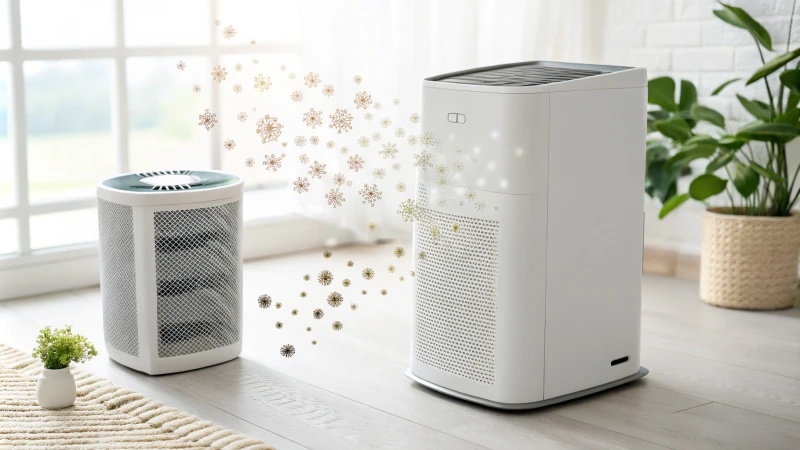
居心地の良いリビングルームにモダンな空気清浄機
居心地の良いリビングルームの空気清浄機

空気清浄機技術の簡単なガイド

ある日、私はきれいな空気の大切さを知った。娘が放課後に喘息と診断されたんです。より健康的な家庭が必要だった。そこで私は空気清浄機を探した。

ショップでは、さまざまなテクノロジーを搭載した多くのデバイスを販売している。 ヘパ フィルター が最初に目に留まった。これらのフィルターは、ホコリや花粉、一部の細菌など、空気中の悪いものを99.97%除去することを約束している。家の中で新鮮な空気を吸いながら、心配することなく座っていることを想像してみてほしい。

しかし、次のこともある。 バイポーライオン化13.家庭内で小さな科学実験をするようなものだ。分子を分解して空気をきれいにします。ウイルスやニオイには効果的だ。しかし、時にはオゾンを発生させることもある。

比較 ヘパ とバイポーライオン化

私は見つけた ヘパ フィルターがより信頼できる。オゾンを発生させない。オゾンを発生させない。 アレルギーまたは喘息14, ヘパ 花粉やペットの毛をキャッチしてくれるからだ。バイポーラ除電は、大きなビルでも使用されており、次のような製品との組み合わせが可能です。 ヘパ 濾過効果を高める。安全確認は重要である。

特徴 ヘパ 空気清浄機 バイポーラ電離
ろ過効率 99.97% 変動あり
オゾン生成 なし 可能
対象汚染物質 ほこり、アレルゲン 臭気、VOC
一般的なアプリケーション レジデンシャル コマーシャル

部屋の広さとニーズに合わせて選ぶ

適切な空気清浄機を選ぶには、部屋のサイズによる。大きな部屋には、清浄空気排出率(CADR)の高い清浄機が必要です。寝室やリビングルームには、静かで効率的な清浄機が最適です。ニオイが気になる場合は カーボンフィルターモデル15.

ブランドと認証のヒント

サポートが充実している信頼できるブランドを選びましょう。オゾンの安全性を示すUL2998などの認証に注目してください。ダイソンやコーウェイは、信頼性の高い ヘパ 清浄機。購入前にレビューや認証を受けて、家族の健康に最適な選択肢を選ぶことが重要だ。

HEPAフィルターは99.97%の浮遊粒子を除去します。真

HEPAフィルターは、0.3ミクロンの粒子を99.97%捕獲するように設計されています。

バイポーライオン化は常にオゾンを生成する。偽

バイポーライオン化はオゾンを生成する可能性があるが、常に生成するわけではない。

結論

この記事では、バイポーラ・イオナイゼーションと、その両方を比較する。 ヘパ 空気清浄機、ハイライト ヘパ汚染物質を捕捉する優れた効率と、バイポーラ・システムにおけるオゾン生成に関する安全性の懸念である。


  1. このリンクでは、潜在的なリスク、特にオゾン生成について説明し、読者がバイポーラ除電を安全に使用するために、十分な情報を得た上で決断できるよう支援する。 ↩

  2. ISO-Aireがどのようにバイポーライオン化と他の技術を統合し、空気浄化を強化しているかをご覧ください。 ↩

  3. 空気の質を改善するために、さまざまな環境でバイポーラ除電を使用する利点について学びます。 ↩

  4. バイポーラ型イオナイゼーションデバイスを安全に使用するために必要な安全ガイドラインと認証についてご覧ください。 ↩

  5. 空気の質を向上させるために、HEPAフィルターを住宅や商業施設に広く適用することを検討する。 ↩

  6. 特定の空気清浄機技術によるオゾン生成に関連する潜在的な健康リスクについて学ぶ。 ↩

  7. さまざまな汚染物質を捕捉するHEPAフィルターの効率を示す詳細な研究をご覧ください。 ↩

  8. 室内の空気をきれいに保つことで、健康とウェルネスに多くの利点があることを理解する。 ↩

  9. オゾン暴露に伴う健康リスクを理解し、空気浄化技術について十分な情報を得た上で意思決定を行う。 ↩

  10. HEPAフィルターがどのように汚染物質を効果的に捕捉し、室内の空気をよりクリーンにするかについて理解を深めてください。 ↩

  11. さまざまな空気浄化技術を比較し、その効果と安全性を理解する。 ↩

  12. 屋内のオゾン暴露が健康に及ぼす可能性のある影響を調べ、安全上の懸念を評価する。 ↩

  13. バイポーライオン化の仕組みと、空気汚染物質を中和するメリットについてご紹介します。 ↩

  14. HEPA空気清浄機がアレルギー患者に推奨される理由をご覧ください。 ↩

  15. ご家庭の空気から臭気やVOCを効果的に除去するためのオプションをご検討ください。 ↩

シェアする
ヒソエア創設者のリー氏
Alwen Lee, an air purification expert with over 10 years of experience, is a devoted father of two and a passionate traveler, having explored more than 30 countries. With a love for public speaking and swimming, he has dedicated his life to the indoor air quality industry. His mission is to ensure that people around the world enjoy the freedom to breathe clean air and lead happy, healthy lives.

メッセージを送る

Related Products

もっと読む

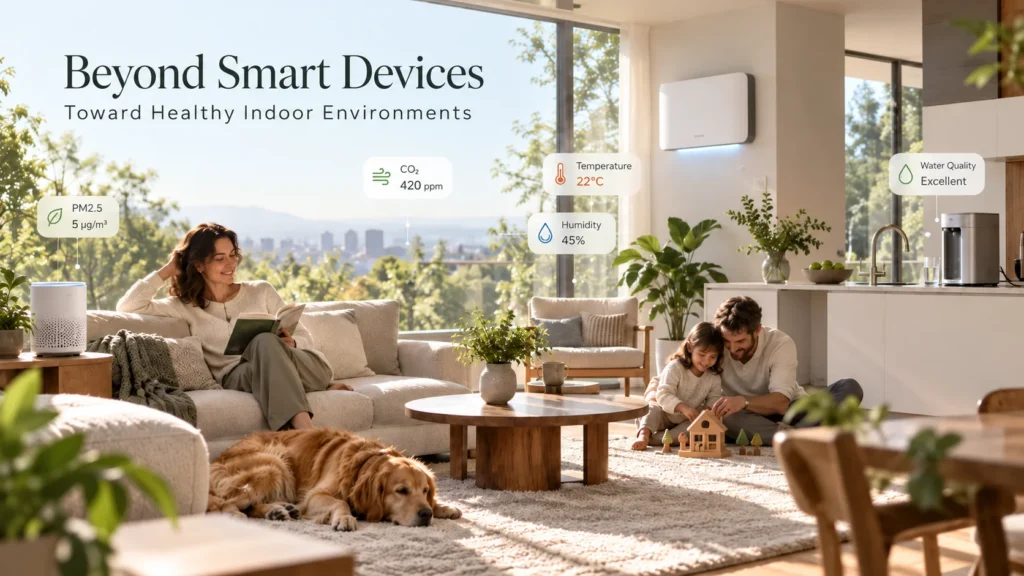
Modern living room with a family enjoying a healthy indoor environment monitored by smart devices, natural lighting, and greenery.

After IFA 2026: The Healthy Home Is Moving Beyond Smart Devices

In our previous IFA 2026 column, Air Purification Is Becoming Part of the Healthy-Home Platform, we argued that the next generation of indoor-health products would ...
ニュース
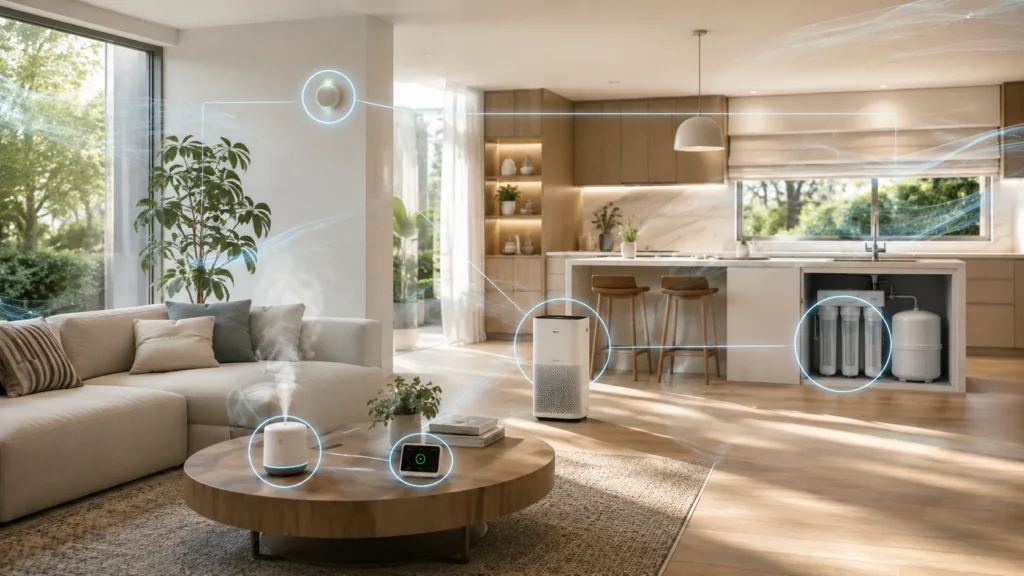
Modern living room and kitchen with smart home air quality devices including an air purifier, humidifier, and water filtration system, connected with visualized blue connectivity lines.

IFA 2026: Air Purification Is Becoming Part of the Healthy-Home Platform

Pre-IFA Industry Perspective | September 4, 2026 This article is based on official announcements and regulatory information available ahead of IFA 2026, which takes place ...
ニュース
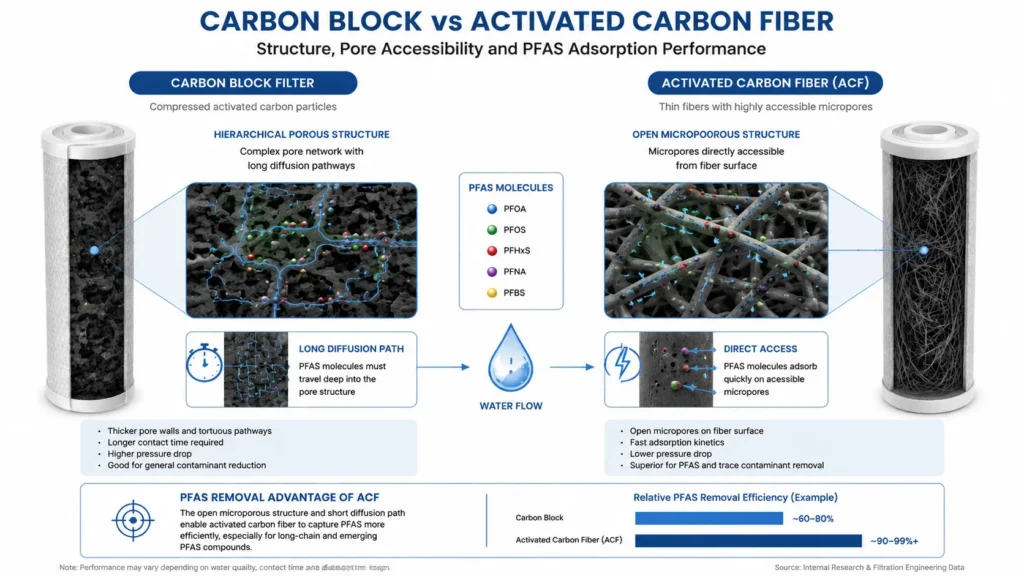
Comparison infographic showcasing the differences between carbon block filter and activated carbon fiber. Detailed diagrams illustrate the hierarchical porous structure of the carbon block with long diffusion paths and the open microporous structure of the activated carbon fiber with direct access for PFAS adsorption.

Carbon Block vs. Activated Carbon Fiber (ACF): Matching Media to Target Contaminants

Two carbon media. Same adsorption chemistry. Very different behaviour in a point-of-use cartridge. If you are specifying a water purifier platform for a PFAS-aware market, ...
ニュース
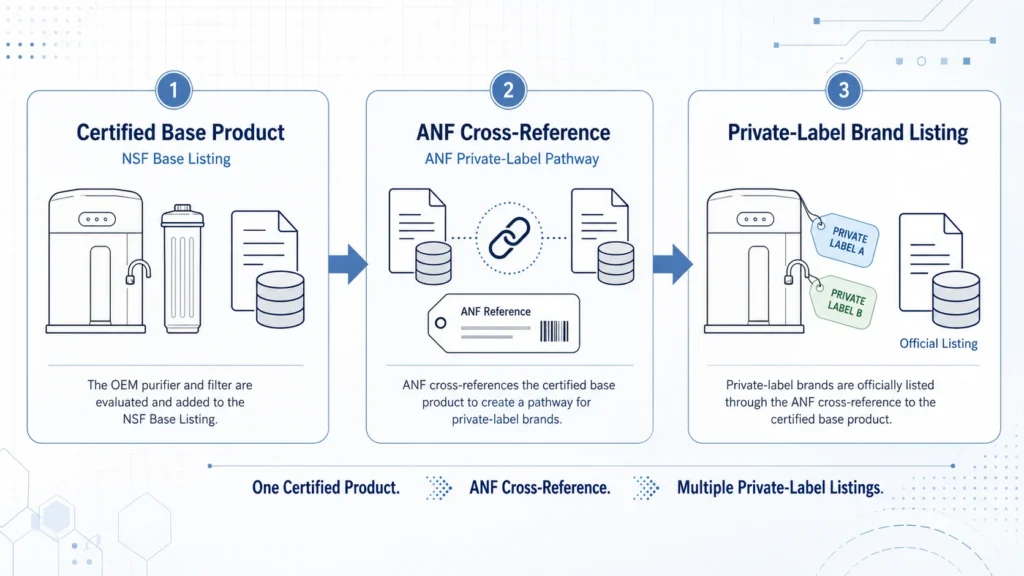
NSF base listing and ANF private-label certification pathway for OEM water filters

What Is an NSF Master Listing? A Guide to Base Listings, ANF Certification and OEM Water Filters

For a brand preparing to launch an OEM water purifier, one of the most common supplier claims is: “We already have an NSF master listing, ...
News, Water Purifiers
Healthy-home brand team reviewing PFAS water filter certification, test data and product engineering

Entering the Water Category Is Easy. Building a Credible PFAS Claim Is Much Harder

For air purification, appliance and healthy-home brands, entering the water category can look surprisingly easy. A company can select an existing undersink system, customize its ...
ニュース
Team in a business meeting discussing a water filtration system with product components and a comparison table displayed on a screen.

5 Leading OEM Water Purifier Manufacturers in China for Private Label Brands

China has thousands of companies selling water filters, reverse osmosis systems and drinking-water appliances. However, only a portion of them are suitable for private-label, OEM ...
ニュース
Contaminant Engineering•3 min read

PFAS Water Filtration Technologies Explained: Carbon, Resin & RO

Key Takeaway:

PFAS reduction depends on the specific compounds present, treatment media, contact time, water chemistry, and system design. Activated carbon, ion exchange, and Reverse Osmosis address PFAS through different mechanisms.

PFAS are a large family of persistent fluorinated compounds that can occur in drinking-water supplies. Their treatment behavior varies significantly by molecular structure, chain length, functional group, concentration, and the chemistry of the source water.

Granular Activated Carbon (GAC) removes PFAS primarily through adsorption. It is generally more effective for many longer-chain PFAS, while shorter-chain compounds tend to break through more quickly. Carbon performance depends on media properties, Empty Bed Contact Time (EBCT), competing organic matter, loading, and replacement frequency.

Ion-exchange resins use charged functional sites to capture many PFAS compounds. Properly selected anion-exchange media can provide high capacity and may perform better than conventional activated carbon for some shorter-chain PFAS, although performance still depends on water chemistry and competing ions.

Reverse Osmosis (RO) uses membrane separation rather than adsorption. Properly designed RO systems can provide broad reduction across many PFAS compounds as well as dissolved salts and other contaminants. Unlike carbon or resin, however, RO also produces a concentrate stream that must be managed.

No single technology should be selected from a PFAS label alone. System design should consider which PFAS compounds are present, their concentrations, required reduction targets, flow rate, media life, and the applicable third-party certification or validation requirements.

HisoAir Water Technical Series
Product Discovery•3 min read

How to Choose an Under-Sink Water Purifier for Modern Kitchens

Key Takeaway:

Match the treatment technology to your water quality first, then evaluate cabinet space, faucet configuration, flow rate, drain and power requirements, and filter replacement needs.

Choosing an under-sink water purifier starts with water chemistry. Carbon filtration is well suited to chlorine, taste, odor, and many organic contaminants, while Reverse Osmosis is more appropriate when dissolved salts, fluoride, nitrates, or broader dissolved contaminants need to be reduced.

For compact kitchens, tankless RO systems eliminate the conventional storage tank and can significantly reduce the space required under the sink. However, membrane capacity stated in GPD does not directly equal faucet flow. When comparing systems, check the actual dispensing flow rate, inlet-pressure requirement, recovery ratio, and whether a booster pump is required.

Installation architecture also matters. Many RO systems require a drain connection, electrical power, and either a dedicated drinking-water faucet or a compatible multi-function faucet. High-flow carbon systems can often connect directly to the existing cold-water line with a simpler installation, but pressure drop and available faucet flow should still be verified.

RO also removes much of the naturally occurring dissolved mineral content. Where taste or mineral balance is a priority, a post-RO remineralization stage can be added. Filter life should be evaluated by both rated capacity and local water quality rather than replacement time alone.

The right system is therefore not simply the smallest or highest-GPD model. It is the configuration that matches the target contaminants, available cabinet space, desired faucet setup, peak dispensing demand, and maintenance expectations.

HisoAir Water Technical Series
Water Quality•2 min read

What Does TDS Mean in Drinking Water? Measurement vs Contaminant Reality

Key Takeaway:

A TDS meter estimates the overall concentration of dissolved ionic substances from electrical conductivity. It cannot identify specific contaminants or determine whether water is chemically safe.

Total Dissolved Solids (TDS) refers to the combined concentration of dissolved substances in water. Most handheld TDS meters do not measure TDS directly. Instead, they measure electrical conductivity (EC) and convert that reading into an estimated parts-per-million (ppm) value.

This means a TDS reading can indicate how much dissolved ionic material is present, but not what that material actually is. Calcium, magnesium, sodium, nitrates, and other dissolved ions can all contribute to conductivity, yet a simple TDS meter cannot distinguish between them.

TDS meters are also not suitable for detecting trace contaminants such as PFAS, many VOCs, pesticides, pharmaceuticals, or disinfection byproducts. These substances may be present at concentrations far below the level needed to noticeably change electrical conductivity.

A low TDS reading therefore does not guarantee safe drinking water, and a higher TDS reading does not automatically indicate contamination. Water-treatment decisions should be based on laboratory testing for specific contaminants of concern rather than TDS alone.

HisoAir Water Technical Series
Technology Selection•2 min read

RO vs UF Water Filtration: Understanding Pore Sizes & Dissolved Minerals

Key Takeaway:

Ultrafiltration can reduce bacteria, turbidity, and suspended particles while retaining most naturally occurring dissolved minerals. Reverse Osmosis provides much broader reduction of dissolved salts and smaller contaminants.

Ultrafiltration (UF) typically uses hollow-fiber membranes with pore sizes in the approximate 0.01–0.1 micron range. These membranes physically retain turbidity, suspended solids, colloids, and many microorganisms while allowing dissolved minerals and salts to remain in the water.

Reverse Osmosis (RO) operates at a much finer separation level. Unlike UF, RO can substantially reduce dissolved ions such as sodium, calcium, fluoride, nitrates, and other contributors to total dissolved solids (TDS). This makes RO more suitable when dissolved-salt reduction is a primary treatment objective.

UF generally requires less system pressure and produces little or no continuous concentrate stream in many point-of-use configurations. RO typically requires greater pressure and produces a reject-water stream, but delivers broader contaminant reduction.

For water with acceptable TDS and mineral content, UF can be a simpler mineral-retaining treatment option. Where dissolved salts, fluoride, nitrates, or broader dissolved contaminants are a concern, RO is generally the more appropriate technology.

HisoAir Water Technical Series
Technology Selection•4 min read

Carbon Block vs Reverse Osmosis: Which Fits Your Need?

Key Takeaway:

Choose RO for dissolved inorganic salts and heavy metals; choose Carbon Block for chemical taste/odor, no wastewater, and high line-pressure flow.

Reverse Osmosis (RO) and Carbon Block filtration represent two fundamentally different treatment methods: membrane separation and adsorption. Understanding these differences helps determine which technology is better suited to a specific water-quality requirement.

Reverse Osmosis uses a semi-permeable membrane with pore sizes of approximately 0.0001 microns. It can significantly reduce dissolved inorganic contaminants such as TDS, fluoride, nitrates, and certain heavy metals. Because water must be forced through the membrane, RO systems require sufficient pressure or a booster pump and generate a concentrated wastewater stream.

Carbon Block filtration relies primarily on adsorption through compressed activated carbon, commonly with nominal pore sizes around 0.5–5 microns. It is highly effective for chlorine, chloramines, VOCs, taste, and odor, while allowing substantially higher direct-flow rates without producing wastewater.

From an operating perspective, Carbon Block systems are generally simpler, require less energy, and avoid the water loss associated with RO. RO involves higher system complexity and operating cost, but provides substantially broader reduction of dissolved contaminants that Carbon Block alone cannot address.

HisoAir Water Technical Series

見積依頼