新しいタブで開きます
革新的な空気品質ソリューション

空気清浄の未来:業界を形作る5つのトレンド

Related Products

空気の質への関心が高まる中、空気清浄技術の進歩は、消費者や企業のニーズを満たすために急速に進化している。パワフルなファンシステムからエコフレンドリーなデザインまで、空気清浄業界は革命を起こそうとしている。ここでは、空気清浄の未来を形作る5つのトレンドを紹介し、企業と消費者によりスマートで効率的、かつ効果的なソリューションを提供する。

最大のエアフローと効率を実現する先進のファンシステム

空気清浄機の最も重要なコンポーネントのひとつは、そのファンシステムである。より広いスペースに対応できる高性能な空気清浄機への需要が高まるにつれ、メーカーは新しいファン技術に多額の投資を行っています。最新のファンシステムは、より強力なエアフローを提供するだけでなく、これまで以上に静かで効率的に送風できるように設計されています。

で ヒソエアデシベルは、最小限の騒音で最大限の清浄空気供給率(CADR)を実現するファンシステムのパイオニアです。Decibel Cancellation™テクノロジーと高度な空気力学的設計を活用することで、高速回転時でも囁くような静かな気流を生み出す清浄機を開発しました。このテクノロジーは、学校、病院、オフィスなど、静かな運転が快適性と生産性に不可欠な環境で特に重要です。

今後のトレンド:素材や設計プロセスの改善により、ファンシステムがさらにエネルギー効率に優れ、静かでパワフルになることが期待されます。エネルギー消費を抑えながら風量を最大化し、高性能で費用対効果の高い清浄機を作ることに焦点が置かれるでしょう。

最大のエアフローと効率を実現する先進のファンシステム

最大のエアフローと効率を実現する先進のファンシステム

多層保護フィルターシステム

ろ過はあらゆる空気清浄機の心臓部であり、将来はフィルターが空気中の汚染物質を捕捉する方法に大きな進歩をもたらすだろう。 HEPAフィルター そして 活性炭フィルター はすでに業界標準となっているが ハイブリッドろ過システム が出てきている。

ヒソエアでは、特定の汚染物質を対象とした複数のろ過技術を統合しています。当社の H13およびH14 HEPAフィルター ウイルス、バクテリア、微小粒子状物質を含む有害な粒子を99.97%~99.997%捕集します。これを 活性炭フィルターこのフィルターは、臭気や揮発性有機化合物(VOC)を効果的に除去します。濾過技術の進歩に伴い、フィルターの寿命を延ばすと同時に、超微粒子PM1.0のような小さな粒子を捕捉する能力を高める新しい素材や設計が注目されています。

今後のトレンド:ろ過システムは、より小さな粒子を捕捉できる多層フィルターや、より耐久性が高く交換頻度の少ない改良されたフィルター素材によって進化し続ける。抗菌、抗ウイルス、臭気中和の技術を取り入れたフィルターに注目すれば、より高い保護効果が期待できる。

多層保護フィルターシステム
多層保護フィルターシステム

Custom Air Purification for Different Spaces in a Post-COVID World

COVID-19は室内空気質に対する考え方を変え、企業は従業員と顧客を守るために空気浄化を優先するようになった。空気浄化の未来は、大規模な商業エリアから小規模な住宅環境に至るまで、特定のスペースやニーズに高度に適合したものになるだろう。

ヒソエア はすでに、病院、学校、ホテル、オフィススペースなど、さまざまなシーン向けに設計された空気清浄機を開発している。COVID以降、空気の清浄化によって空気感染症のリスクを大幅に減らすことができる、人通りの多い場所での清浄機に対するニーズが高まっている。実際、スマート・センサーは必須の機能となりつつあり、清浄機がリアルタイムの空気品質データに基づいてろ過レベルを自動的に調整できるようになっている。

今後のトレンド:ユニークなスペースや使用例に合わせて特別に設計された空気清浄機が登場することを期待したい。高度なセンサーとリアルタイムのモニタリングにより、企業は室内環境をよりコントロールできるようになり、空間の規模や複雑さに関係なく、空気の質が最適なレベルに保たれるようになる。


Integration with Matter: Smart Homes and IoT Air Purification

スマートホームとモノのインターネット(IoT)の台頭は、空気清浄機業界に革命をもたらしている。 マタースマートホームの相互運用性のための新しい規格であるこの規格により、様々なメーカーの異なるデバイスがシームレスに連携できるようになる。つまり、空気清浄機は間もなく他のスマートホームデバイスと統合できるようになり、完全に自動化されたコネクテッド環境を構築できるようになるのだ。

ヒソエア はこのトレンドの最前線にあり、IoT技術によってスマートシステムと統合できる清浄機を開発しています。当社の空気清浄機は、モバイルアプリを通じて遠隔でモニター・コントロールすることができ、ユーザーは空気品質の設定を調整したり、フィルターの状態を確認したり、リアルタイムの空気品質データを閲覧したりすることができます。Matterによって、この接続性はさらに合理化され、統一されたスマートホーム体験が提供されるでしょう。

今後のトレンド:空気清浄機は、HVACシステム、サーモスタット、空気品質モニターと並んで、スマートホームエコシステムの重要な一部となることが期待される。Matterによって、ユーザーは室内環境をよりコントロールできるようになり、最小限の労力で空気の質とエネルギー効率の両方を向上させることができる。


費用対効果が高く、環境に優しいソリューション

企業や消費者の環境意識が高まるにつれ、費用対効果が高く、環境に優しい空気清浄機への需要が高まるだろう。将来は、優れた性能を発揮するだけでなく、持続可能な方法でそれを実現する空気清浄機が登場するだろう。

で ヒソエア私たちはすでに、空気清浄機のエネルギー効率と持続可能性の向上に取り組んでいます。当社のファン・システムはエネルギー消費を抑えるように設計されており、ろ過システムは廃棄物を最小限に抑える長持ちする素材を使用しています。さらに、私たちは リサイクル可能な材料 清浄機本体と包装の両方にある。

今後のトレンド:空気清浄機は、環境にやさしい製造方法、リサイクル可能な部品、省エネ技術にメーカーが注力することで、より環境にやさしく、より手頃な価格になっていくだろう。このような進歩により、環境への影響を軽減しながら、より多くの人々が高品質の空気清浄を利用できるようになるだろう。


結論空気浄化の未来は明るい

テクノロジーの進化と、健康と持続可能性への関心の高まりによって、空気清浄機業界はエキサイティングな変化を遂げようとしている。強力なファンシステムからスマートろ過、IoT統合に至るまで、次世代の空気清浄機はより賢く、より静かで、より効率的なものになるだろう。企業も消費者も同様に空気の質を優先し続ける、 ヒソエア は時代をリードし、明日のニーズに応える最先端のソリューションを開発している。

空気清浄の未来をあなたの空間にもたらす準備が整いましたら、以下までご連絡ください。 ヒソエア 当社の革新的なソリューションの詳細については、今すぐお問い合わせください。

空気浄化の未来は明るい
空気浄化の未来は明るい
シェアする
Alwen Lee of HisoAir
Alwen Lee, an air purification expert with over 10 years of experience, is a devoted father of two and a passionate traveler, having explored more than 30 countries. With a love for public speaking and swimming, he has dedicated his life to the indoor air quality industry. His mission is to ensure that people around the world enjoy the freedom to breathe clean air and lead happy, healthy lives.

メッセージを送る

Related Products

もっと読む

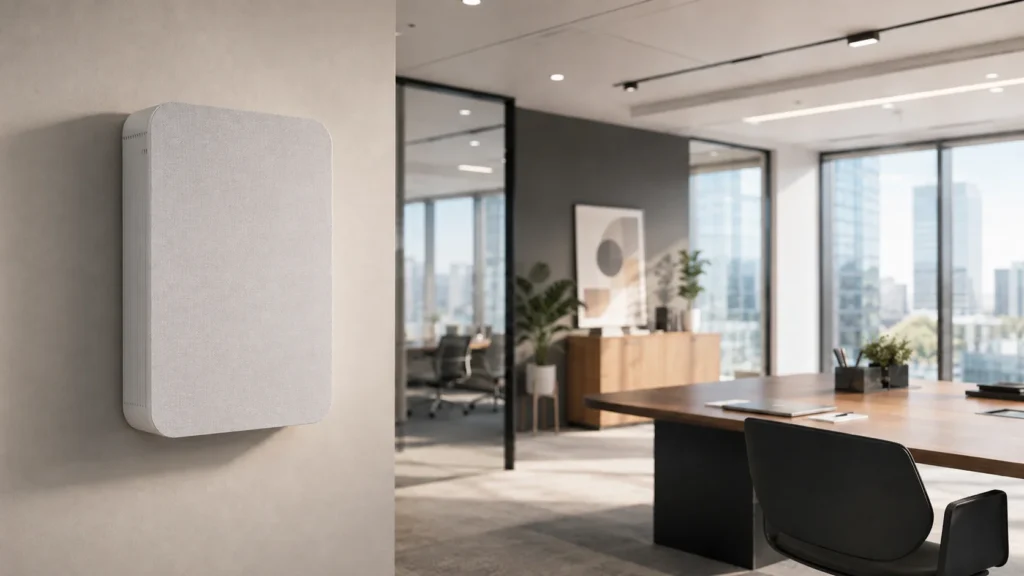
A modern office room with a gray wall-mounted air purifier, large wooden desk, office chairs, indoor plants, and glass windows offering a city view.

Luftreiniger gegen Staub: HEPA-Luftreinigung für Büro, Gewerbe und Industrie

Kurz gesagt: Ein Luftreiniger entfernt Staub aus der Luft – nicht vom Schreibtisch. Er reduziert die Konzentration schwebender Partikel und damit auch die Menge an ...
Air purifier, Filter
Featured image for How to launch a private label wellness product in the US

How to launch a private label wellness product in the US

Stand out in the US wellness market! Partner with innovators for unique products and tap into a booming industry. Start your launch today!
AI Trends, Air purifier
wall mounted air purifier ha380 6

DIY vs. Commercial: Ceiling Purifier vs. Wall-Mounted Purifier

Indoor air quality has become a global concern for both individuals and organizations. Whether at home, in offices, or in public facilities, the need for ...
空気清浄機
Air purifier beside a family and dog in a living room

The Strategic Guide to Home Air Purification: A Room-by-Room Analysis

In an era where indoor living dominates our daily routines, the quality of the air we breathe within our homes has become a paramount concern. ...
空気清浄機
換気空気清浄機 HV 100

Wall-Mounted Purifier vs HVAC for Indoor Air Quality

Indoor air quality isn’t a nice-to-have—it’s daily infrastructure. Wildfire smoke, urban PM2.5, and indoor sources from cooking to cleaners now make clean air a baseline ...
空気清浄機
Wall-mounted air purifier above a bed

Wall-Mounted Air Purifiers: Best Choice for Apartments

Save space and breathe cleaner air with wall-mounted air purifiers. Perfect for apartments, they reduce odors, dust, and allergens for healthier living. The rise of ...
空気清浄機
Contaminant Engineering•3 min read

PFAS Water Filtration Technologies Explained: Carbon, Resin & RO

Key Takeaway:

PFAS reduction depends on the specific compounds present, treatment media, contact time, water chemistry, and system design. Activated carbon, ion exchange, and Reverse Osmosis address PFAS through different mechanisms.

PFAS are a large family of persistent fluorinated compounds that can occur in drinking-water supplies. Their treatment behavior varies significantly by molecular structure, chain length, functional group, concentration, and the chemistry of the source water.

Granular Activated Carbon (GAC) removes PFAS primarily through adsorption. It is generally more effective for many longer-chain PFAS, while shorter-chain compounds tend to break through more quickly. Carbon performance depends on media properties, Empty Bed Contact Time (EBCT), competing organic matter, loading, and replacement frequency.

Ion-exchange resins use charged functional sites to capture many PFAS compounds. Properly selected anion-exchange media can provide high capacity and may perform better than conventional activated carbon for some shorter-chain PFAS, although performance still depends on water chemistry and competing ions.

Reverse Osmosis (RO) uses membrane separation rather than adsorption. Properly designed RO systems can provide broad reduction across many PFAS compounds as well as dissolved salts and other contaminants. Unlike carbon or resin, however, RO also produces a concentrate stream that must be managed.

No single technology should be selected from a PFAS label alone. System design should consider which PFAS compounds are present, their concentrations, required reduction targets, flow rate, media life, and the applicable third-party certification or validation requirements.

HisoAir Water Technical Series
Product Discovery•3 min read

How to Choose an Under-Sink Water Purifier for Modern Kitchens

Key Takeaway:

Match the treatment technology to your water quality first, then evaluate cabinet space, faucet configuration, flow rate, drain and power requirements, and filter replacement needs.

Choosing an under-sink water purifier starts with water chemistry. Carbon filtration is well suited to chlorine, taste, odor, and many organic contaminants, while Reverse Osmosis is more appropriate when dissolved salts, fluoride, nitrates, or broader dissolved contaminants need to be reduced.

For compact kitchens, tankless RO systems eliminate the conventional storage tank and can significantly reduce the space required under the sink. However, membrane capacity stated in GPD does not directly equal faucet flow. When comparing systems, check the actual dispensing flow rate, inlet-pressure requirement, recovery ratio, and whether a booster pump is required.

Installation architecture also matters. Many RO systems require a drain connection, electrical power, and either a dedicated drinking-water faucet or a compatible multi-function faucet. High-flow carbon systems can often connect directly to the existing cold-water line with a simpler installation, but pressure drop and available faucet flow should still be verified.

RO also removes much of the naturally occurring dissolved mineral content. Where taste or mineral balance is a priority, a post-RO remineralization stage can be added. Filter life should be evaluated by both rated capacity and local water quality rather than replacement time alone.

The right system is therefore not simply the smallest or highest-GPD model. It is the configuration that matches the target contaminants, available cabinet space, desired faucet setup, peak dispensing demand, and maintenance expectations.

HisoAir Water Technical Series
Water Quality•2 min read

What Does TDS Mean in Drinking Water? Measurement vs Contaminant Reality

Key Takeaway:

A TDS meter estimates the overall concentration of dissolved ionic substances from electrical conductivity. It cannot identify specific contaminants or determine whether water is chemically safe.

Total Dissolved Solids (TDS) refers to the combined concentration of dissolved substances in water. Most handheld TDS meters do not measure TDS directly. Instead, they measure electrical conductivity (EC) and convert that reading into an estimated parts-per-million (ppm) value.

This means a TDS reading can indicate how much dissolved ionic material is present, but not what that material actually is. Calcium, magnesium, sodium, nitrates, and other dissolved ions can all contribute to conductivity, yet a simple TDS meter cannot distinguish between them.

TDS meters are also not suitable for detecting trace contaminants such as PFAS, many VOCs, pesticides, pharmaceuticals, or disinfection byproducts. These substances may be present at concentrations far below the level needed to noticeably change electrical conductivity.

A low TDS reading therefore does not guarantee safe drinking water, and a higher TDS reading does not automatically indicate contamination. Water-treatment decisions should be based on laboratory testing for specific contaminants of concern rather than TDS alone.

HisoAir Water Technical Series
Technology Selection•2 min read

RO vs UF Water Filtration: Understanding Pore Sizes & Dissolved Minerals

Key Takeaway:

Ultrafiltration can reduce bacteria, turbidity, and suspended particles while retaining most naturally occurring dissolved minerals. Reverse Osmosis provides much broader reduction of dissolved salts and smaller contaminants.

Ultrafiltration (UF) typically uses hollow-fiber membranes with pore sizes in the approximate 0.01–0.1 micron range. These membranes physically retain turbidity, suspended solids, colloids, and many microorganisms while allowing dissolved minerals and salts to remain in the water.

Reverse Osmosis (RO) operates at a much finer separation level. Unlike UF, RO can substantially reduce dissolved ions such as sodium, calcium, fluoride, nitrates, and other contributors to total dissolved solids (TDS). This makes RO more suitable when dissolved-salt reduction is a primary treatment objective.

UF generally requires less system pressure and produces little or no continuous concentrate stream in many point-of-use configurations. RO typically requires greater pressure and produces a reject-water stream, but delivers broader contaminant reduction.

For water with acceptable TDS and mineral content, UF can be a simpler mineral-retaining treatment option. Where dissolved salts, fluoride, nitrates, or broader dissolved contaminants are a concern, RO is generally the more appropriate technology.

HisoAir Water Technical Series
Technology Selection•4 min read

Carbon Block vs Reverse Osmosis: Which Fits Your Need?

Key Takeaway:

Choose RO for dissolved inorganic salts and heavy metals; choose Carbon Block for chemical taste/odor, no wastewater, and high line-pressure flow.

Reverse Osmosis (RO) and Carbon Block filtration represent two fundamentally different treatment methods: membrane separation and adsorption. Understanding these differences helps determine which technology is better suited to a specific water-quality requirement.

Reverse Osmosis uses a semi-permeable membrane with pore sizes of approximately 0.0001 microns. It can significantly reduce dissolved inorganic contaminants such as TDS, fluoride, nitrates, and certain heavy metals. Because water must be forced through the membrane, RO systems require sufficient pressure or a booster pump and generate a concentrated wastewater stream.

Carbon Block filtration relies primarily on adsorption through compressed activated carbon, commonly with nominal pore sizes around 0.5–5 microns. It is highly effective for chlorine, chloramines, VOCs, taste, and odor, while allowing substantially higher direct-flow rates without producing wastewater.

From an operating perspective, Carbon Block systems are generally simpler, require less energy, and avoid the water loss associated with RO. RO involves higher system complexity and operating cost, but provides substantially broader reduction of dissolved contaminants that Carbon Block alone cannot address.

HisoAir Water Technical Series

見積依頼