新しいタブで開きます
革新的な空気品質ソリューション

空気中の浮遊ホコリを取り除く5つの最良の方法

一見無害に見えるホコリ。しかし、その効果を知れば、家から消えてほしいと願うようになる。幸い、その方法はたくさんある。
住宅や建物に最も多く存在する大気汚染物質のひとつがホコリである。ホコリは大量かつ微細であるため、その存在をコントロールすることは非常に難しい。地方に住んでいなくても、ホコリは存在する。実際、都会のジャングルはホコリの問題にかなり悩まされている。

空気中のホコリを完全に除去することは不可能だ。室内空間にホコリが定着しないようにするには、厳しい努力が必要だ。例えば、定期的に掃除をするなどの方法がある。しかし、実際の最善の望みは、ホコリの存在を最小限に抑えることなのだ。

生活空間でのホコリの繁殖を抑えるには、以下のような方法がある。 高品質空気清浄機.この記事では、これらのテクニックについて解説する。 

ホコリはどこから来るのか?
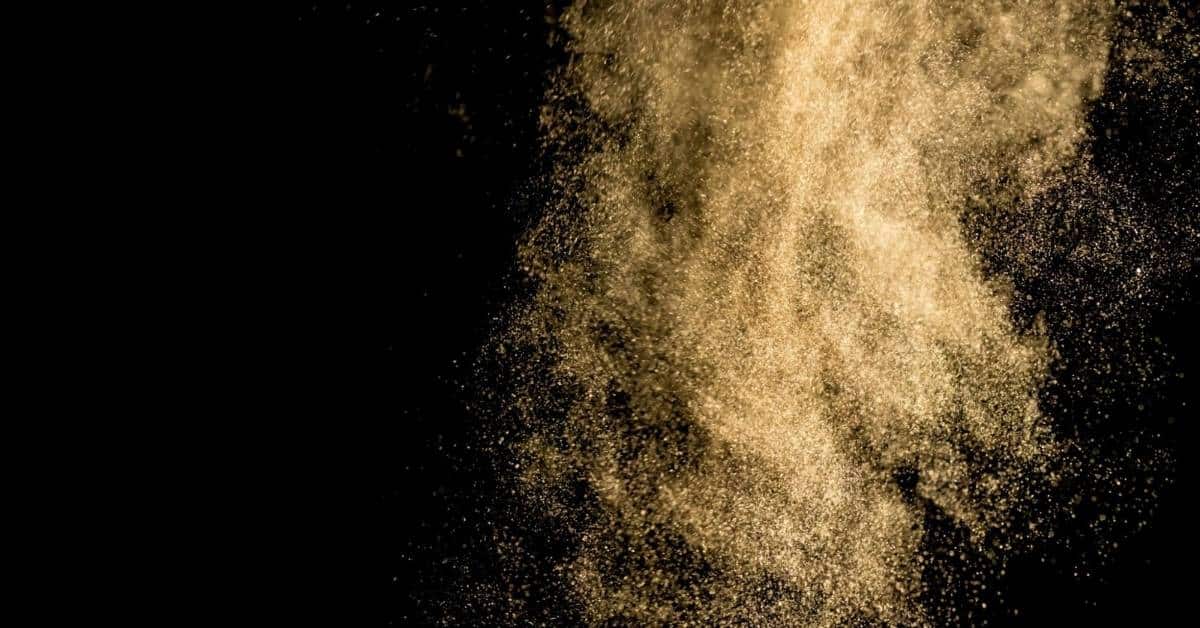
埃

画像ソースVecteezy

あなたの家のホコリは、さまざまな場所からやってきます。そして、隣人からのホコリは、あなたの家とは異なるかもしれない。つまり、この汚染物質は都合よく処理できないものなのだ。

具体的には、ホコリは皮膚の細胞や小さな布、土などさまざまな物質から構成されている。靴に付着した土が家の中で広がり、ホコリになることもある。だから、それは注意すべきことだ。しかし同時に、布張りの家具やカーペット、本棚にしまってある本など、家の中にはすでにホコリの発生源がある。

ペットもホコリの発生源になる。同時に、外から入ってくる煙や空気も家の中に持ち込む可能性がある。さらに、家の中にいるダニも、ホコリの室内への拡散を早める可能性があることを認識しておく必要がある。全体として、ホコリは ごった煮のように さまざまな(主に厄介な)ものをね。 

空気中にホコリが舞うのは普通のこと?

前述したように、ホコリは空気中に広く存在する汚染物質である。結局のところ、それは複数の発生源に由来する。そのため、好むと好まざるとにかかわらず、この問題に絶え間なく対処することになる。

At this point, one could say that dust is already a "normal" occurrence. It will always be likely that your home has dust, especially if you don't do regular cleaning. The build-up will always be there.

正常でないのは、このホコリを抑制する対策を講じることなく、家の中でホコリを増殖させてしまった場合である。ホコリの影響が出るのはその瞬間だ。その対策の一例が 部屋用空気清浄機. 

ホコリは危険か?

粉塵にさらされ咳をしている人

画像ソースアンスプラッシュ

粉塵は私たちの健康に悪影響を及ぼす。空気中に浮遊する粉塵の粒子は非常に小さい。それが私たちの目や鼻、口に入り込み、病気を引き起こしたり、既存の症状を悪化させたりするのだ。

粉塵は肺を刺激するため、多くの人が粉塵に敏感である。ホコリを大量に吸い込むと、呼吸器系に不快感が生じる。アレルギー体質の人は、特にほこりに花粉やカビの胞子、フケなどが含まれていると、アレルギー発作を起こしやすくなる。

ひどい場合は、粉塵にさらされることで喘息発作を誘発することもある、 皮膚炎そして気管支感染症。粉塵に化学物質が含まれている場合は、さらに健康上の合併症に悩まされる可能性が高い。 

家の中のホコリの多い場所
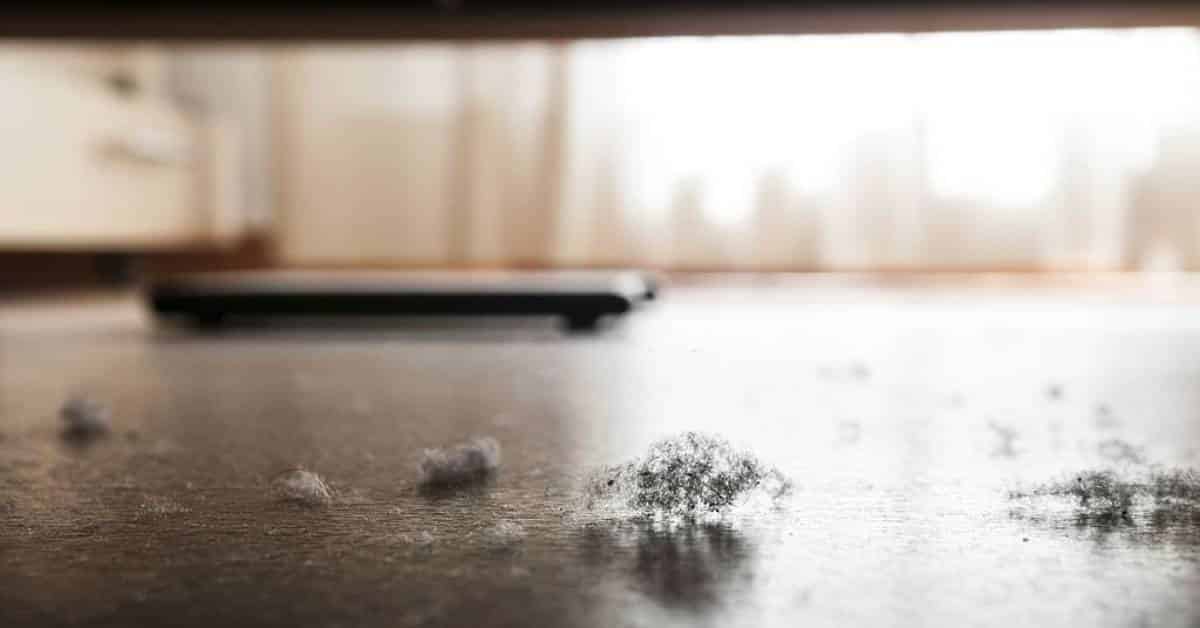
床に隠れた埃

画像出典:iStockphoto

一般的に、あなたの家はほこりがたまりやすい。この汚染物質から一部分だけが安全だと考える理由はない。しかし、ほとんどの場合、ホコリはこのような場所で一般的に発生している:

リビングルーム

リビングルームは常にホコリの問題に悩まされている。その理由は、人の出入りが多いからだ。人が出入りする。したがって、彼らが持ち込んだ汚れの痕跡がここに残るのは明らかだ。窓やドアが近くにあることも、リビングルームにホコリがたまりやすい原因となっている。

ベッドルーム

意外なことに、寝室もホコリが増殖しやすい。前述したように、ダニは自分が出す汚れによって自らホコリを発生させます。同時に、寝室は人の出入りが多い場所でもあります。つまり、いずれにせよ、この居住空間にもホコリを持ち込んでいる可能性があるのだ。

キッチン

キッチンは家の中で最も忙しい場所のひとつだ。人が食事をし、料理をし、皿洗いをする場所だ。そのため、ホコリがたまりやすいのだ。人間の活動と自然のホコリの発生源が組み合わさることで、キッチンは家庭内で最もホコリの多い場所のひとつとなる。

地下室

あなたの家に地下室がある場合、そこにほこりが溜まっている可能性が高い。たいていの場合、地下室は無視されがちだ。家の所有者は、そこを掃除することにそれほど熱心ではありません。同時に、地下室の換気はそれほど良くない。だから、そこに何が入り込もうとも、なくなることはない。コンクリートの壁や床は、やがて埃となる残留物を生み出すだろう。

なぜ粉塵浄化が重要なのか?

ホコリは(ほとんど)目に見えないが、呼吸器を刺激する。咳や喘鳴など、さまざまな病気を引き起こす可能性がある。また、ホコリは次のような悪影響もある。 アレルギー患者喘息発作の引き金になりやすいからだ。 

こうしたホコリに関連した合併症は、ホコリ除去を各家庭の優先事項にすべき理由のひとつである。ホコリを完全に取り除くことができないのであれば、せめてホコリの数を許容範囲まで減らしてほしい。効率的なホコリ対策は、ホコリが引き起こす呼吸器系の問題を回避するのに役立つ。

ホコリは家を汚すとも言える。ホコリの多い場所には住みたくないですよね?ですから、効果的な掃除方法でホコリを取り除くことが不可欠です。

空気中のホコリを取り除くために空気清浄機を追加する
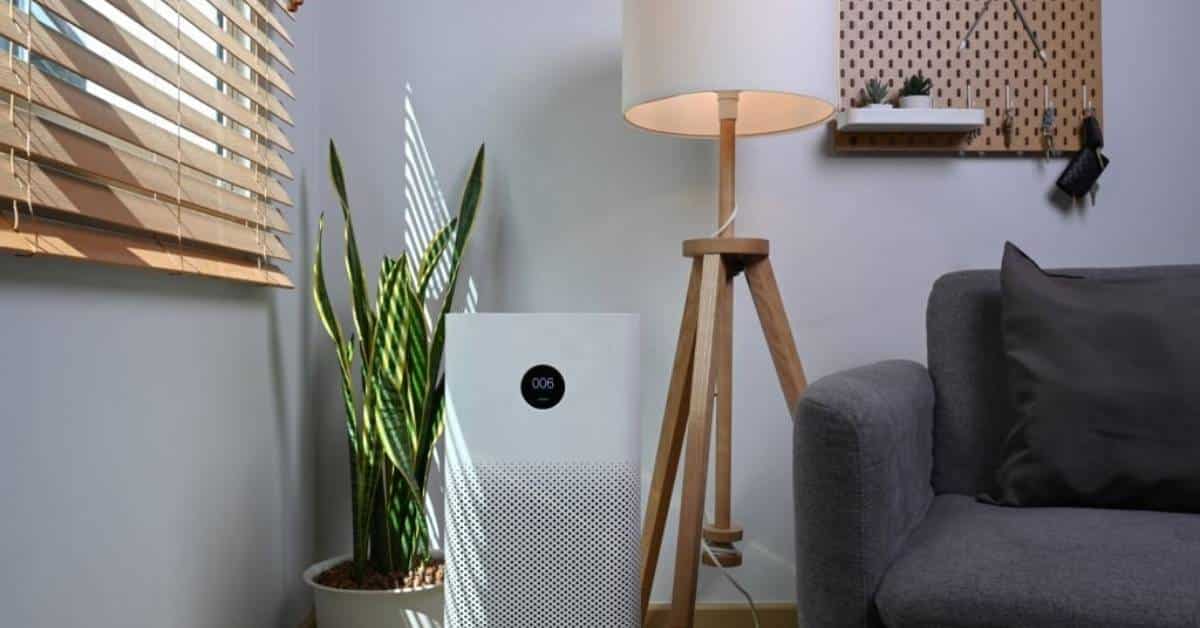
リビングルームの空気清浄機

画像出典:iStockphoto

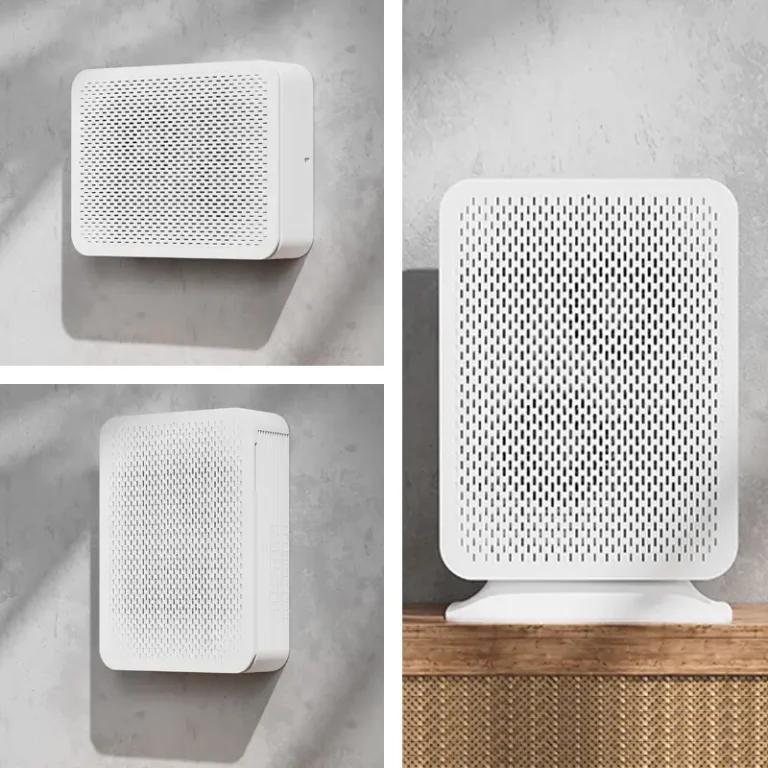
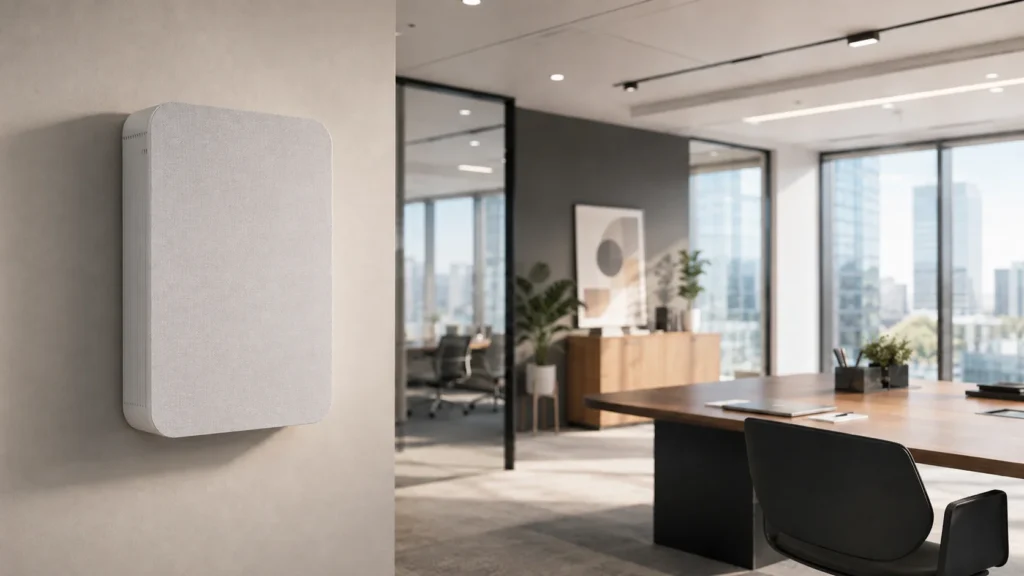
家庭内のホコリを除去する最も効果的な方法のひとつは、次のものを使うことである。 空気清浄機.これらの機器は、室内の空気の質を向上させるために設計されています。高品質の空気清浄機を使用することで、空気中の汚染物質の存在を減らすことができます。 

これらの空気清浄機について詳しく知り、生活空間のホコリ問題を取り除くのにどのように役立つかをご覧ください。

空気清浄機はなぜ空気の質を改善するために重要なのか?

前述したように、空気清浄機は室内の空気の質を改善するのに役立つ。実際、この機械の主な機能は、空気を汚したり、臭くしたり、呼吸に耐えられなくしたりする様々な汚染物質を取り除くことだ。

これらの空気清浄機の性能は、掃除機やその他の清掃方法よりも優れている。何しろ、これらの装置は空気を直接ターゲットにしているため、ホコリやアレルゲン、病原菌が家中に運ばれる媒体そのものなのだ。空気清浄機が家にある限り、その発生源にかかわらず、吸い込む空気はこれらの汚染物質から安全に守られる。

ホコリ用空気清浄機

家庭内でホコリの問題を抱えているなら、空気清浄機への投資は必須だ。掃除機をかけるのはもちろんのこと、空気清浄機はより包括的に汚染物質に対処してくれる。

ホコリは表面に定着するのではなく、空気中に浮遊する傾向があることを覚えておこう。空気清浄機は空気をシステムに取り込む。そこに入ると、空気中に存在する多くの種類の汚染物質を除去するために、フィルターがその役割を果たす。実際、ほとんどの空気清浄機はホコリを捕獲するように設計されている。そのため、一度これらの器具を家に設置すれば、ホコリが問題になることはない。

しかし、すべての空気清浄機が同じ性能を持っているわけではない。もう少ししたら、ホコリを除去するための空気清浄機の選び方について説明しよう。

汚染物質用空気清浄機は安全か?

空気清浄機は一般的に安全に使用できる。これらの装置は、試験済みで実績のあるろ過システムを使用して、空気中のさまざまな汚染物質を捕捉します。基本的に、空気中に残留物を発生させることなく作動します。

同時に、高品質の空気清浄機には、以下のような機能が追加されている。 エレクトロチャージド・フィルターその性能を高めるためだ。繰り返しになるが、これはあなたが呼吸する空気中に有害な内容を誘発するものではない。 

空気清浄機で唯一注意が必要なのは、オゾン発生器だ。オゾンは気体化合物で、空気中の汚染物質を中和すると言われている。コンセプトは理想的だが、オゾンが肺を刺激することに変わりはない。オゾンを大量に吸い込むと、呼吸器系の問題を引き起こす可能性がある。実際、環境保護庁はオゾン発生器の使用に対して警告を発している。
filter ha380b

空気清浄機はどのようにホコリを除去するのか?

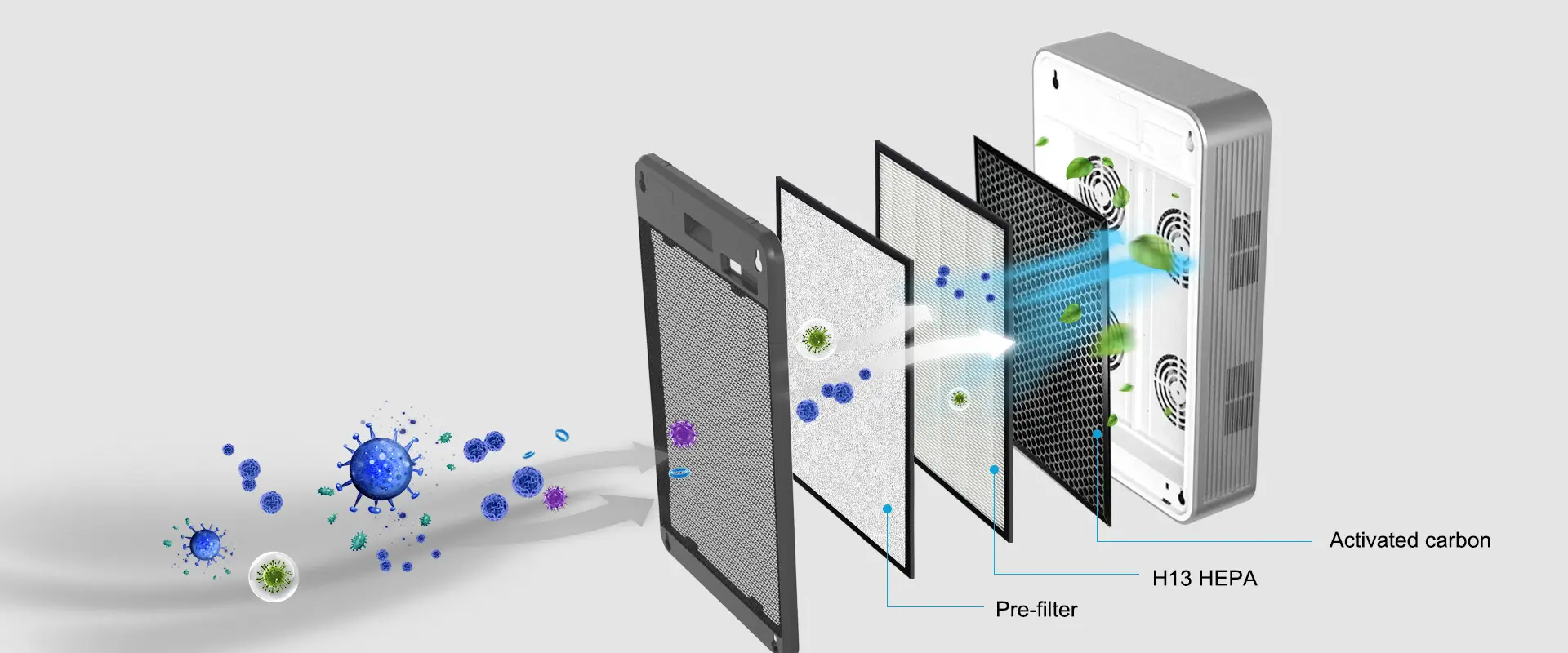
標準的な空気清浄機は、空気中に浮遊するさまざまな汚染物質を除去するためにろ過システムを使用している。専門的に言えば、これらの空気清浄機には少なくとも3つのフィルターが含まれている: HEPAフィルタープレフィルター、カーボンフィルター。 

ペットの毛などの大きなゴミを捕獲するのがプレフィルターだ。フィルターにかけられる大きさであれば、ゴミやホコリも捕らえることができる場合もある。微細なホコリに対応するのはHEPAフィルターで、0.3ミクロンの粒子を99.9%捕捉できる特殊なメディアだ。

この意味で、HEPAフィルターは病原菌やアレルゲンを除去することができる。同時に、お部屋を循環する目に見えないホコリにも対応します。一方、カーボンフィルターは、臭気物質、化学物質、揮発性有機化合物を除去するものである。

空気清浄機によるホコリの除去:ステップ・バイ・ステップ

以下に、フィルター式空気清浄機の仕組みについて説明する。プロセスはシンプルだが、呼吸する空気の清浄度を確保するには十分な効果がある。

  1. 空気清浄機はファンを使って内部の空気を吸い込む。 
  2. 空気が吸気口を通過すると、何層ものフィルターを通過する。
  3. 空気中のチリやホコリを総合的に除去するのは、プレフィルターとHEPAフィルターだ。 
  4. フィルターを通過した空気は、再び室内に放出される。

このプロセスを繰り返すことで、部屋や居住空間の室内空気が有害な粒子から解放され、清潔に保たれる。

除去後、ホコリはどのくらいで落ち着きますか?

この質問に対する具体的な答えはない。ホコリの発生源はほぼ無限であることはすでに述べた。たとえ空気清浄機があったとしても、家の中にホコリが入ってくる機会がある限り、ホコリはなくならない。

このため、自宅の防塵対策も可能な限り徹底することが不可欠だ。これは不可能に思えるが、できる方法はある。

ここでの唯一の保証は、空気清浄機が家にある限り、ホコリの存在は最小限に抑えられるということだ。時々掃除をする必要さえ減るかもしれない。それだけでも、空気清浄機ならではのメリットだ。

しかし、すべての空気清浄機が同じ働きをするわけではない。そこで次のセクションでは、ホコリを除去するための空気清浄機をどのように選ぶべきかについて簡単に説明する。

ホコリ用空気清浄機を購入する際の注意点

ホコリ除去のための空気清浄機を選ぶ際に欠かせない注意点を以下に挙げる。これらのガイドラインに従うだけで、あなたのニーズに合った空気清浄機を必ず手に入れることができます。

  • カバレッジ - 空気清浄機の適用範囲はさまざまだ。広い部屋用に設計された空気清浄機もあれば、狭いエリアに限定された空気清浄機もある。購入する空気清浄機が、部屋の面積に対応した定格であることを確認してください。例えば、あなたの寝室が約400平方フィートなら、空気清浄機は少なくとも400平方フィートのスペースで動作するように定格されている必要があります。カバー範囲は広ければ広いほど良い。 
  • フィルターの種類 - ここで必要なのは、プレフィルターとHEPAフィルターを備えた空気清浄機だ。これらはホコリやゴミを捕獲するフィルターだ。ホコリの大きさに関係なく、これらのフィルターがホコリを捕らえることができる。これらのフィルターがない空気清浄機では、空間に必要なホコリ除去性能は得られません。
  • クリーンエア供給率 - 空気清浄機の清浄空気供給率(CADR)は、空気清浄機が特定の汚染物質(ほこり、花粉、煙)に対処できる能力を示す。空気清浄機のCADRが高ければ高いほど、ホコリなどの一般的な家庭内汚染物質に対する性能がより包括的であることを意味する。ちなみに、大型の空気清浄機ほどCADRの数値が高い。

除去後のホコリを最小限に抑えるには?

前述したように、空気清浄機があったとしても、家の中のホコリを完全に取り除くことは不可能だ。次善の策は、ホコリの存在を最小限に抑えることだ。その方法をいくつかご紹介しよう。

    • 靴を脱ぐ - ホコリは避けられないが、家に着いたら靴を脱ぐことで、その大部分を取り除くことができる。専門家は、特に土や地面の汚れが多い場所から来た場合は、靴を脱ぐことを勧めている。 
    • マットを敷く - マットは、家の中にホコリが入るのを防ぐのに欠かせない設備だ。玄関にゴツゴツしたマットを敷き、人が入る前に足や靴を拭けるようにする。時々振ってホコリを落とすことも忘れずに。
    • ACフィルターを定期的に交換する - エアコンのフィルターは、少なくとも3カ月に1回は交換する必要があります。しかし、家の中にホコリが多すぎると思われる場合は、もっと頻繁に掃除してもよい。 
    • 寝具を定期的に掃除する - マットレスがホコリの蓄積から守られているとは決して思わないでください。時間が経つにつれて、ダニやフケ、古い皮膚片、その他のチリなど、さまざまな種類の汚れがマットレスに付着します。ですから、枕や毛布も含めて、定期的に掃除することを忘れないでください。
    • 定期的に掃除機をかける - 部屋に定期的に掃除機をかけることも忘れずに。キッチンや廊下など、人の出入りが多い場所は1日おきに掃除機をかける。その他の場所は、1週間に1回掃除機をかけましょう。

空気中のほこりを取り除くその他の方法

ホコリはアレルギーや目のかゆみを引き起こし、肺にダメージを与える可能性もある。ホコリは非常に速く移動するため、家の中はできるだけホコリのない状態に保つのがベストです。ここでは、家を安全な場所にするためのヒントをいくつかご紹介します:
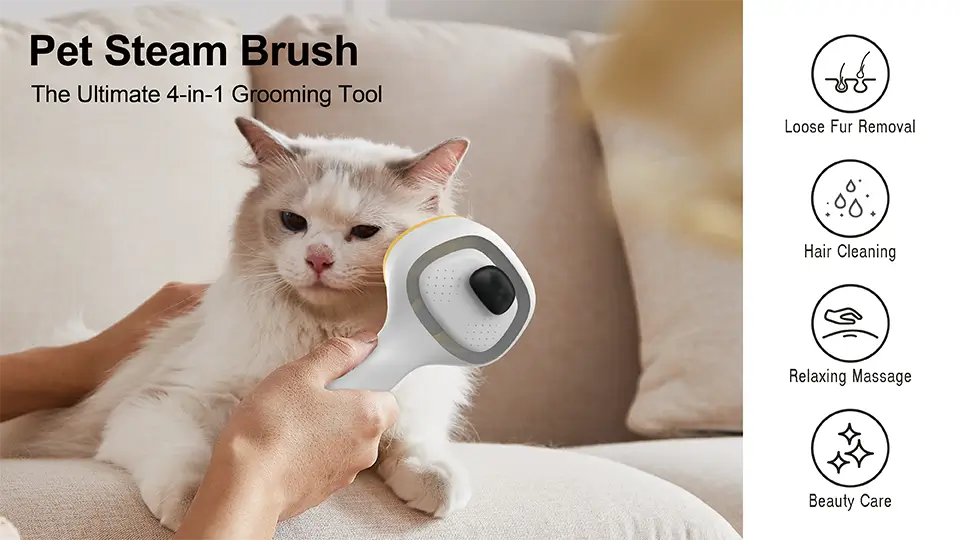
furgo pet brush v2 13
(Furgo - Pet Steam Brush)

ペットの世話は必須

ペットがホコリの発生源になりがちなことに驚くだろう!ペットの毛皮や古い角質は、しばしばホコリを発生させます。この問題に適切に対処できなければ、ペットは予想以上にホコリをまき散らすことになります。

ペットを清潔に保ち、毛並みを整えることが、状況をコントロールするひとつの方法です。ペットの毛や古い角質が蓄積しないように、定期的にグルーミングをしましょう。もちろん、毛づくろいをすることで、ペットの気分もよくなります。

ペットがいつも外にいるご家庭では、適切なグルーミングが必須です。ペットの足や前足には、家の中に持ち込む可能性のある土がたくさん付着しているはずだ!

静電気に対処する

興味深いことに、静電気は知らないうちに家の中で発生している。静電気はしばしば 乾燥している地域.この静電気がホコリや汚れを引き寄せるのだ。そしてそれだけでなく、ホコリを表面にしっかりと付着させる。 

乾燥した部屋に溜まったホコリが硬すぎることに気づくだろう。それは静電気のせいだ。幸いなことに、加湿器を設置することでこの問題を解決することができます。

加湿器の役割は、室内の空気に水分を加え、より湿度の高い状態にすることです。加湿器を設置したら、湿度を40~50%に保つことを目標にしましょう。こうすることで、室内の空気の乾燥が治まり、静電気の発生が抑えられます。

家具のホコリを取る

窓やドアはホコリの侵入口である。したがって、それらにもっと注意を払うべきである。

掃除機をかけるのは床だけではありません。カーテンやソファ、柔らかい繊維の小物類にも掃除機をかけるべきだ。カーテンやソファ、柔らかい繊維の小物にはホコリがたまりやすい。時々掃除機をかけて、ホコリがたまらないようにしましょう。

繊維製品をきれいにすることさえできれば、すでに大きなホコリ除去の手順を踏んでいることになる。もちろん、この養生法を定期的に行うこともお忘れなく。

家の整頓

ホコリは散らかった場所に多く発生する。スペースに物が多ければ多いほど、ホコリが堆積する場所も多くなります。同時に、繊維製品など、ホコリの原因となるものがあるかどうかもわかりません。

効率よくホコリを取りたいなら、まず生活空間のごちゃごちゃしたものを減らしましょう。そうしないと、ホコリを寄せ付けなくなります。例えば、カーペットがなくても生活できるのであれば、カーペットを取り除きましょう。

結論

このように、ホコリはコントロールや管理が難しい汚染物質である。家の清潔さや健康の安全を損なわないためには、空気清浄機やその他の清掃方法の助けを借りる必要がある。

空気清浄機といえば、すべての空気清浄機が同じ効果を持つわけではないことはすでに述べた。空気清浄機は、HisoAirのような信頼できるメーカーから購入する必要がある。HisoAirは医療用空気清浄機の国際的ブランドである。同社の製品はすべて、空気清浄に関する国際基準を満たしている。訪問 ヒソエア をご覧ください。

シェアする
ヒソエア創設者のリー氏
Alwen Lee, an air purification expert with over 10 years of experience, is a devoted father of two and a passionate traveler, having explored more than 30 countries. With a love for public speaking and swimming, he has dedicated his life to the indoor air quality industry. His mission is to ensure that people around the world enjoy the freedom to breathe clean air and lead happy, healthy lives.

メッセージを送る

もっと読む

Modern living room with a family enjoying a healthy indoor environment monitored by smart devices, natural lighting, and greenery.

After IFA 2026: The Healthy Home Is Moving Beyond Smart Devices

In our previous IFA 2026 column, Air Purification Is Becoming Part of the Healthy-Home Platform, we argued that the next generation of indoor-health products would ...
ニュース
Modern living room and kitchen with smart home air quality devices including an air purifier, humidifier, and water filtration system, connected with visualized blue connectivity lines.

IFA 2026: Air Purification Is Becoming Part of the Healthy-Home Platform

Pre-IFA Industry Perspective | September 4, 2026 This article is based on official announcements and regulatory information available ahead of IFA 2026, which takes place ...
ニュース
A modern office room with a gray wall-mounted air purifier, large wooden desk, office chairs, indoor plants, and glass windows offering a city view.

Luftreiniger gegen Staub: HEPA-Luftreinigung für Büro, Gewerbe und Industrie

Kurz gesagt: Ein Luftreiniger entfernt Staub aus der Luft – nicht vom Schreibtisch. Er reduziert die Konzentration schwebender Partikel und damit auch die Menge an ...
Air purifier, Filter
Comparison infographic showcasing the differences between carbon block filter and activated carbon fiber. Detailed diagrams illustrate the hierarchical porous structure of the carbon block with long diffusion paths and the open microporous structure of the activated carbon fiber with direct access for PFAS adsorption.

Carbon Block vs. Activated Carbon Fiber (ACF): Matching Media to Target Contaminants

Two carbon media. Same adsorption chemistry. Very different behaviour in a point-of-use cartridge. If you are specifying a water purifier platform for a PFAS-aware market, ...
ニュース
NSF base listing and ANF private-label certification pathway for OEM water filters

What Is an NSF Master Listing? A Guide to Base Listings, ANF Certification and OEM Water Filters

For a brand preparing to launch an OEM water purifier, one of the most common supplier claims is: “We already have an NSF master listing, ...
News, Water Purifiers
Healthy-home brand team reviewing PFAS water filter certification, test data and product engineering

Entering the Water Category Is Easy. Building a Credible PFAS Claim Is Much Harder

For air purification, appliance and healthy-home brands, entering the water category can look surprisingly easy. A company can select an existing undersink system, customize its ...
ニュース
Contaminant Engineering•3 min read

PFAS Water Filtration Technologies Explained: Carbon, Resin & RO

Key Takeaway:

PFAS reduction depends on the specific compounds present, treatment media, contact time, water chemistry, and system design. Activated carbon, ion exchange, and Reverse Osmosis address PFAS through different mechanisms.

PFAS are a large family of persistent fluorinated compounds that can occur in drinking-water supplies. Their treatment behavior varies significantly by molecular structure, chain length, functional group, concentration, and the chemistry of the source water.

Granular Activated Carbon (GAC) removes PFAS primarily through adsorption. It is generally more effective for many longer-chain PFAS, while shorter-chain compounds tend to break through more quickly. Carbon performance depends on media properties, Empty Bed Contact Time (EBCT), competing organic matter, loading, and replacement frequency.

Ion-exchange resins use charged functional sites to capture many PFAS compounds. Properly selected anion-exchange media can provide high capacity and may perform better than conventional activated carbon for some shorter-chain PFAS, although performance still depends on water chemistry and competing ions.

Reverse Osmosis (RO) uses membrane separation rather than adsorption. Properly designed RO systems can provide broad reduction across many PFAS compounds as well as dissolved salts and other contaminants. Unlike carbon or resin, however, RO also produces a concentrate stream that must be managed.

No single technology should be selected from a PFAS label alone. System design should consider which PFAS compounds are present, their concentrations, required reduction targets, flow rate, media life, and the applicable third-party certification or validation requirements.

HisoAir Water Technical Series
Product Discovery•3 min read

How to Choose an Under-Sink Water Purifier for Modern Kitchens

Key Takeaway:

Match the treatment technology to your water quality first, then evaluate cabinet space, faucet configuration, flow rate, drain and power requirements, and filter replacement needs.

Choosing an under-sink water purifier starts with water chemistry. Carbon filtration is well suited to chlorine, taste, odor, and many organic contaminants, while Reverse Osmosis is more appropriate when dissolved salts, fluoride, nitrates, or broader dissolved contaminants need to be reduced.

For compact kitchens, tankless RO systems eliminate the conventional storage tank and can significantly reduce the space required under the sink. However, membrane capacity stated in GPD does not directly equal faucet flow. When comparing systems, check the actual dispensing flow rate, inlet-pressure requirement, recovery ratio, and whether a booster pump is required.

Installation architecture also matters. Many RO systems require a drain connection, electrical power, and either a dedicated drinking-water faucet or a compatible multi-function faucet. High-flow carbon systems can often connect directly to the existing cold-water line with a simpler installation, but pressure drop and available faucet flow should still be verified.

RO also removes much of the naturally occurring dissolved mineral content. Where taste or mineral balance is a priority, a post-RO remineralization stage can be added. Filter life should be evaluated by both rated capacity and local water quality rather than replacement time alone.

The right system is therefore not simply the smallest or highest-GPD model. It is the configuration that matches the target contaminants, available cabinet space, desired faucet setup, peak dispensing demand, and maintenance expectations.

HisoAir Water Technical Series
Water Quality•2 min read

What Does TDS Mean in Drinking Water? Measurement vs Contaminant Reality

Key Takeaway:

A TDS meter estimates the overall concentration of dissolved ionic substances from electrical conductivity. It cannot identify specific contaminants or determine whether water is chemically safe.

Total Dissolved Solids (TDS) refers to the combined concentration of dissolved substances in water. Most handheld TDS meters do not measure TDS directly. Instead, they measure electrical conductivity (EC) and convert that reading into an estimated parts-per-million (ppm) value.

This means a TDS reading can indicate how much dissolved ionic material is present, but not what that material actually is. Calcium, magnesium, sodium, nitrates, and other dissolved ions can all contribute to conductivity, yet a simple TDS meter cannot distinguish between them.

TDS meters are also not suitable for detecting trace contaminants such as PFAS, many VOCs, pesticides, pharmaceuticals, or disinfection byproducts. These substances may be present at concentrations far below the level needed to noticeably change electrical conductivity.

A low TDS reading therefore does not guarantee safe drinking water, and a higher TDS reading does not automatically indicate contamination. Water-treatment decisions should be based on laboratory testing for specific contaminants of concern rather than TDS alone.

HisoAir Water Technical Series
Technology Selection•2 min read

RO vs UF Water Filtration: Understanding Pore Sizes & Dissolved Minerals

Key Takeaway:

Ultrafiltration can reduce bacteria, turbidity, and suspended particles while retaining most naturally occurring dissolved minerals. Reverse Osmosis provides much broader reduction of dissolved salts and smaller contaminants.

Ultrafiltration (UF) typically uses hollow-fiber membranes with pore sizes in the approximate 0.01–0.1 micron range. These membranes physically retain turbidity, suspended solids, colloids, and many microorganisms while allowing dissolved minerals and salts to remain in the water.

Reverse Osmosis (RO) operates at a much finer separation level. Unlike UF, RO can substantially reduce dissolved ions such as sodium, calcium, fluoride, nitrates, and other contributors to total dissolved solids (TDS). This makes RO more suitable when dissolved-salt reduction is a primary treatment objective.

UF generally requires less system pressure and produces little or no continuous concentrate stream in many point-of-use configurations. RO typically requires greater pressure and produces a reject-water stream, but delivers broader contaminant reduction.

For water with acceptable TDS and mineral content, UF can be a simpler mineral-retaining treatment option. Where dissolved salts, fluoride, nitrates, or broader dissolved contaminants are a concern, RO is generally the more appropriate technology.

HisoAir Water Technical Series
Technology Selection•4 min read

Carbon Block vs Reverse Osmosis: Which Fits Your Need?

Key Takeaway:

Choose RO for dissolved inorganic salts and heavy metals; choose Carbon Block for chemical taste/odor, no wastewater, and high line-pressure flow.

Reverse Osmosis (RO) and Carbon Block filtration represent two fundamentally different treatment methods: membrane separation and adsorption. Understanding these differences helps determine which technology is better suited to a specific water-quality requirement.

Reverse Osmosis uses a semi-permeable membrane with pore sizes of approximately 0.0001 microns. It can significantly reduce dissolved inorganic contaminants such as TDS, fluoride, nitrates, and certain heavy metals. Because water must be forced through the membrane, RO systems require sufficient pressure or a booster pump and generate a concentrated wastewater stream.

Carbon Block filtration relies primarily on adsorption through compressed activated carbon, commonly with nominal pore sizes around 0.5–5 microns. It is highly effective for chlorine, chloramines, VOCs, taste, and odor, while allowing substantially higher direct-flow rates without producing wastewater.

From an operating perspective, Carbon Block systems are generally simpler, require less energy, and avoid the water loss associated with RO. RO involves higher system complexity and operating cost, but provides substantially broader reduction of dissolved contaminants that Carbon Block alone cannot address.

HisoAir Water Technical Series

見積依頼