新しいタブで開きます
革新的な空気品質ソリューション

空気清浄機と従来の空調システム:空気清浄機と従来のHVACシステム?

Related Products

空気清浄機と空調システムを備えたモダンなリビングルーム
モダン・リビングルームの空気清浄

特に空気の質が話題になっている今、家庭での快適な呼吸はかつてないほど重要だ。空気清浄機やHVACのアップグレードといった選択肢がある中で、空気をクリーンに保つためにどれがベストなのかを決めるのは大変なことです。

空気清浄機は、その高効率により、空気中の小さな粒子やアレルゲンの除去において、従来のHVACシステムよりも効果的であることが多い。 ヘパ フィルター。HVACシステムが家全体の温度と湿度を管理するのに対し、空気清浄機は特定の部屋に焦点を当て、0.3ミクロンの微粒子を99.97%捕集する。

アレルギーで気が狂いそうになったとき、家の中で見えない敵と戦っているような気がしたのを覚えている。そこで私は空気清浄機と空調システムについて調べ始めた。空気清浄機は高度なろ過能力で特定の場所をターゲットにするのに優れているが、HVACシステムは温度と湿度を管理し、家全体の快適さを支えるものである。この決定には、コスト、コンプライアンス基準、さらには今後の技術トレンドを考慮することが不可欠だ。

これらの選択肢を探るうちに、実用性と快適性の岐路に立たされた。空気清浄機は一般的に価格が手ごろで、オンラインで簡単に入手できるため、即効性のある選択肢として魅力的だ。一方、HVACシステムのアップグレードは高額な投資となるが、家庭やオフィスの構造にシームレスに統合できる。COVID以降、室内の空気をよりクリーンにしたいという要望が急増し、空気清浄技術とHVACシステムのスマートな統合といったイノベーションにつながっている。このトレンドは、AIとHVACシステムを融合させることで、室内空気環境への取り組み方に革命をもたらすかもしれない。 IoT よりスマートなソリューションのために。

空気清浄機はHVACシステムよりも費用対効果が高い。真

空気清浄機はオンラインで購入できるが、HVACシステムは設置に費用がかかる。

HVACシステムは、空気清浄機のようにHEPAフィルターを使用している。偽

HVACシステムは通常、効果の低いHEPAではなくMERVフィルターを使用している。

空気清浄機とHVACシステムは何が違うのか?

空気清浄機はHVACシステムと何が違うのだろう?ここでは、空気清浄機のユニークな濾過の秘密に迫ってみよう。

空気清浄機とHVACシステムは、そのろ過能力に大きな違いがある。空気清浄機は、多くの場合 ヘパ フィルターは、0.3ミクロンの微小粒子を99.97%捕捉することに優れている。一方、HVACシステムでは MERV-より大きな粒子に焦点を当て、全体的な換気を維持します。

空気清浄機と空調換気口のあるモダンなリビングルーム
モダン・リビングルーム

理解する ヘパ そして MERV フィルター

初めてアパートのホコリ問題に取り組もうと思ったときのことを覚えている。私が空気清浄機を選んだのは、高効率粒子状空気 (ヘパ)フィルターは、私のアレルギーに大打撃を与えていたペットのフケや花粉のような微細な粒子も捕らえることを約束した。これらの ヘパ フィルターは驚異的で、99.97%の効率で0.3ミクロンの粒子を捕らえる。一方、私たちのビルの空調システムを調べてみると、最小効率報告値(MERV)フィルターである。これらの範囲は MERV 1 から MERV 16で、数値が高いほど濾過能力は高いが、それでも私の信頼する空気清浄機の精度には及ばない。 詳細はこちら ヘパ フィルター1.

大気質管理における役割

自宅の空気環境の管理について考えるとき、私は空気清浄機を特定の部屋、特にリビングルームや寝室など、私たちが最も長い時間を過ごす場所のために使うものと考えている。それとは対照的に、HVACシステムは家全体の温度と湿度を調整する、我が家の気候制御の基幹となるものだ。HVACシステムは、精密なろ過よりも空気の流れを重視する。 HVACシステムの利点を探る2.

コストとコンプライアンス基準

私にとって、コストは間違いなく重要な要素だった。空気清浄機はかなり手頃な価格で、特にアマゾンのようなプラットフォームを通じてオンラインで簡単に購入できることがわかった。特にAmazonのようなプラットフォームで簡単に購入できる。AHAM)の基準をクリアしているため、その有効性については安心感があった。しかし、HVACシステムのオプションを調べてみると、カスタム設計と設置が必要であることがわかった!これらはアメリカ暖房冷凍空調学会(ASHRAE)、これは新築には極めて重要である。COVID-19以降、より多くの人々が空気の質の問題を認識するようになり、空気浄化技術をHVACシステムに組み込むことが一般的になりつつある。 発見 AHAM そして ASHRAE 規格3.

ろ過技術の将来動向

COVID-19以降、室内空気品質に対する考え方の変化は驚くべきものでした。ウェルキューブのポータブル空気清浄機のようなイノベーションが、既存の建物インフラと統合することで波紋を広げているのを目にした。この種の技術は、AIと IoT を導入することで、空気の質の管理方法を劇的に向上させることができる。室内の空気を清潔で健康に保つためのスマートな解決策を求める私たちにとって、未来は明るいようだ。 空気清浄機の最新トレンド4.

空気清浄機はHVACシステムよりも費用対効果が高い。真

空気清浄機は安価で、オンラインで購入できるが、HVACシステムは設置に費用がかかる。

HVACシステムは空気清浄機のようにHEPAフィルターを使用している。偽

HVACシステムは通常、効果の低いHEPAではなくMERVフィルターを使用している。

空気清浄機とHVACシステムのコスト比較は?

空気清浄機とHVACシステムのどちらを選ぶかは、信頼性の高いセダンと高級SUVのどちらかを選ぶように感じるかもしれません。それぞれのコストと利点を掘り下げて、あなたの家にぴったりのものを見つけましょう。

空気清浄機は通常、HVACシステムに比べて初期費用が安く、設置も簡単である。しかし、HVACシステムは家全体の総合的な空気質の改善を提供し、多くの場合、高度な浄化技術が組み込まれているため、長期的な価値に影響を与える。
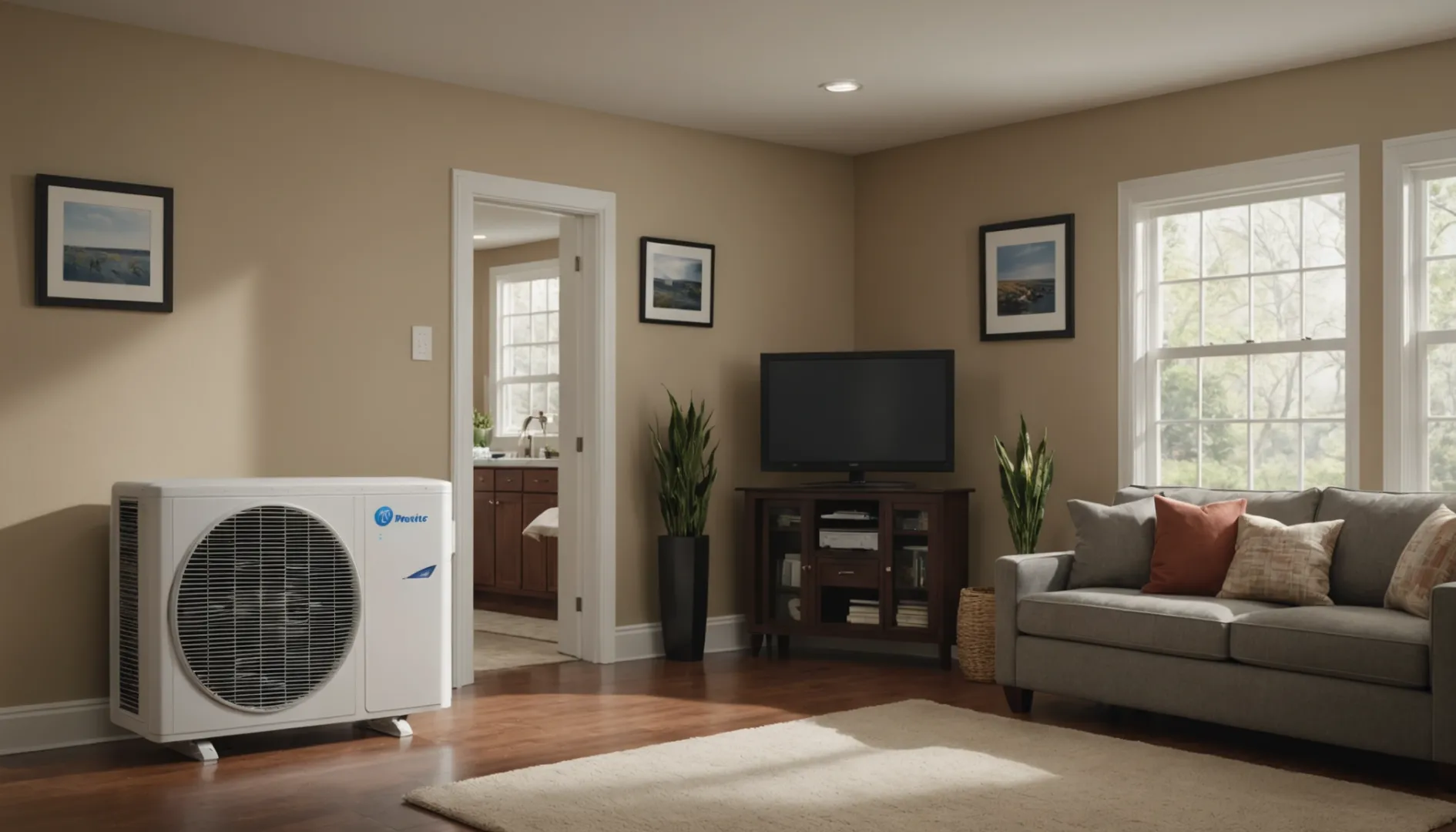
家庭におけるHVACシステムと空気清浄機の比較
HVACと空気清浄機の比較

初期費用と設置

私が初めて自宅の空気環境を改善しようと考えたとき、空気清浄機のシンプルさに惹かれた。これらのスタンドアローン・ユニットはオンラインで簡単に注文でき、2、3回クリックするだけで、数百ドル後には手元に届いた。これとは対照的に、HVACシステムのことを考えると、まるで新車を買うことを考えているような気分になった。初期費用はかなり高く、専門家による設置費用は言うまでもない。家を新築したり、古いシステムを取り替えたりする場合、これはかなりの投資になる。

について HVAC設置費用5 は、家の大きさやシステムの複雑さによって、数千ドルから数万ドルの幅がある。しかし、技術の進歩により、より効率的なシステムが開発されており、初期費用が高くても時間の経過とともに正当化される可能性がある。

運営維持費

そのうちに、これらのシステムを維持することこそ、真のコミットメントであることに気づいた。私のHVACシステムは、季節に関係なく私の家が快適であることを保証するために、一年中時計仕掛けのように動いている。つまり、フィルターの交換や時折の点検など、定期的なメンテナンスが必要なのだ。プラス面では、全体的なエネルギー効率に役立ち、光熱費が安くなることもある。

空気清浄機のエネルギー消費量は少ないが、それでも頻繁なフィルター交換が必要である。 ヘパ フィルター。家のあちこちに何台もある場合は、累積コストがかさむかもしれない。

長期的な価値と統合

長期的な価値は、あなたの家庭の具体的なニーズ次第です。我が家にはアレルギーを持つ家族がいるため、浄化技術が統合されたHVACシステムという包括的なソリューションを選択するのは当然のことでした。汚染物質だけでなく、湿度や温度も管理してくれます。

を統合する傾向が強まっている。 HVACによる空気浄化技術6 システム。ウェルキューブのようなイノベーションは、AIを活用したよりスマートな空気品質管理を約束する。 IoT.これらは、初期費用はかさむが、効率改善によって長期的には大きな節約になる。

進化するスタンダードとトレンド

室内空気の質に対する意識が高まるにつれ、空気清浄機もHVACシステムもその性能を高めている。空気清浄機も空調システムも、厳しい基準を満たす必要がある。AHAM 清浄機と ASHRAE HVACシステム用。

間近に迫った 2025年法案7 は、浄化技術のHVACシステムへの統合をさらに推し進め、将来を見据えた住まいを求める人々にとって、より魅力的なものにすると予想される。

空気清浄機はHVACシステムよりも費用対効果が高い。真

空気清浄機はHVACに比べて安価で、オンラインで簡単に購入できる。

HVACシステムは空気清浄にHEPAフィルターを使用している。偽

HVACシステムは通常、HEPAではなくMERV13~16のフィルターを使用する。

コンプライアンス基準は空気清浄機とHVACシステムにどう影響するか?

空気清浄機やHVACシステムがなぜそのように機能するのか、不思議に思ったことはありませんか?それは、コンプライアンス規格に関係しているのです!

などのコンプライアンス基準 AHAM そして ASHRAE は、空気清浄機やHVACシステムの安全性、効率性、性能を規定している。これらの装置が汚染物質を効果的に除去し、空気の質を維持し、消費者の健康を守り、品質管理を保証することを保証している。

空気清浄機と空調換気口のあるモダンなリビングルーム
モダン・リビングルームのコントラスト

コンプライアンス基準の役割

私が初めてコンプライアンス基準の重要性に気づいたときのことを覚えている。初めて空気清浄機を買った直後だった。当時、私はアレルギーに悩まされており、狭いアパートの空気を本当にきれいにできるものが必要だった。そこで見つけたのが AHAM 標準8そのため、この清浄機が煙、ほこり、花粉を除去するのにどの程度効果的なのかを理解することができた。このことを知ったことで、製品が一定の安全性と効率の基準を満たしていることを信頼することができ、購入に自信を持つことができました。

同様に、HVACシステムのメンテナンスを担当したことがある人なら、夏の涼しさや冬の暖かさを保つことだけが目的ではないことを知っているだろう。それは ASHRAE 規格9 システムが効率的に快適な環境を維持できるようにしながら、エネルギー使用のガイドラインを設定するためである。これは、エネルギー消費量が急増する可能性のある大規模ビルでは特に重要である。

デザインとパフォーマンスへの影響

私が空気清浄機を選ぶとき ヘパ このフィルターが、0.3ミクロンの粒子を99.97%除去するという特定のろ過能力を満たしていたからです。これにより、アレルゲンや汚染物質を効果的に除去することができ、私のアレルギー症状に顕著な違いが現れました。HVACシステムの場合 ASHRAE 規格は、温度と湿度を効率的に調整するように設計されていることを意味し、特に灼熱の夏には助かった。

技術の進歩と今後の動向

技術は常に進化しており、それは空気清浄機にも当てはまる。最近、私は ウェルキューブ10は、ビル管理システムと統合して空気の質を改善するポータブル空気清浄機である。将来的には、2025年までにすべての新しいシステムに浄化技術を内蔵することを義務付ける規制が導入される可能性があり、室内空気環境の改善に対する需要に確実に応えられるようになる。

情報収集の重要性

パンデミックを経験した後、私は室内空気の質をより意識するようになった。コンプライアンス基準を理解することで、自宅の安全を守る製品を購入する際に、より良い選択ができるようになりました。製造業者にとって、これらの基準を守ることは、安全性と革新性をますます重視する市場において、自社製品が競争力を維持することを意味する。

空気清浄機はAHAM規格に準拠している。真

空気清浄機は家電製品とみなされ、AHAM規格に準拠している。

HVACシステムは空気清浄にHEPAフィルターを使用している。偽

HVACシステムは通常、HEPAフィルターではなく、MERV13-16フィルターを使用しています。

空気清浄技術を形作る将来のトレンドとは?

私は常に、空気の質が私たちの日常生活をどのように変えることができるかに魅了されてきたが、こうした空気浄化のエキサイティングなトレンドは、まったく新しいレベルに到達している。

空気清浄技術の未来は、高度なろ過技術、スマートホームの統合、エネルギー効率と持続可能性への取り組みにおける革新が牽引している。

スマートHVACと空気清浄システムを備えたモダンなリビングルーム
スマートHVACリビングルーム

高度ろ過システム

高品質のフィルターを使った後、空気がどれほどきれいになったかを初めて実感したことを覚えている。それ以来、私たちがどれほど進歩しているか、信じられないほどです。高効率粒子状空気 (ヘパ)フィルターが微小粒子を捕捉するためのゴールドスタンダードであることに変わりはないが、現在ではさらに高度な素材がミックスに加わっている。例えば 光触媒酸化11 そして 活性炭フィルター12 は、厄介なVOCや頑固な臭いに対処するための最適なソリューションになりつつある。

スマートホームテクノロジーとの統合

空気清浄機をホームネットワークに接続した日は、画期的な出来事だった。スマートフォンをタップするだけで、どこにいても家の空気の質をコントロールできるようになった。今では多くの機器にWi-Fiが搭載され、スマートホームシステムとシームレスに同期できる。リアルタイムのデータに基づいて空気の設定を調整するセンサーがあることを想像してみてほしい!個人的な空気環境のアシスタントがいるようなものだ IoT13 つまり、これらの清浄機は今や、HVACシステムと手を携えて可能な限りエネルギー効率を高めるという、より大きな構想の一部となっているのだ。

エネルギー効率と持続可能性に焦点

私は常に環境フットプリントを気にしてきたので、空気清浄機が持続可能な方向に向かっているのを見ると、本当に勇気づけられる。技術やデザインの進歩により、空気清浄機のエネルギー効率は向上しています。また 再生可能エネルギー14 また、環境に配慮した製造材料の使用は、これらの機器が地球に与える影響を軽減する方法のほんの一部に過ぎません。法規制もまた、より環境に優しい技術革新へとメーカーを誘導しており、これは環境に配慮する私たち全員にとってwin-winの関係である。

室内空気品質管理の強化

COVID-19以降、多くの人々と同じように、私も室内で吸う空気について意識するようになった。現在では、単に空気を浄化するだけでなく、空気の質を総合的に管理するソリューションが提供されている。Wellcubeのようなシステムは、建物のインフラと統合するように進化しており、かつてないほど室内の空気の質に関する洞察を与えてくれる。近い将来、空気清浄が、よりスマートな室内環境管理パズルの1ピースに過ぎなくなると考えると、驚きを禁じ得ない。空気の質が常にモニターされ、自動的に最適化される世界を想像してみてほしい。

空気清浄機はHEPAフィルターを使用して高い濾過性を実現している。真

空気清浄機のHEPAフィルターは、0.3ミクロンの粒子を99.97%捕捉する。

HVACシステムは、空気清浄機よりも費用対効果が高い。偽

HVACシステムは、空気清浄機とは異なり、カスタマイズや設置に費用がかかる。

結論

空気清浄機は、小さな粒子を除去することに優れている。 ヘパ HVACシステムが全館的な快適性を管理する一方で、フィルターは、HVACシステムが全館的な快適性を管理する。両者とも、室内空気の質を向上させるために、よりスマートで統合されたソリューションへと進化している。


  1. 室内空気に対するHEPAフィルターの効率と利点を理解する。 ↩

  2. HVACシステムがどのように空気の質と換気を管理しているかを探る。 ↩

  3. 空気清浄機やHVACの設計に影響を与えるコンプライアンス基準について学びます。 ↩

  4. 空気品質管理システムの最先端動向をご覧ください。 ↩

  5. 包括的な理解のために、典型的な設置費用を調べてください。 ↩

  6. 統合がどのように室内空気の質を高めるかをご覧ください。 ↩

  7. 大気質ソリューションに影響を与える今後の規制を理解する。 ↩

  8. 空気清浄機製品の効果基準について学ぶ。 ↩

  9. エネルギーコストを節約するためのHVAC効率ガイドラインを理解する。 ↩

  10. 浄化技術を建築システムに統合するイノベーションを探る。 ↩

  11. この技術がどのように汚染物質を効果的に分解するかをご覧ください。 ↩

  12. VOCと臭気を除去する役割について学ぶ。 ↩

  13. IoTがどのように制御と効率を高めるかを探る。 ↩

  14. グリーン・テクノロジーがどのように統合されているかを確認する。 ↩

シェアする
Alwen Lee of HisoAir
Alwen Lee, an air purification expert with over 10 years of experience, is a devoted father of two and a passionate traveler, having explored more than 30 countries. With a love for public speaking and swimming, he has dedicated his life to the indoor air quality industry. His mission is to ensure that people around the world enjoy the freedom to breathe clean air and lead happy, healthy lives.

メッセージを送る

Related Products

もっと読む

Modern living room with a family enjoying a healthy indoor environment monitored by smart devices, natural lighting, and greenery.

After IFA 2026: The Healthy Home Is Moving Beyond Smart Devices

In our previous IFA 2026 column, Air Purification Is Becoming Part of the Healthy-Home Platform, we argued that the next generation of indoor-health products would ...
ニュース
Modern living room and kitchen with smart home air quality devices including an air purifier, humidifier, and water filtration system, connected with visualized blue connectivity lines.

IFA 2026: Air Purification Is Becoming Part of the Healthy-Home Platform

Pre-IFA Industry Perspective | September 4, 2026 This article is based on official announcements and regulatory information available ahead of IFA 2026, which takes place ...
ニュース
Comparison infographic showcasing the differences between carbon block filter and activated carbon fiber. Detailed diagrams illustrate the hierarchical porous structure of the carbon block with long diffusion paths and the open microporous structure of the activated carbon fiber with direct access for PFAS adsorption.

Carbon Block vs. Activated Carbon Fiber (ACF): Matching Media to Target Contaminants

Two carbon media. Same adsorption chemistry. Very different behaviour in a point-of-use cartridge. If you are specifying a water purifier platform for a PFAS-aware market, ...
ニュース
NSF base listing and ANF private-label certification pathway for OEM water filters

What Is an NSF Master Listing? A Guide to Base Listings, ANF Certification and OEM Water Filters

For a brand preparing to launch an OEM water purifier, one of the most common supplier claims is: “We already have an NSF master listing, ...
News, Water Purifiers
Healthy-home brand team reviewing PFAS water filter certification, test data and product engineering

Entering the Water Category Is Easy. Building a Credible PFAS Claim Is Much Harder

For air purification, appliance and healthy-home brands, entering the water category can look surprisingly easy. A company can select an existing undersink system, customize its ...
ニュース
Team in a business meeting discussing a water filtration system with product components and a comparison table displayed on a screen.

5 Leading OEM Water Purifier Manufacturers in China for Private Label Brands

China has thousands of companies selling water filters, reverse osmosis systems and drinking-water appliances. However, only a portion of them are suitable for private-label, OEM ...
ニュース
Contaminant Engineering•3 min read

PFAS Water Filtration Technologies Explained: Carbon, Resin & RO

Key Takeaway:

PFAS reduction depends on the specific compounds present, treatment media, contact time, water chemistry, and system design. Activated carbon, ion exchange, and Reverse Osmosis address PFAS through different mechanisms.

PFAS are a large family of persistent fluorinated compounds that can occur in drinking-water supplies. Their treatment behavior varies significantly by molecular structure, chain length, functional group, concentration, and the chemistry of the source water.

Granular Activated Carbon (GAC) removes PFAS primarily through adsorption. It is generally more effective for many longer-chain PFAS, while shorter-chain compounds tend to break through more quickly. Carbon performance depends on media properties, Empty Bed Contact Time (EBCT), competing organic matter, loading, and replacement frequency.

Ion-exchange resins use charged functional sites to capture many PFAS compounds. Properly selected anion-exchange media can provide high capacity and may perform better than conventional activated carbon for some shorter-chain PFAS, although performance still depends on water chemistry and competing ions.

Reverse Osmosis (RO) uses membrane separation rather than adsorption. Properly designed RO systems can provide broad reduction across many PFAS compounds as well as dissolved salts and other contaminants. Unlike carbon or resin, however, RO also produces a concentrate stream that must be managed.

No single technology should be selected from a PFAS label alone. System design should consider which PFAS compounds are present, their concentrations, required reduction targets, flow rate, media life, and the applicable third-party certification or validation requirements.

HisoAir Water Technical Series
Product Discovery•3 min read

How to Choose an Under-Sink Water Purifier for Modern Kitchens

Key Takeaway:

Match the treatment technology to your water quality first, then evaluate cabinet space, faucet configuration, flow rate, drain and power requirements, and filter replacement needs.

Choosing an under-sink water purifier starts with water chemistry. Carbon filtration is well suited to chlorine, taste, odor, and many organic contaminants, while Reverse Osmosis is more appropriate when dissolved salts, fluoride, nitrates, or broader dissolved contaminants need to be reduced.

For compact kitchens, tankless RO systems eliminate the conventional storage tank and can significantly reduce the space required under the sink. However, membrane capacity stated in GPD does not directly equal faucet flow. When comparing systems, check the actual dispensing flow rate, inlet-pressure requirement, recovery ratio, and whether a booster pump is required.

Installation architecture also matters. Many RO systems require a drain connection, electrical power, and either a dedicated drinking-water faucet or a compatible multi-function faucet. High-flow carbon systems can often connect directly to the existing cold-water line with a simpler installation, but pressure drop and available faucet flow should still be verified.

RO also removes much of the naturally occurring dissolved mineral content. Where taste or mineral balance is a priority, a post-RO remineralization stage can be added. Filter life should be evaluated by both rated capacity and local water quality rather than replacement time alone.

The right system is therefore not simply the smallest or highest-GPD model. It is the configuration that matches the target contaminants, available cabinet space, desired faucet setup, peak dispensing demand, and maintenance expectations.

HisoAir Water Technical Series
Water Quality•2 min read

What Does TDS Mean in Drinking Water? Measurement vs Contaminant Reality

Key Takeaway:

A TDS meter estimates the overall concentration of dissolved ionic substances from electrical conductivity. It cannot identify specific contaminants or determine whether water is chemically safe.

Total Dissolved Solids (TDS) refers to the combined concentration of dissolved substances in water. Most handheld TDS meters do not measure TDS directly. Instead, they measure electrical conductivity (EC) and convert that reading into an estimated parts-per-million (ppm) value.

This means a TDS reading can indicate how much dissolved ionic material is present, but not what that material actually is. Calcium, magnesium, sodium, nitrates, and other dissolved ions can all contribute to conductivity, yet a simple TDS meter cannot distinguish between them.

TDS meters are also not suitable for detecting trace contaminants such as PFAS, many VOCs, pesticides, pharmaceuticals, or disinfection byproducts. These substances may be present at concentrations far below the level needed to noticeably change electrical conductivity.

A low TDS reading therefore does not guarantee safe drinking water, and a higher TDS reading does not automatically indicate contamination. Water-treatment decisions should be based on laboratory testing for specific contaminants of concern rather than TDS alone.

HisoAir Water Technical Series
Technology Selection•2 min read

RO vs UF Water Filtration: Understanding Pore Sizes & Dissolved Minerals

Key Takeaway:

Ultrafiltration can reduce bacteria, turbidity, and suspended particles while retaining most naturally occurring dissolved minerals. Reverse Osmosis provides much broader reduction of dissolved salts and smaller contaminants.

Ultrafiltration (UF) typically uses hollow-fiber membranes with pore sizes in the approximate 0.01–0.1 micron range. These membranes physically retain turbidity, suspended solids, colloids, and many microorganisms while allowing dissolved minerals and salts to remain in the water.

Reverse Osmosis (RO) operates at a much finer separation level. Unlike UF, RO can substantially reduce dissolved ions such as sodium, calcium, fluoride, nitrates, and other contributors to total dissolved solids (TDS). This makes RO more suitable when dissolved-salt reduction is a primary treatment objective.

UF generally requires less system pressure and produces little or no continuous concentrate stream in many point-of-use configurations. RO typically requires greater pressure and produces a reject-water stream, but delivers broader contaminant reduction.

For water with acceptable TDS and mineral content, UF can be a simpler mineral-retaining treatment option. Where dissolved salts, fluoride, nitrates, or broader dissolved contaminants are a concern, RO is generally the more appropriate technology.

HisoAir Water Technical Series
Technology Selection•4 min read

Carbon Block vs Reverse Osmosis: Which Fits Your Need?

Key Takeaway:

Choose RO for dissolved inorganic salts and heavy metals; choose Carbon Block for chemical taste/odor, no wastewater, and high line-pressure flow.

Reverse Osmosis (RO) and Carbon Block filtration represent two fundamentally different treatment methods: membrane separation and adsorption. Understanding these differences helps determine which technology is better suited to a specific water-quality requirement.

Reverse Osmosis uses a semi-permeable membrane with pore sizes of approximately 0.0001 microns. It can significantly reduce dissolved inorganic contaminants such as TDS, fluoride, nitrates, and certain heavy metals. Because water must be forced through the membrane, RO systems require sufficient pressure or a booster pump and generate a concentrated wastewater stream.

Carbon Block filtration relies primarily on adsorption through compressed activated carbon, commonly with nominal pore sizes around 0.5–5 microns. It is highly effective for chlorine, chloramines, VOCs, taste, and odor, while allowing substantially higher direct-flow rates without producing wastewater.

From an operating perspective, Carbon Block systems are generally simpler, require less energy, and avoid the water loss associated with RO. RO involves higher system complexity and operating cost, but provides substantially broader reduction of dissolved contaminants that Carbon Block alone cannot address.

HisoAir Water Technical Series

見積依頼