
You want to sell PFAS water filters, but sourcing is hard. Bad suppliers waste your money and ruin your brand. I will show you how to source them safely.
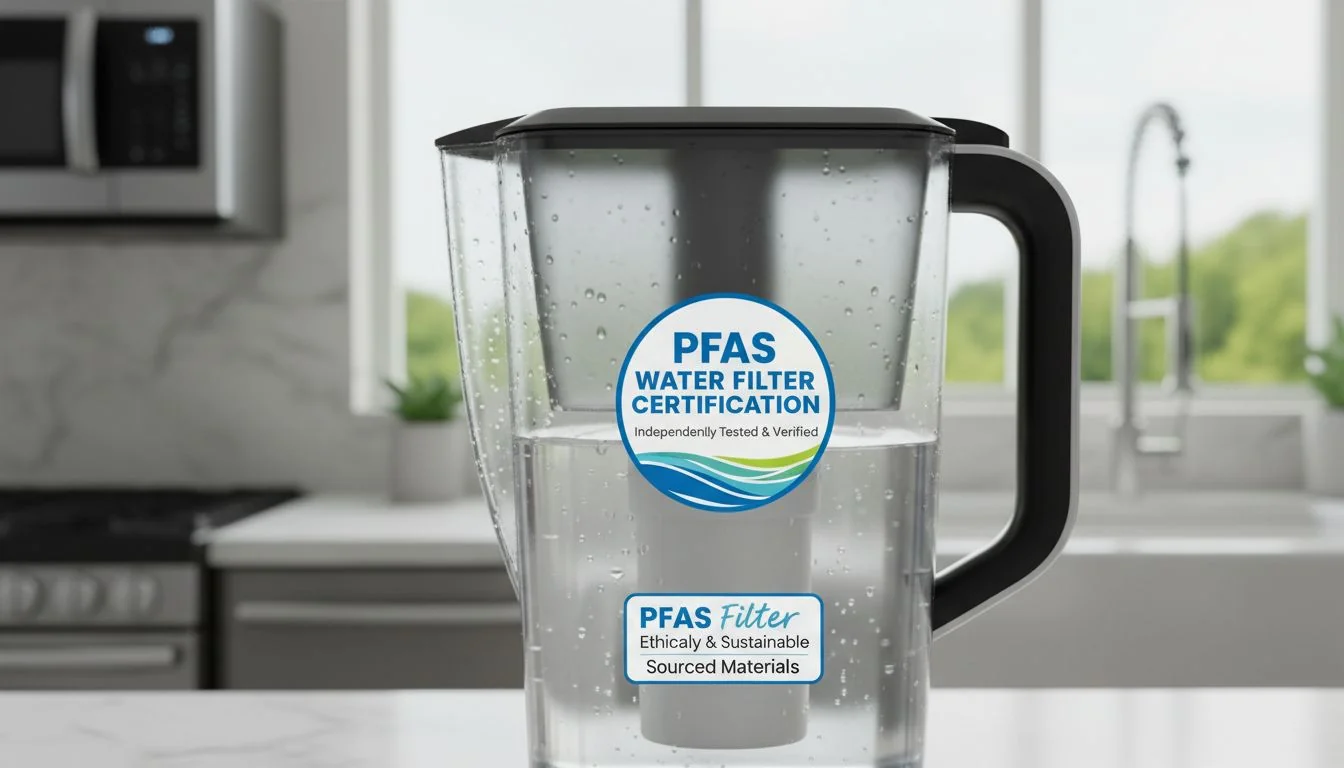
Brands must understand certification ownership, compliant claims, and minimum order quantities before sourcing private label PFAS water filters. You need to define product specs clearly and avoid false "PFAS-ready" claims. Proper planning prevents costly tooling mistakes and ensures your product meets strict market standards.
I remember my early days in the mold factory. I saw many brands fail because they rushed into production without a plan. You do not want to make those same mistakes. Let us look at the exact steps you need to take to launch a successful private label filter.
You can use the term 'PFAS-ready' on your packaging even if you do not have an official certification.偽
You should never use 'PFAS-ready' as if it means 'PFAS-certified' unless a real certification exists. This can lead to legal trouble.
Properly sourcing a private label water filter requires planning your certification strategy before making tooling decisions.真
Tooling and packaging decisions depend heavily on your target claims and market channels, so certification must come first.
Why Is Private Label Attractive in the Water Filtration Category?
Building a filter from scratch takes years. You lose time and miss market trends. Private label lets you launch fast and capture eager buyers right now.
Private label is attractive because it lowers your initial investment and speeds up your time to market. You can use existing, proven filter designs. This allows you to focus your budget on marketing and brand growth instead of expensive research and development.
Speed and Cost Benefits
When I started my mold trading company, I noticed a clear trend. Clients who used existing molds saved thousands of dollars. Private label works the same way. You skip the long design phase. You do not need to pay for new injection molds. This is a huge advantage for product designers like you who manage tight project deadlines.
Risk Reduction
You also reduce your risk. The factory already tested the product. They know the plastic components work well together. They already solved the mold shrinkage problems. You just need to focus on your brand design and packaging labels.
| ベネフィット | Custom Design | Private Label |
|---|---|---|
| Time to Market | 12 to 18 months | 3 to 6 months |
| Tooling Cost | 非常に高い | Zero to Low |
| R&D Risk | 高い | 低い |
You can see why many brands choose this path. It is a smart way to enter the market quickly. You still get a high-quality product, but you avoid the heavy lifting of early-stage manufacturing.
Private label products require you to pay for all new injection molds.偽
Private label uses existing factory designs, which means you usually do not pay for new molds.
Using a private label strategy speeds up your time to market.真
You skip the R&D and tooling phases, allowing you to launch much faster.
Who Owns the Certification and Listing for Your Filter?
You sell a great filter, but the factory owns the certification. If they cut you off, you lose everything. You must secure your certification rights early.
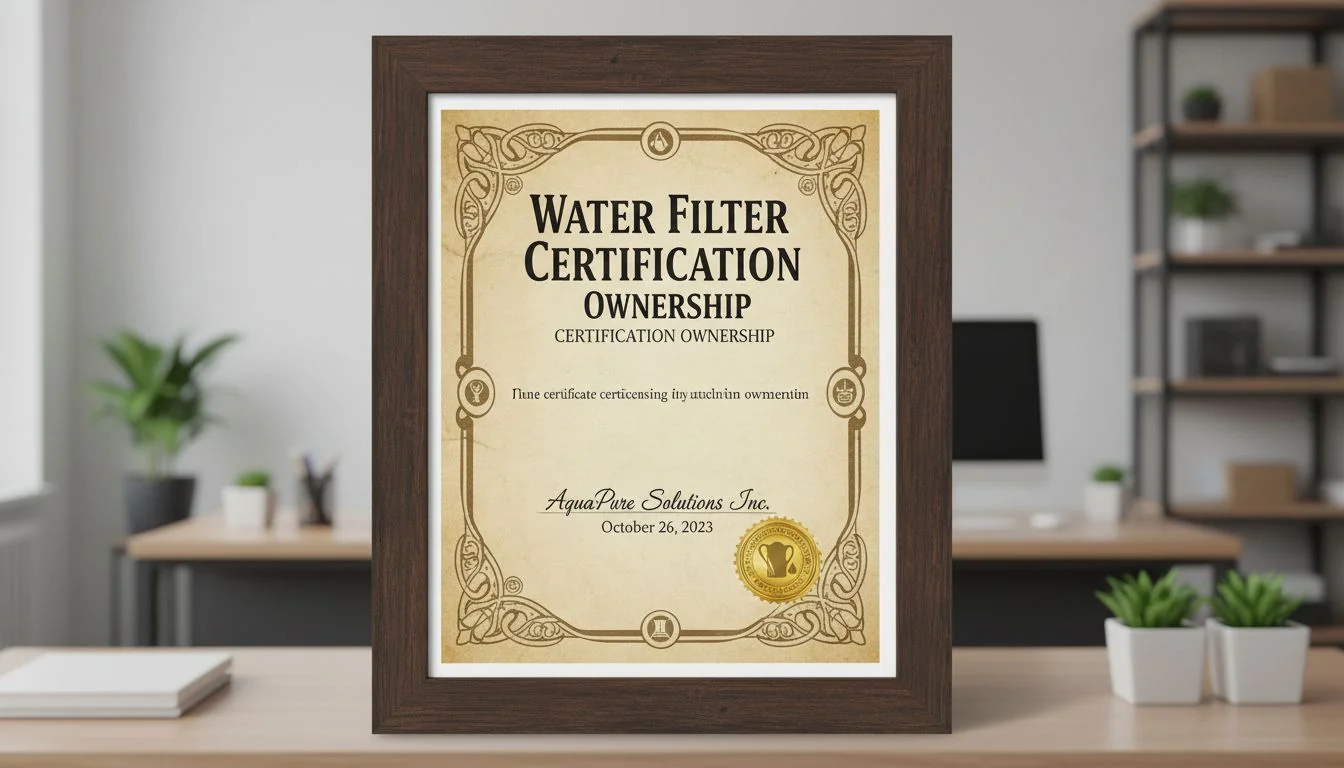
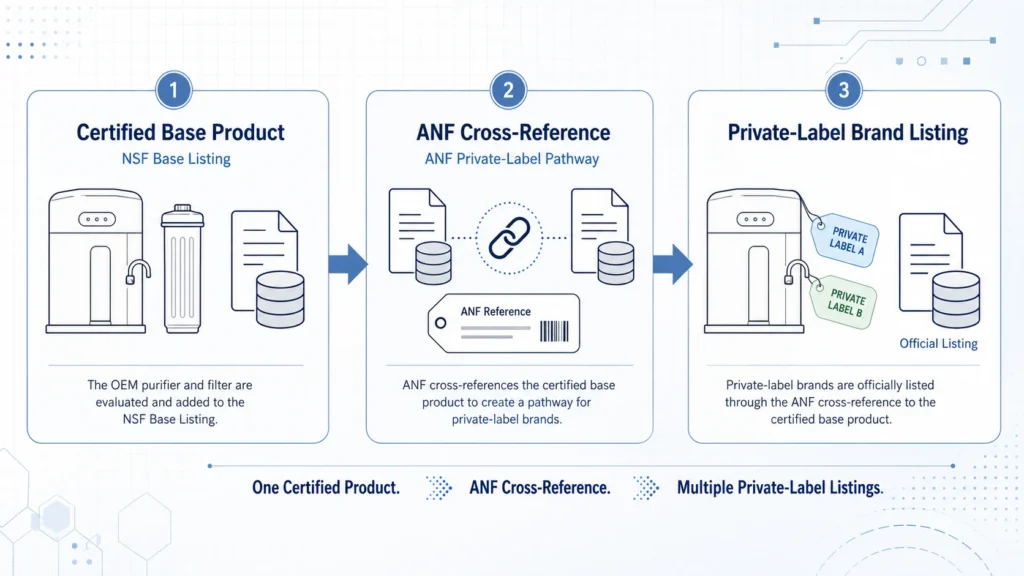
The factory usually owns the primary certification for a private label filter. You must apply for a multiple listee agreement to put your brand name on the certificate. You cannot legally claim your product is PFAS-certified unless your specific brand name appears on the official listing.
The Danger of Shared Certificates
I have seen brands print thousands of packaging boxes with fake claims. They thought they could use the factory certificate directly. This is a huge mistake. If the factory loses their certification, your product becomes illegal to sell. You must control your own listing.
Multiple Listee Agreements
You need a multiple listee agreement. This process links your brand to the factory test results. It proves your product meets the standards. You must never use words like "PFAS-ready" to trick buyers. You either have the real certification, or you do not.
| Certification Type | Who Owns It | Brand Protection |
|---|---|---|
| Factory Original | The Manufacturer | Very Low |
| Multiple Listee | Your Brand | 高い |
| Custom Testing | Your Brand | 非常に高い |
You must discuss certificate ownership before you sign any contract. You need to know who pays for the annual listing fees. You also need to know who handles the after-sales responsibility if a product fails a random test.
You can use the factory certification directly on your packaging without any extra paperwork.偽
You must apply for a multiple listee agreement to legally use the certification under your brand name.
A multiple listee agreement links your brand to the original factory test results.真
This agreement allows you to share the certification status while keeping your brand name on the official list.
How Do You Define Product Specs and Performance Targets?
Vague product specs lead to bad products. Your customers will complain about poor water flow. You must define every detail before the factory starts production.
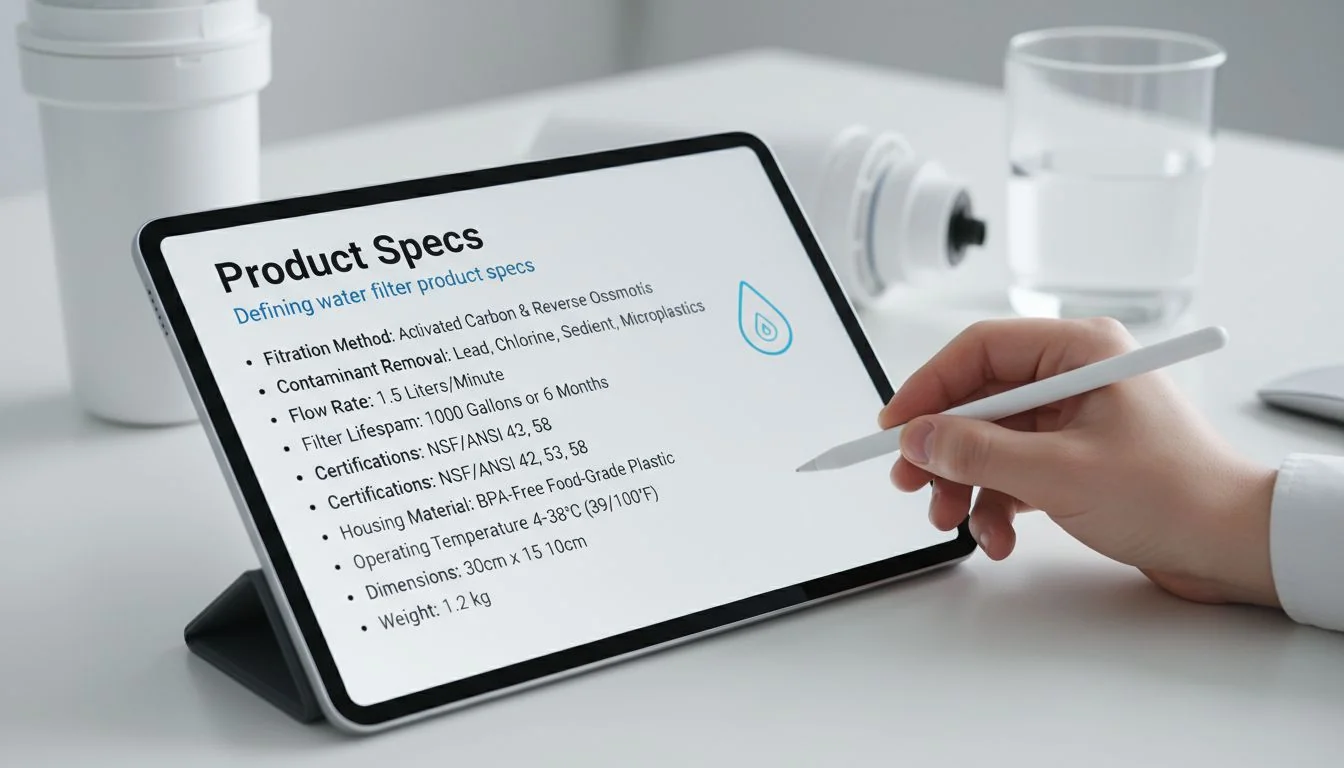
You must define the exact flow rate, filter life, and PFAS reduction targets for your water filter. You need to specify the plastic materials and the exact carbon block specifications. Clear specs ensure the factory builds a product that meets both aesthetic and functional requirements.
Setting Clear Targets
When I worked in the mold factory, engineers hated vague instructions. If you just say "make a good filter," you will get a cheap product. You must act like a true product designer. You need to write down the exact performance targets. How many gallons should the filter clean? What is the target water pressure?
Material Selection
You also need to choose the right materials. The plastic components must be food-grade. They must withstand high water pressure without cracking. You must ask the factory about their mold design principles. Good mold design prevents weak spots in the plastic housing.
| Specification | Why It Matters | Common Target |
|---|---|---|
| Flow Rate | User experience | 0.5 gallons per minute |
| Filter Life | Replacement frequency | 300 gallons |
| PFAS Reduction | Health safety | >95% reduction |
You must also think about design differentiation. Even in private label, you can change the color or the texture of the plastic. This helps your product stand out on the shelf.
Vague product specifications usually result in a high-quality final product.偽
Vague specs lead to cheap materials and poor performance because the factory will choose the easiest path.
You can change the color and texture of a private label product to make it stand out.真
Factories can easily adjust plastic colors and surface finishes without changing the core mold design.
What Are the MOQ, Pricing, and Cost Structure Basics?
High minimum orders tie up your cash. Hidden fees destroy your profit margins. You must understand the true cost structure before you place your first order.
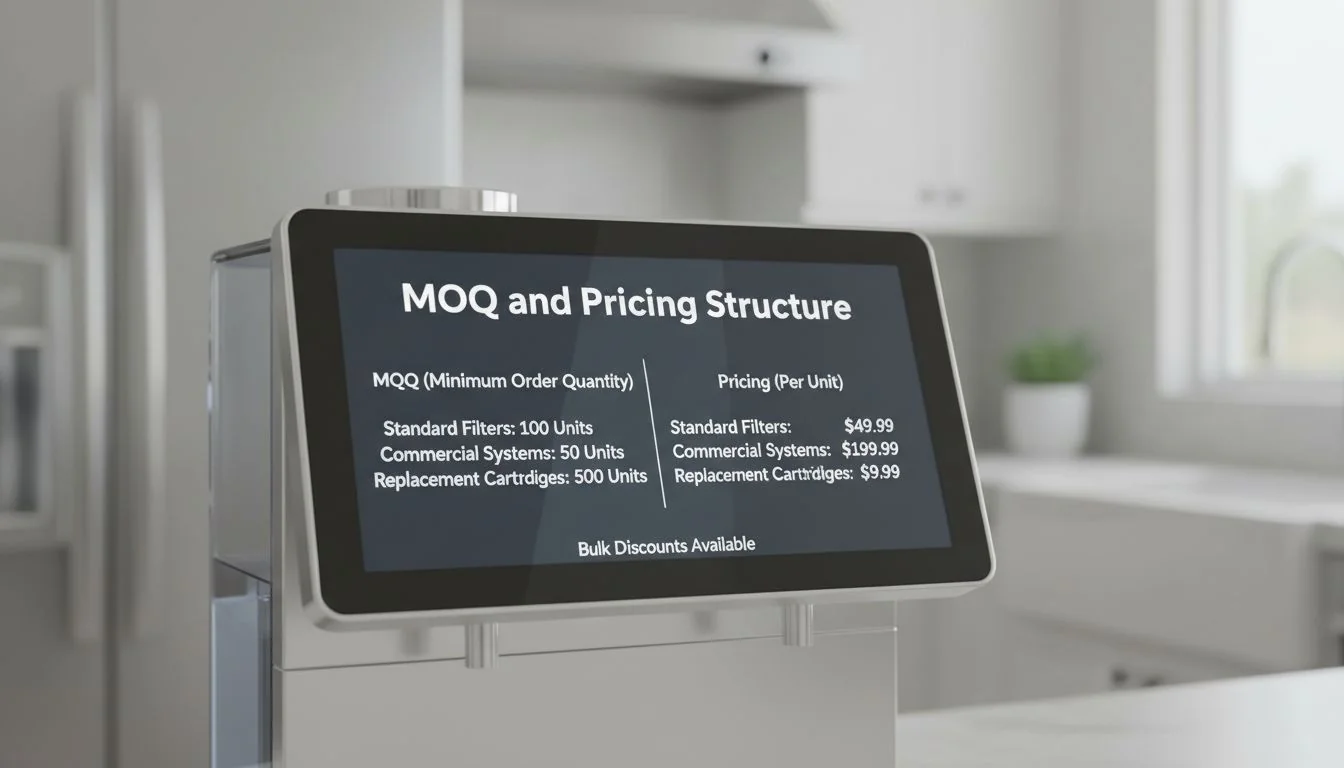
The cost structure includes the unit price, packaging costs, and certification fees. Minimum Order Quantity (MOQ) dictates how many units you must buy at once. You must negotiate the MOQ and understand all hidden costs to ensure your private label filter remains profitable for your business.
Understanding the True Cost
Many of my clients at the trading company struggled with pricing. They only looked at the unit cost. They forgot about the packaging labels and the shipping fees. You must calculate the landed cost. This is the total cost to get the product to your warehouse.
Negotiating MOQ
Factories set a Minimum Order Quantity to cover their setup costs. For plastic components, the factory needs to heat the injection machines. This takes time and energy. If you want a custom color, the MOQ will be higher.
| Cost Category | 説明 | Impact on Profit |
|---|---|---|
| Unit Price | Cost of the filter itself | 高い |
| Packaging | Custom boxes and labels | ミディアム |
| 認証 | Annual listing fees | ミディアム |
You can sometimes negotiate a lower MOQ if you use standard factory colors. You must balance your initial investment with your expected sales. Do not buy 10,000 units if you only expect to sell 500 in the first month.
The unit price is the only cost you need to consider when sourcing a product.偽
You must also include packaging, shipping, and certification fees to find your true landed cost.
Factories require a Minimum Order Quantity to cover their machine setup costs.真
Heating and preparing injection molding machines takes time and energy, which requires a minimum production run to be profitable.
How Do You Manage Lead Times, Logistics, and Inventory?
Late shipments ruin your product launch. Empty shelves make your customers buy from competitors. You must plan your inventory carefully to keep your supply chain moving.
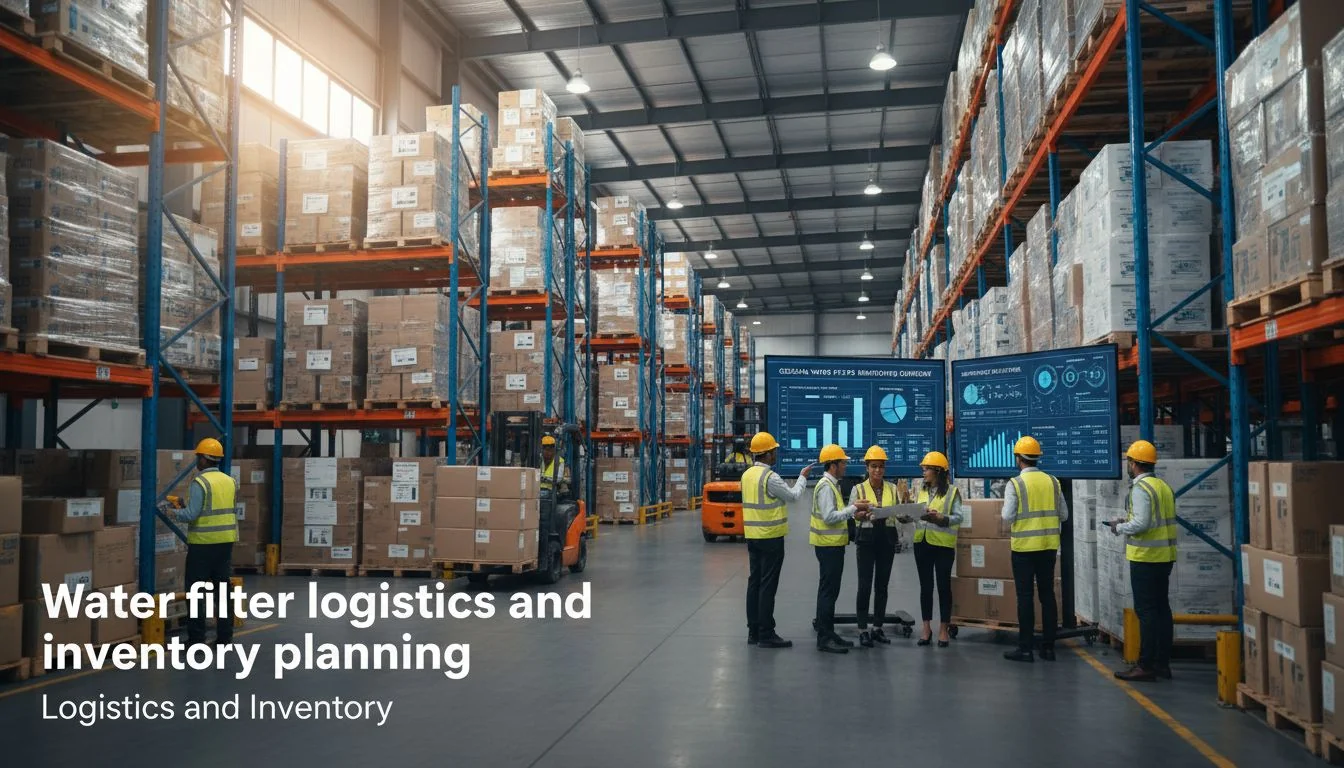
Lead time is the total time from placing an order to receiving the goods. You must account for manufacturing time, shipping delays, and customs clearance. Proper inventory planning ensures you always have enough stock to meet customer demand without paying for excessive warehouse storage space.
Calculating Lead Times
I always tell my clients to add two weeks to any factory estimate. Things go wrong. Machines break down. Shipping containers get delayed at the port. If the factory says production takes 30 days, you should plan for 45 days. You must manage tight project deadlines by building a buffer into your schedule.
Smart Inventory Planning
You do not want to run out of stock. You also do not want too much stock sitting in a warehouse. You need to track your sales velocity. This tells you how fast you sell your filters.
| ステージ | Average Time | Potential Delays |
|---|---|---|
| 製造 | 30 to 45 days | Material shortages |
| Ocean Freight | 25 to 40 days | Port congestion |
| Customs | 3 to 7 days | Missing paperwork |
You must order your next batch before your current batch runs out. You need to communicate clearly with your factory. Tell them your sales forecasts so they can prepare raw materials in advance.
Factory production estimates are always 100% accurate and never change.偽
Machine breakdowns and material shortages often cause delays, so you should always add a time buffer.
Tracking your sales velocity helps you know when to place your next inventory order.真
Knowing how fast you sell products allows you to reorder stock before you run out.
What Are the Common Sourcing Pitfalls and How Do You Avoid Them?
Bad suppliers will lie to get your money. They will change materials without telling you. You must know how to spot these traps before they destroy your business.
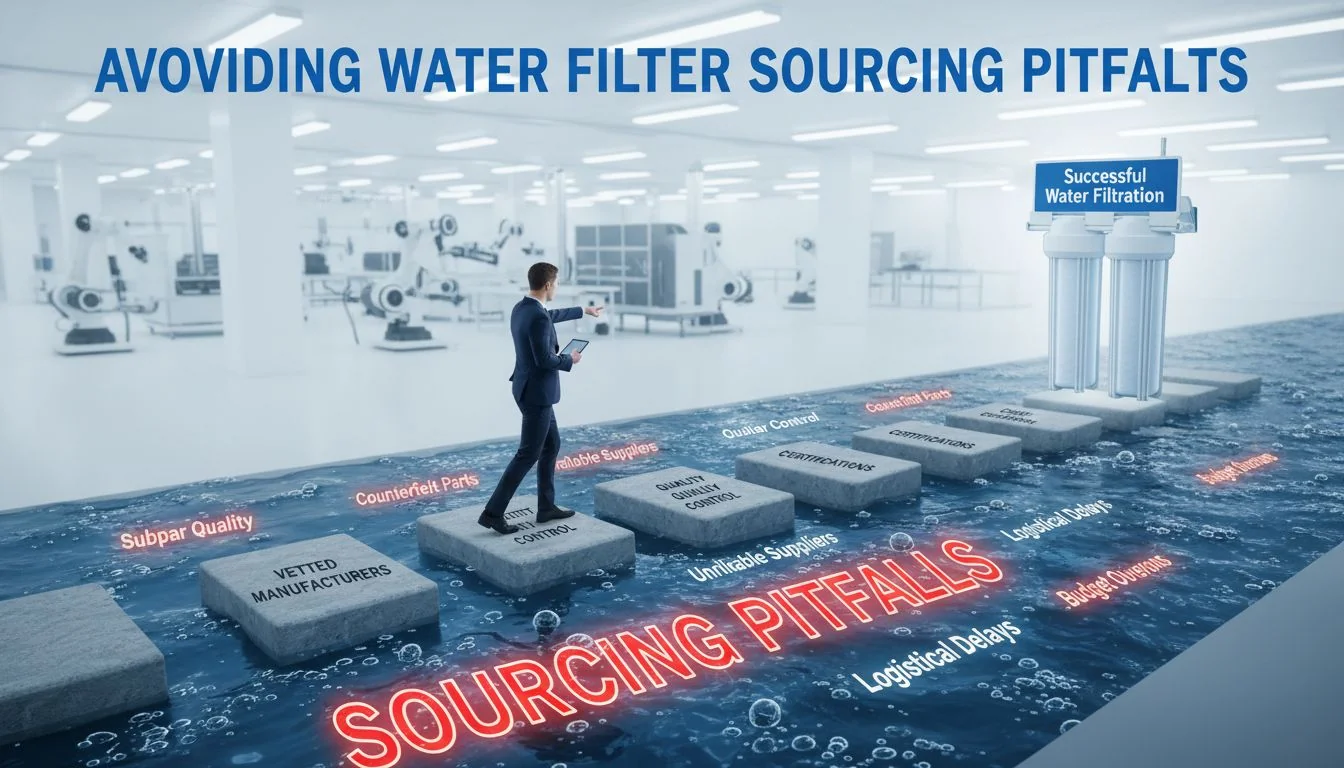
Common pitfalls include accepting fake test reports, ignoring after-sales responsibility, and failing to inspect goods before shipment. You avoid these by hiring third-party inspectors, verifying certificates directly with testing agencies, and signing strict quality control agreements with your factory before production begins.
Verifying Claims and Certificates
In my years in the mold industry, I saw many factories cut corners. They might show you a PFAS test report from five years ago. You must verify every document. Call the testing agency. Make sure the certificate is current. Never accept "PFAS-ready" as a real claim. It means nothing.
Quality Control and After-Sales
You must define after-sales responsibility. If a filter leaks and ruins a customer's kitchen, who pays for the damage? You need a clear contract. You must also hire a third-party inspector. They will check the plastic components before they leave the factory.
| Pitfall | Consequence | How to Avoid |
|---|---|---|
| Fake Certificates | Legal trouble | Verify with the agency |
| Material Changes | Product failure | Third-party inspections |
| Unclear Contracts | You pay for damages | Define after-sales terms |
You must protect your brand. Do not trust the factory blindly. You must build a system that forces them to maintain high quality on every single order.
You should always trust the test reports provided by the factory without checking them.偽
Factories sometimes provide outdated or fake reports. You must verify them with the testing agency.
Hiring a third-party inspector helps ensure the factory uses the correct materials.真
An independent inspector checks the goods before shipment to confirm they meet your quality standards.
結論
Sourcing private label PFAS filters requires careful planning. Please contact us to discuss your target claims, market channels, and certification strategy before you make any tooling or packaging decisions.




 English
  Français
  Español
  Italiano
  Deutsch
  Português
  Русский
  العربية
  日本語
日本語  한국어
한국어  Tiếng Việt

