





Choosing a manufacturing partner is a huge decision. The wrong choice can sink your business with delays and hidden fees. I want to help you get it right from the start.
While Asia, especially China, often has lower direct labor costs, Mexico frequently offers a lower total landed cost1 for U.S. brands. This is due to major savings on shipping, tariffs, and inventory, plus faster delivery times that modern consumers demand.
I've spent years navigating the world of global manufacturing for our water purifiers at ヒソエア. The simple answer of "Asia is cheaper" is no longer true. The game has changed. Factors like shipping delays2, tariffs, and changing consumer expectations have made this a much more complex question. We need to look beyond the price per unit and consider the total cost of getting a product into a customer's hands. Let's break down the real differences so you can make the best choice for your brand.
Manufacturing in Mexico is always cheaper overall than in China for U.S. companies.偽
It depends on the product. For complex electronics with deep supply chains, China might still be cheaper. For bulkier goods or brands prioritizing speed, Mexico often wins on total landed cost.
The 'landed cost' includes the product price, shipping, insurance, and tariffs.真
Landed cost represents the total expense to get a product from the factory floor to the buyer's door, giving a much more accurate picture of sourcing expenses than the factory price alone.
Why is this comparison more important than ever?
The world of e-commerce is moving faster than ever. Customers expect quick delivery, and supply chain disruptions can cripple a brand. This makes your manufacturing location a critical strategic decision.
This comparison is vital because consumer expectations and global risks have changed. Proximity to your customers, like we get from Mexico, directly impacts delivery speed, inventory costs3, and your brand's resilience, making it a key factor for success in 2025 and beyond.
The New Rules of Manufacturing
In the past, the decision was simple: find the lowest production cost. Today, that's just one piece of the puzzle. I've learned that we have to think about the entire system. The "Amazon Prime effect" is real. Customers in the U.S. want their products in days, not weeks. Shipping from Asia can take a month or more. Shipping from Mexico can take just a few days. This speed is a huge competitive advantage. It allows us to meet customer expectations and react quickly to market trends. A long supply chain from Asia means we are slow to adapt. A short supply chain from Mexico means we are agile. This agility is priceless for a growing D2C brand.
The average shipping time from China to the U.S. is under two weeks.偽
Ocean freight from China to the U.S. typically takes 30-40 days, not including time for customs clearance and inland transport.
Nearshoring can significantly reduce a company's carbon footprint.真
Shorter shipping distances, especially via truck or rail from Mexico instead of ocean freight from Asia, result in lower fuel consumption and greenhouse gas emissions.
Is Asian labor always cheaper than in Mexico?
You're trying to lower your costs, and labor is a big part of that. You hear that Asia has the cheapest labor, but rising wages and complex rules can make that a myth.
No, Asian labor is not always the cheapest option when you factor in everything. While some Asian countries have lower hourly wages, Mexico's labor laws4 are more structured, and the productivity levels are very competitive, often balancing out the direct cost difference for U.S. brands.
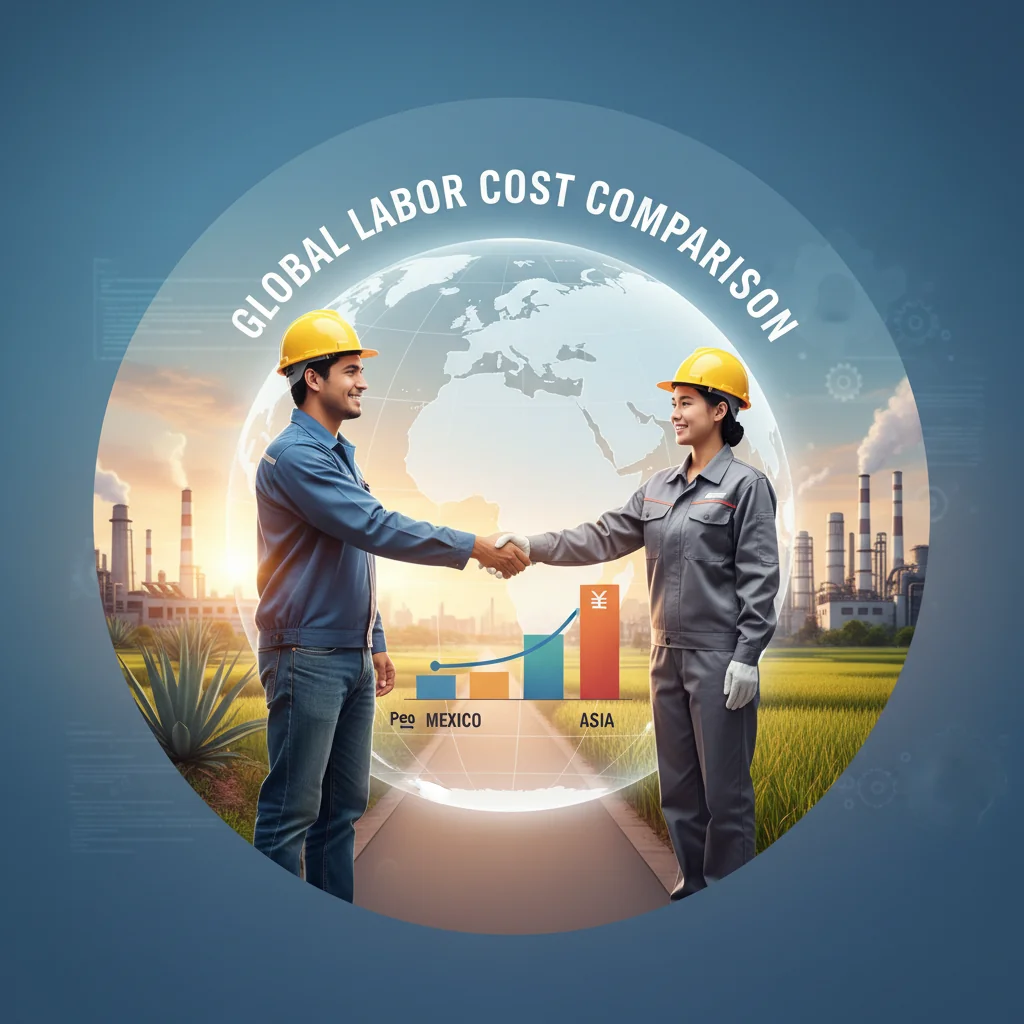
A Closer Look at Labor
When I first started, I just looked at the hourly wage. That was a mistake. The true cost of labor is more complicated. You have to consider productivity, benefits, and local regulations. In Mexico, labor laws are stricter and more similar to those in the U.S. This means things like overtime and social benefits are clearly defined. In some parts of Asia, the rules can be less clear, which creates risk. While China's wages have been rising, Mexico's have remained more stable. It's important to look at the "fully burdened" labor rate, not just the number on a price sheet.
| ファクター | メキシコ | 中国 | ベトナム |
|---|---|---|---|
| Avg. Mfg. Wage | ~$4-6/hour | ~$6-8/hour | ~$3-4/hour |
| Productivity | 高い | 非常に高い | 中程度 |
| Labor Laws | Strict, defined | Strict, evolving | Flexible, less predictable |
| メリット | Mandatory | Mandatory | 変動あり |
This table shows that while a country like Vietnam might have a lower wage, China's high productivity and Mexico's balance of cost and skill make them strong competitors.
Mexico's labor laws are less strict than China's.偽
Mexico has comprehensive federal labor laws that are often stricter regarding overtime, severance, and mandatory benefits compared to the more variable regulations in many Asian countries.
Wages for manufacturing in China have more than doubled in the last decade.真
China has intentionally increased its minimum wage and average manufacturing wages to move up the value chain, making it less of a low-cost leader than it once was.
How do shipping and tariffs change the total cost?
You found a low unit price from a factory in Asia. But then you get hit with massive shipping bills and unexpected tariffs. Suddenly, your great deal isn't so great anymore.
Logistics and tariffs can completely change your cost analysis. Shipping from Mexico is drastically faster and cheaper to the U.S. Plus, the USMCA agreement5 means most products from Mexico are tariff-free, unlike many goods from China which face significant duties.
The Journey to Your Customer
そこで nearshoring6 to Mexico really shines. I learned this the hard way when a shipment from Asia was stuck at a port for six weeks. With Mexico, our products move by truck or rail. They can be at our U.S. warehouse in under a week. This speed is incredible. It also costs a lot less. But the biggest factor is tariffs. The USMCA (United States-Mexico-Canada Agreement) makes most goods from Mexico duty-free. Many products from China, however, are subject to tariffs of up to 25%. That's a massive cost that goes directly against your profit margin. Consumers are also paying more attention to sustainability. The shorter shipping distance from Mexico means a lower carbon footprint, which is a great story for our brand.
| ファクター | Mexico to U.S. | Asia to U.S. |
|---|---|---|
| Shipping Time | 2-8 days | 30-45 days |
| Shipping Cost | Low to Moderate | 高い |
| Tariffs (USMCA) | 0% on most goods | 0-25%+ |
| carbon footprint7 | 低い | 高い |
The USMCA agreement provides no real benefit over the old NAFTA agreement.偽
USMCA updated key areas like intellectual property, digital trade, and labor rules, modernizing the trade relationship and reinforcing tariff-free access for most goods.
All products imported from China have a 25% tariff.偽
Tariffs on Chinese goods vary widely by product category. While many items fall under Section 301 tariffs (often 7.5% or 25%), many others have no additional duties.
Does lower cost mean lower quality or productivity?
You worry that if you move manufacturing from a powerhouse like China, your quality will suffer. You think you might trade cost savings for more defects and slower production lines.
Not necessarily. While China leads in high-tech automation, Mexico has a highly skilled workforce and a strong industrial base, especially in automotive and electronics. Productivity is high, and quality can be excellent, but you may need to invest more in supplier management.
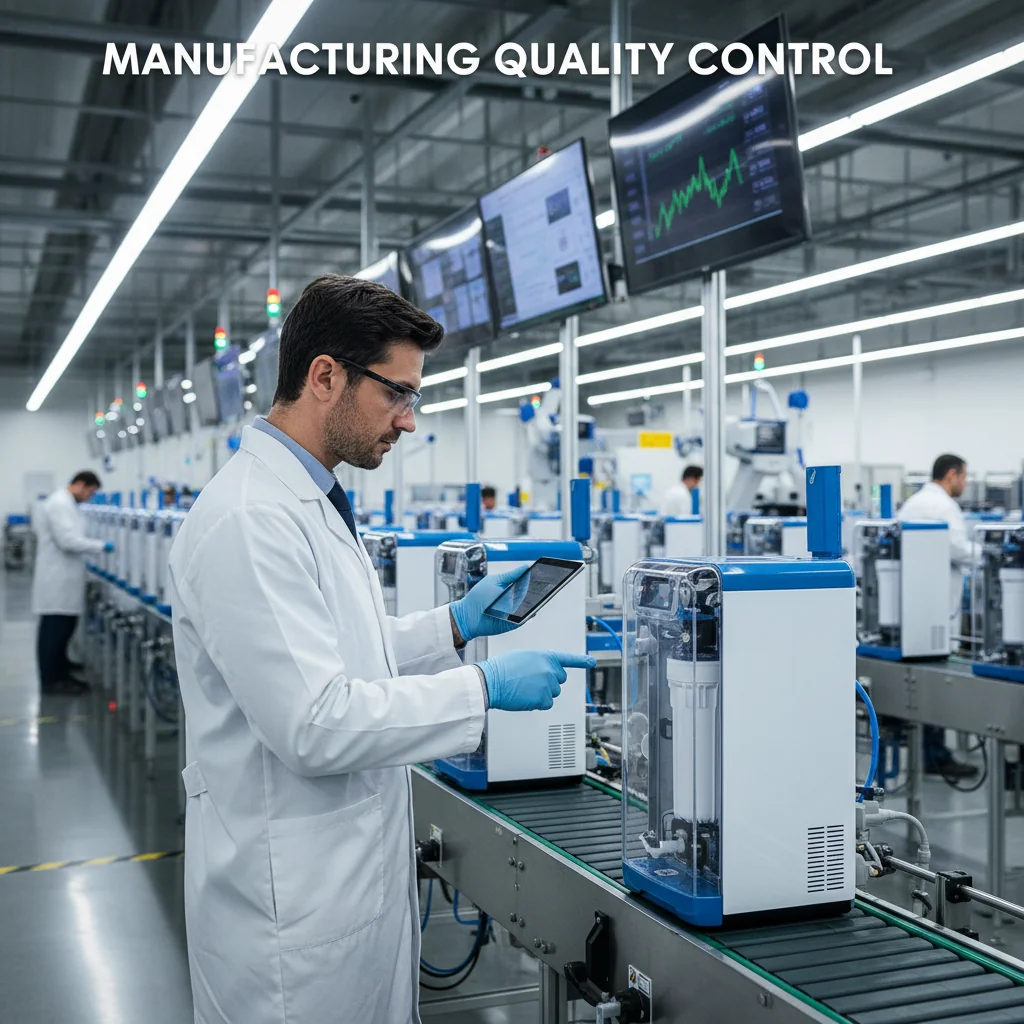
Building a Quality Product
Quality is everything for our brand, HisoAir. We can't afford defects. My experience shows that quality is about the factory you choose, not just the country. China is a leader in Industry 4.0. Their factories are often highly automated, which leads to amazing consistency. Mexico is catching up fast, but much of its strength is in its skilled manual labor. This is great for products that require careful assembly. The biggest difference I've found is the supplier ecosystem. In a city like Shenzhen, you can find every component, package, and accessory within a few miles. It's a true one-stop shop. In Mexico, we sometimes have to import specific components, often from Asia. This can add a step and a small cost, but the overall benefits of nearshoring still put us ahead.
China is the world leader in factory automation and Industry 4.0 adoption.真
China has heavily invested in robotics and smart manufacturing as part of its 'Made in China 2025' plan, making it a global leader in advanced factory technology.
Mexico has no high-tech manufacturing sector.偽
Mexico has a very sophisticated and advanced manufacturing sector, particularly in the automotive, aerospace, and electronics industries, with world-class facilities and a highly skilled workforce.
You've calculated your unit cost, shipping, and tariffs. You think you have the final number. But then unexpected expenses start appearing, eating away at your profits and tying up your cash.
hidden costs8 like inventory, energy, and currency risk can be significant. Sourcing from Asia often requires holding huge amounts of inventory, while Mexico's higher energy costs and currency fluctuations can also impact your bottom line in ways that aren't immediately obvious.
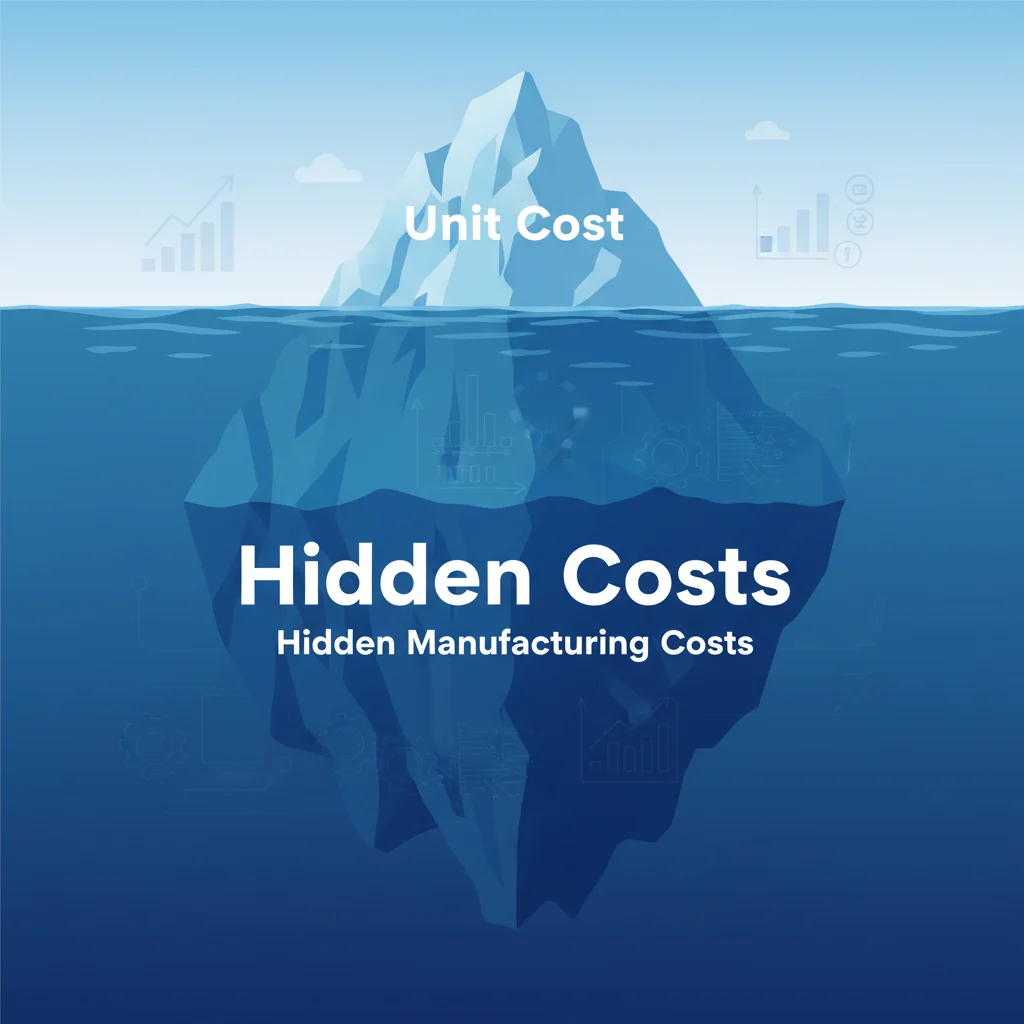
The Costs Below the Surface
This is the area that trips up most brands. When we sourced from Asia, we had to order massive quantities to cover the long lead times. All that inventory is cash that's just sitting on a shelf. By nearshoring to Mexico, we can use a leaner inventory model. We order less, more often. This frees up so much working capital that we can reinvest in marketing and growth. However, Mexico has its own hidden costs. Energy and utilities can be more expensive and less reliable than in China, where industrial zones often have subsidized power. Another risk is currency. The Mexican Peso can fluctuate against the dollar. Most Asian suppliers will bill you in USD, which removes that risk. You have to watch these factors closely.
| Hidden Cost / Risk | メキシコ | Asia (e.g., China) |
|---|---|---|
| Inventory Holding | Low (lean model) | High (large orders) |
| Energy Costs | Can be high/unstable | Often subsidized, stable |
| Currency Risk | Moderate (Peso vs USD) | Low (often billed in USD) |
| コンプライアンス | Stricter labor laws | Varies by country |
Holding large amounts of inventory is a good strategy to protect against stockouts.偽
While it prevents stockouts, holding excess inventory is a major financial drain. It ties up working capital, increases storage costs, and carries the risk of obsolescence, making lean inventory a more efficient model.
Most Chinese exporters bill international clients in Chinese Yuan (RMB).偽
To simplify transactions and reduce currency risk for their clients, the vast majority of Chinese exporters bill and accept payment in U.S. Dollars (USD).
Which region is right for your D2C brand?
You've seen the pros and cons of both regions. Now you have to make a final decision. The choice feels overwhelming, and you're not sure which path is best for your brand's future.
For D2C/B2C brands targeting the U.S. market, Mexico is often the strategic choice. It prioritizes speed, cash flow, and サプライチェーンの回復力9. Asia remains a strong option for brands where the absolute lowest unit cost is the single most important factor.
Making the Strategic Choice
At HisoAir, we serve customers who expect quality and speed. For us, the choice became clear. The ability to get our water purifiers to customers quickly is a huge win. The lower inventory costs freed up cash that helped us grow faster. And telling our customers that our products have a lower carbon footprint because of shorter shipping distances is a powerful marketing message. If your brand is built on speed-to-market, agility, and a strong connection with your U.S. customer base, I strongly recommend you look at Mexico. If your product is extremely complex with a deep component ecosystem, or if your business model can tolerate long lead times in exchange for the lowest possible unit price, then Asia might still be the right fit. Analyze your priorities: is it cost, speed, or risk? Your answer will point you in the right direction.
Consumers are increasingly willing to pay more for sustainably sourced products.真
Numerous studies show a growing trend of consumer preference for brands that demonstrate strong ESG (Environmental, Social, and Governance) practices, including sustainable sourcing and a lower carbon footprint.
Nearshoring to Mexico is only for large corporations, not small D2C brands.偽
Mexico's manufacturing ecosystem is very flexible, with many factories (known as maquiladoras) that are set up to work with smaller brands, making it an accessible option for D2C startups.
結論
Choosing between Mexico and Asia depends on your brand's goals. It's a balance of total cost, speed, and risk. Analyze your priorities to make the smartest choice for growth.
References
-
Understanding total landed cost helps businesses evaluate true expenses beyond unit price, crucial for informed sourcing decisions. ↩
-
Shipping delays can significantly affect delivery times and costs, making it essential to consider them in your manufacturing strategy. ↩
-
Inventory costs can significantly affect cash flow and profitability, making it essential to manage them effectively in manufacturing. ↩
-
Understanding labor laws is crucial for compliance and cost management, impacting overall manufacturing expenses. ↩
-
The USMCA agreement offers tariff-free access for many goods, which can greatly reduce costs for manufacturers sourcing from Mexico. ↩
-
Nearshoring can enhance supply chain efficiency and reduce costs, making it a strategic choice for many brands. ↩
-
The carbon footprint of manufacturing can influence brand perception and consumer choices, highlighting the importance of sustainable practices. ↩
-
Identifying hidden costs is vital for accurate budgeting and financial planning in manufacturing, ensuring no surprises affect profitability. ↩
-
Supply chain resilience is key to maintaining operations during disruptions, making it a critical factor in manufacturing decisions. ↩







 English
  Français
  Español
  Italiano
  Deutsch
  Português
  Русский
  العربية
  日本語
日本語  한국어
한국어  Tiếng Việt

