
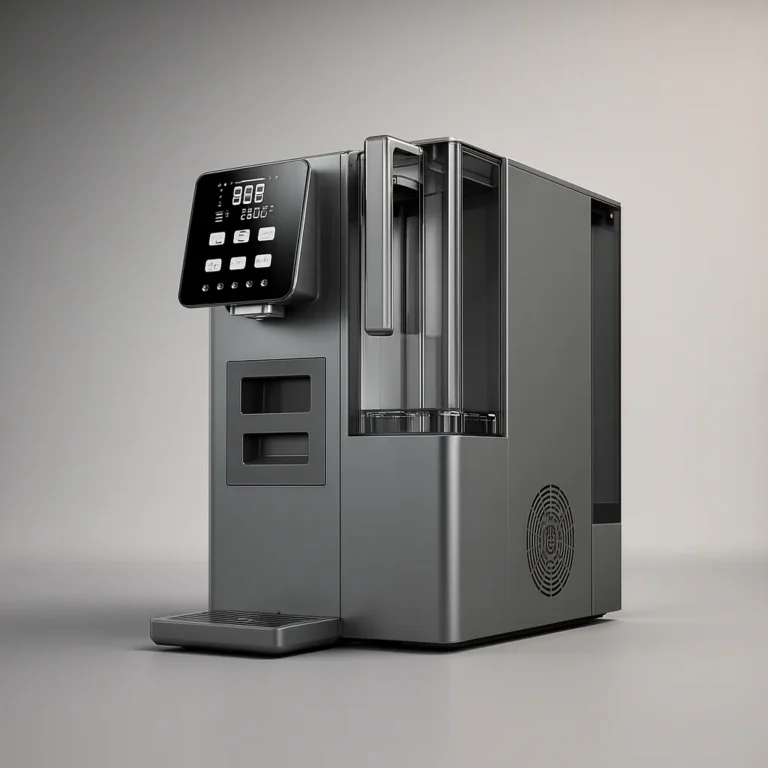
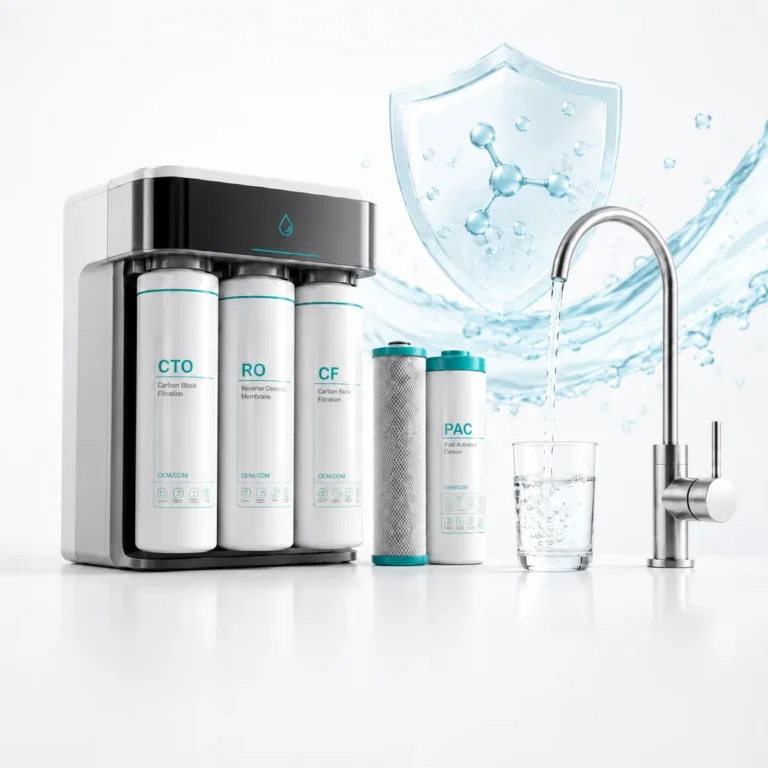
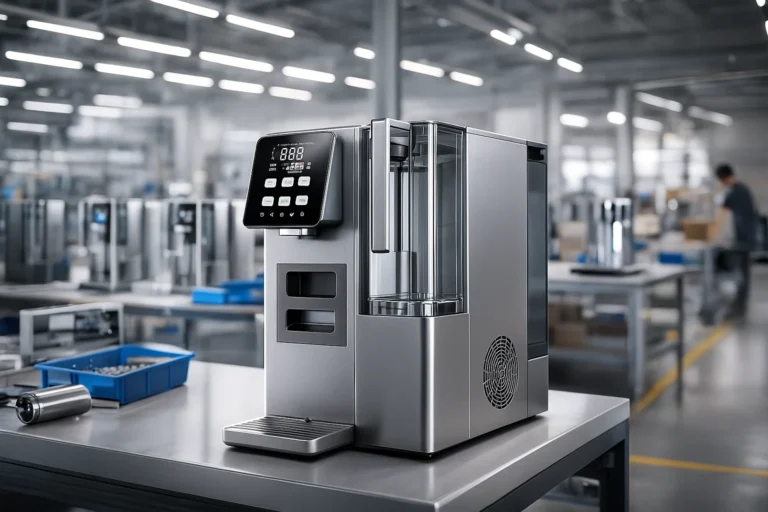

Schools face strict water safety rules. Choosing the wrong bottle filler wastes money and fails compliance. Here is how to verify specs before you buy.
Buyers must verify NSF/ANSI 531 and 58 certifications for PFAS reduction, check if filters are built-in or external, and evaluate flow rates for high school traffic. You should also review ADA compliance, durable construction, and total cost of ownership, including filter replacement schedules and maintenance alerts.
I remember reviewing a plastic housing design for a water dispenser years ago. The client ignored the internal filter space. We had to redesign the whole mold. You do not want to make a similar mistake when buying or designing these units. Let us look at the exact details you need to check.
All bottle filling stations automatically remove PFAS chemicals.偽
Only stations with specific certified filters, like NSF/ANSI 53 or 58, can effectively reduce PFAS.
ADA compliance affects the installation height of school bottle fillers.真
The Americans with Disabilities Act requires specific reach ranges and clear floor space for accessibility.
Why Are Bottle Filling Stations a Common School Upgrade?
Old water fountains break easily. Students avoid them, and facility managers hate fixing them. Upgrading to modern bottle fillers solves these hardware and maintenance headaches.
Modern bottle filling stations are a common school upgrade because they offer durable construction, easy service access, and visible filter maintenance status. They handle high student traffic better than traditional fountains and provide a reliable way to deliver filtered water.
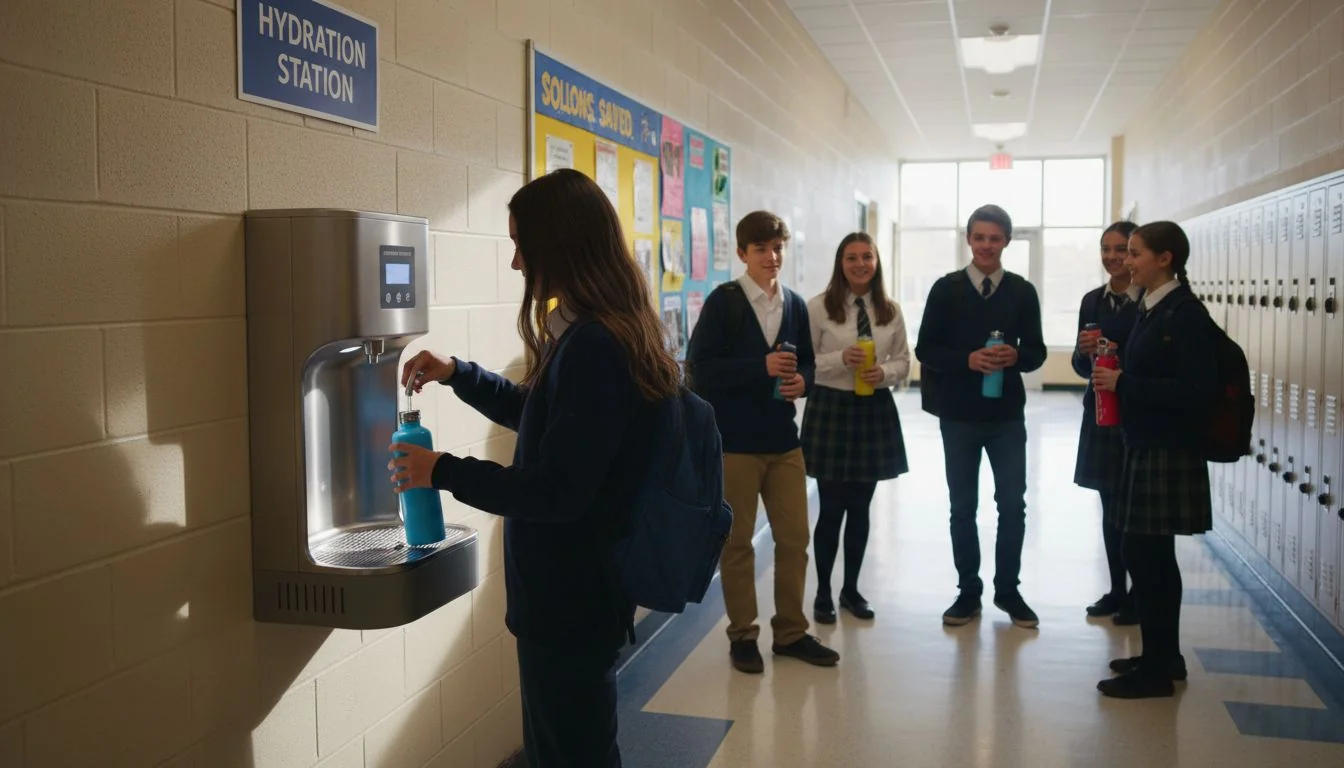
When I look at the plastic components of a modern bottle filler, I see smart engineering. Schools need tough products. Kids can be rough on equipment. Facility managers need units that do not break down every week. A good bottle filling station uses thick, durable plastics and strong metal frames. This reduces vandalism and accidental damage.
Facility management value is a huge selling point. Old fountains required a lot of guesswork. Modern units have visible maintenance status2 lights. A green light means the filter is good. A red light means you need to change it. This simple feature saves hours of checking. It also gives students confidence in the water quality.
Evaluating Hardware Durability
| 特徴 | 学校へのメリット |
|---|---|
| Heavy-duty plastic housing | Resists impacts and daily wear |
| Visible status lights | Removes guesswork for maintenance teams |
| Easy-access panels | Speeds up filter changes and repairs |
| Touchless sensors | Reduces the spread of germs |
I always tell my clients to look at how easy a product is to open. If a maintenance worker needs special tools just to change a filter, the design is bad. You want a unit that balances security with easy service access.
Visible status lights increase maintenance time for facility managers.偽
Status lights actually decrease maintenance time by showing exactly when a filter needs replacing.
Touchless sensors help reduce the spread of germs in schools.真
Touchless operation prevents multiple users from touching the same surface, lowering cross-contamination risks.
Filtration Inside Bottle Fillers: What Should the Spec Sheet Show?
Confusing spec sheets cause bad purchases. You might buy a unit that lacks the right filter. This wastes your budget. Read the specs carefully to avoid this mistake.
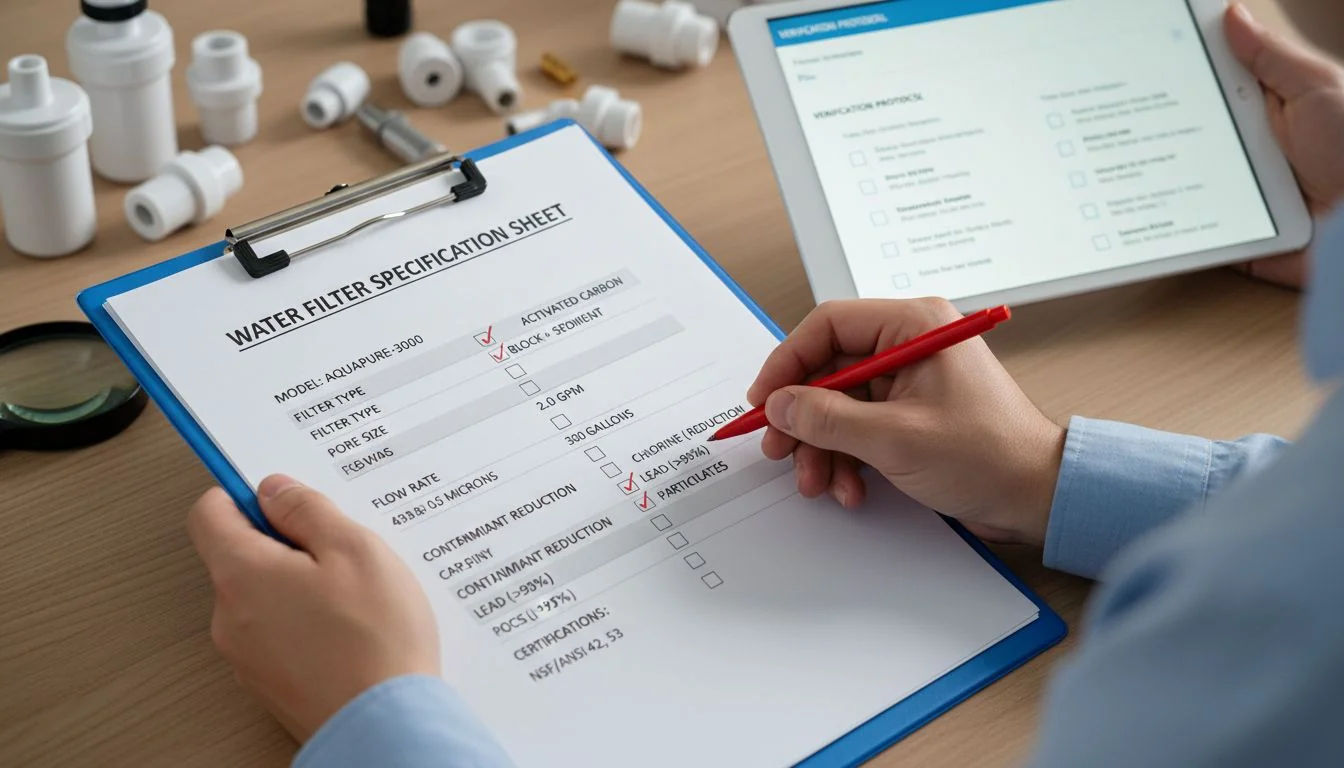
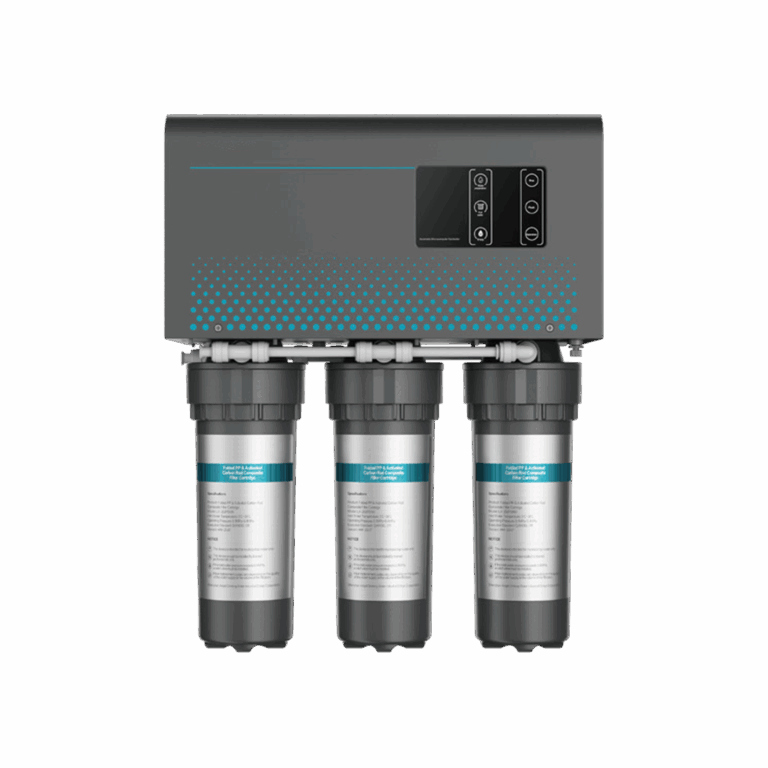
The spec sheet should clearly state if the filter is built-in or external. It must list the exact contaminants it removes, the micron rating, and the filter capacity3 in gallons. This helps buyers distinguish between basic sediment filters and advanced PFAS-reducing filters.
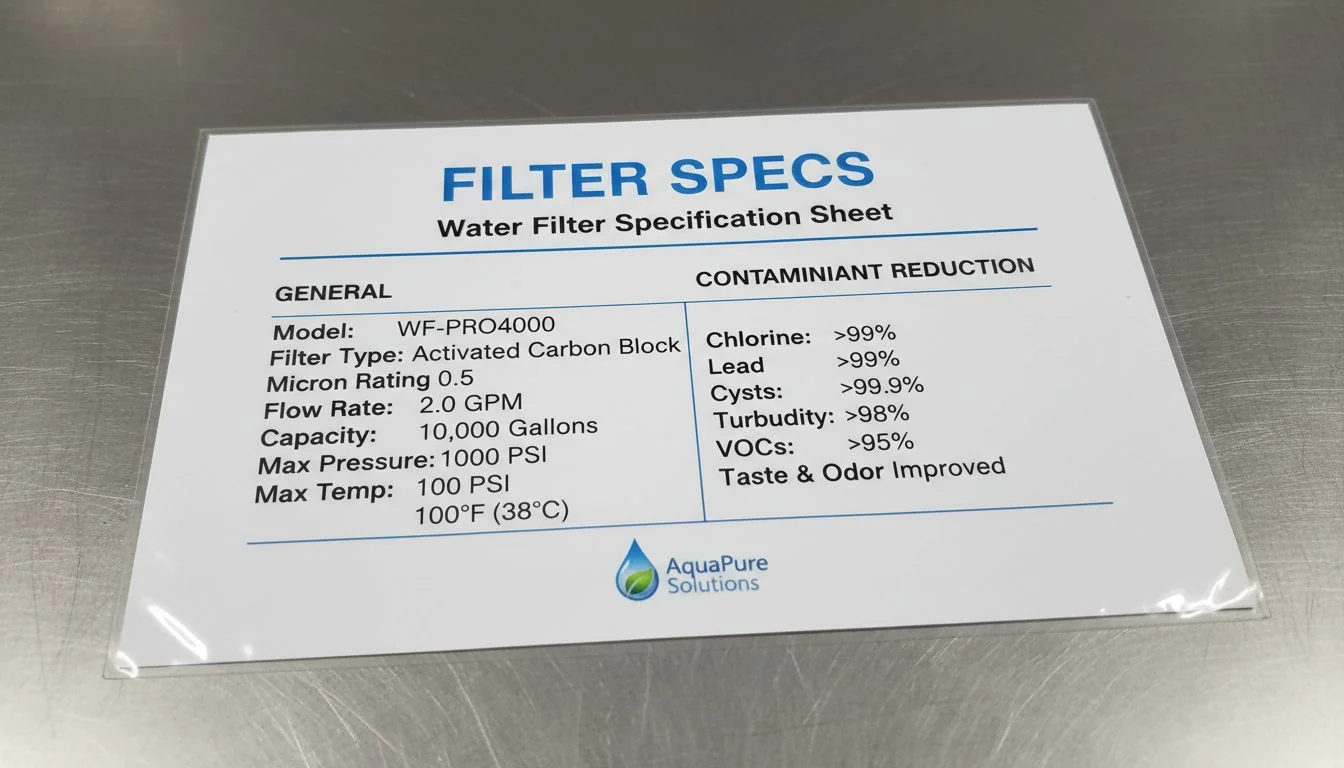
I once helped a client design a mold for an external filter housing. It was bulky and hard to install. Built-in filters save space, but they require precise internal design. Buyers must know exactly what they are getting. The spec sheet is your map.
You need to distinguish between built-in filters and external filters. Built-in filters sit inside the main unit. They look clean and are safe from tampering. External filters sit outside or behind a wall. They can hold larger filters but require more plumbing work.
Built-in vs. External Filters
| フィルタータイプ | 長所 | 短所 |
|---|---|---|
| Built-in Filter | Clean look, safe from tampering, easy to reach | Limited size, lower total gallon capacity |
| External Filter | High capacity, longer time between changes | Requires extra space, harder to install |
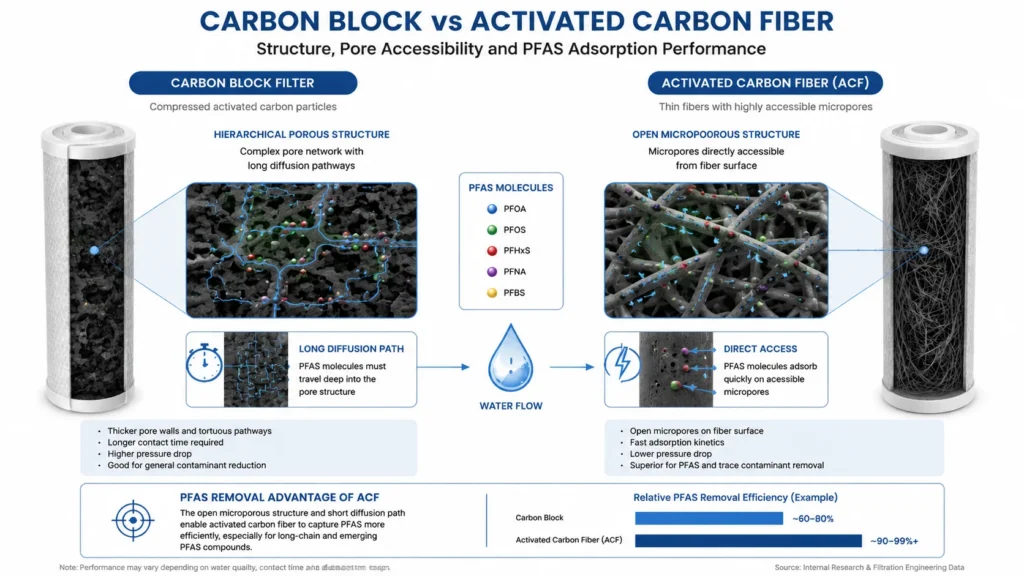
The spec sheet must also show the micron rating. A smaller micron rating means it catches smaller particles. For PFAS reduction, you need specific carbon or reverse osmosis filters. Do not just look at the marketing words. Look at the hard numbers on the spec sheet. If the sheet does not list PFAS, the filter does not remove it.
Built-in filters are usually safe from student tampering.真
Built-in filters are enclosed within the locked housing of the station, preventing unauthorized access.
Any filter with a low micron rating will remove PFAS.偽
PFAS removal requires specific filter media, like activated carbon or reverse osmosis, not just a small micron size.
Which Certifications and Performance Claims Must You Verify?
Fake marketing claims trick many buyers. You waste budget on unverified filters that fail safety tests. Always demand proof of official certifications before you buy.
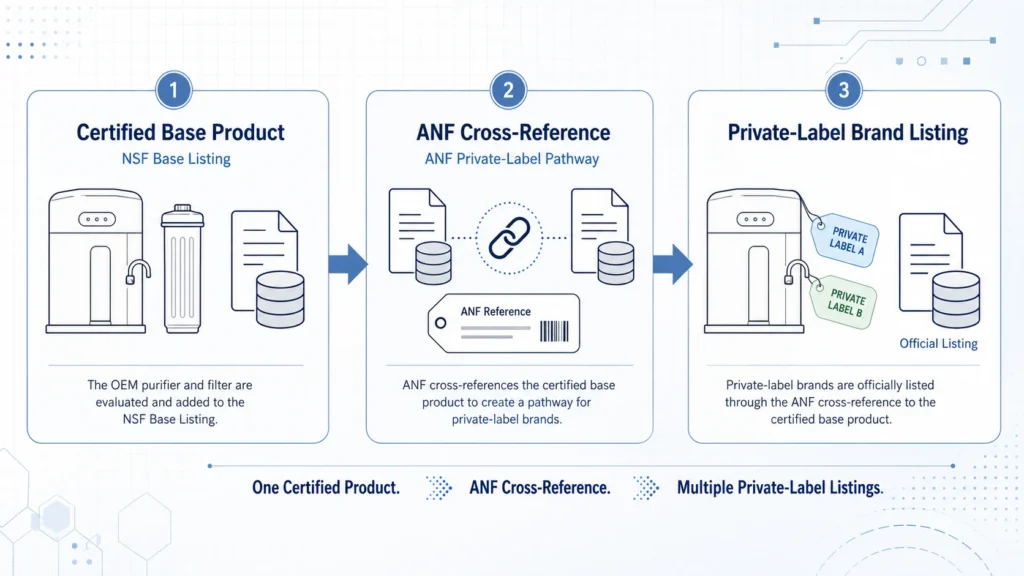
Buyers must verify NSF/ANSI 53 for health effects and NSF/ANSI 58 for reverse osmosis systems. You should check the official certification database4 to ensure the specific model is listed for PFAS reduction, rather than just trusting the marketing brochure.
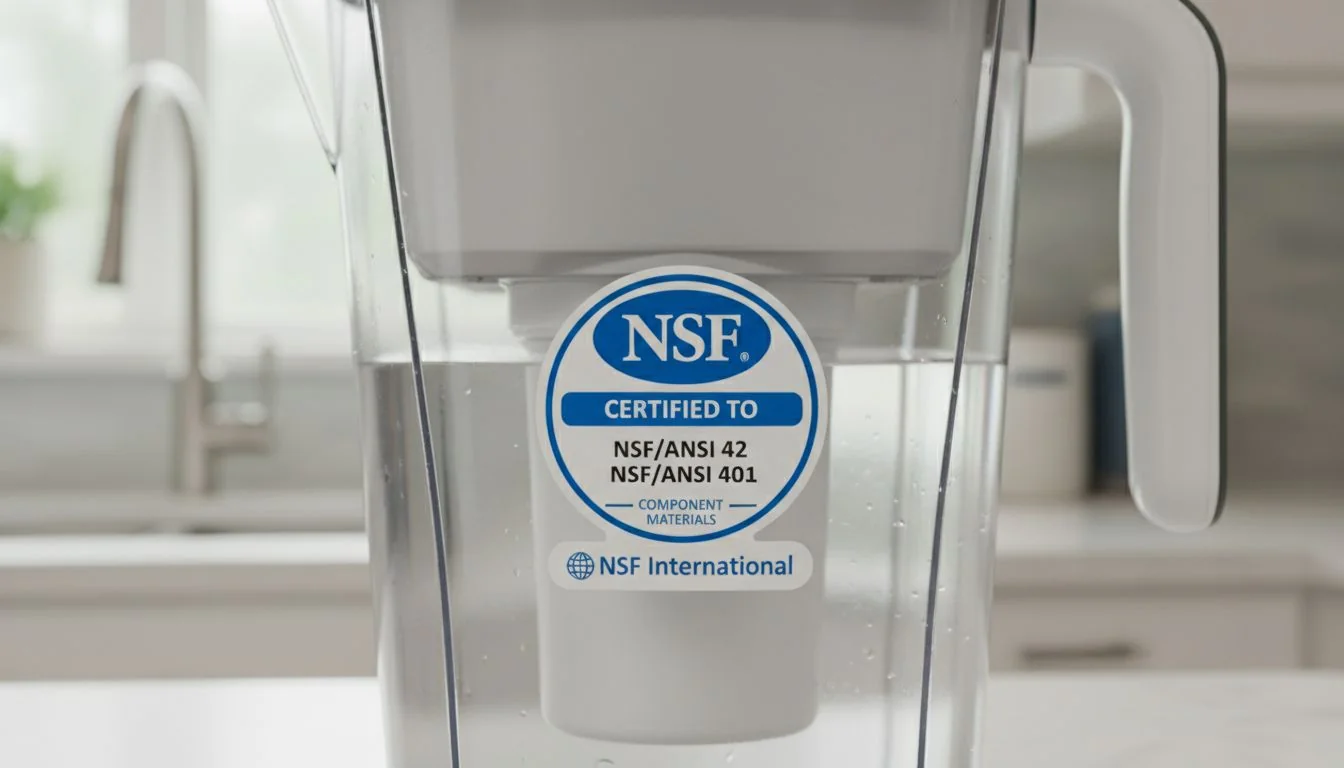
In manufacturing, a certification mark is everything. If a plastic resin is not UL certified, we do not use it. The same rule applies to water filters. You cannot just trust a label that says "PFAS free." You need the exact testing standard.
You must understand the certification scope. A filter might have an NSF certification, but only for chlorine taste and odor. That is NSF/ANSI 42. It does not mean it removes PFAS. For PFAS, you need NSF/ANSI 53 or NSF/ANSI 58.
Common Water Filter Certifications
| Certification Standard | What It Covers | Good for PFAS? |
|---|---|---|
| NSF/ANSI 42 | Aesthetic effects (taste, odor, chlorine) | いいえ |
| NSF/ANSI 53 | Health effects (lead, PFAS, cysts) | はい |
| NSF/ANSI 58 | Reverse Osmosis systems | はい |
| NSF/ANSI 372 | Lead-free plumbing components | いいえ |
I always advise buyers to go online. Visit the official NSF or WQA website. Type in the model number of the filter. Verify that the certification scope specifically includes PFAS reduction. If the manufacturer cannot provide a valid certification number, walk away. Do not risk student safety on unverified claims.
NSF/ANSI 42 certification guarantees that a filter removes PFAS.偽
NSF/ANSI 42 only covers aesthetic effects like chlorine taste and odor, not health contaminants like PFAS.
You can verify a filter's certification by checking the official NSF database online.真
The NSF maintains a public online database where buyers can search for and verify specific product certifications.
How Do Flow Rate, Capacity, and Filter Life Handle School Traffic?
Slow water flow creates long lines. Students get frustrated and late for class. You must match the flow rate and filter capacity to the high school traffic.
A good school bottle filler should offer a flow rate of at least 1.1 to 1.5 gallons per minute. You must also check the filter life capacity. High-traffic areas need filters that last thousands of gallons to prevent constant replacements.
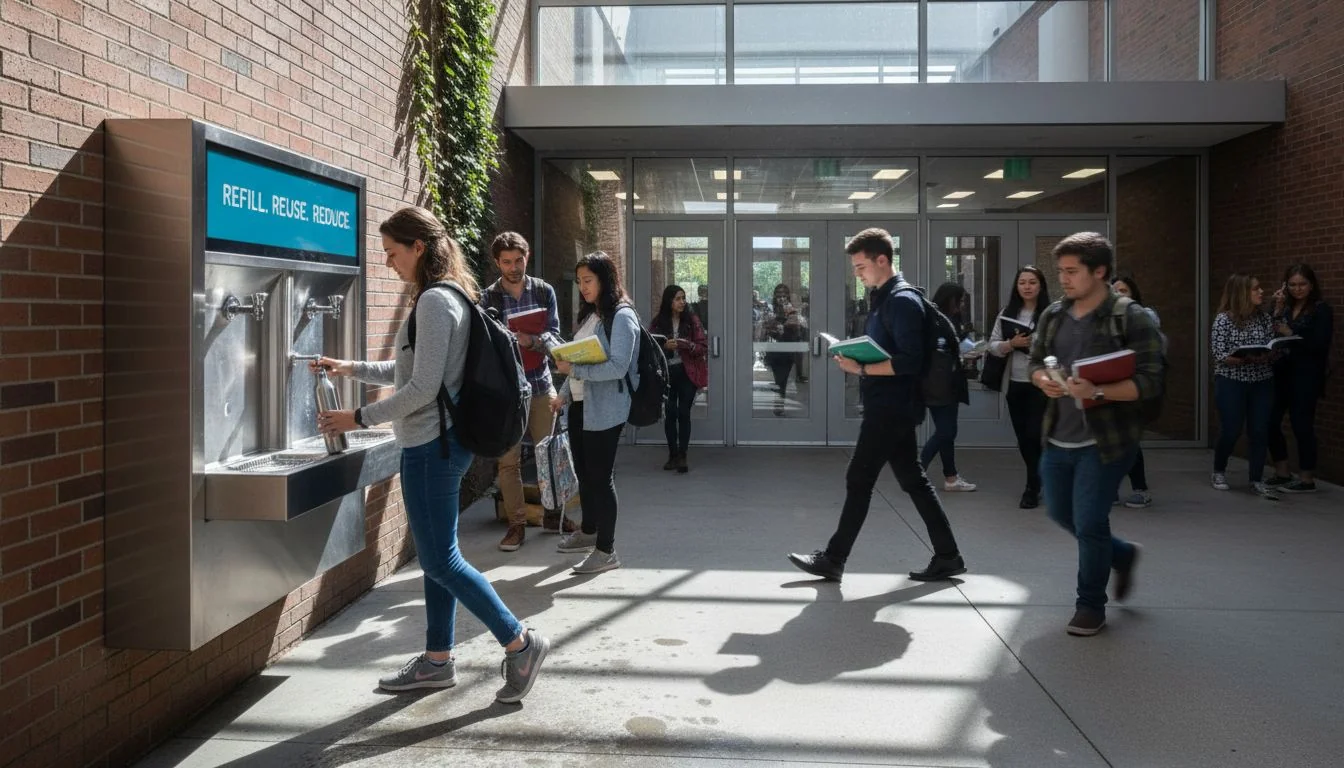
Think about the peak times in a school. Between classes, hundreds of kids want water. If the flow rate is too low, the system fails its purpose. I always tell designers to think about the end user. A slow machine is a useless machine.
You need to balance flow rate with filter capacity. A fast flow rate is great, but it uses up the filter faster. Filter life is measured in gallons. A standard filter might last 3,000 gallons. In a busy school hallway, you might use that up in a few months.
Matching Capacity to School Traffic
| Traffic Level | Recommended Flow Rate | Suggested Filter Capacity |
|---|---|---|
| Low (Staff Room) | 1.0 GPM | 1,500 Gallons |
| Medium (Small Gym) | 1.1 - 1.2 GPM | 3,000 Gallons |
| High (Main Hallway) | 1.5 GPM | 6,000+ Gallons |
You must plan for these numbers. If you buy a unit with a small filter capacity for a main hallway, your maintenance team will change filters every week. This wastes time and money. Always check the spec sheet for both flow rate and total gallon capacity before you buy.
A flow rate of 0.5 gallons per minute is ideal for a busy school hallway.偽
A flow rate of 0.5 GPM is too slow for high traffic and will cause long lines. 1.1 to 1.5 GPM is recommended.
Filter life capacity is typically measured in total gallons of water filtered.真
Manufacturers rate filter life based on the volume of water it can process, usually in gallons, before losing effectiveness.
What Are the Installation and Accessibility (ADA) Considerations?
Ignoring ADA rules causes legal trouble. You might install a great machine, but you must tear it out if a student cannot reach it. Plan ahead.
Buyers must ensure the bottle filling station meets ADA requirements for spout height, reach depth, and clear floor space. The installation location must allow easy access for all students, and the wall structure must support the weight of the unit.
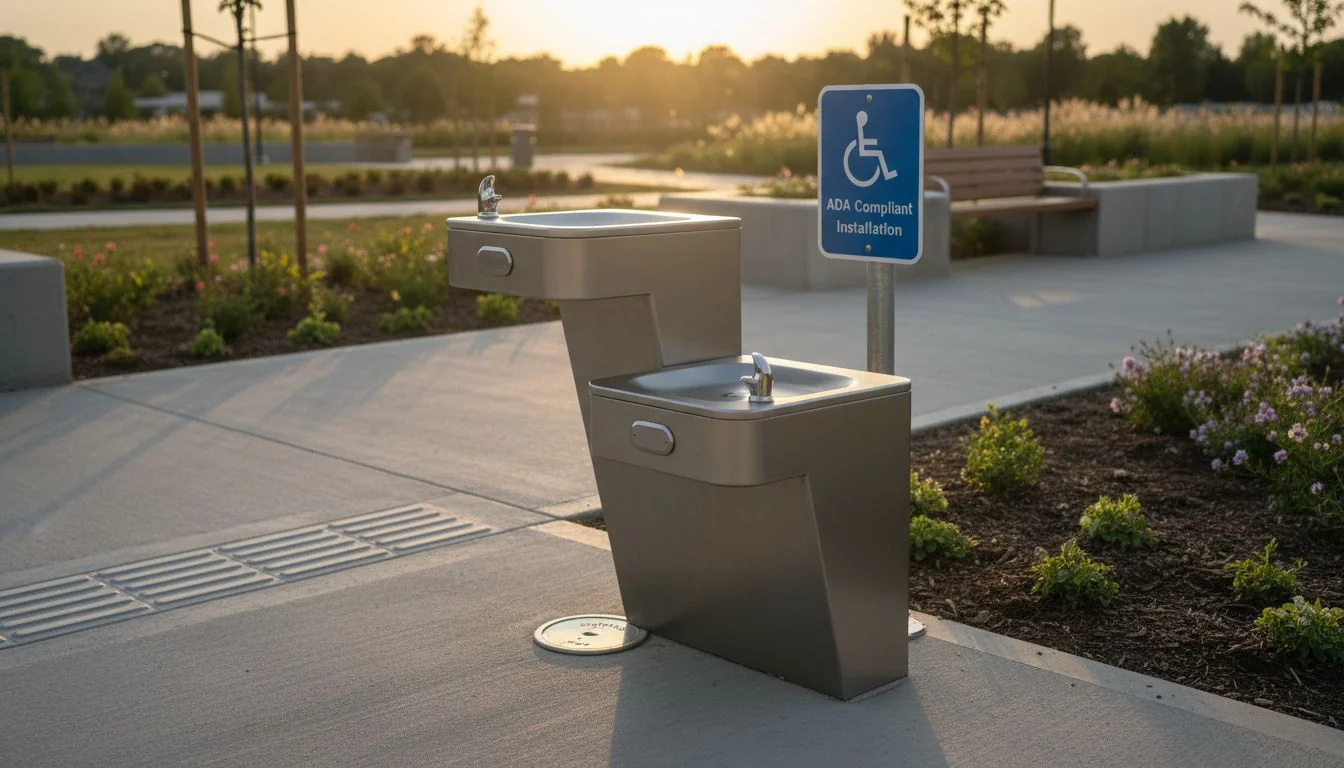
When we design molds for wall-mounted products, we add thick ribs for structural support. The wall itself must also be strong. A bottle filling station is heavy, especially when full of water. You must ensure the installation wall can hold the weight.
More importantly, you must follow the Americans with Disabilities Act (ADA). ADA compliance5 dictates exactly where and how you install the unit. You cannot just put it anywhere. The spout must be at a specific height. There must be enough clear floor space for a wheelchair to turn around.
Key ADA Installation Metrics
| ADA Requirement | Measurement / Rule |
|---|---|
| Spout Height | Maximum 36 inches from the floor |
| Clear Floor Space | Minimum 30 inches by 48 inches |
| Protrusion Limits | Cannot stick out more than 4 inches into a hallway |
| Operation Force | Must operate with less than 5 pounds of force |
If you ignore these rules, you will fail building inspections. You will have to pay to move the plumbing and the machine. Always check the manufacturer's installation guide. It should clearly state how to install the unit to meet ADA standards.
ADA rules limit how far a water station can stick out into a hallway.真
To prevent hazards for visually impaired individuals, objects cannot protrude more than 4 inches into circulation paths.
Any wall can support a commercial bottle filling station without extra reinforcement.偽
These stations are heavy and often require in-wall backing or reinforced mounting plates to ensure they do not fall.
How to Plan Total Cost of Ownership and Filter Replacements?
The upfront price is just the start. Hidden maintenance costs will drain your yearly budget. You need a clear plan for total cost of ownership6 and filter replacements.
Total cost of ownership includes the initial unit price, installation fees, and ongoing filter replacements. Buyers should look for units with visible filter replacement reminders and easy service access to reduce labor costs for facility management teams over time.
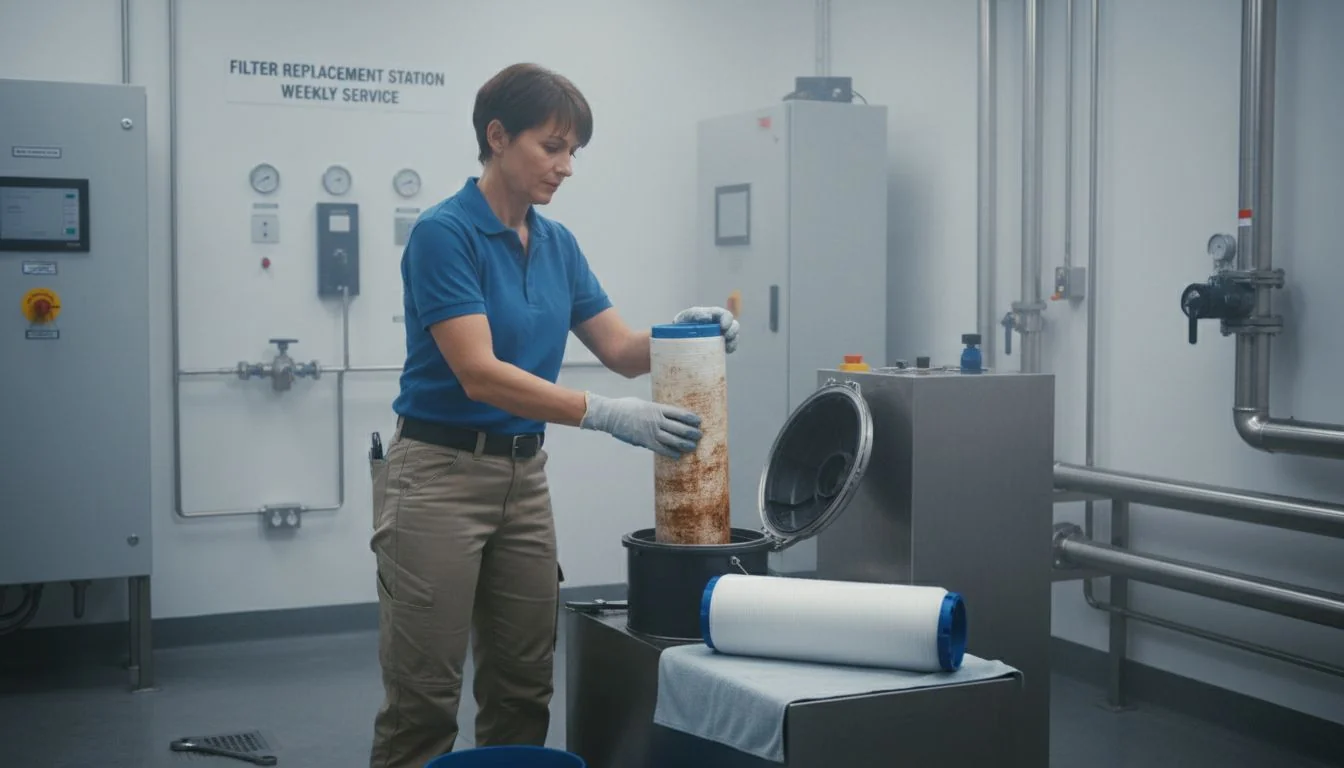
I run a business, so I know that buying a cheap machine often costs more in the long run. If a filter takes two hours to change because of bad plastic housing design, your labor costs go up. You must calculate the total cost of ownership (TCO).
TCO includes everything. It includes the machine, the plumber, the replacement filters, and the labor to change them. You need a solid filter replacement planning strategy. Do not just buy the machine and forget about it.
Calculating Long-Term Costs
| Cost Category | 説明 |
|---|---|
| Initial Purchase | The price of the bottle filling station |
| インストール | Plumbing, electrical, and wall reinforcement labor |
| Filter Replacements | Cost of new filters per year based on traffic |
| Maintenance Labor | Time spent by staff checking and changing filters |
Smart buyers look for units with filter replacement reminders. This saves labor time. We want to help you make the best choice. Please invite your school buyers to share installation locations, target claims, and certification requirements with us. We can help you verify the specs and find the perfect fit for your facility.
Total cost of ownership only includes the initial purchase price of the machine.偽
Total cost of ownership includes purchase price, installation, maintenance labor, and ongoing filter replacement costs.
Filter replacement reminders help reduce unnecessary maintenance labor.真
Reminders alert staff exactly when a change is needed, eliminating the time wasted on manual checks.
結論
Verifying specs, certifications, and maintenance needs ensures you buy the right PFAS-reducing bottle filler. Share your installation locations and target claims with us to find your perfect match today.
References
-
Understanding NSF/ANSI 53 certification is crucial for ensuring water safety and PFAS reduction in schools. ↩
-
Visible maintenance status lights simplify upkeep and enhance user confidence in water quality. ↩
-
Understanding filter capacity is vital for ensuring that stations meet the demands of school traffic. ↩
-
Verifying certifications in the official database ensures that filters meet safety and performance standards. ↩
-
Exploring ADA compliance ensures that installations are accessible for all students, preventing legal issues. ↩
-
Calculating total cost of ownership helps schools budget effectively for long-term maintenance and operational costs. ↩



 English
  Français
  Español
  Italiano
  Deutsch
  Português
  Русский
  العربية
  日本語
日本語  한국어
한국어  Tiếng Việt

