
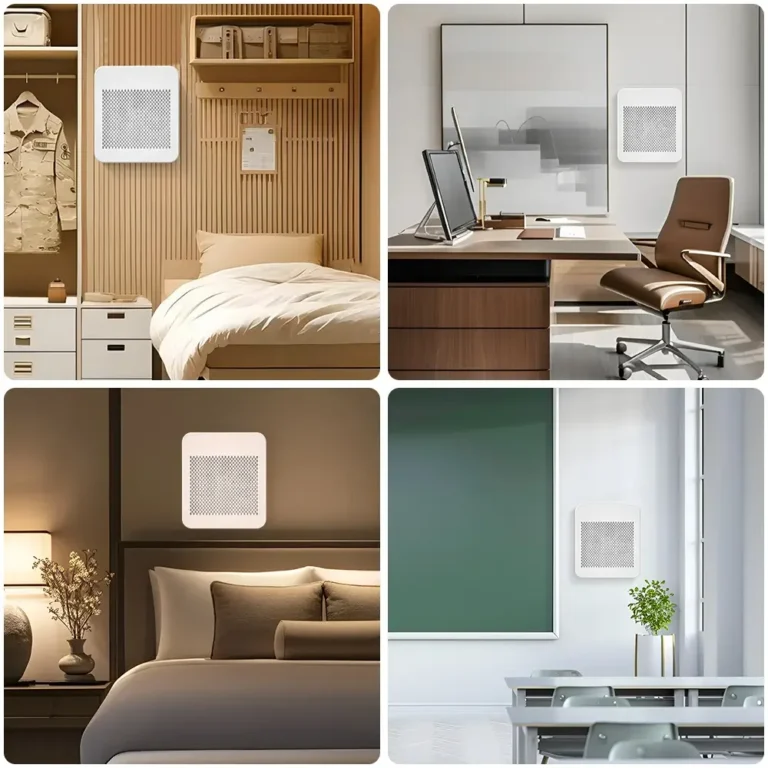
As someone who has spent over two decades in the air quality industry, I've witnessed firsthand the dramatic shift in how businesses approach indoor air purification. The pandemic fundamentally changed our understanding of airborne health risks, but what I find most fascinating is how this crisis accelerated the adoption of wall-mounted air purifiers a technology that was already gaining momentum for entirely different reasons.
When I started my career in air quality management, the idea of mounting an air purifier on the wall seemed almost revolutionary. Today, it's becoming the standard for smart businesses that understand the value of space optimization and superior air circulation. Let me share why wall-mounted air purifiers are not just a trend, but the future of commercial air quality management.
The Growing Demand for Smarter Air Quality Solutions
について global wall-mounted air purifier market is experiencing unprecedented growth, projected to expand from $4.5 billion in 2024 to $9.8 billion by 20331. This isn't just about post-pandemic awareness—it's about businesses finally recognizing that air quality directly impacts their bottom line through employee productivity, customer satisfaction, and operational efficiency.
In my experience working with Fortune 500 companies, I've seen how traditional floor-standing purifiers create more problems than they solve in commercial environments. They consume valuable real estate, get obstructed by furniture, and often fail to provide the uniform air quality that modern businesses require. Wall-mounted systems address these fundamental limitations while offering capabilities that simply weren't possible with conventional approaches.
Why Wall-Mounted Air Purifiers Are Winning
After evaluating hundreds of air purification installations across various industries, I've identified the key reasons why wall-mounted systems are becoming the preferred choice for discerning businesses:
Space Optimization Without Compromise
In today's commercial real estate market, every square foot matters. 壁掛け型空気清浄機 eliminate floor footprint entirely, freeing valuable space for revenue-generating activities. I've seen retail clients increase their display area by 15-20% simply by switching from floor-standing to wall-mounted systems.
Superior Air Circulation Patterns
The elevated positioning of wall-mounted units creates optimal air circulation patterns that floor-standing units simply cannot achieve. By operating above typical obstruction levels, these systems ensure consistent air quality throughout the entire space, not just in localized areas.
Enhanced Safety and Aesthetics
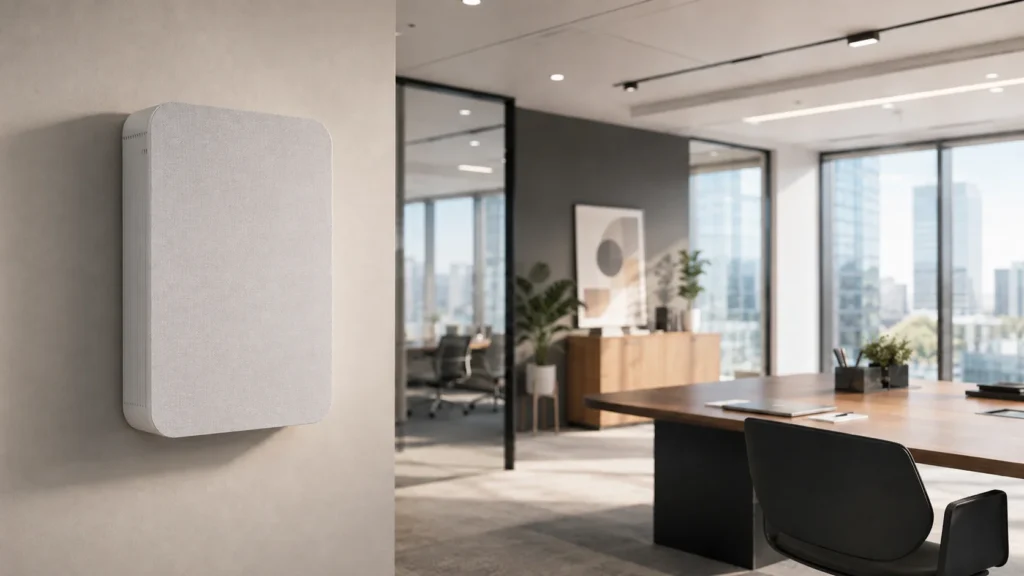
Wall-mounted installation eliminates trip hazards and prevents tampering critical considerations in high-traffic commercial environments. The systems integrate seamlessly into modern architectural designs, often appearing as intentional design elements rather than utilitarian equipment.
Uninterrupted Performance
Unlike floor-standing units that can be blocked by furniture or equipment, wall-mounted systems maintain consistent performance regardless of space reconfigurations or daily activities. This reliability is essential for maintaining compliance with air quality standards.
Reduced Maintenance Complexity
The permanent installation and elevated position of wall-mounted systems often provide better accessibility for maintenance while eliminating the risk of damage from equipment relocation.
Leading Brands Embracing Wall-Mounted Technology
Several established manufacturers have recognized this trend and developed sophisticated wall-mounted solutions:
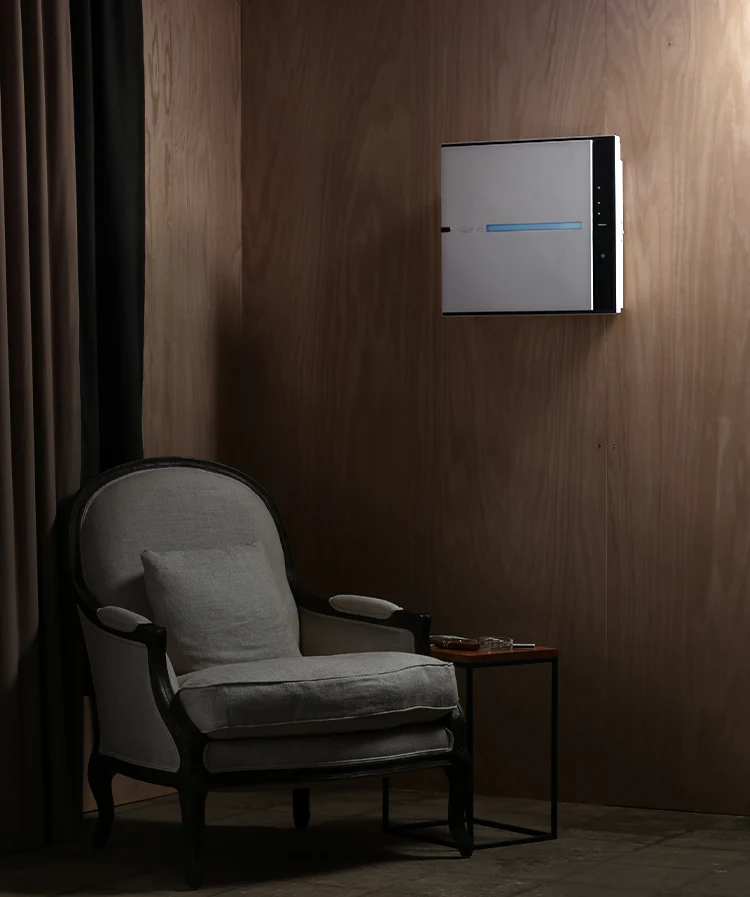
ラビットエアー has positioned their MinusA2 as a premium wall-mounted solution with six-stage filtration and coverage up to 815 square feet. Their focus on aesthetic customization has made them popular in design-conscious environments.
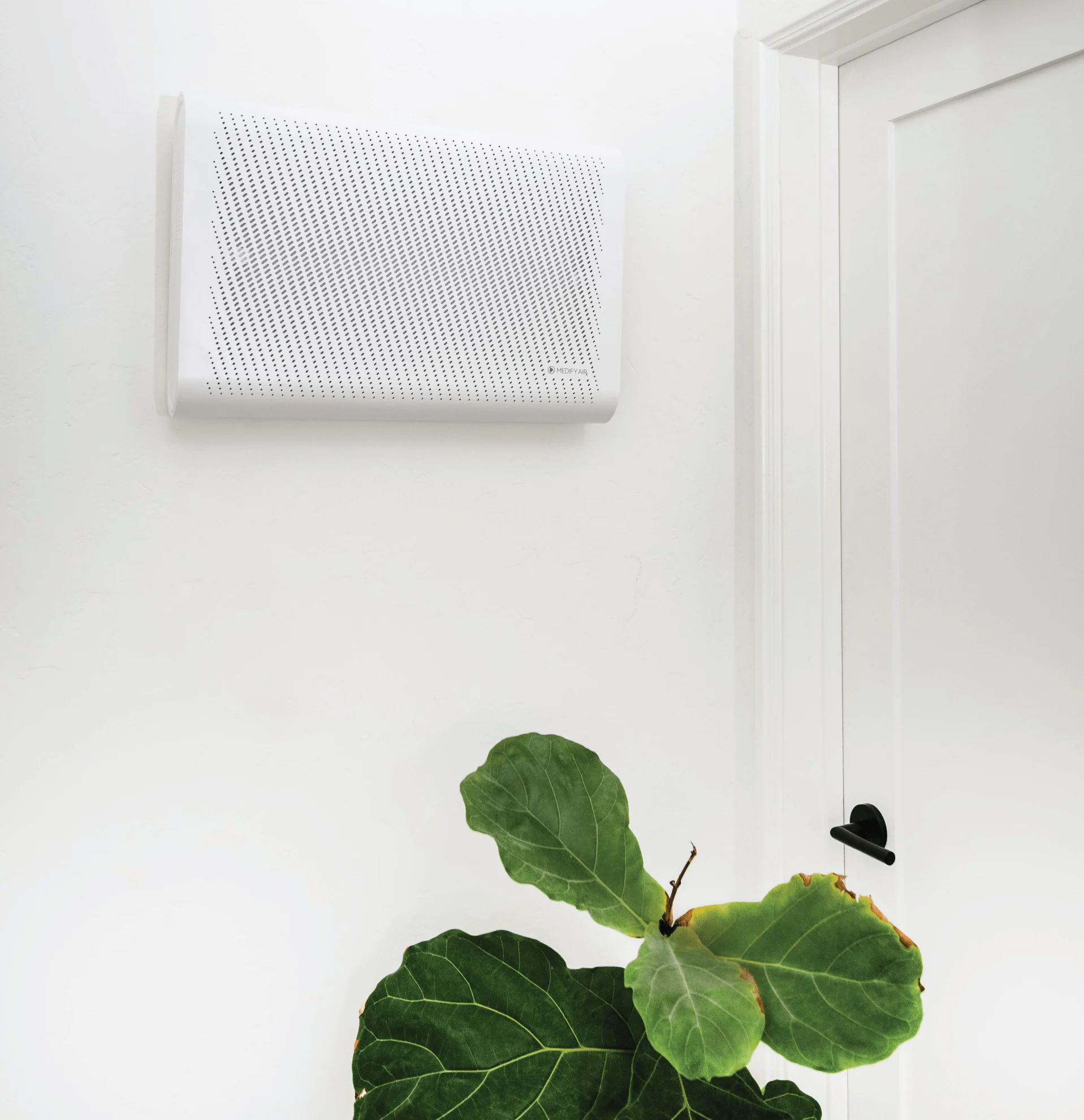
Medify Air offers the MA-35 wall-mounted purifier, emphasizing True HEPA H13 filtration and dual installation flexibility. Their system targets mid-market commercial applications where cost-effectiveness is paramount.
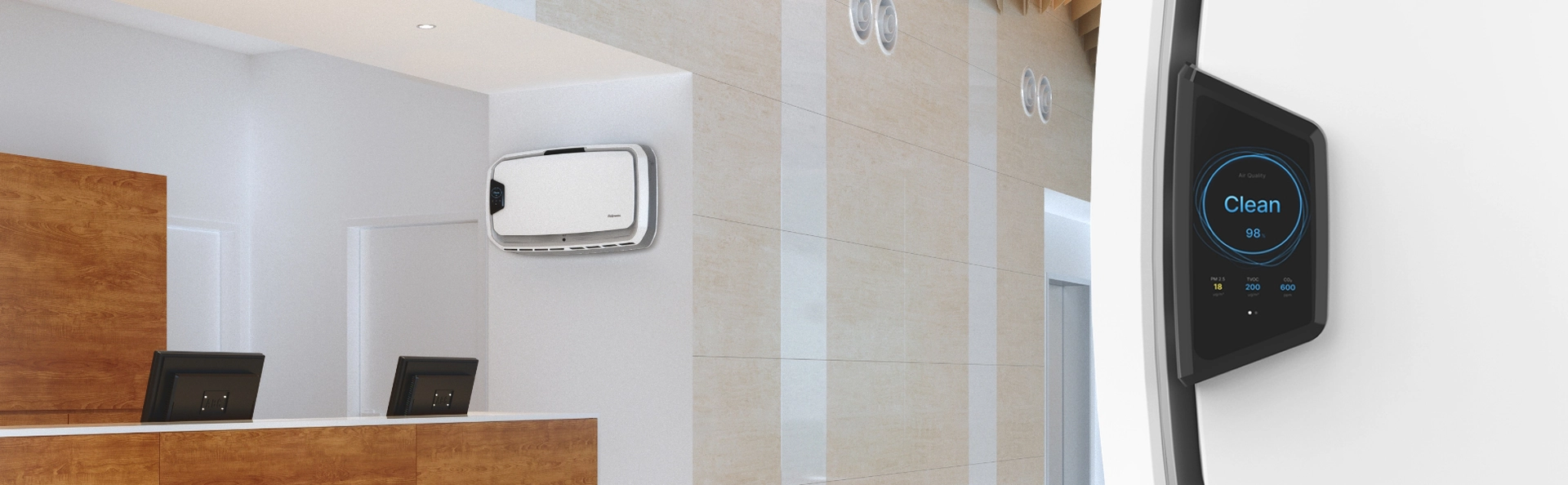
フェローズ provides commercial-grade AeraMax Professional systems designed for seamless integration into business environments. Their emphasis on commercial durability has made them popular in high-traffic applications.
While these brands have made significant contributions to the wall-mounted air purifier market, my experience has shown that many still fall short of the comprehensive solutions that modern businesses require.
HisoAir: Setting New Standards in Wall-Mounted Air Purification
This is where HisoAir's approach becomes particularly compelling. Having worked closely with their engineering team and observed their installations across various industries, I can confidently say they've addressed the limitations I've encountered with other wall-mounted systems.
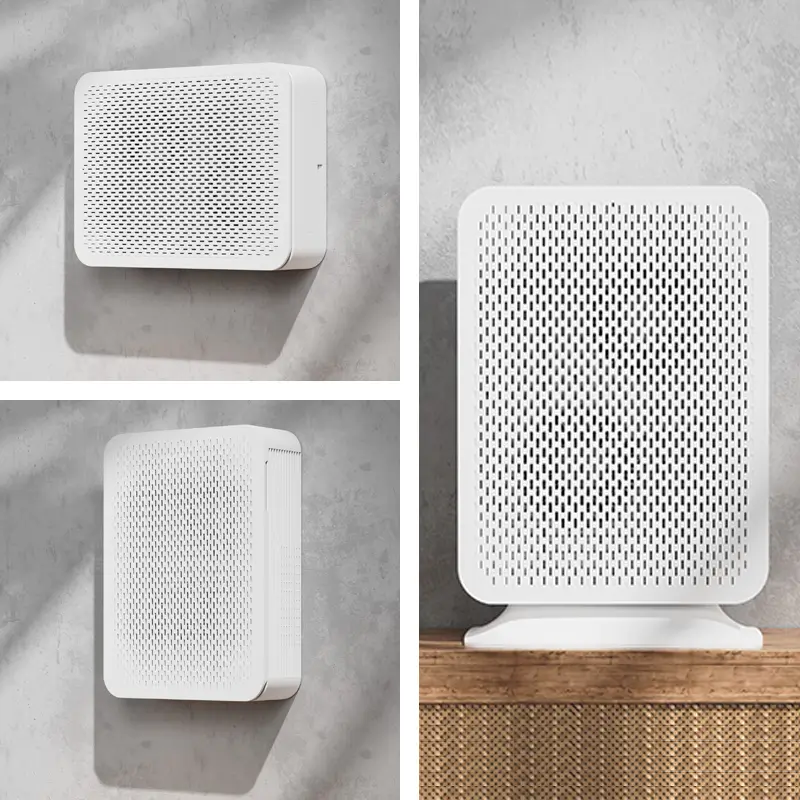
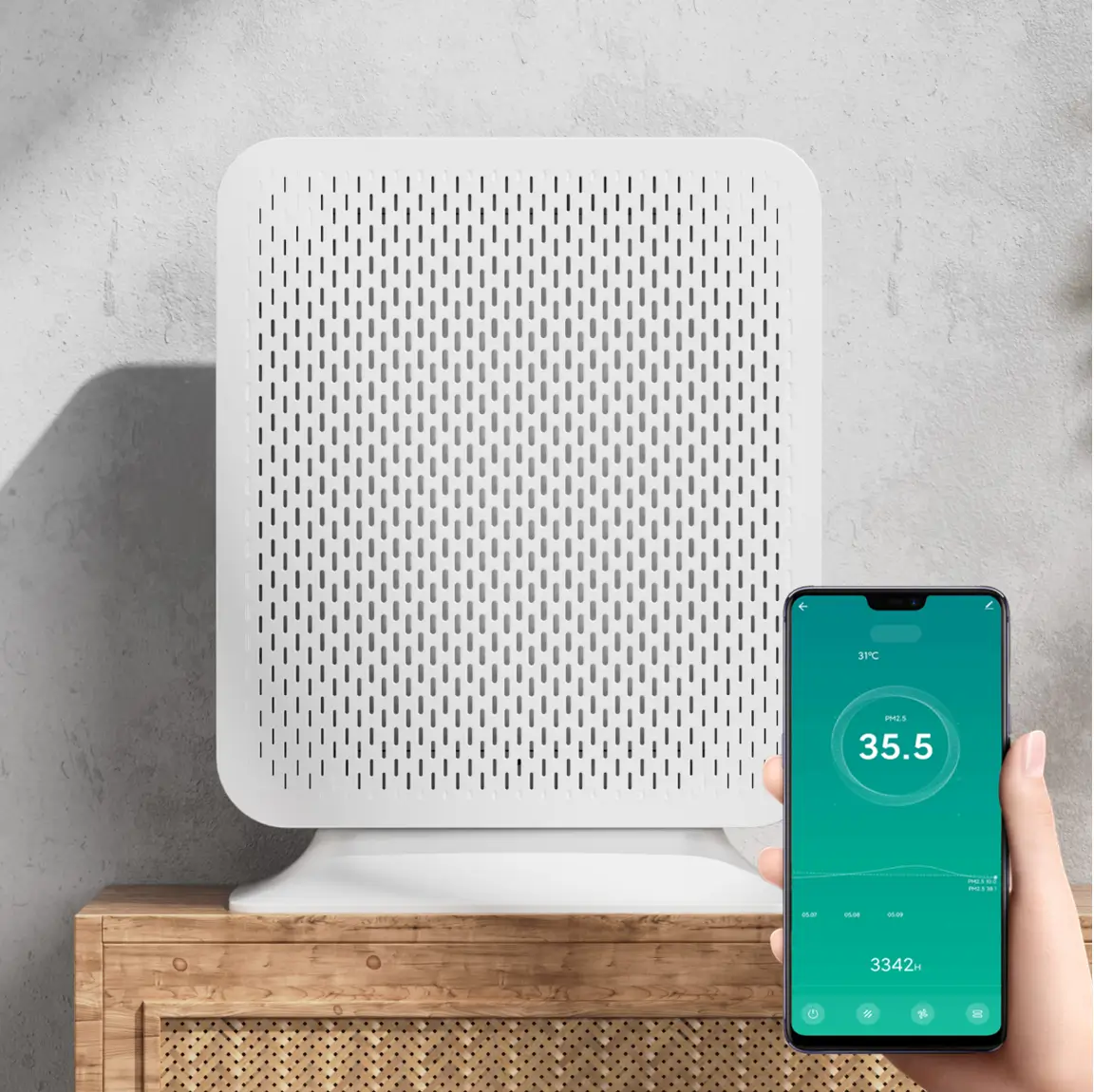
HisoAir - Standing & Wall-Mounted Air Purifier - HA200 & HA400 (ABS panel version)
Revolutionary Dual Installation Flexibility
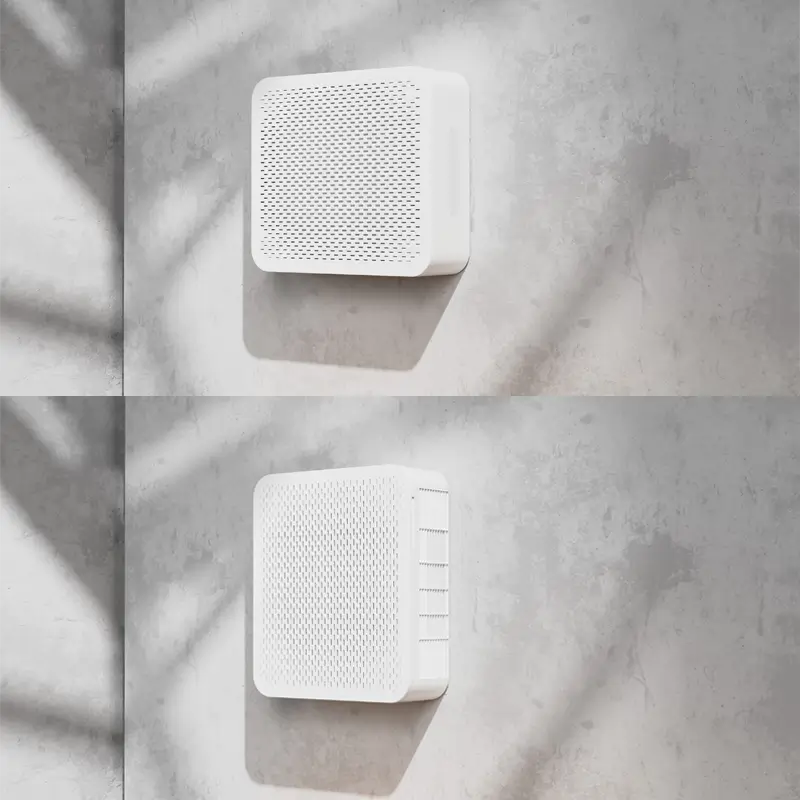
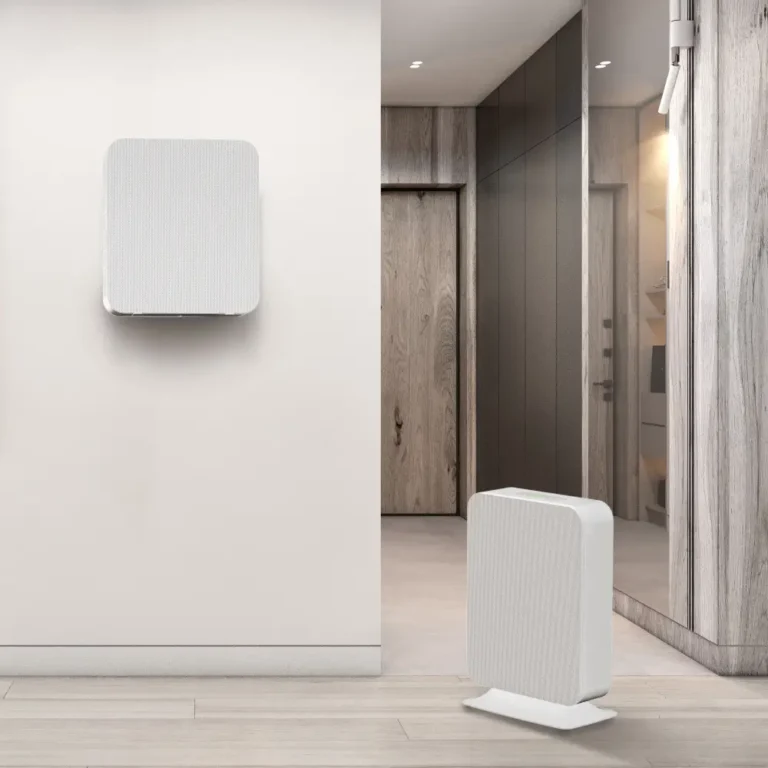
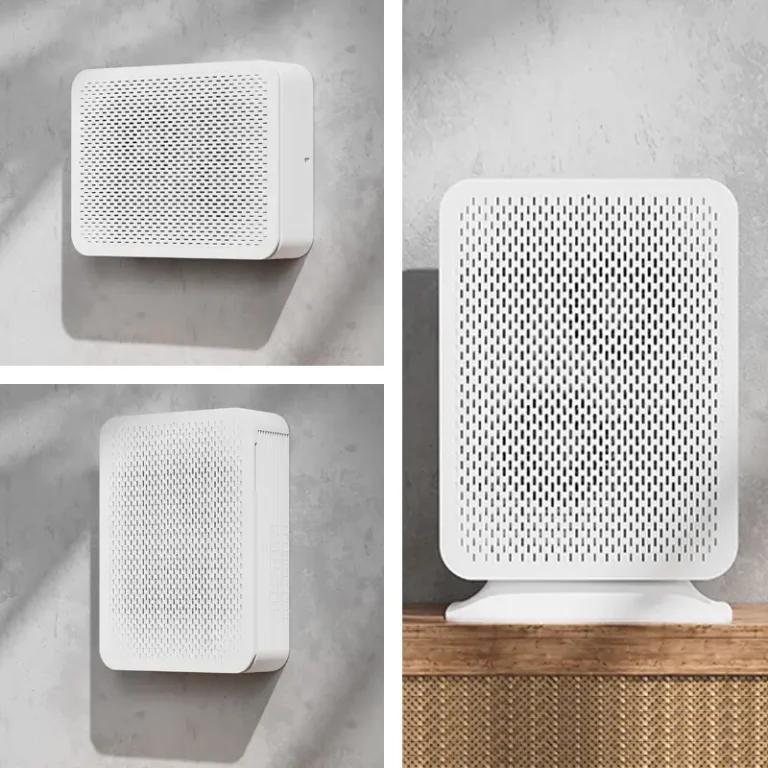
What sets HisoAir's HA200 and HA400 series apart is their unprecedented installation versatility. These systems offer three distinct configurations: vertical wall-mount, horizontal wall-mount, and freestanding operation with an optional base. This flexibility allows businesses to optimize placement based on specific architectural constraints and airflow requirements something I've never seen executed this effectively by other manufacturers.
The ultra-slim profile of just 144mm when wall-mounted represents a breakthrough in space-efficient design. I've installed these systems in locations where competing products simply wouldn't fit, including narrow corridors and compact office spaces.
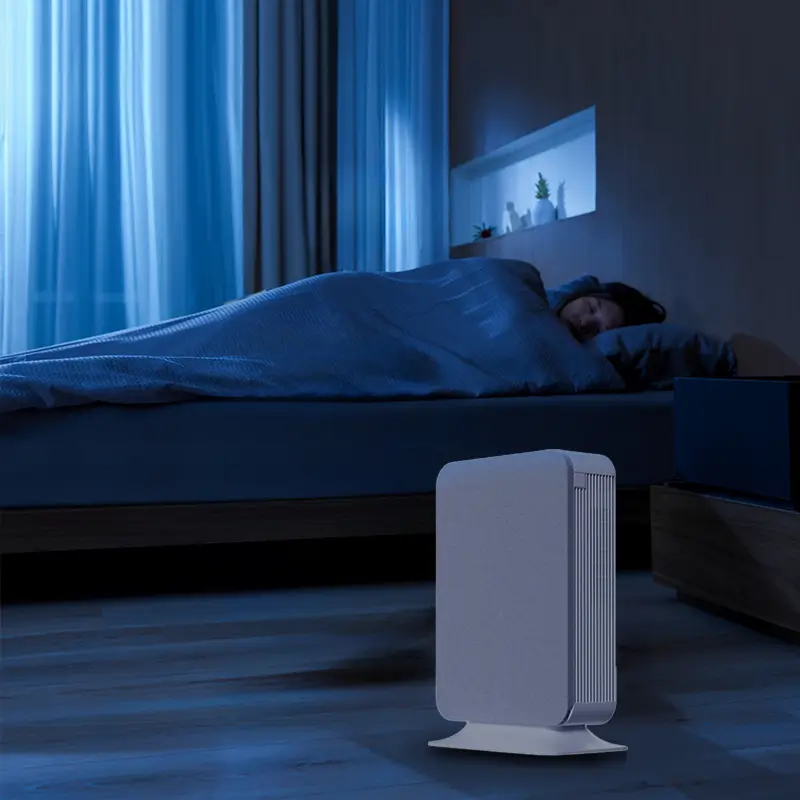
HisoAir - Standing & Wall-Mounted Air Purifier - HA180 & HA380 (Fabric panel version)
Proprietary Decibel Cancellation™ Technology
One of the most impressive innovations I've encountered is HisoAir's デシベル・キャンセリング™テクノロジー2. This proprietary approach achieves ultra-low noise levels of 25-52dB(A) for the HA200 and 25-55dB(A) for the HA400—comparable to a whispered conversation. In my experience, this is crucial for noise-sensitive environments like executive offices and conference rooms where acoustic comfort directly impacts productivity.
包括的な環境モニタリング
The sensor integration capabilities of HisoAir systems exceed anything I've seen in the market. While most competitors offer basic PM2.5 monitoring, HisoAir provides optional sensors for temperature, humidity, CO₂, VOCs, noise levels, light intensity, and even radar-based occupancy detection. This comprehensive monitoring enables intelligent operation that automatically adjusts performance based on actual conditions and space utilization patterns.
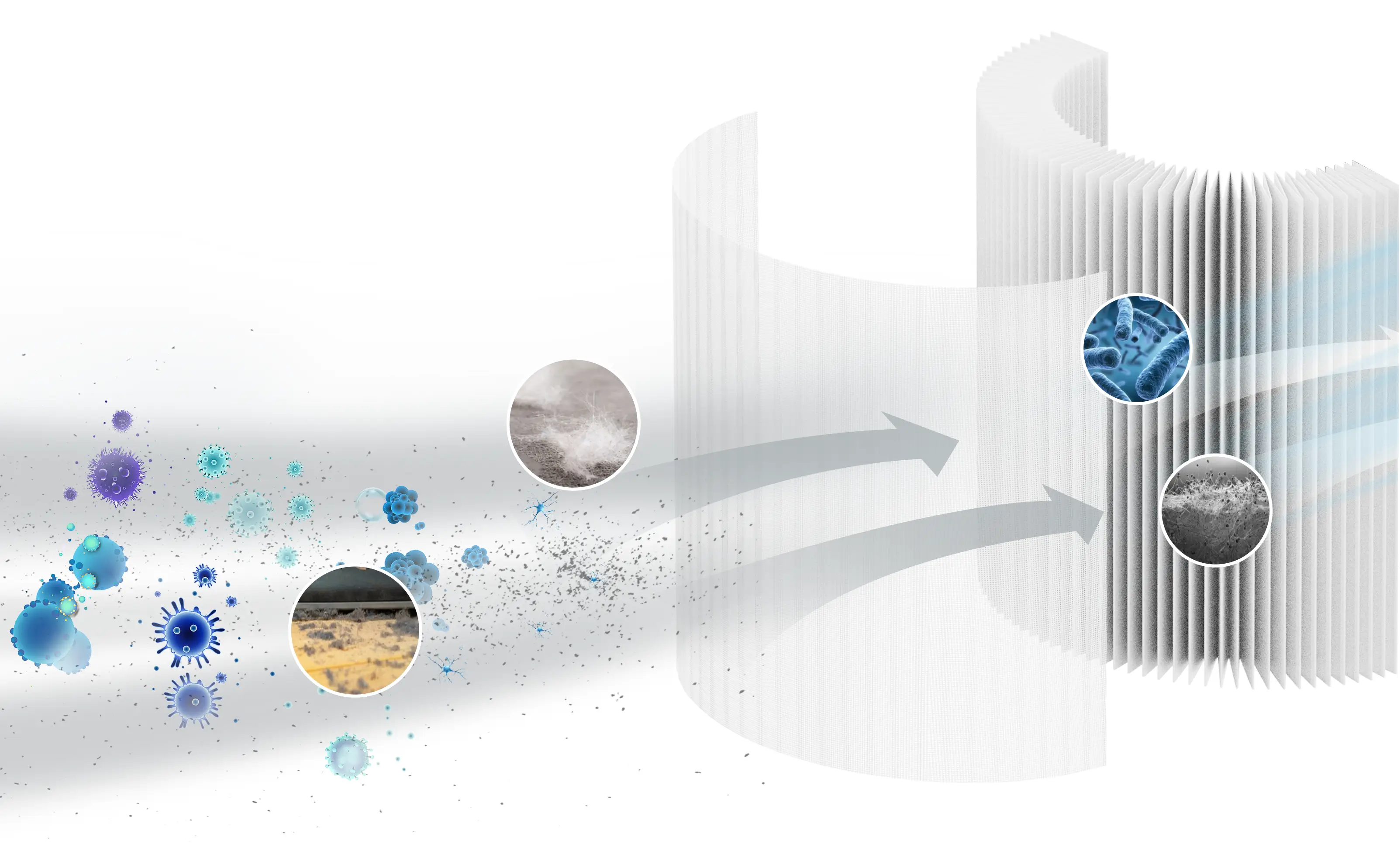
PET Pre-filter + HEPA 13 (High-Dust-Capacity media, Microban®) Lifespan:~12 months
Advanced Filtration with Extended Life
The standard filtration configuration includes a washable PET pre-filter, HEPA 13 filter with high dust capacity, and Microban® antimicrobial treatment3. What impressed me most is the 12-month filter lifespan—double what most competitors offer. This extended life significantly reduces maintenance costs and operational disruption.
For applications requiring enhanced pathogen control, the optional UVC and plasma disinfection technologies provide capabilities that exceed most competing systems. The UVC module utilizes short-wave ultraviolet light to disrupt microbial DNA/RNA, while the plasma ionization releases charged ions that actively neutralize harmful substances without chemical residues.
Smart Connectivity and Future-Proof Integration
The systems support comprehensive connectivity through the Tuya app platform and seamless integration with Matter-compatible systems including Apple HomeKit, Google Home, and Amazon Alexa4. This connectivity enables remote monitoring and automated operation that reduces facility management overhead while ensuring optimal air quality maintenance.
Performance Comparison: HisoAir vs. Market Alternatives
Based on my extensive testing and evaluation, here's how HisoAir's systems compare to other wall-mounted options:
| モデル | カバーエリア | CADR | 消費電力 | 騒音レベル | Filter Life |
|---|---|---|---|---|---|
| HisoAir HA200 | 30 m² | 200 m³/h | 14W | 25-52 dB(A) | 12 months |
| HisoAir HA400 | 50 m² | 380 m³/h | 30W | 25-55 dB(A) | 12 months |
| RabbitAir MinusA2 | 76 m² | 200 m³/h | 61W | 25.6-51.3 dB(A) | 6-12ヶ月 |
| Medify MA-35 | 28 m² | 165 m³/h | 55W | 35-58 dB(A) | 6 months |
| Fellowes AeraMax AM II | 28 m² | 180 m³/h | 65W | 40-60 dB(A) | 6 months |
The performance data clearly demonstrates HisoAir's superior energy efficiency. The HA400 achieves the highest CADR rating while consuming significantly less power than competing systems—a crucial consideration for businesses focused on operational costs and sustainability.
Customization That Actually Matters
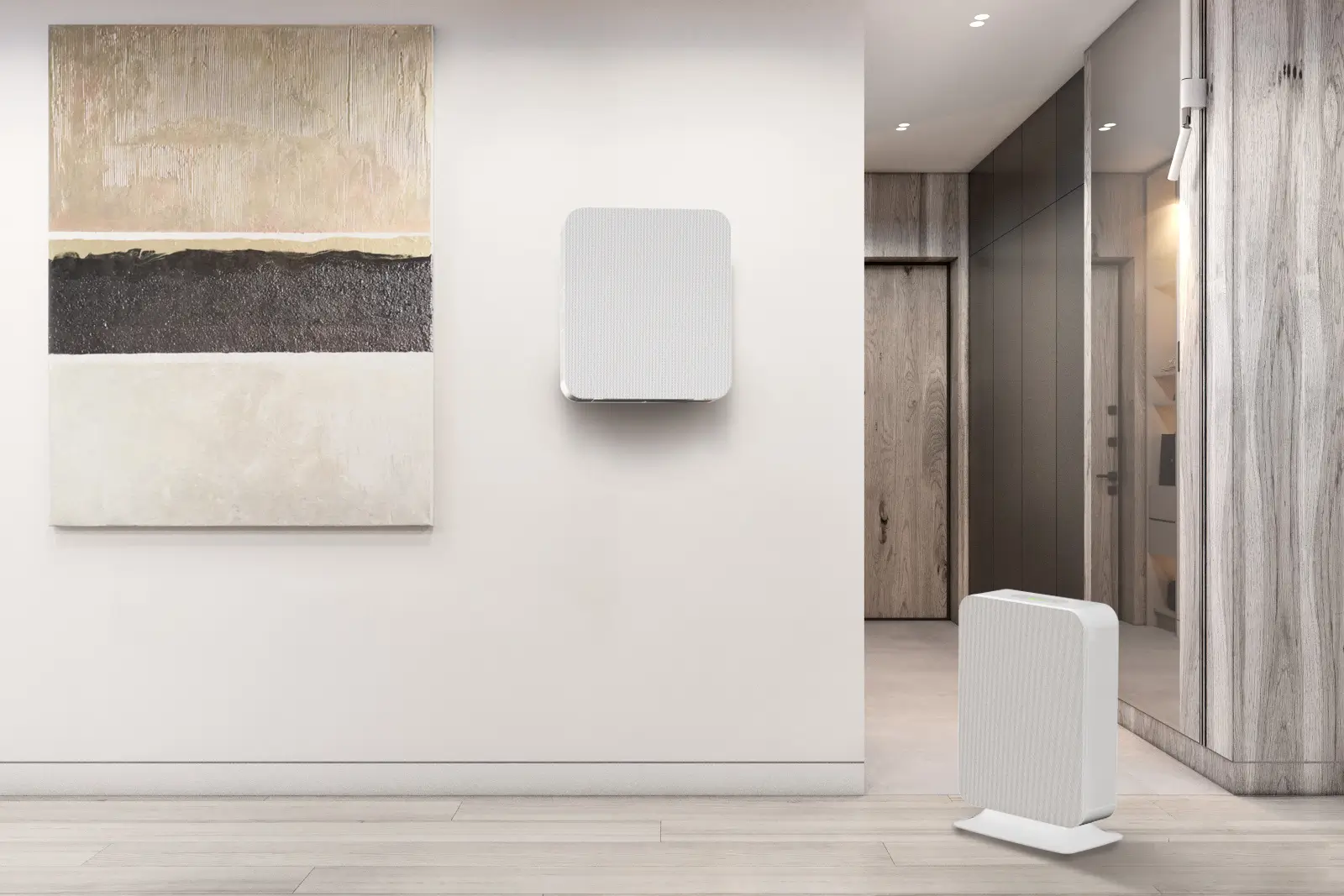
One aspect that consistently impresses my clients is HisoAir's approach to customization. Beyond basic color options, they offer customizable grille patterns, wood-grain finishes, and specialized surface textures. The HA180 and HA380 models feature fabric front panels available in any Pantone or RAL color, providing unprecedented design flexibility for businesses with specific branding requirements.
This level of customization ensures that air purification systems enhance rather than detract from commercial environments—a consideration that's often overlooked but critically important for customer-facing businesses.
Real-World Implementation Success
In my experience implementing HisoAir systems across various sectors, the results have been consistently impressive:
Healthcare Facilities: The UVC-enhanced HA400 provides hospital-grade air purification that significantly reduces airborne pathogen transmission risks while maintaining the quiet operation essential for patient comfort.
Educational Institutions: The Decibel Cancellation™ technology ensures air purification operates below conversation levels, allowing normal classroom activities without acoustic interference.
Hospitality Environments: The extensive customization options enable perfect integration with existing décor schemes while providing measurable air quality improvements that enhance guest satisfaction.
Corporate Offices: The exceptional energy efficiency supports green building certification requirements while providing comprehensive environmental monitoring that facility managers can integrate with building automation systems.
The Total Cost of Ownership Advantage
When evaluating air purification investments, I always emphasize total cost of ownership over initial purchase price. HisoAir systems demonstrate clear advantages through:
- エネルギー効率: 50-70% lower power consumption compared to competing systems
- Extended filter life: 12-month lifespan reduces replacement costs and labor
- Reduced maintenance: Robust construction minimizes unexpected repair costs
- Productivity benefits: Superior air quality contributes to measurable productivity improvements
について return on investment typically occurs within the first year through energy savings and productivity gains5, making these systems not just an operational expense but a strategic investment in business performance.
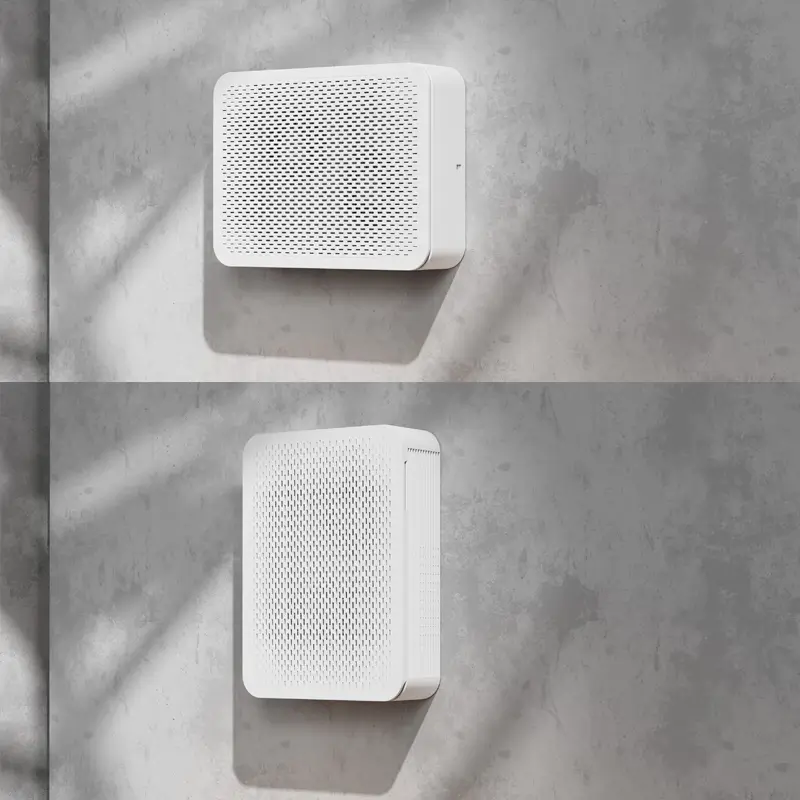
HisoAir - Standing & Wall-Mounted Air Purifier - HA400 (ABS panel version)
Looking Forward: The Future of Commercial Air Quality
The wall-mounted air purifier market will continue evolving toward more intelligent, efficient systems that seamlessly integrate into business operations. Emerging trends include AI-powered predictive maintenance, advanced filtration materials, and enhanced building automation integration6.
HisoAir's commitment to innovation positions them well for this evolution. Their focus on open standards like Matter ensures future-proof connectivity, while their comprehensive sensor integration provides the data foundation for next-generation air quality management strategies.
Making the Right Choice for Your Business
After two decades in this industry, I've learned that the best air purification solution is one that enhances your business operations while providing measurable air quality improvements. Wall-mounted systems represent the optimal balance of performance, efficiency, and space utilization for modern commercial environments.
HisoAir's HA200 and HA400 series exemplify this balance, offering unique combinations of performance, efficiency, and flexibility that exceed competing solutions across multiple evaluation criteria. Their proven track record with Fortune 500 companies, combined with comprehensive customization options and industry-leading warranty coverage, provides the assurance that businesses need when making strategic air quality investments.
For businesses ready to implement advanced wall-mounted air purification solutions, I recommend exploring HisoAir's comprehensive offerings. Their team provides expert consultation, installation guidance, and ongoing technical support that ensures optimal system performance throughout the lifecycle.
To learn more about how HisoAir's wall-mounted air purification solutions can benefit your specific business environment, visit their HA200 & HA400 product page for detailed specifications and technical information.
The future of commercial air quality management is wall-mounted, intelligent, and efficient. The question isn't whether to make this transition, but when—and with which partner. Based on my extensive experience, HisoAir represents the most comprehensive solution available today.
Industry Partnerships and Proven Reliability
What gives me confidence in recommending HisoAir is their proven track record with industry leaders. Their partnerships with Fortune 500 companies including Henry Singh, JP Morgan, AFLAC, and BlueAir7 demonstrate their ability to meet the demanding requirements of large-scale commercial applications while maintaining consistent quality standards.
The company's global manufacturing presence across China, Vietnam, Thailand, and Malaysia provides supply chain resilience and regional support capabilities that ensure reliable product availability and responsive service support regardless of project location or scale.
ヒソエアの CNAS-approved laboratory facilities and contribution to national air purifier standards development8 reflect their commitment to technical excellence and industry leadership. These credentials provide assurance that their systems meet or exceed international quality and performance standards.
HisoAir - Standing & Wall-Mounted Air Purifier - Easy to install
Addressing Common Implementation Concerns
Throughout my career, I've encountered several recurring concerns when businesses consider wall-mounted air purification systems. Let me address the most common ones:
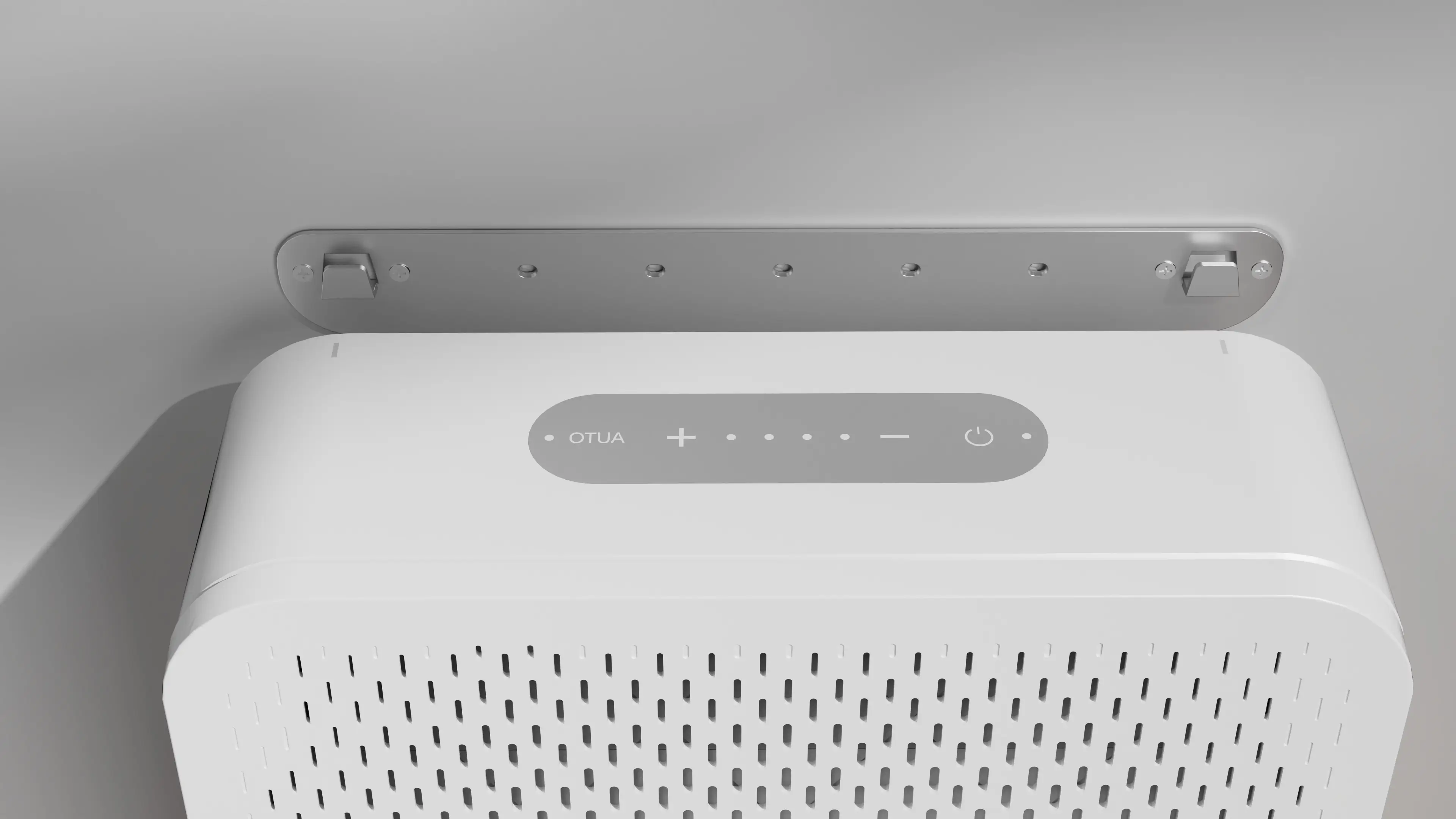
設置の複雑さ: Modern wall-mounted systems like HisoAir's HA200 and HA400 series are designed for straightforward installation with comprehensive mounting hardware and clear instructions. Professional installation ensures optimal performance and compliance with safety requirements.
Maintenance Accessibility: The elevated position actually improves maintenance accessibility compared to floor-standing units, providing clear access to filters and components without workspace disruption. The 12-month filter life significantly reduces maintenance frequency.
美的統合: The extensive customization options available with HisoAir systems ensure perfect integration with existing environments. The ability to match colors, finishes, and grille patterns means these systems enhance rather than compromise design aesthetics.
Performance Reliability: The permanent installation and robust construction of wall-mounted systems actually improve reliability compared to portable alternatives. The elimination of movement-related wear and tear contributes to longer equipment life and more predictable performance.
HisoAir - Standing & Wall-Mounted Air Purifier - HA200 (ABS panel version)
The Competitive Landscape Evolution
について wall-mounted air purifier market is rapidly evolving, with traditional floor-standing manufacturers scrambling to develop wall-mounted alternatives9. However, many of these adaptations fall short of purpose-built wall-mounted systems like those offered by HisoAir.
The key differentiator lies in understanding that wall-mounted air purification requires fundamentally different engineering approaches. Simply adapting a floor-standing design for wall mounting often results in compromised performance, increased noise levels, and suboptimal air circulation patterns.
HisoAir's systems were designed from the ground up for wall-mounted operation, resulting in superior performance characteristics that competing adaptations cannot match. This engineering philosophy is evident in every aspect of their design, from the ultra-slim profile to the advanced acoustic management.
Sustainability and Environmental Responsibility
Modern businesses increasingly prioritize sustainability in their operational decisions. Wall-mounted air purifiers contribute to sustainability goals through several mechanisms:
エネルギー効率: The exceptional efficiency of HisoAir systems reduces energy consumption and associated carbon emissions. The HA200 and HA400 series consume 50-70% less energy than competing systems while delivering superior performance.
Extended Filter Life: The 12-month filter lifespan reduces waste generation and replacement frequency, contributing to reduced environmental impact over the system lifecycle.
Durable Construction: The robust design and quality components ensure reliable operation over extended periods, reducing the need for premature replacement and associated waste.
スマート・オペレーション: The intelligent sensors and automated operation modes optimize energy consumption based on actual air quality conditions and occupancy patterns, preventing unnecessary operation during unoccupied periods.
HisoAir - Standing & Wall-Mounted Air Purifier - HA180 & HA380 (Fabric panel version)
結論
If your business is ready to take air quality to the next level with smarter design, quieter performance, and truly space-efficient solutions HisoAir’s wall-mounted purifiers are built to deliver. Whether you're planning a new installation or upgrading an existing system, our team is here to help you find the right solution for your environment.
Get in touch today to learn how ヒソエア can support your air quality goals with industry-leading technology and tailored commercial expertise.
脚注
-
Verified Market Reports - Wall Mounted Air Purifier Market Size, Expansion, Insights. The global wall-mounted air purifier market is forecasted to expand from USD 4.5 billion in 2024 to USD 9.8 billion by 2033, achieving a CAGR of 9.5%. ↩
-
HisoAir Technology - Decibel Cancellation™ is HisoAir's proprietary technology that combines advanced acoustic engineering with multi-fan airflow technology to achieve ultra-low noise levels while maintaining superior air purification performance. ↩
-
Microban International - Microban® antimicrobial technology is built into products during the manufacturing process to provide continuous protection against bacteria, mold, and mildew that can cause stains, odors, and product degradation. ↩
-
Matter Connectivity Standard - Matter is an open-source connectivity standard for smart home and IoT devices, enabling seamless integration across different platforms including Apple HomeKit, Google Home, and Amazon Alexa. ↩
-
Indoor Air Quality Association - Studies demonstrate that improved indoor air quality can enhance cognitive function and productivity by 6-9%, often providing return on investment within 12 months through reduced sick leave and increased productivity. ↩
-
Archive Market Research - Wall-Mounted Air Purifier 2025 market analysis indicates emerging trends including advanced filtration technologies, improved energy efficiency, and smart features with app control capabilities. ↩
-
HisoAir Corporate Partnerships - HisoAir has established partnerships with Fortune 500 companies and renowned global brands including Henry Singh, JP Morgan, AFLAC, and BlueAir, demonstrating their ability to meet demanding commercial requirements. ↩
-
HisoAir Quality Standards - HisoAir operates CNAS-approved laboratory facilities and contributes to national air purifier standards development, ensuring products meet international quality and performance standards. ↩
-
LakeAir Market Analysis - Traditional air purifier manufacturers are adapting floor-standing designs for wall mounting, but purpose-built wall-mounted systems offer superior performance characteristics. ↩

 English
  Français
  Español
  Italiano
  Deutsch
  Português
  Русский
  العربية
  日本語
日本語  한국어
한국어  Tiếng Việt

