
The US market for air purifiers has grown significantly over the past few years due to rising concerns about air quality, pollution, and health-related risks. As businesses and consumers continue to prioritize clean air, the demand for high-quality, efficient air purifiers has surged. For brands looking to enter this market or expand their product lines, partnering with an experienced OEM/ODM air purifier manufacturer is essential.
In this blog, we’ll explore the key factors that make an air purifier manufacturer suitable for the U.S. market, including compliance with U.S. safety standards, experience serving top brands, and expertise in developing smart, IoT-enabled devices. We will also highlight why HisoAir is the ideal partner for brands looking to offer custom air purification solutions in the U.S.
Expertise in U.S. Safety and Quality Standards
Meeting U.S. safety and quality standards is a critical requirement for any air purifier manufacturer that aims to enter the American market. These standards ensure that air purifiers are safe, energy-efficient, and effective at improving indoor air quality. For OEM/ODM manufacturers, understanding and adhering to these regulations is a complex process that requires years of experience.
Key Certifications and Standards for U.S. Market:
- UL (Underwriters Laboratories) Safety Standards: UL certification ensures that air purifiers meet the highest standards for electrical safety and overall product safety.
- AHAM (Association of Home Appliance Manufacturers): AHAM certification focuses on the Clean Air Delivery Rate (CADR), which measures how effectively an air purifier can remove pollutants from the air.
- CARB (California Air Resources Board): CARB sets strict regulations for ozone emissions, a critical factor for air purifiers sold in California.
- DOE (Department of Energy) & Energy Star: Energy efficiency is vital for U.S. consumers, and manufacturers must meet DOE standards and qualify for Energy Star certifications to ensure their products consume minimal power.
- FCC Compliance: Air purifiers with electronic components must comply with FCC regulations to prevent harmful interference with radio communications.
- CA65 (California Proposition 65): This standard ensures that air purifiers do not expose consumers to harmful chemicals that may cause cancer or reproductive harm.
At HisoAir, we have over 20 years of experience navigating these certifications and safety standards, enabling us to produce air purifiers that meet every U.S. regulatory requirement. Our dedicated teams ensure that every product passes the necessary tests to comply with these rigorous standards, minimizing the risk of product recalls or safety issues .
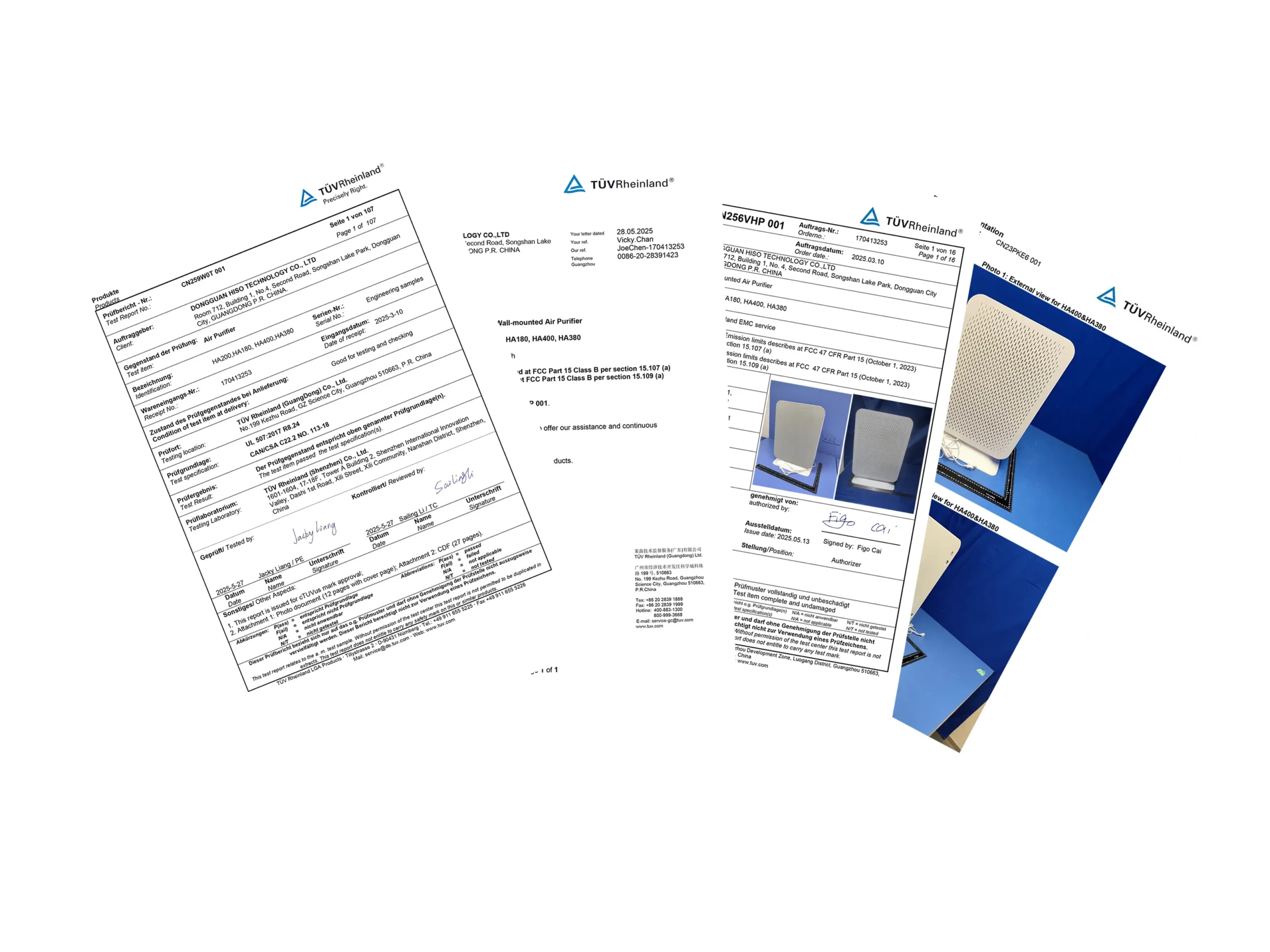
HisoAir | Certified to International Standards
Experience in the U.S. Market and Serving Top Brands
Understanding the preferences of U.S. consumers is crucial for any manufacturer looking to succeed in this market. American customers prioritize certain features, such as energy efficiency, quiet operation, and high CADR ratings. To meet these demands, manufacturers must have extensive experience in designing products that align with these preferences.
Working with Top U.S. Brands:
Experienced OEM/ODM manufacturers have a proven track record of working with top U.S. brands like 3M, Carrier, and Germguardian. These partnerships demonstrate a manufacturer’s ability to create high-quality, custom air purifiers that meet the specific needs of U.S. customers.
At HisoAir, we have successfully developed and manufactured air purifiers for leading global brands, including BlueAir. We specialize in creating tailored solutions that address unique client requirements, such as specialized filtration for allergens, quiet operation for bedrooms and offices, and IoT-enabled devices for smart homes. Our experience in the U.S. market ensures that we can deliver exactly what U.S. consumers expect .

Keeping Up with Evolving U.S. Regulatory Trends
The U.S. regulatory landscape for air purifiers is constantly evolving, and manufacturers must stay ahead of these changes to remain compliant. Recent updates from AHAM, DOE, and the introduction of ASHRAE 241 in 2024 are setting new benchmarks for air purifier performance and energy efficiency.
Key Regulatory Updates:
- AHAM Standard Updates: New CADR testing standards require manufacturers to improve filtration efficiency without compromising on energy consumption.
- DOE Energy Consumption Requirements: The DOE has implemented stricter energy efficiency requirements for air purifiers, meaning that products must deliver a high CADR with minimal power usage to stay compliant.
- ASHRAE 241: This new standard, set to take effect in 2024, outlines guidelines for air filtration and ventilation systems in large commercial spaces, and will require manufacturers to design air purifiers that can meet these higher filtration demands.
At HisoAir, we are constantly upgrading our product designs and technology to ensure compliance with these evolving standards. Our engineering team is well-versed in the latest regulatory trends, ensuring that our products not only meet current requirements but also anticipate future changes .
Expertise in Firmware and IoT Connectivity: Thread and Matter
As smart homes and IoT technology become more widespread in the U.S., air purifiers need to offer connectivity options that allow users to control and monitor their devices remotely. Two emerging IoT protocols, Thread and Matter, are rapidly gaining popularity in the U.S. market for their seamless integration across various smart home platforms.
Why Thread and Matter Are Important:
- Thread: This low-power wireless protocol is ideal for smart home devices, offering fast response times and increased reliability in connected environments.
- Matter: This industry-unifying standard simplifies the integration of smart home devices across platforms like Apple HomeKit, Amazon Alexa, and Google Home.
HisoAir has extensive experience in developing IoT-enabled air purifiers that support these cutting-edge protocols. Our engineers create firmware that ensures our devices can easily integrate into smart home ecosystems, providing users with complete control over their air quality from anywhere .
In-House CNAS Testing Labs: Ensuring Quality and Performance
One of the hallmarks of a top-tier OEM/ODM manufacturer is the ability to conduct extensive in-house testing to guarantee product quality and performance. CNAS-certified testing labs (China National Accreditation Service for Conformity Assessment) are essential for manufacturers aiming to produce air purifiers that meet the highest standards of accuracy and reliability.
Key Testing Capabilities:
- Sensor Accuracy & Calibration: Ensuring that air quality sensors are calibrated correctly for real-time monitoring.
- CADR Testing: Verifying the Clean Air Delivery Rate to ensure compliance with AHAM and other U.S. standards.
- CCM Testing: Cumulative Clean Mass testing measures how much pollutant an air purifier can remove over time.
- Electric Testing: Ensuring electrical safety and FCC compliance.
- Airflow and Noise Testing: Verifying that the airflow is optimized while keeping noise levels low for consumer comfort.
HisoAir has invested in state-of-the-art testing facilities to ensure that all of our air purifiers meet and exceed international standards. Our CNAS-approved labs conduct a wide range of tests, including CADR, CCM, electric safety, and noise level testing, ensuring that every product we manufacture is reliable and safe for the U.S. market .
Why HisoAir is the Right Partner for OEM/ODM Air Purifier Manufacturing
With over 20 years of experience in the air purification industry, HisoAir is the ideal partner for businesses looking to offer custom air purifiers in the U.S. market. Our expertise in navigating U.S. safety standards, serving top brands, and staying ahead of industry trends ensures that we can deliver high-quality products that meet the specific needs of U.S. customers.
Key Advantages of Partnering with HisoAir:
- Expertise in S. certifications and standards (UL, AHAM, CARB, DOE, Energy Star, FCC, CA65).
- Proven track record of working with top U.S. brands like BlueAir.
- Experience developing smart, IoT-enabled air purifiers with Thread and Matter protocols.
- In-house CNAS testing labs for comprehensive quality assurance.
Ready to bring your air purifier brand to the U.S. market? Contact HisoAir today to learn more about our OEM/ODM services and how we can help you develop custom air purification solutions that meet the highest standards of quality and performance.

Conclusion: Choosing the Right OEM/ODM Manufacturer for the U.S. Market
Choosing an experienced OEM/ODM air purifier manufacturer is critical for success in the U.S. market. With strict safety and efficiency standards, rapidly evolving regulations, and the demand for smart, connected devices, manufacturers must be equipped to meet these challenges. HisoAir has the expertise, facilities, and experience needed to deliver high-quality air purifiers that align with U.S. market needs.
Contact us today to explore how we can help your brand succeed with custom air purification solutions designed for the U.S. market.


 English
 Français
 Español
 Italiano
 Deutsch
 Português
 Русский
 العربية
 日本語
 한국어
 Tiếng Việt

