新しいタブで開きます
革新的な空気品質ソリューション

Best air purifier in malaysia 2026: top 10 brands

Related Products

空気は、ホコリ、アレルゲン、ウイルス、バクテリアなど、人々の健康に害を及ぼす数多くの粒子で汚染されている。それを 高性能空気清浄機 より悪い結果を防ぐために必要なことである。

によると 世界保健機関10人中9人(99%)が汚染された空気を吸っている。これは特に、自動車やプラスチックの燃焼などによる煙の排出が多い、高度に都市化された地域に当てはまる。人々は、空気感染する可能性のある病気にかかるのを防ぐために、空気清浄機や、呼吸する空気をきれいにすることができるその他の機器を使用することに頼っている。
空気清浄機は市場で大きな需要がある。多くの企業が オーダー OEM空気清浄機 から職場環境を改善する。 空気清浄機メーカー.また、アレルゲンやウイルスから家族を守るために、住宅内に空気清浄機を設置する人もいる。この記事では、マレーシアの空気清浄機メーカー上位4社についてご紹介します。

マレーシアの空気清浄機メーカー上位5社のリスト

このリストに掲載された各メーカーの概要は以下の通りです。時間が限られている場合は、詳細を知りたい企業名をクリックして、その情報にすぐに移動することもできます。マレーシアを拠点とする空気清浄機メーカーの中から、業界全体のパフォーマンスで私たちの目を引いたメーカーをご紹介します。

  1. アレン
  2. シャオミ
  3. フィリップ
  4. コーウェイ
  5. レボワ
  6. ムーカ

トップ10 ベスト マレーシアの空気清浄機

以下の企業は、マレーシアの空気清浄機メーカーで、私たちの条件を満たした上位4社です。各社の強み、提供する技術、長年の経験、特筆すべき業績を慎重に検討し、このリストに掲載しました。各社の詳細については、こちらをご覧ください。

1.アレン空気清浄機 - マレーシアで最高の家庭用空気清浄機

アレンロゴ
アレンロゴ

アレン社は、商業用および工業用製品の製造に定評のあるメーカーです。 家庭用空気清浄機.多くの家庭、企業、ビルで、その空気清浄機の効率の良さから使用されている。 室内空気浄化. 

  1. Alen BreatheSmart 75i True HEPA空気清浄機レビュー - ベスト・アレン空気清浄機
  2. Alen BreatheSmart 45i True HEPA空気清浄機レビュー - アレルゲン除去に最適
  3. Alen BreatheSmart Classic 空気清浄機 HEPA レビュー - 最高のHEPA空気清浄機 
  4. アレンT300 HEPA UVタワー型空気清浄機のレビュー - 最高のタワー型空気清浄機
  5. アレンA350エネルギースターHEPA空気清浄機レビュー - エネルギー効率に最適

これをチェック 最高のアレンBreathesmart空気清浄機HEPAのレビュー を案内する。

[fl_builder_insert_layout id=3805]

2.xiaomi空気清浄機 - マレーシアで最高の格安空気清浄機
シャオミのロゴ
シャオミのロゴ

シャオミは比較的新しい空気清浄機メーカーである。

ベストXiaomi空気清浄機レビュー

  1. Xiaomi 3H - 最高のXiaomi空気清浄機
  2. Xiaomi 3C - 最高のXiaomi HEPA空気清浄機
  3. Xiaomi 2H - 機械的ろ過のための最高のXiaomi空気清浄機
  4. Xiaomi 2H - 広い空間に最適なXiaomi空気清浄機
  5. Xiaomi EraClean - 車用ベストXiaomi空気清浄機

これをチェック シャオミ空気清浄機レビュー を案内する。

[fl_builder_insert_layout id=3805]

3.フィリップの空気清浄機 - マレーシアのアレルギーと喘息に最適な空気清浄機

フィリップスのロゴ
フィリップスのロゴ

フィリップスはデンマーク発祥の多国籍コングロマリット企業である。フレデリック・フィリップスとジェラルド・フィリップスが1891年に設立した。2013年に家電製品から医療技術に重点を移し、近代的なヘルスケア機器の製造を開始した。現在、フィリップスはすでに有名な空気清浄機メーカーである。

  1. フィリップス4000I空気清浄機 - 最高のフィリップス空気清浄機
  2. フィリップス 2892 空気清浄機 - 機械ろ過式フィリップス空気清浄機のベストモデル
  3. フィリップス空気清浄機シリーズ800 - アレルギーに最適なフィリップス空気清浄機
  4. フィリップスAC2889空気清浄機 - HEPAろ過のための最高のフィリップス空気清浄機
  5. フィリップス3000I空気清浄機 - 最高の高CADRフィリップス空気清浄機
  6. フィリップス 2000I 空気清浄機 - ペットに最適なフィリップス空気清浄機
  7. フィリップス シリーズ 1000 空気清浄機 - 小さな部屋に最適なフィリップス空気清浄機
  8. フィリップスAC1217空気清浄機 - 最もエネルギー効率の高いフィリップス空気清浄機
  9. フィリップス空気清浄機2887 - VOCに最適なフィリップス空気清浄機
  10. フィリップス空気清浄機AC3259-病原菌に最適なフィリップス空気清浄機
  11. フィリップス空気清浄機AC1211 - 寝室に最適なフィリップス空気清浄機
  12. フィリップス空気清浄機6000 - 家全体に最適なフィリップス空気清浄機
  13. フィリップス GoPure GP5212 車用空気清浄機 - 最高のフィリップス車用空気清浄機

フィリップスの空気清浄機の売れ筋モデルをチェックする フィリップス空気清浄機のレビュー のガイドを参照して、それぞれの仕様、機能、性能を比較し、あなたのニーズに合った理想的なフィリップの空気清浄機を見つけてください。

[fl_builder_insert_layout id=3805]

4.Coway空気清浄機 -マレーシアのほこりに最適な空気清浄機

コーウェイのロゴ
コーウェイのロゴ

画像ソースコーウェイ

コーウェイは、家庭用健康器具の開発に注力する国際企業である。この空気清浄機メーカーは1989年に設立され、すでに多くの空気清浄機、ビデ、浄水器を製造している。現在、Coway製品はすでに40カ国以上で販売されている。

  1. Coway Airmega 400 空気清浄機 - Best Coway Airmega 400 空気清浄機
  2. Coway Airmega 300 空気清浄機 - HEPAろ過のベストCoway空気清浄機
  3. Coway Airmega 250 空気清浄機 - 大きな部屋に最適なCoway空気清浄機
  4. Coway Airmega 200M 空気清浄機 - 臭い対策に最適なCoway空気清浄機
  5. Coway Airmega 150 空気清浄機 - この価格で最高のCoway空気清浄機
  6. Coway AP1512 空気清浄機 - アレルギーに最適なCoway空気清浄機
  7. コーウェイ 1018F 空気清浄機 - 病原菌に最適なコーウェイ空気清浄機

このサイトを通じて、最も売れている条項をいくつかチェックし、比較し、お客様の要件を満たせるかどうかを確認することをお勧めします。 コーウェイ空気清浄機のレビュー を案内する。

[fl_builder_insert_layout id=3805]

5.Levoit空気清浄機--マレーシアで最高のペット用空気清浄機

レヴォワのロゴ
レヴォワのロゴ

画像ソースレヴォワ

レボワは 空気清浄機メーカー 株式会社VeSyncが所有するブランド。この会社は2012年にEtekcityとしてスタートし、当初はアメリカの家庭向けの小型家電を製造していた。設立から数年後、VeSyncは傘下に2つのブランドを追加した:LevoitとCosoriである。現在、VeSync製品は主に8カ国で販売され、世界市場を網羅している。

ここでは、Levoit、特にこのブランドで最も人気のある空気清浄機のレビューに焦点を絞る。

  1. Levoit Core 400S 空気清浄機 - 最高のLevoit空気清浄機
  2. Levoit Core 300 空気清浄機 - 最高のLevoit HEPA空気清浄機
  3. Levoit Core 200S 空気清浄機 - 最高のLevoitスマートWiFi空気清浄機
  4. Levoit Core P350 空気清浄機 - ペットに最適なLevoit空気清浄機
  5. Levoit Vital 100 空気清浄機 - 寝室に最適なLevoit空気清浄機
  6. Levoit H134 空気清浄機 - 家庭用ベスト Levoit 空気清浄機
  7. Levoit H133 空気清浄機-広い部屋に最適なLevoit空気清浄機
  8. Levoit H132空気清浄機 - 最高のLevoitデスクトップ空気清浄機
  9. Levoit H128 空気清浄機 - Best Price Levoit 空気清浄機
  10. Levoit PUR131 空気清浄機 - 煙に最適なLevoit空気清浄機

独立性をチェック レボワ空気清浄機レビュー 私たちは比較のために彼らのために作った。

[fl_builder_insert_layout id=3805]

6.Mooka空気清浄機-マレーシアの霞に最適な空気清浄機

ムーカのロゴ
ムーカのロゴ

Mookaは、空気清浄機、加湿器、その他の家電製品の製造に特化した家電ブランドである。

  1. Mooka E-300L 空気清浄機 - 最高のMooka HEPA空気清浄機
  2. Mooka Allo 空気清浄機 - 最高のMookaデスクトップ空気清浄機
  3. Mooka C10 空気清浄機 - 小さな部屋に最適なMooka空気清浄機
  4. Mooka B08RZ3GSKH 4-in-1空気清浄機 - 大きな部屋のある家庭に最適なMooka空気清浄機
  5. Mooka GL-FS32 空気清浄機 - 高度なろ過能力を備えたMooka空気清浄機のベストモデル

こちらをご覧ください。 Mooka空気清浄機のレビュー ブランドの最も人気のある空気清浄機の技術仕様と機能についてのガイドです。

[fl_builder_insert_layout id=3805]

7.Daiohs Malaysia Sdn. Bhd.-- ベストカー空気清浄機マレーシア

大王マレーシアのロゴ
大王マレーシアのロゴ

画像ソースダイオーズ・マレーシア社

ビジネスタイプ メーカー
本社:31, Jalan Puteri 5/10, Bandar Puteri Puchong, 47100 Puchong, Selangor, Malaysia
主な市場 グローバル
経験年数 8年

大王製紙マレーシアは、大王製紙として認知されている日本企業の一部である。同社はもともと、家庭用やオフィス用のコーヒーメーカーで有名なメーカーである。しかし、最近では空気清浄機の製造にも乗り出している。ダイオーズ・マレーシアは比較的若い会社だが、親会社がすでにこの業界で豊富な経験を持っていることは注目に値する。

主要製品

  • コーヒーメーカー
  • 給茶機
  • 空気清浄機

8.オランシLLC--マレーシアで最高のポータブル空気清浄機

Oransi LLCのロゴ
Oransi LLCのロゴ

画像ソースオランシLLC

ビジネスタイプ:メーカー
本社 21-A Jalan 20/16, Paramount Garden 46300, Petaling Jaya Selangor, Malaysia
主な市場 グローバル
経験年数:13年

オランシはアメリカ合衆国の空気清浄機メーカーである。しかし、同社は様々な製品を世界各国に販売している。現在マレーシアでは、INAT Eco Sdn. Bhd.が唯一の販売代理店として市場シェアを獲得している。

オランシは2009年に操業を開始し、NASA、ペイパル、グーグル、IBMなど多くの有名企業と提携していることで知られている。オランシはエネルギースターのパートナーでもあり、同社の製品がエネルギー効率に優れていることを保証している。オランシが行っている注目すべきプロジェクトのひとつに、人々がきれいな空気と質の高い教育を利用できるようにすることを目的としたエアリフト・プログラムがある。

主要製品

  • 空気清浄機
  • 交換用フィルター

[fl_builder_insert_layout id=3805]

9.トロックス・マレーシア--マレーシアのオフィスに最適な空気清浄機

トロックス・マレーシアのロゴ
トロックス・マレーシアのロゴ

画像ソーストロックス・マレーシア

ビジネスタイプ:メーカー
本社所在地:20 Persiaran Bunga Tanjung 1, Senawang Land Industrial Park, 70400 Seremban, Negeri Sembilan, Malaysia
主要市場:グローバル
経験年数 27年
証明書 ISO 9001: 2015

トロックス・マレーシアはドイツの大企業トロックスGmbHの子会社である。マレーシアの生産施設は13 400平方メートルに及ぶ。品質管理の面では、トロックス・マレーシアが2000年に国内で初めてISO 9002の認証を取得し、昨年2018年にはISO 9001: 2015の認証を取得したことは注目に値する。

主要製品

  • 空気清浄機
  • エアディフューザー
  • エア・ウォーター・システム
  • その他

[fl_builder_insert_layout id=3805]

10.Perfect Lifes Sdn.Bhd.-- マレーシアで最高のヘパ空気清浄機

Perfect Lifes Sdn.Bhd. ロゴ

画像ソースパーフェクトライフ社

ビジネスタイプ メーカー
本社:No.8, Jalan Sepadu 25/123A, Taman Perindustrian Axis, Seksyen 25, Shah Alam, 40400, Selangor, Malaysia
主な市場 マレーシア

Perfect Lifes Sdn. Bhd.は、主に医療用製品と家庭用洗浄システムのメーカーである。もちろん、その製品ポートフォリオには、空気清浄機、ガラス製品、太陽光発電製品などのさまざまなモデルが含まれている。同社はまた、認定を受けたCOVID-19衛生サービスも提供している。

主要製品

  • メディカル製品
  • 空気清浄機
  • ペットケア製品
  • ホームクリーナー

[fl_builder_insert_layout id=3805]

An OEM/ODM Air Purifier Development Partner for Malaysian Buyers

中国は世界の製造大国であり、世界中の製品のほぼ3分の1を供給しています。この国のトップ空気清浄機メーカーとお知り合いになりたいとお考えなら、今すぐヒソエアにご相談ください!

ヒソエア

ヒソエアのロゴ
ヒソエアのロゴ

画像ソース ヒソエア

ビジネスタイプ OEM/ODM/JDM air purifier product development and manufacturing coordination partner
本社 Room 712, Building 1, No. 4 Second Road, Songshan Lake Park, Dongguan, Guangdong, China
主な市場 グローバル
Manufacturing Network:Joint and contract manufacturing partners in China, Vietnam and Thailand
Target Customers:Air quality brands, distributors, commercial solution providers and project buyers
経験年数 Backed by a core engineering and manufacturing team with 20+ years of air-treatment experience
証明書 Model-specific testing and market compliance documentation

HisoAir supports air quality brands, distributors and project buyers with OEM/ODM air purifier development, from product definition and industrial design to filtration configuration, CADR and acoustic validation, compliance coordination and scalable production.

Backed by a core engineering and manufacturing team with more than 20 years of air-treatment experience, HisoAir coordinates production through joint and contract manufacturing partners in China, Vietnam and Thailand. Manufacturing location, product configuration and compliance plans are evaluated according to each project’s target market, volume and technical requirements.

For Malaysian projects, HisoAir can support product documentation and certification preparation according to the applicable model and local market requirements.

主要製品

  • 医療用空気清浄機

結論

今日、私たちの世界に存在する大気汚染の量は、地域社会の健康に危険をもたらす前例のないレベルに達している。残念なことに、私たちの世界を動かしている過程では、少なくとも今のところは、汚染を発生させる必要がある。一方、空気清浄機は、人々が吸い込む空気をきれいにするための優れたソリューションである。

この記事では、マレーシアの空気清浄機メーカーのベストをリストアップしました。一方、中国の空気清浄機トップメーカーとのお取引をお考えでしたら、ヒソエアが喜んでお手伝いいたします。お見積もりは無料です!

以下の記事も参考になるだろう:

シェアする
Alwen Lee of HisoAir
Alwen Lee, an air purification expert with over 10 years of experience, is a devoted father of two and a passionate traveler, having explored more than 30 countries. With a love for public speaking and swimming, he has dedicated his life to the indoor air quality industry. His mission is to ensure that people around the world enjoy the freedom to breathe clean air and lead happy, healthy lives.

メッセージを送る

Related Products

もっと読む

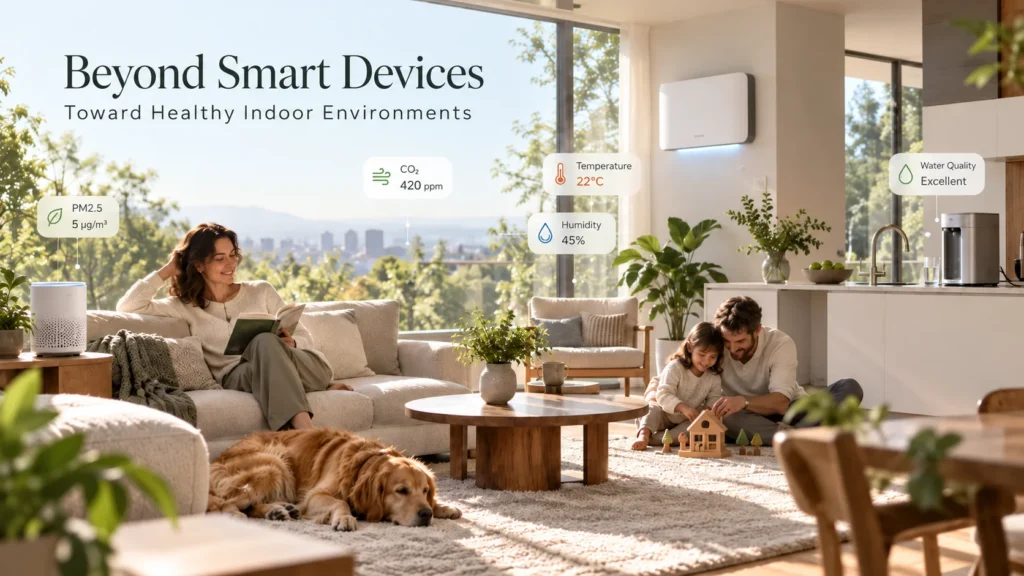
Modern living room with a family enjoying a healthy indoor environment monitored by smart devices, natural lighting, and greenery.

After IFA 2026: The Healthy Home Is Moving Beyond Smart Devices

In our previous IFA 2026 column, Air Purification Is Becoming Part of the Healthy-Home Platform, we argued that the next generation of indoor-health products would ...
ニュース
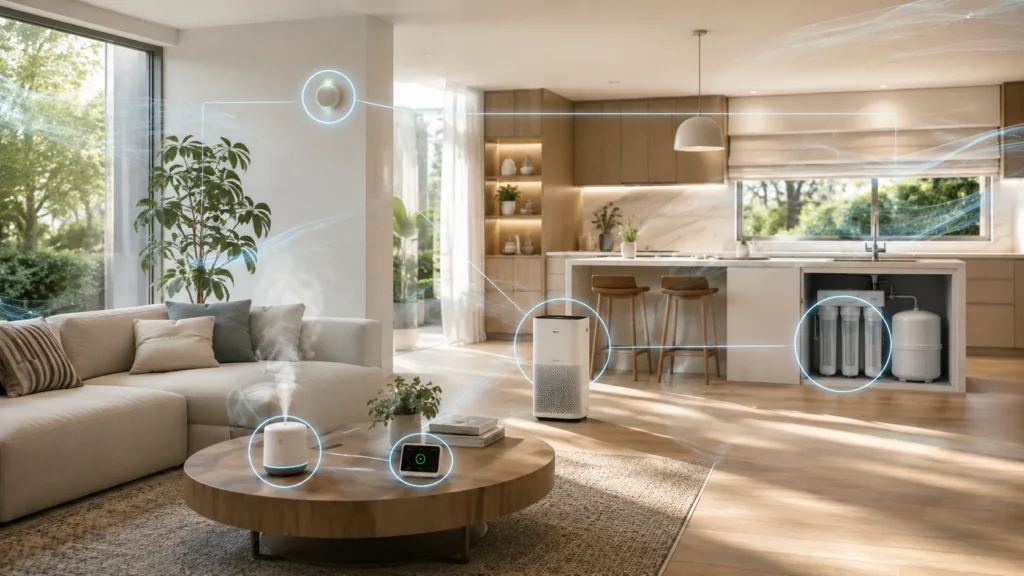
Modern living room and kitchen with smart home air quality devices including an air purifier, humidifier, and water filtration system, connected with visualized blue connectivity lines.

IFA 2026: Air Purification Is Becoming Part of the Healthy-Home Platform

Pre-IFA Industry Perspective | September 4, 2026 This article is based on official announcements and regulatory information available ahead of IFA 2026, which takes place ...
ニュース
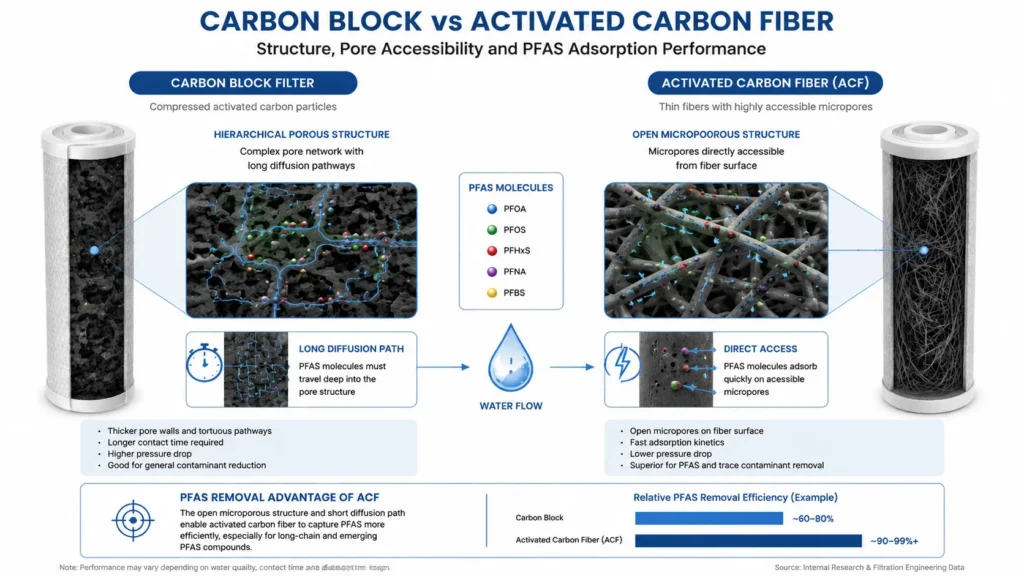
Comparison infographic showcasing the differences between carbon block filter and activated carbon fiber. Detailed diagrams illustrate the hierarchical porous structure of the carbon block with long diffusion paths and the open microporous structure of the activated carbon fiber with direct access for PFAS adsorption.

Carbon Block vs. Activated Carbon Fiber (ACF): Matching Media to Target Contaminants

Two carbon media. Same adsorption chemistry. Very different behaviour in a point-of-use cartridge. If you are specifying a water purifier platform for a PFAS-aware market, ...
ニュース
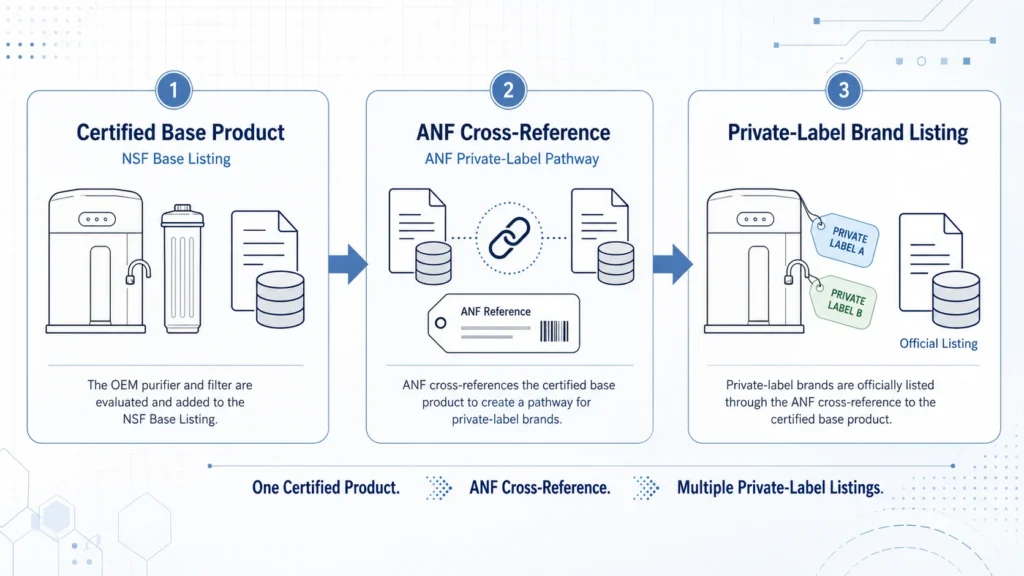
NSF base listing and ANF private-label certification pathway for OEM water filters

What Is an NSF Master Listing? A Guide to Base Listings, ANF Certification and OEM Water Filters

For a brand preparing to launch an OEM water purifier, one of the most common supplier claims is: “We already have an NSF master listing, ...
News, Water Purifiers
Healthy-home brand team reviewing PFAS water filter certification, test data and product engineering

Entering the Water Category Is Easy. Building a Credible PFAS Claim Is Much Harder

For air purification, appliance and healthy-home brands, entering the water category can look surprisingly easy. A company can select an existing undersink system, customize its ...
ニュース
Team in a business meeting discussing a water filtration system with product components and a comparison table displayed on a screen.

5 Leading OEM Water Purifier Manufacturers in China for Private Label Brands

China has thousands of companies selling water filters, reverse osmosis systems and drinking-water appliances. However, only a portion of them are suitable for private-label, OEM ...
ニュース
Contaminant Engineering•3 min read

PFAS Water Filtration Technologies Explained: Carbon, Resin & RO

Key Takeaway:

PFAS reduction depends on the specific compounds present, treatment media, contact time, water chemistry, and system design. Activated carbon, ion exchange, and Reverse Osmosis address PFAS through different mechanisms.

PFAS are a large family of persistent fluorinated compounds that can occur in drinking-water supplies. Their treatment behavior varies significantly by molecular structure, chain length, functional group, concentration, and the chemistry of the source water.

Granular Activated Carbon (GAC) removes PFAS primarily through adsorption. It is generally more effective for many longer-chain PFAS, while shorter-chain compounds tend to break through more quickly. Carbon performance depends on media properties, Empty Bed Contact Time (EBCT), competing organic matter, loading, and replacement frequency.

Ion-exchange resins use charged functional sites to capture many PFAS compounds. Properly selected anion-exchange media can provide high capacity and may perform better than conventional activated carbon for some shorter-chain PFAS, although performance still depends on water chemistry and competing ions.

Reverse Osmosis (RO) uses membrane separation rather than adsorption. Properly designed RO systems can provide broad reduction across many PFAS compounds as well as dissolved salts and other contaminants. Unlike carbon or resin, however, RO also produces a concentrate stream that must be managed.

No single technology should be selected from a PFAS label alone. System design should consider which PFAS compounds are present, their concentrations, required reduction targets, flow rate, media life, and the applicable third-party certification or validation requirements.

HisoAir Water Technical Series
Product Discovery•3 min read

How to Choose an Under-Sink Water Purifier for Modern Kitchens

Key Takeaway:

Match the treatment technology to your water quality first, then evaluate cabinet space, faucet configuration, flow rate, drain and power requirements, and filter replacement needs.

Choosing an under-sink water purifier starts with water chemistry. Carbon filtration is well suited to chlorine, taste, odor, and many organic contaminants, while Reverse Osmosis is more appropriate when dissolved salts, fluoride, nitrates, or broader dissolved contaminants need to be reduced.

For compact kitchens, tankless RO systems eliminate the conventional storage tank and can significantly reduce the space required under the sink. However, membrane capacity stated in GPD does not directly equal faucet flow. When comparing systems, check the actual dispensing flow rate, inlet-pressure requirement, recovery ratio, and whether a booster pump is required.

Installation architecture also matters. Many RO systems require a drain connection, electrical power, and either a dedicated drinking-water faucet or a compatible multi-function faucet. High-flow carbon systems can often connect directly to the existing cold-water line with a simpler installation, but pressure drop and available faucet flow should still be verified.

RO also removes much of the naturally occurring dissolved mineral content. Where taste or mineral balance is a priority, a post-RO remineralization stage can be added. Filter life should be evaluated by both rated capacity and local water quality rather than replacement time alone.

The right system is therefore not simply the smallest or highest-GPD model. It is the configuration that matches the target contaminants, available cabinet space, desired faucet setup, peak dispensing demand, and maintenance expectations.

HisoAir Water Technical Series
Water Quality•2 min read

What Does TDS Mean in Drinking Water? Measurement vs Contaminant Reality

Key Takeaway:

A TDS meter estimates the overall concentration of dissolved ionic substances from electrical conductivity. It cannot identify specific contaminants or determine whether water is chemically safe.

Total Dissolved Solids (TDS) refers to the combined concentration of dissolved substances in water. Most handheld TDS meters do not measure TDS directly. Instead, they measure electrical conductivity (EC) and convert that reading into an estimated parts-per-million (ppm) value.

This means a TDS reading can indicate how much dissolved ionic material is present, but not what that material actually is. Calcium, magnesium, sodium, nitrates, and other dissolved ions can all contribute to conductivity, yet a simple TDS meter cannot distinguish between them.

TDS meters are also not suitable for detecting trace contaminants such as PFAS, many VOCs, pesticides, pharmaceuticals, or disinfection byproducts. These substances may be present at concentrations far below the level needed to noticeably change electrical conductivity.

A low TDS reading therefore does not guarantee safe drinking water, and a higher TDS reading does not automatically indicate contamination. Water-treatment decisions should be based on laboratory testing for specific contaminants of concern rather than TDS alone.

HisoAir Water Technical Series
Technology Selection•2 min read

RO vs UF Water Filtration: Understanding Pore Sizes & Dissolved Minerals

Key Takeaway:

Ultrafiltration can reduce bacteria, turbidity, and suspended particles while retaining most naturally occurring dissolved minerals. Reverse Osmosis provides much broader reduction of dissolved salts and smaller contaminants.

Ultrafiltration (UF) typically uses hollow-fiber membranes with pore sizes in the approximate 0.01–0.1 micron range. These membranes physically retain turbidity, suspended solids, colloids, and many microorganisms while allowing dissolved minerals and salts to remain in the water.

Reverse Osmosis (RO) operates at a much finer separation level. Unlike UF, RO can substantially reduce dissolved ions such as sodium, calcium, fluoride, nitrates, and other contributors to total dissolved solids (TDS). This makes RO more suitable when dissolved-salt reduction is a primary treatment objective.

UF generally requires less system pressure and produces little or no continuous concentrate stream in many point-of-use configurations. RO typically requires greater pressure and produces a reject-water stream, but delivers broader contaminant reduction.

For water with acceptable TDS and mineral content, UF can be a simpler mineral-retaining treatment option. Where dissolved salts, fluoride, nitrates, or broader dissolved contaminants are a concern, RO is generally the more appropriate technology.

HisoAir Water Technical Series
Technology Selection•4 min read

Carbon Block vs Reverse Osmosis: Which Fits Your Need?

Key Takeaway:

Choose RO for dissolved inorganic salts and heavy metals; choose Carbon Block for chemical taste/odor, no wastewater, and high line-pressure flow.

Reverse Osmosis (RO) and Carbon Block filtration represent two fundamentally different treatment methods: membrane separation and adsorption. Understanding these differences helps determine which technology is better suited to a specific water-quality requirement.

Reverse Osmosis uses a semi-permeable membrane with pore sizes of approximately 0.0001 microns. It can significantly reduce dissolved inorganic contaminants such as TDS, fluoride, nitrates, and certain heavy metals. Because water must be forced through the membrane, RO systems require sufficient pressure or a booster pump and generate a concentrated wastewater stream.

Carbon Block filtration relies primarily on adsorption through compressed activated carbon, commonly with nominal pore sizes around 0.5–5 microns. It is highly effective for chlorine, chloramines, VOCs, taste, and odor, while allowing substantially higher direct-flow rates without producing wastewater.

From an operating perspective, Carbon Block systems are generally simpler, require less energy, and avoid the water loss associated with RO. RO involves higher system complexity and operating cost, but provides substantially broader reduction of dissolved contaminants that Carbon Block alone cannot address.

HisoAir Water Technical Series

見積依頼