新しいタブで開きます
革新的な空気品質ソリューション

中国の空気清浄機メーカー トップ4

Related Products

高品質の空気清浄機を大量に手に入れる必要があるのなら、それを生産している様々なトップ企業とつながることが最善の利益になる。このブログでは、中国におけるこのような製品のトップ4メーカーをリストアップした。

私たち人間が呼吸する空気の質は、時間とともにどんどん濁っていき、健康被害をもたらす可能性がある。汚染された空気を吸い込むと、化学物質やバクテリア、ウイルスが含まれている可能性があり、病気や障害を引き起こす可能性がある。空気清浄機 優れたろ過システム このような場合、かなり必要になる。

この業界でシェアを獲得したり、大規模な空気清浄システムを導入したりするには、信頼できる優れた空気清浄機のメーカーやサプライヤーを見つけることから始める必要がある。本記事では、歩留まりの良さ、製造能力、認証、および同様の要因の点で良い結果を出している中国メーカーのリストをまとめた。以下からチェックしてほしい。

中国空気清浄機メーカートップ4社リスト

以下は、私たちの要件を満たした中国の空気清浄機メーカー上位4社です。それぞれの会社情報を調べ、簡単ではありますが、包括的なプロフィールをそれぞれのセクションにまとめました。詳細をお急ぎの場合は、チェックしたい会社をクリックしてください。

  1. ヒソエア
  2. HOKO
  3. オランシ
  4. 純海

中国の空気清浄機メーカー トップ4

このリストに入った以下の企業の製造能力と認証を考慮した。その他、空気清浄業界における総合的な実績も考慮しました。各社の長所と、あなたに提供できるものについて知るには、この先をお読みください。

1.ヒソエア

ヒソエアのロゴ
ヒソエアのロゴ

画像ソース ヒソエア

ビジネスタイプ:OE/OD/JD メーカー, サプライヤー
本社 Room 712, Building 1, No. 4, Second Road, Songshan Lake Park, Dongguan City, Guangdong Province, China
主要市場:グローバル
経験年数: 19 years
証明書 ce、ros、en1822
If you’re particularly looking for air purifiers that are as effective as those used in medical environments, HisoAir would be worth working with. It was established in 2003. It has, by far, completed more than a hundred projects globally throughout its years of establishment.
ヒソエアは世界100カ国以上に製品を輸出し、50以上の特許を取得しています。同社は99.99%以上の粒子除去率を持つ空気清浄機を製造している。現在のCOVID-19パンデミックと同様に、ヒソエア製品は注目に値する。 SGSによる検証済み コロナウイルスファミリーの99.8%を除去することができる。

主要製品

  • 医療用空気清浄機

2.HOKO

HOKOロゴ
HOKOロゴ

画像ソースHOKO

ビジネスタイプ OE/ODメーカー
本社 広州市南沙区東城鎮台南路613号
主要市場:中国
経験年数 17年
証明書 ISO 9001: 2015, ISO 14001: 2015, CE, ROHS
HOKOは、正式には広州海科電子科技有限公司として認識されており、幅広い空気清浄機へのアクセスに重点を置いている場合、適切なパートナーになる可能性があります。この会社は、空気清浄機の多様なバリエーションで有名なだけでなく、他の家庭用製品を含む市場でも定評があります。
HOKOは空気清浄機に焦点を当て、品質管理および環境への影響に関するさまざまな国際認証を取得していることから、このリストに入った。また、HOKOは2005年から空気清浄機の設計・製造を行っており、その経験も長い。このことは、同社製品が99.97%の粒子除去率を達成していることからも明らかである。

主要製品

  • 空気清浄機
  • 空気加湿器
  • 生ごみ処理機
  • おでこ温度計
  • その他の家庭用品

3.オランシ

オランシのロゴ
オランシのロゴ

画像ソースオランシ

ビジネスタイプ OE/ODメーカー
本社 中華人民共和国広州市南沙区蘭河鎮海怡街1号1楼
主要市場:中国、ヨーロッパ、南米、東南アジア
経験年数 13年
証明書 ISO 9001: 2008, ce, cb, rohs, saso, cqc, ccc
オランシ・ヘルスケア株式会社、通称オランシは、6万平方メートルを超える巨大な生産施設を誇る企業である。空気清浄機のモデル数が非常に多く、他のヘルスケア製品も生産しているため、豊富なカタログを持っていると言える。
オランシは2017年に中国広東省のハイテク企業の称号を得た。また、同年、同国の環境電化製品トップ10メーカーの1社に認定された。また、国際的に認められた品質管理システムを遵守して製品を製造している。

主要製品

  • 空気清浄機
  • 浄水器
  • 青果クリーナー
  • 美容製品

4.純海

純海ロゴ
純海ロゴ

画像ソース純海

ビジネスタイプ メーカー
本社 中国上海市彰虹路303号
主な市場 中国、日本、韓国、フランス、ドイツ、スペイン、イタリア、UAE、ロシア
経験年数 15年
証明書 ISO 9001: 2008、ISO 14000
ジュンカイは、空気清浄機の製造、建設、工業レベルでの水処理、ガス処理など、さまざまな市場を手掛ける企業グループである。もちろん、ここでは空気ろ過・浄化製品を手がける潤海環境エンジニアリング株式会社を取り上げる。
2007年に設立された潤海環境エンジニアリング株式会社は、エアフィルター製造に関する集中的な研究開発を行っており、その豊富なフィルターバリエーションは注目に値する。これは間違いなく、ISO 9001: 2008品質管理システム認証基準を満たす空気清浄機の製造に役立っている。

主要製品

  • エアフィルター
  • 空気清浄機

結論

世界社会は飛躍的に技術を進歩させているが、その反面、汚染という形で人々の健康に重大なリスクをもたらしている。空気清浄機は、空気をきれいにし、病気や障害の原因となる汚染物質をろ過するのに役立つ優れたソリューションです。

本記事では、中国の様々なトップメーカーをリストアップしたが、医療への関心が高まっている今、医療グレードの製品を持つヒソエアはベストパートナーのひとつになると思う。 今すぐヒソエアへ お見積もりは無料です。

以下の記事も参考になるだろう:
シェアする
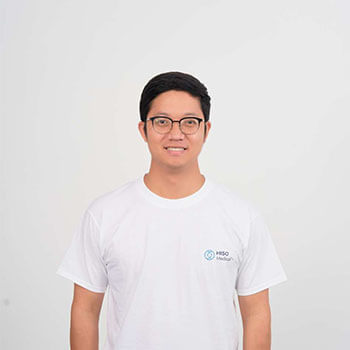
ヒソエア創設者のリー氏
Alwen Lee, an air purification expert with over 10 years of experience, is a devoted father of two and a passionate traveler, having explored more than 30 countries. With a love for public speaking and swimming, he has dedicated his life to the indoor air quality industry. His mission is to ensure that people around the world enjoy the freedom to breathe clean air and lead happy, healthy lives.

メッセージを送る

Related Products

もっと読む

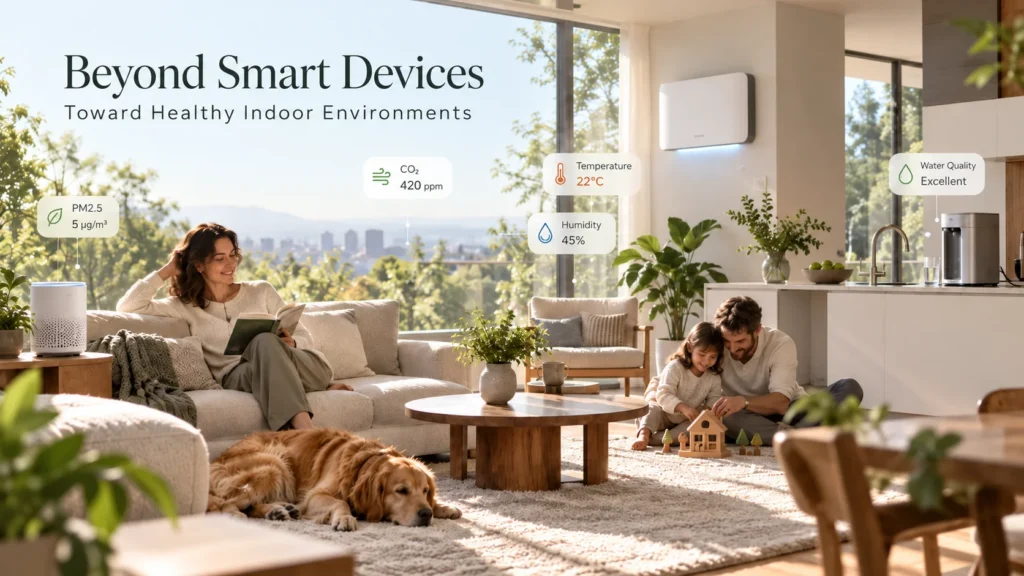
Modern living room with a family enjoying a healthy indoor environment monitored by smart devices, natural lighting, and greenery.

After IFA 2026: The Healthy Home Is Moving Beyond Smart Devices

In our previous IFA 2026 column, Air Purification Is Becoming Part of the Healthy-Home Platform, we argued that the next generation of indoor-health products would ...
ニュース
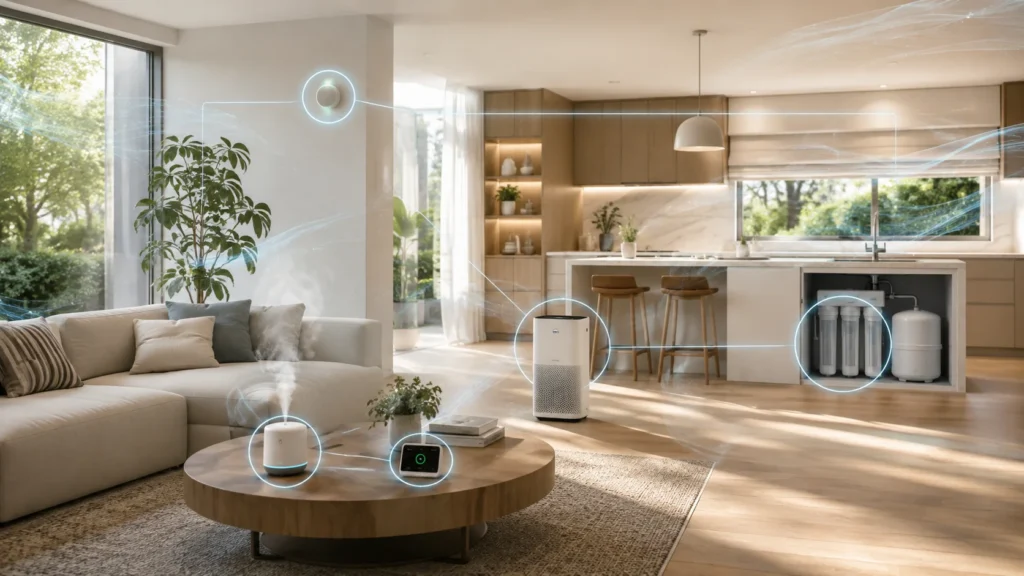
Modern living room and kitchen with smart home air quality devices including an air purifier, humidifier, and water filtration system, connected with visualized blue connectivity lines.

IFA 2026: Air Purification Is Becoming Part of the Healthy-Home Platform

Pre-IFA Industry Perspective | September 4, 2026 This article is based on official announcements and regulatory information available ahead of IFA 2026, which takes place ...
ニュース
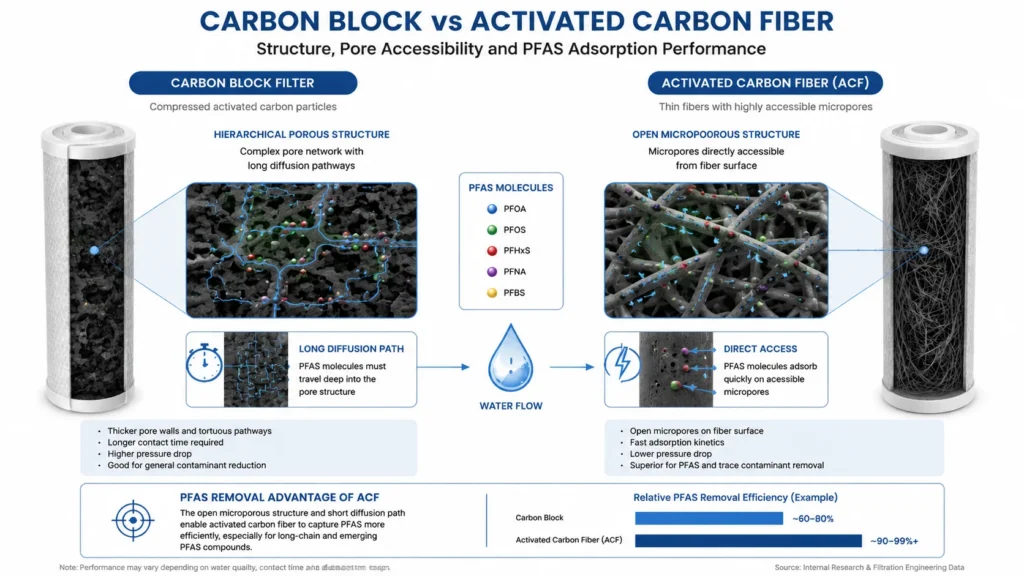
Comparison infographic showcasing the differences between carbon block filter and activated carbon fiber. Detailed diagrams illustrate the hierarchical porous structure of the carbon block with long diffusion paths and the open microporous structure of the activated carbon fiber with direct access for PFAS adsorption.

Carbon Block vs. Activated Carbon Fiber (ACF): Matching Media to Target Contaminants

Two carbon media. Same adsorption chemistry. Very different behaviour in a point-of-use cartridge. If you are specifying a water purifier platform for a PFAS-aware market, ...
ニュース
NSF base listing and ANF private-label certification pathway for OEM water filters

What Is an NSF Master Listing? A Guide to Base Listings, ANF Certification and OEM Water Filters

For a brand preparing to launch an OEM water purifier, one of the most common supplier claims is: “We already have an NSF master listing, ...
News, Water Purifiers
Healthy-home brand team reviewing PFAS water filter certification, test data and product engineering

Entering the Water Category Is Easy. Building a Credible PFAS Claim Is Much Harder

For air purification, appliance and healthy-home brands, entering the water category can look surprisingly easy. A company can select an existing undersink system, customize its ...
ニュース
Team in a business meeting discussing a water filtration system with product components and a comparison table displayed on a screen.

5 Leading OEM Water Purifier Manufacturers in China for Private Label Brands

China has thousands of companies selling water filters, reverse osmosis systems and drinking-water appliances. However, only a portion of them are suitable for private-label, OEM ...
ニュース
Contaminant Engineering•3 min read

PFAS Water Filtration Technologies Explained: Carbon, Resin & RO

Key Takeaway:

PFAS reduction depends on the specific compounds present, treatment media, contact time, water chemistry, and system design. Activated carbon, ion exchange, and Reverse Osmosis address PFAS through different mechanisms.

PFAS are a large family of persistent fluorinated compounds that can occur in drinking-water supplies. Their treatment behavior varies significantly by molecular structure, chain length, functional group, concentration, and the chemistry of the source water.

Granular Activated Carbon (GAC) removes PFAS primarily through adsorption. It is generally more effective for many longer-chain PFAS, while shorter-chain compounds tend to break through more quickly. Carbon performance depends on media properties, Empty Bed Contact Time (EBCT), competing organic matter, loading, and replacement frequency.

Ion-exchange resins use charged functional sites to capture many PFAS compounds. Properly selected anion-exchange media can provide high capacity and may perform better than conventional activated carbon for some shorter-chain PFAS, although performance still depends on water chemistry and competing ions.

Reverse Osmosis (RO) uses membrane separation rather than adsorption. Properly designed RO systems can provide broad reduction across many PFAS compounds as well as dissolved salts and other contaminants. Unlike carbon or resin, however, RO also produces a concentrate stream that must be managed.

No single technology should be selected from a PFAS label alone. System design should consider which PFAS compounds are present, their concentrations, required reduction targets, flow rate, media life, and the applicable third-party certification or validation requirements.

HisoAir Water Technical Series
Product Discovery•3 min read

How to Choose an Under-Sink Water Purifier for Modern Kitchens

Key Takeaway:

Match the treatment technology to your water quality first, then evaluate cabinet space, faucet configuration, flow rate, drain and power requirements, and filter replacement needs.

Choosing an under-sink water purifier starts with water chemistry. Carbon filtration is well suited to chlorine, taste, odor, and many organic contaminants, while Reverse Osmosis is more appropriate when dissolved salts, fluoride, nitrates, or broader dissolved contaminants need to be reduced.

For compact kitchens, tankless RO systems eliminate the conventional storage tank and can significantly reduce the space required under the sink. However, membrane capacity stated in GPD does not directly equal faucet flow. When comparing systems, check the actual dispensing flow rate, inlet-pressure requirement, recovery ratio, and whether a booster pump is required.

Installation architecture also matters. Many RO systems require a drain connection, electrical power, and either a dedicated drinking-water faucet or a compatible multi-function faucet. High-flow carbon systems can often connect directly to the existing cold-water line with a simpler installation, but pressure drop and available faucet flow should still be verified.

RO also removes much of the naturally occurring dissolved mineral content. Where taste or mineral balance is a priority, a post-RO remineralization stage can be added. Filter life should be evaluated by both rated capacity and local water quality rather than replacement time alone.

The right system is therefore not simply the smallest or highest-GPD model. It is the configuration that matches the target contaminants, available cabinet space, desired faucet setup, peak dispensing demand, and maintenance expectations.

HisoAir Water Technical Series
Water Quality•2 min read

What Does TDS Mean in Drinking Water? Measurement vs Contaminant Reality

Key Takeaway:

A TDS meter estimates the overall concentration of dissolved ionic substances from electrical conductivity. It cannot identify specific contaminants or determine whether water is chemically safe.

Total Dissolved Solids (TDS) refers to the combined concentration of dissolved substances in water. Most handheld TDS meters do not measure TDS directly. Instead, they measure electrical conductivity (EC) and convert that reading into an estimated parts-per-million (ppm) value.

This means a TDS reading can indicate how much dissolved ionic material is present, but not what that material actually is. Calcium, magnesium, sodium, nitrates, and other dissolved ions can all contribute to conductivity, yet a simple TDS meter cannot distinguish between them.

TDS meters are also not suitable for detecting trace contaminants such as PFAS, many VOCs, pesticides, pharmaceuticals, or disinfection byproducts. These substances may be present at concentrations far below the level needed to noticeably change electrical conductivity.

A low TDS reading therefore does not guarantee safe drinking water, and a higher TDS reading does not automatically indicate contamination. Water-treatment decisions should be based on laboratory testing for specific contaminants of concern rather than TDS alone.

HisoAir Water Technical Series
Technology Selection•2 min read

RO vs UF Water Filtration: Understanding Pore Sizes & Dissolved Minerals

Key Takeaway:

Ultrafiltration can reduce bacteria, turbidity, and suspended particles while retaining most naturally occurring dissolved minerals. Reverse Osmosis provides much broader reduction of dissolved salts and smaller contaminants.

Ultrafiltration (UF) typically uses hollow-fiber membranes with pore sizes in the approximate 0.01–0.1 micron range. These membranes physically retain turbidity, suspended solids, colloids, and many microorganisms while allowing dissolved minerals and salts to remain in the water.

Reverse Osmosis (RO) operates at a much finer separation level. Unlike UF, RO can substantially reduce dissolved ions such as sodium, calcium, fluoride, nitrates, and other contributors to total dissolved solids (TDS). This makes RO more suitable when dissolved-salt reduction is a primary treatment objective.

UF generally requires less system pressure and produces little or no continuous concentrate stream in many point-of-use configurations. RO typically requires greater pressure and produces a reject-water stream, but delivers broader contaminant reduction.

For water with acceptable TDS and mineral content, UF can be a simpler mineral-retaining treatment option. Where dissolved salts, fluoride, nitrates, or broader dissolved contaminants are a concern, RO is generally the more appropriate technology.

HisoAir Water Technical Series
Technology Selection•4 min read

Carbon Block vs Reverse Osmosis: Which Fits Your Need?

Key Takeaway:

Choose RO for dissolved inorganic salts and heavy metals; choose Carbon Block for chemical taste/odor, no wastewater, and high line-pressure flow.

Reverse Osmosis (RO) and Carbon Block filtration represent two fundamentally different treatment methods: membrane separation and adsorption. Understanding these differences helps determine which technology is better suited to a specific water-quality requirement.

Reverse Osmosis uses a semi-permeable membrane with pore sizes of approximately 0.0001 microns. It can significantly reduce dissolved inorganic contaminants such as TDS, fluoride, nitrates, and certain heavy metals. Because water must be forced through the membrane, RO systems require sufficient pressure or a booster pump and generate a concentrated wastewater stream.

Carbon Block filtration relies primarily on adsorption through compressed activated carbon, commonly with nominal pore sizes around 0.5–5 microns. It is highly effective for chlorine, chloramines, VOCs, taste, and odor, while allowing substantially higher direct-flow rates without producing wastewater.

From an operating perspective, Carbon Block systems are generally simpler, require less energy, and avoid the water loss associated with RO. RO involves higher system complexity and operating cost, but provides substantially broader reduction of dissolved contaminants that Carbon Block alone cannot address.

HisoAir Water Technical Series

見積依頼