
新しいタブで開きます
革新的な空気品質ソリューション

Where Are Bissell Air Purifiers Manufactured?

When you think of Bissell, what comes to mind? For most, it’s a story of American ingenuity. With a history stretching back nearly 150 years, Bissell has become a household name, synonymous with floor care and a deep-rooted American heritage. It’s a brand that began in a small crockery shop in Grand Rapids, Michigan, and grew into a global leader, all while remaining in the hands of its founding family. This powerful narrative naturally leads many consumers and business owners to a simple assumption: Bissell products, including their popular air purifiers, are made in the USA.

But in today's complex global economy, the story of a product's origin is often more nuanced than its brand's nationality. For direct-to-consumer (D2C) customers, knowing where a product is made can influence purchasing decisions based on quality, ethics, and a desire to support domestic manufacturing. For our business-to-business (B2B) clients, this knowledge is critical for supply chain transparency, strategic sourcing, and risk management.

So, where are Bissell air purifiers actually manufactured? At Hisoair, we believe in empowering our clients with clear, factual information. To answer this question, we’ve delved into corporate records, product specifications, and industry analyses to separate brand identity from manufacturing reality. The answer is a fascinating case study in modern global business.

A Foundation of American Identity

To understand the public perception of Bissell, you have to start in 1876. Melville and Anna Bissell, tired of cleaning sawdust from their shop’s carpet, invented and patented a revolutionary carpet sweeper. This invention wasn’t just a product; it was the cornerstone of a new company. In 1883, the first Bissell manufacturing plant was built in Grand Rapids, cementing the brand’s physical and economic ties to West Michigan.
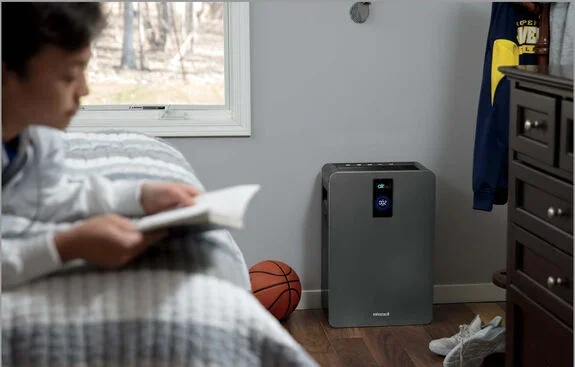
bissell air purifiers 2

This legacy is not just a historical footnote; it is the core of Bissell's present-day identity. The company remains privately owned, now in its fifth generation of family leadership, with its global headquarters firmly planted in Walker, Michigan. Bissell is, by every meaningful corporate measure, an American company.

The brand’s commitment to its home state is demonstrable. A 2019 expansion of its Michigan headquarters involved a \$10 million capital investment and the creation of 100 new high-paying jobs, adding to a local workforce of nearly 500. This dedication to its American roots creates a powerful "halo effect," where the company's national identity is logically, though often incorrectly, extended by consumers to the physical manufacturing of all its products.

Furthermore, while its manufacturing has globalized, Bissell’s strategic and innovative heart remains in the United States. The Walker headquarters is the command center for corporate strategy, brand management, and product development. In 2010, the company invested \$9 million to create a state-of-the-art R\&D facility on its Michigan campus, which collaborates with its other R\&D outposts in South Korea and China. The intellectual property, design, and overarching business strategy are born and managed in America.

The "Made in the USA" Narrative: Perception vs. Contradiction

Given this profound American heritage, it’s no surprise that a narrative of domestic manufacturing has taken hold. This perception is reinforced through various consumer-facing channels. On a BestBuy.com Q\&A page for the Bissell air320 model, a user confidently states, "As far as I know, all Bissell equipment is proudly made in the USA."

Retailers have made even more direct assertions. Ace Vacuums, an authorized dealer, features a collection page for Bissell Air Purifiers with the explicit claim: "Made in the USA, Bissell Air Purifiers are crafted with high-quality materials and innovative technology." Such a definitive statement from a retail partner lends an air of authority that consumers can easily take as fact.

However, these claims stand in stark contrast to a telling pattern of omission in expert industry analyses. In-depth guides whose sole purpose is to identify American-made air purifiers consistently fail to include Bissell. A comprehensive report from HouseFresh.com, created specifically to help consumers find U.S.-made alternatives to Asian-sourced products, highlights brands like CleanAirKits (Missouri) and Austin Air (New York) but makes no mention of Bissell. Similarly, a feature by the retailer Sylvane.com on American-made air purifiers promotes brands like Enviroklenz (Kansas) and, again, Austin Air, but Bissell is conspicuously absent.

This repeated omission across multiple, independent, research-driven industry roundups serves as powerful negative evidence. It suggests that within the home appliance industry, Bissell is not recognized as a U.S. manufacturer of air purifiers. This discrepancy between anecdotal claims and expert analysis points to a more complex reality.
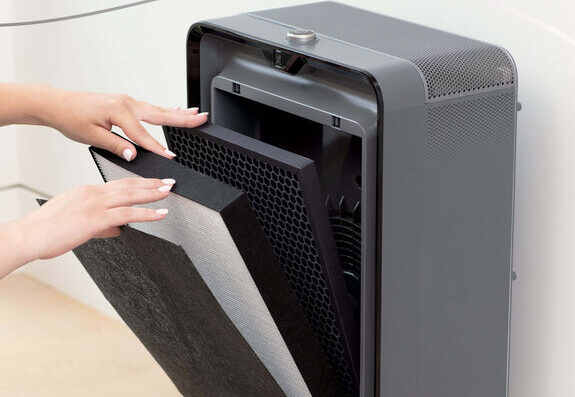
bissell air purifiers 3

Corporate Disclosures: Unveiling a Global Manufacturing Footprint

The definitive answer to this puzzle is found not in consumer forums or retailer websites, but within Bissell's own official corporate statements. Through documents related to legal compliance and supply chain management, Bissell provides a clear and unambiguous picture of a sophisticated global manufacturing network.

The single most conclusive piece of evidence comes from Bissell's "Statement on Forced Labour in Supply Chains," a public document prepared to comply with Canadian law. Such regulatory filings carry significant legal weight and are intended to provide a factual representation of a company's operations. In this statement, Bissell declares:

"We manufacture products including vacuum cleaners, carpet washers, steam and hard floor cleaners, air purifiers and other cleaning products in Cambodia, China, Taiwan, Vietnam, Malaysia, Mexico, Thailand, and Indonesia."

This official disclosure is the key. It explicitly includes "air purifiers" in the list of products manufactured overseas and names several Asian countries as the locations for this production. This statement, originating directly from Bissell in a formal legal context, supersedes all third-party claims to the contrary.

This is strongly corroborated by other corporate materials. The company's careers website highlights that "BISSELL operations across China are critical to the success of our growing global business," with teams dedicated to Engineering, Product Development, and Global Supply Chain Management in key hubs like Shenzhen, Suzhou, and Shanghai. To manage this complexity, Bissell has adopted Oracle Cloud Supply Chain Management (SCM) systems to handle forecasting for over 8,000 product lines sourced from a diverse array of global suppliers. These are the hallmarks of a company reliant on a vast overseas manufacturing base.

Product-Level Forensics: Tracing the Country of Origin

While corporate disclosures confirm the global strategy, an examination of specific products offers granular proof. This product-level forensic analysis consistently points to China as a primary manufacturing location for both finished units and essential replacement parts.

Bissell air220: A product specifications page from HD Supply Solutions, a major industrial distributor, explicitly lists the "Country of Origin" as CHINA.

Bissell Myair HUB: A product listing from Tura Scandinavia, a European distributor, specifies that its "Country of origin" is China.

Bissell air320 Replacement Filter: A product page for the genuine Bissell replacement filter pack for the air320 model clearly states the "Country of Origin" is China.

Just as significant as this direct evidence is the consistent absence of any "Made in the USA" claims on Bissell's own official marketing materials. A review of Bissell's U.S. and Canadian websites for its air purifier lineup—including the popular MYAir series, the air220, and the air400—reveals extensive details on features and performance, but none claim to be manufactured in the United States. For a company with an American heritage as strong and marketable as Bissell's, the "Made in the USA" label is a valuable asset. The deliberate choice not to use it is a powerful implicit confirmation that the products do not meet the legal standards required to make such a claim.
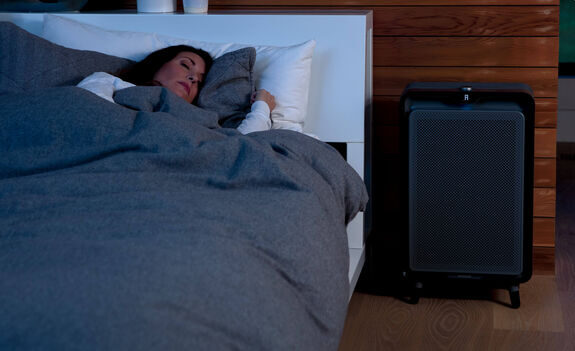
bissell air purifiers 4

Final Determination: An American Company with a Global Product

The investigation leads to a nuanced but definitive conclusion. The discrepancy at the heart of the query—the conflict between a deeply American brand identity and the realities of a globalized production model—is resolved by distinguishing between the corporation and the product.

Bissell Inc. is, without question, an American company. Its identity is forged from a 148-year history in Michigan, and it remains family-owned and U.S.-headquartered. The strategy, innovation, design, and marketing—the mind behind the product—are fundamentally American.

However, the definitive evidence from Bissell's own supply chain disclosures and specific product-level data overwhelmingly demonstrates that Bissell air purifiers are manufactured in Asia, with China being a primary and explicitly documented country of origin.

This reality is not the result of corporate deception. Rather, it is a compelling case study in the crucial distinction between a corporation's nationality and its products' country of origin. Bissell is an American company that makes products for a global market using a global supply chain. This approach allows it to leverage international manufacturing efficiencies to remain competitive in the small household appliance sector.

For both consumers and businesses, this highlights a vital lesson: a brand's heritage doesn't always tell the whole story of its supply chain. The mind and strategy behind the Bissell air purifier are American, but the hands that assemble it are located in Asia.

シェアする
ヒソエア創設者のリー氏
Alwen Lee, an air purification expert with over 10 years of experience, is a devoted father of two and a passionate traveler, having explored more than 30 countries. With a love for public speaking and swimming, he has dedicated his life to the indoor air quality industry. His mission is to ensure that people around the world enjoy the freedom to breathe clean air and lead happy, healthy lives.

メッセージを送る

もっと読む

マレーシアの空気清浄機メーカー トップ4

Best air purifier in malaysia 2026: top 10 brands

The air is contaminated with numerous particles like dust, allergens, viruses, bacteria, and more that can harm people’s health. Cleaning it with efficient air purifiers ...
空気清浄機メーカー, ニュース
sunhouse air purifiers 4

Where Are Sunhouse Air Purifiers Manufactured?

When you pick up a product, the 'Made in...' label often tells a seemingly straightforward story. For Sunhouse, a prominent name in home appliances, that ...
空気清浄機メーカー
trusens air purifier 2

Where Are TruSens Air Purifiers Manufactured?

In today's world, clean air isn't just a luxury; it's a necessity for health, productivity, and peace of mind. Whether you're a homeowner seeking a ...
空気清浄機メーカー
intellipure air purifiers

Where Are Intellipure Air Purifiers Manufactured?

In today’s market, the phrase “Made in USA” carries significant weight. For direct-to-consumer (D2C) buyers, it often implies superior quality, support for the domestic economy, ...
空気清浄機メーカー
rowenta air purifier 2

Where Are Rowenta Air Purifiers Manufactured?

As a business operating in the direct-to-consumer (D2C) or B2B space, understanding the intricacies of a global supply chain is paramount. The simple question, "Where ...
空気清浄機メーカー
aroeve air purifiers 4

Where Are Aroeve Air Purifiers Manufactured?

In the sprawling, hyper-competitive world of e-commerce, a new type of brand has emerged. Seemingly materializing from nowhere, these "phantom brands" can rapidly dominate product ...
空気清浄機メーカー
Contaminant Engineering•3 min read

PFAS Water Filtration Technologies Explained: Carbon, Resin & RO

Key Takeaway:

PFAS reduction depends on the specific compounds present, treatment media, contact time, water chemistry, and system design. Activated carbon, ion exchange, and Reverse Osmosis address PFAS through different mechanisms.

PFAS are a large family of persistent fluorinated compounds that can occur in drinking-water supplies. Their treatment behavior varies significantly by molecular structure, chain length, functional group, concentration, and the chemistry of the source water.

Granular Activated Carbon (GAC) removes PFAS primarily through adsorption. It is generally more effective for many longer-chain PFAS, while shorter-chain compounds tend to break through more quickly. Carbon performance depends on media properties, Empty Bed Contact Time (EBCT), competing organic matter, loading, and replacement frequency.

Ion-exchange resins use charged functional sites to capture many PFAS compounds. Properly selected anion-exchange media can provide high capacity and may perform better than conventional activated carbon for some shorter-chain PFAS, although performance still depends on water chemistry and competing ions.

Reverse Osmosis (RO) uses membrane separation rather than adsorption. Properly designed RO systems can provide broad reduction across many PFAS compounds as well as dissolved salts and other contaminants. Unlike carbon or resin, however, RO also produces a concentrate stream that must be managed.

No single technology should be selected from a PFAS label alone. System design should consider which PFAS compounds are present, their concentrations, required reduction targets, flow rate, media life, and the applicable third-party certification or validation requirements.

HisoAir Water Technical Series
Product Discovery•3 min read

How to Choose an Under-Sink Water Purifier for Modern Kitchens

Key Takeaway:

Match the treatment technology to your water quality first, then evaluate cabinet space, faucet configuration, flow rate, drain and power requirements, and filter replacement needs.

Choosing an under-sink water purifier starts with water chemistry. Carbon filtration is well suited to chlorine, taste, odor, and many organic contaminants, while Reverse Osmosis is more appropriate when dissolved salts, fluoride, nitrates, or broader dissolved contaminants need to be reduced.

For compact kitchens, tankless RO systems eliminate the conventional storage tank and can significantly reduce the space required under the sink. However, membrane capacity stated in GPD does not directly equal faucet flow. When comparing systems, check the actual dispensing flow rate, inlet-pressure requirement, recovery ratio, and whether a booster pump is required.

Installation architecture also matters. Many RO systems require a drain connection, electrical power, and either a dedicated drinking-water faucet or a compatible multi-function faucet. High-flow carbon systems can often connect directly to the existing cold-water line with a simpler installation, but pressure drop and available faucet flow should still be verified.

RO also removes much of the naturally occurring dissolved mineral content. Where taste or mineral balance is a priority, a post-RO remineralization stage can be added. Filter life should be evaluated by both rated capacity and local water quality rather than replacement time alone.

The right system is therefore not simply the smallest or highest-GPD model. It is the configuration that matches the target contaminants, available cabinet space, desired faucet setup, peak dispensing demand, and maintenance expectations.

HisoAir Water Technical Series
Water Quality•2 min read

What Does TDS Mean in Drinking Water? Measurement vs Contaminant Reality

Key Takeaway:

A TDS meter estimates the overall concentration of dissolved ionic substances from electrical conductivity. It cannot identify specific contaminants or determine whether water is chemically safe.

Total Dissolved Solids (TDS) refers to the combined concentration of dissolved substances in water. Most handheld TDS meters do not measure TDS directly. Instead, they measure electrical conductivity (EC) and convert that reading into an estimated parts-per-million (ppm) value.

This means a TDS reading can indicate how much dissolved ionic material is present, but not what that material actually is. Calcium, magnesium, sodium, nitrates, and other dissolved ions can all contribute to conductivity, yet a simple TDS meter cannot distinguish between them.

TDS meters are also not suitable for detecting trace contaminants such as PFAS, many VOCs, pesticides, pharmaceuticals, or disinfection byproducts. These substances may be present at concentrations far below the level needed to noticeably change electrical conductivity.

A low TDS reading therefore does not guarantee safe drinking water, and a higher TDS reading does not automatically indicate contamination. Water-treatment decisions should be based on laboratory testing for specific contaminants of concern rather than TDS alone.

HisoAir Water Technical Series
Technology Selection•2 min read

RO vs UF Water Filtration: Understanding Pore Sizes & Dissolved Minerals

Key Takeaway:

Ultrafiltration can reduce bacteria, turbidity, and suspended particles while retaining most naturally occurring dissolved minerals. Reverse Osmosis provides much broader reduction of dissolved salts and smaller contaminants.

Ultrafiltration (UF) typically uses hollow-fiber membranes with pore sizes in the approximate 0.01–0.1 micron range. These membranes physically retain turbidity, suspended solids, colloids, and many microorganisms while allowing dissolved minerals and salts to remain in the water.

Reverse Osmosis (RO) operates at a much finer separation level. Unlike UF, RO can substantially reduce dissolved ions such as sodium, calcium, fluoride, nitrates, and other contributors to total dissolved solids (TDS). This makes RO more suitable when dissolved-salt reduction is a primary treatment objective.

UF generally requires less system pressure and produces little or no continuous concentrate stream in many point-of-use configurations. RO typically requires greater pressure and produces a reject-water stream, but delivers broader contaminant reduction.

For water with acceptable TDS and mineral content, UF can be a simpler mineral-retaining treatment option. Where dissolved salts, fluoride, nitrates, or broader dissolved contaminants are a concern, RO is generally the more appropriate technology.

HisoAir Water Technical Series
Technology Selection•4 min read

Carbon Block vs Reverse Osmosis: Which Fits Your Need?

Key Takeaway:

Choose RO for dissolved inorganic salts and heavy metals; choose Carbon Block for chemical taste/odor, no wastewater, and high line-pressure flow.

Reverse Osmosis (RO) and Carbon Block filtration represent two fundamentally different treatment methods: membrane separation and adsorption. Understanding these differences helps determine which technology is better suited to a specific water-quality requirement.

Reverse Osmosis uses a semi-permeable membrane with pore sizes of approximately 0.0001 microns. It can significantly reduce dissolved inorganic contaminants such as TDS, fluoride, nitrates, and certain heavy metals. Because water must be forced through the membrane, RO systems require sufficient pressure or a booster pump and generate a concentrated wastewater stream.

Carbon Block filtration relies primarily on adsorption through compressed activated carbon, commonly with nominal pore sizes around 0.5–5 microns. It is highly effective for chlorine, chloramines, VOCs, taste, and odor, while allowing substantially higher direct-flow rates without producing wastewater.

From an operating perspective, Carbon Block systems are generally simpler, require less energy, and avoid the water loss associated with RO. RO involves higher system complexity and operating cost, but provides substantially broader reduction of dissolved contaminants that Carbon Block alone cannot address.

HisoAir Water Technical Series

見積依頼