


When you pick up a product, the 'Made in...' label often tells a seemingly straightforward story. For Sunhouse, a prominent name in home appliances, that label frequently points to Vietnam. However, in today's intricately connected global economy, the true origin story of a product like a Sunhouse air purifier is far more nuanced and compelling than a single label can convey. It's a testament to a sophisticated strategy of global integration, leveraging the unique strengths of multiple countries to deliver a competitive, high-quality product.
Understanding the journey of a product from raw components to a finished good is crucial for both consumers seeking quality and businesses looking for reliable manufacturing partners. The question isn't merely 'Where is it made?' but 'How is it made?' Let's delve into the layers behind the Sunhouse air purifier and uncover the fascinating reality of its manufacturing origins.
The Rise of a Vietnamese Manufacturing Giant
Sunhouse Group JSC's journey is a powerful narrative rooted deeply in Vietnam. Established in 2000 as an importer of household goods, the company strategically transformed its focus from distribution to large-scale manufacturing. A pivotal moment arrived in the early 2000s with a joint venture with Sunhouse Korea, which provided the technological bedrock for its production capabilities. This partnership enabled them to construct their initial factories and implement advanced Korean technology, laying the groundwork for their remarkable growth.
Today, Sunhouse stands as a titan of Vietnamese industry. The company proudly operates an extensive manufacturing ecosystem within Vietnam, which has expanded from six factories to a network of 10-12 facilities spanning over 100,000 square meters. This impressive infrastructure boasts the capacity to produce more than 80 million product units annually, ranging from air fryers and non-stick pans to LED lights and water purifiers.
This unwavering commitment to domestic production serves several critical objectives:
- Quality Control: By owning and operating their factories, Sunhouse maintains direct and stringent control over the final stages of production, ensuring every product adheres to their high standards for durability and performance.
- Brand Identity: The 'Made in Vietnam' label is integral to their brand identity, resonating strongly with a domestic market of over 20 million households and appealing to international partners seeking to diversify their supply chains.
- Economic Strength: This substantial investment reinforces Vietnam's burgeoning reputation as a strategic and capable manufacturing hub, evolving beyond a perception of merely low-cost labor to one of high-quality production and research & development.
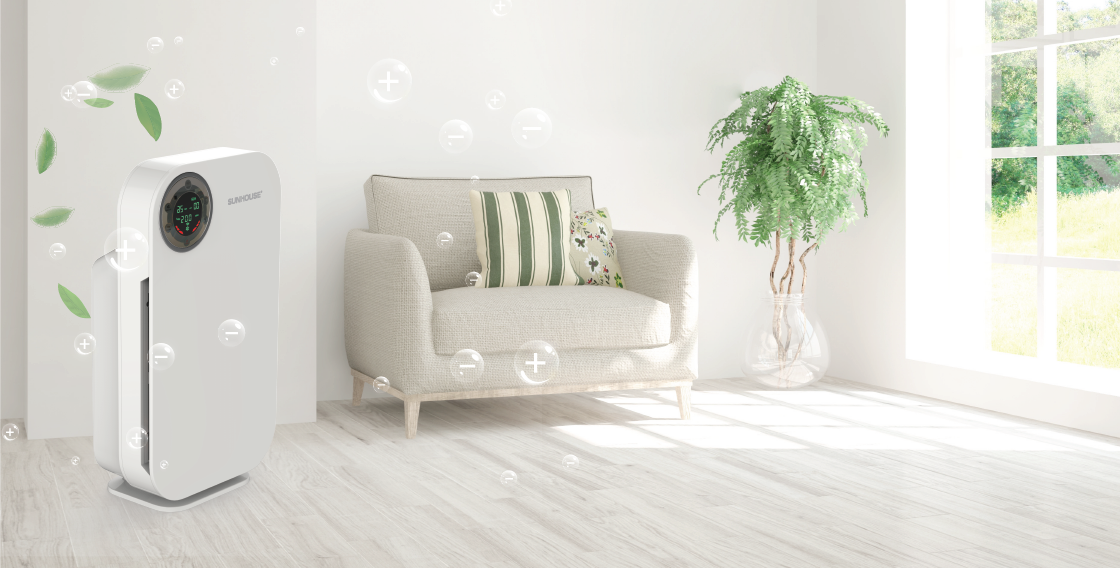
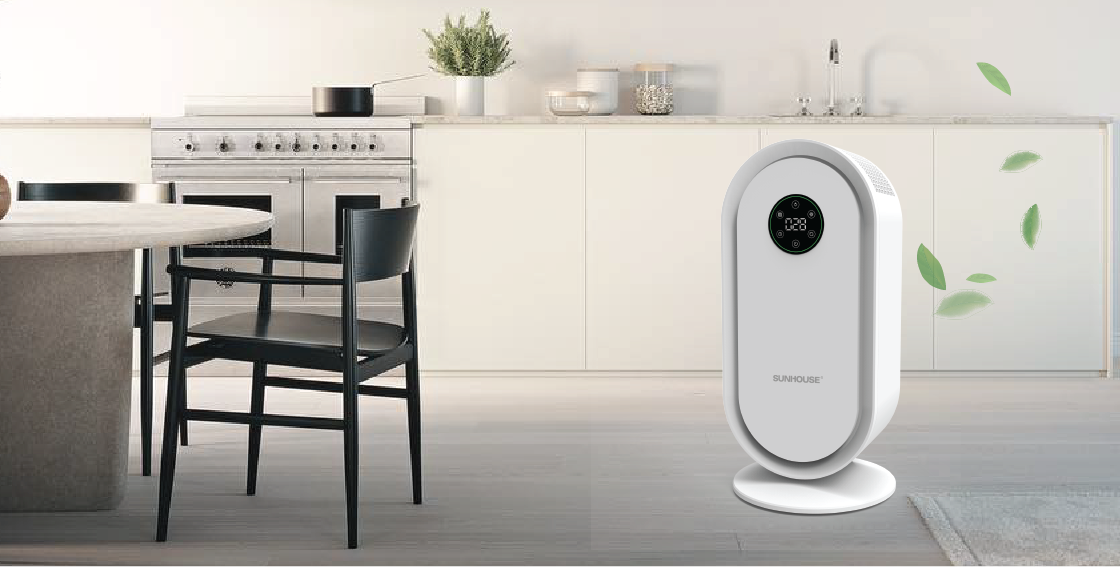
For any observer, Sunhouse embodies the quintessential Vietnamese manufacturing success story. Their products, including air purifiers, emerge from assembly lines in their Hanoi-based factory clusters, meticulously packaged and prepared for their vast network of over 60,000 points of sale. Based on this, the answer to our initial question might seem straightforward: Sunhouse air purifiers are made in Vietnam. However, this is only part of the story.
The Global Supply Chain: A Complex Interplay
While Sunhouse proudly champions its Vietnamese manufacturing prowess, it simultaneously operates as a shrewd global integrator. A closer examination of global trade data reveals that Sunhouse Group JSC is a significant importer, with thousands of shipments recorded annually. The leading sourcing country, by a considerable margin, is China.
This isn't solely about raw materials. Corporate profiles confirm that Sunhouse employs a hybrid model that involves 'hires processing from China, South Korea, and Thailand..., then imports and distributes'. This indicates a sophisticated strategy that encompasses sourcing not just materials, but crucial, technologically advanced components from specialized manufacturers across the globe.
This dual approach is not a contradiction; rather, it represents a pragmatic and highly efficient global supply chain strategy. It empowers Sunhouse to:
- Leverage Specialized Ecosystems: China offers an unparalleled ecosystem for electronic components, providing access to cutting-edge technology, immense scale, and cost efficiencies that are exceedingly difficult to replicate elsewhere.
- Optimize Costs: By sourcing components from the most cost-effective regions and conducting final assembly in a competitive labor market like Vietnam, the company can effectively manage costs without compromising product quality.
- Rapid Product Line Expansion: This model enables Sunhouse to swiftly introduce a diverse array of products to the market, sometimes by importing finished 'white-label' goods that are subsequently branded and sold under the Sunhouse name.
This hybrid strategy is fundamental to comprehending the true origin of a complex electronic device such as an air purifier. The final assembly location represents just one piece of a much larger international puzzle.
The Air Purifier: A Case Study in Global Collaboration
So, how does this intricate global strategy specifically apply to the Sunhouse air purifier? The evidence points to a clear, bifurcated manufacturing process that perfectly exemplifies the company's hybrid model.
1. Critical Components: Manufactured in China
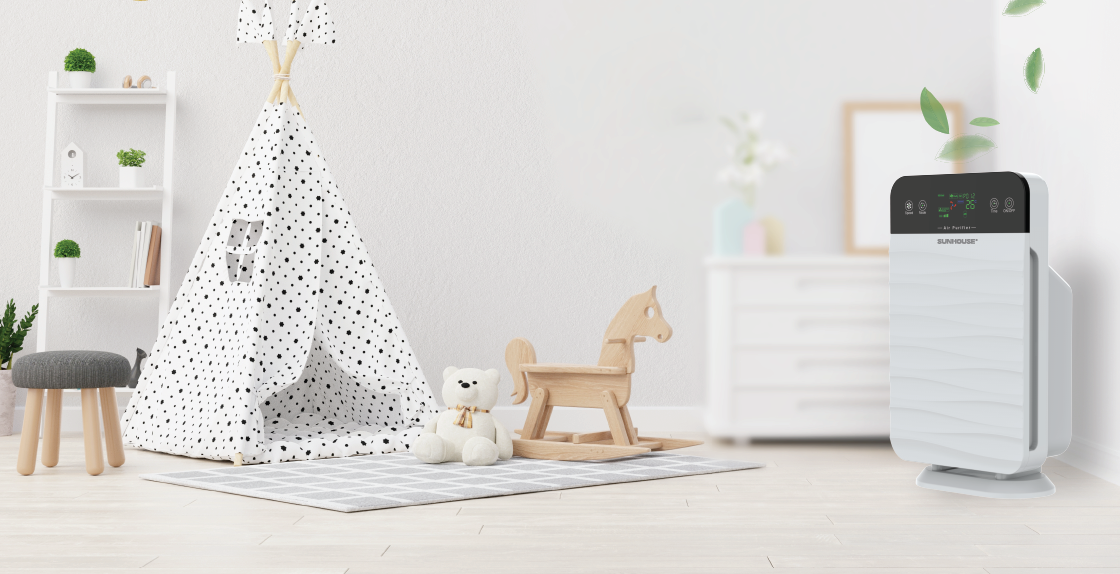
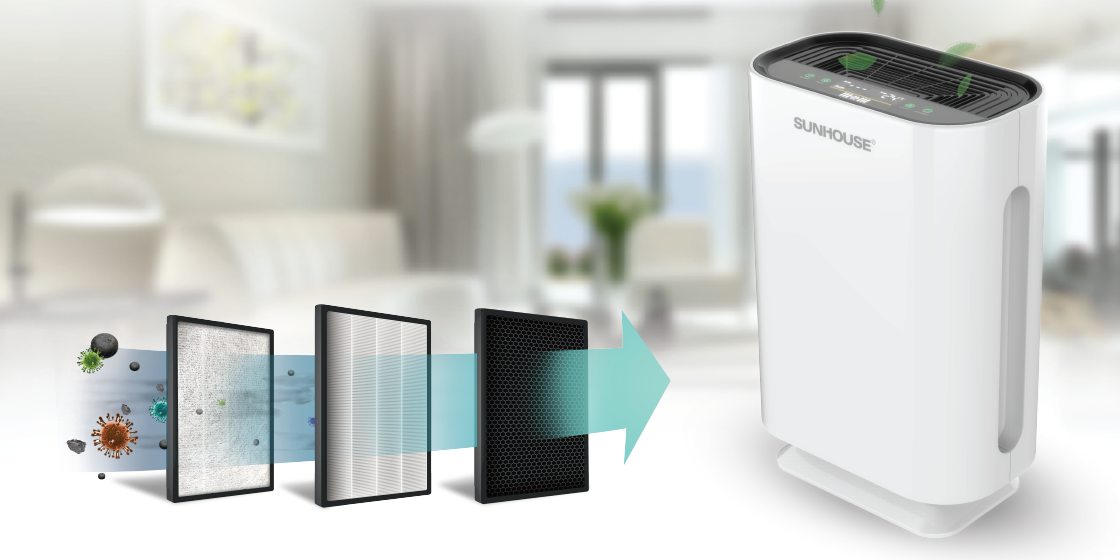
The single most vital component in any air purifier is its filter. This is the core technology responsible for capturing particulates and ensuring clean air. A product listing for the AIR FILTER SHD-AF9760, a component specifically designed for a Sunhouse air purifier, explicitly states its country of origin as China.
This is a crucial revelation. It demonstrates that the high-tech heart of the air purifier the HEPA 13 membrane, capable of filtering 99.97% of fine dust particles is manufactured in China. This aligns seamlessly with the strategy of leveraging China's specialized, high-volume electronics and component manufacturing sector for the most technologically intensive parts.
2. Final Assembly & Export: Made in Vietnam
While the critical filter originates in China, the finished product tells a distinct story. Trade documents, specifically a bill of lading, record a complete 'Air purifier brand Sunhouse, model: SHD-15AP9715' unit being exported from Vietnam.
This piece of evidence is equally significant. It confirms that the final and substantial transformation of the product the assembly of the Chinese-made filter with the casing, fan, sensors, and other parts, followed by meticulous packaging and rigorous quality assurance occurs within Sunhouse's Vietnamese factories. This is entirely consistent with the company's demonstrated capability in assembling and exporting complex electronics, such as air fryers, to demanding international markets like the United States.
The Verdict: A Product of Transnational Manufacturing
So, where are Sunhouse air purifiers manufactured? The most precise answer is that they are the culmination of a transnational, hybrid manufacturing strategy. Critical high-technology components are produced in China, while the final assembly, comprehensive quality control, and packaging are meticulously carried out in Vietnam.
This sophisticated model allows Sunhouse to legitimately label its products as 'Made in Vietnam,' as the country serves as the crucial nexus where the final, value-adding transformation takes place. For the end consumer, this signifies acquiring a product that integrates globally sourced technology, expertly assembled under the vigilant oversight of a trusted national brand.
For business clients, this model positions Sunhouse as a highly capable Original Equipment Manufacturer (OEM) partner. They demonstrate a profound mastery of complex global supply chains, offering a resilient and cost-effective alternative for companies seeking manufacturing solutions in Southeast Asia. Sunhouse unequivocally proves that Vietnam is not merely a location for assembly, but a strategic hub for integrating a global value chain.
The Future of Manufacturing: A Global Collaboration Model
The Sunhouse story serves as a compelling microcosm of modern manufacturing. The seemingly simple 'Made in...' label is undergoing a profound evolution. It no longer necessarily implies that every screw, microchip, and filter was sourced and built within the confines of a single nation. Instead, it represents the final destination on a global journey, where diverse components and specialized expertise from across the world converge.
This sophisticated, multi-country approach is rapidly becoming the standard for leading brands worldwide. For companies aspiring to develop their own line of high-quality air purification products, comprehending this intricate global landscape is paramount. Partnering with an expert capable of navigating the entire process from component sourcing and engineering in established technological hubs to final assembly and rigorous quality assurance in emerging markets is no longer merely an advantage; it has become an indispensable necessity for achieving sustained success in the competitive global marketplace.
結論
Sunhouse air purifiers exemplify the modern paradigm of global manufacturing. While proudly bearing the 'Made in Vietnam' label, their creation is a collaborative effort spanning continents. Key high-tech components, such as the advanced HEPA 13 filters, are sourced from China, leveraging its specialized manufacturing capabilities. The final assembly, quality control, and packaging, however, are meticulously performed in Sunhouse's state-of-the-art factories in Vietnam. This hybrid approach allows Sunhouse to optimize costs, access cutting-edge technology, and maintain stringent quality standards, ultimately delivering a high-performance product to consumers worldwide. The Sunhouse model underscores a fundamental shift in global production, where the 'Made in' label signifies a final value-adding stage within a complex, interconnected supply chain, rather than a singular point of origin for all components. This strategy not only highlights Vietnam's growing role as a sophisticated manufacturing hub but also showcases Sunhouse's adeptness at navigating and harnessing the efficiencies of the global economy.


 English
  Français
  Español
  Italiano
  Deutsch
  Português
  Русский
  العربية
  日本語
日本語  한국어
한국어  Tiếng Việt

