新しいタブで開きます

あなたのブランドに最適な空気清浄機メーカーの選び方:完全ガイド

空気の質がこれまで以上に重要視される現代において、適切な空気清浄機メーカーを見つけることは、ブランドの明暗を分けることになります。市場に新規参入する企業であれ、製品ラインの拡大を目指す既存企業であれ、信頼できる空気清浄機メーカーと提携することで、顧客の共感を得られる高品質の製品を確実に提供することができます。

この包括的なガイドでは、あなたのブランドのために空気清浄機メーカーを選択する際に考慮する必要がある主な要因について、以下の資料をもとに説明します。 ヒソエアの OEMおよびODM空気浄化ソリューションのリーダーとして20年の経験。カスタマイズ能力から品質管理、拡張性、認証に至るまで、お客様のビジネスにとって十分な情報に基づいた決断をお手伝いします。

ビジネスニーズの把握

1. ターゲット市場の特定

ターゲット市場の特定

メーカーを選ぶ前に、貴社の顧客が誰で、何を必要としているかを理解することが不可欠です。コンパクトで静かな空気清浄機を探している家庭用消費者をターゲットにしているのか、それとも堅牢で大規模な空気清浄システムを必要とする企業、病院、産業部門をターゲットにしているのか。

例えば、住宅顧客は次のような機能を優先させるかもしれない。 低騒音、洗練されたデザイン、エネルギー効率一方、コマーシャル・クライアントは、以下の点に重点を置くかもしれない。 高いCADR(清浄空気排出率)値, HEPAフィルターそして、広いスペースを素早く掃除する能力。

2. 製品要件を定義する

ターゲット市場を特定したら、空気清浄機が備えていなければならない機能を概説する番だ。以下のような要素を考慮してください:

  • ろ過システム:HEPA、活性炭、UVライト、水性フィルター。
  • スマートな機能:Wi-Fi接続、空気品質センサー、アプリの統合。
  • 騒音レベル:特に住宅用または病院用の製品。
  • エネルギー効率:環境意識の高い消費者にとって、ますます重要な要素。

ヒソエア は、最先端のろ過技術から静かでエネルギー効率の高いファンシステムまで、幅広いカスタマイズ・オプションを提供しています。こうした多様なニーズに合わせて製品をカスタマイズできることが、当社が世界中のブランドから信頼されるパートナーである理由のひとつです。

3. ブランド・アイデンティティの確立

どのメーカーを選ぶかは、ブランドのアイデンティティを形成する上で重要な役割を果たします。ブランドとしての位置づけが プレミアム・ラグジュアリー・ブランド または 低予算オプション空気清浄機の品質、デザイン、性能は、ブランドのメッセージと一致していなければなりません。

と協力することで ヒソエアそのため、お客様のブランド価値を反映した一貫した高品質の製造が可能になります。私たちは、以下のようなお客様を支援してきました。 キャリア そして デロス ターゲット市場に響くカスタム空気清浄機を開発することで、それを実現している。

メーカーを選ぶ際に考慮すべき主な要素

1. カスタマイズ機能

競合他社に差をつける製品を世に送り出すには、カスタマイズが欠かせません。メーカーは、デザイン、機能、ブランディングの柔軟なオプションを提供する必要があります。

で ヒソエアの両方を提供する。 OEM (および ODM (オリジナルデザイン製造)サービスにより、製品のデザインを完全にコントロールすることができ、また、革新的な製品開発の専門知識を活用することができます。

例えば、こうだ、 ヒソエア と協力した。 外科的にクリーンな空気 は、医療環境向けに特別に設計された空気清浄機を開発し、医療環境特有のニーズに応える高度なろ過システムを提供している。このようなレベルのカスタマイズは、混雑した市場でブランドを際立たせるのに役立っている。

2. 生産能力と拡張性

特に、ブランドが成長したり、季節的に需要が急増したりする場合、生産規模を拡大する能力は極めて重要です。少量生産であれ大量生産であれ、メーカーは品質や納期に妥協することなく、その両方に対応できなければなりません。

ヒソエア を含む強固な生産インフラを有している。 ベトナム工場の一部である。 中国+1戦略.この追加生産拠点は、関税、政治的不確実性、サプライチェーンの混乱に関連するリスクを軽減し、大量の需要に効率的に対応できるようにする。

私たちは、次のようなブランドとのパートナーシップで成功を収めています。 3M そして アフラック は、トップクラスの品質を維持しながら生産規模を拡大する能力を実証している。

3. テクノロジーとイノベーション

空気清浄機産業が進化するにつれて、次のような新技術が登場している。 スマート空気清浄機、IoTコネクティビティそして AIによる大気質モニタリング が標準になりつつある。あなたが選ぶメーカーは、こうした技術革新を取り入れることができるだけでなく、それを推進することもできるはずだ。

ヒソエア は技術的進歩の最前線にいます。当社の製品は IoT技術モバイルアプリで空気清浄機を監視・制御できるため、スマートホーム環境に最適です。HisoAirと提携することで、貴社ブランドは空気清浄技術の最新イノベーションを装備することになります。
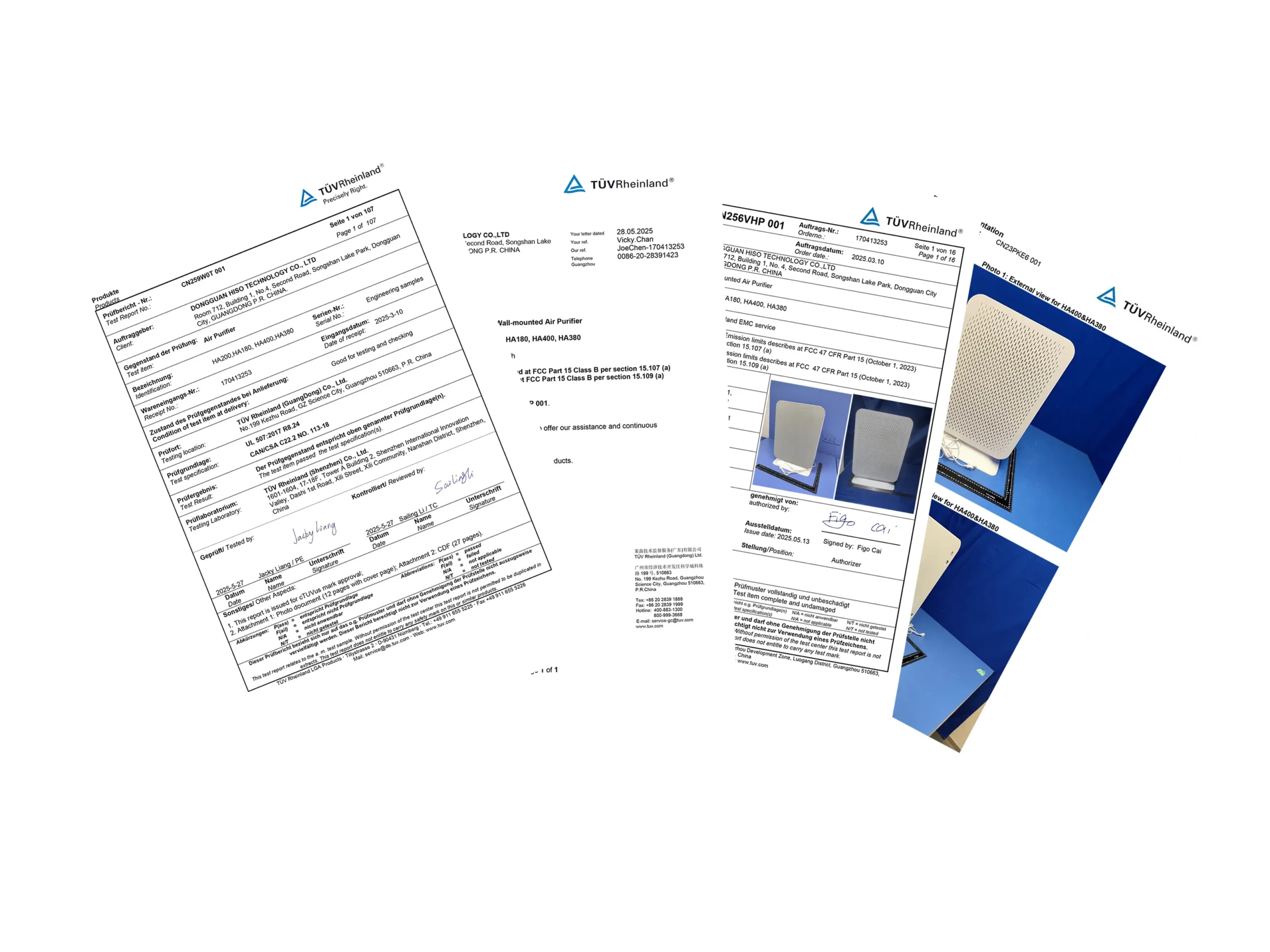
ha200 ha400 ha180 ha380 certifications
HisoAir | Certified to International Standards

4. 品質管理と保証

成功するブランドを構築する上で、一貫した製品品質を確保することは譲れない。製造業者は厳格な 品質管理(QC)プロトコル 不具合を早期に発見し、すべてのユニットで高いパフォーマンスを維持する。

で ヒソエアそのため、私たちは、品質保証を徹底しています。 CNAS認定ラボフィルター効率、騒音レベル、安全性のテストを含みます。当社のQCプロセスは、次のようなブランドから信頼を得ています。 ヘンリー・シャイン そして キャリア顧客に対して最高水準を要求する。

5. 認証とコンプライアンス

安全性と市場参入を確保するため、空気清浄機は以下のような特定の業界認証を満たす必要がある:

  • CE (欧州コンプライアンス)
  • RoHS (有害物質の規制)
  • UL (アンダーライターズ・ラボラトリーズの安全認証)
  • AHAM (家電製品協会空気清浄基準)

これらの認証は、貴社の製品が安全、環境、性能に関する規制に準拠していることを保証するものです。 ヒソエア これらの基準をすべて満たし、お客様の製品がグローバルな流通に対応できることを保証します。

地理的位置と中国+1戦略

1. 国内製造業と海外製造業

国内での製造はリードタイムを短縮できるかもしれないが、海外メーカー、特に中国や東南アジアのような地域では、コスト面で大きな利点がある。

中国は空気清浄機製造の世界的リーダーであり続けている。 整備されたインフラ、熟練した労働力、原材料へのアクセス.しかし、今日の企業は、政情不安、関税、サプライチェーンの混乱などのリスクも考慮しなければならない。

2. 中国+1戦略:重要拠点としてのベトナム

こうしたリスクを軽減するために、多くの企業が採用しているのが 中国+1戦略ベトナムやタイなど、他の国に生産拠点を移している。 ヒソエアのベトナム工場 は、シームレスな生産能力を提供し、関税の影響を軽減し、サプライ・チェーンの継続性を確保するのに役立っている。

この戦略により、ブランドは地政学的リスクを軽減しながら、中国の卓越した製造業から利益を得ることができる。当社の CBREのようなブランドとのパートナーシップ は、ベトナムの施設を活用して世界の需要に確実かつコスト効率よく対応する方法を示している。

メーカーの経験と専門知識の評価

1. 営業年数と専門知識

経験が重要。空気清浄業界で長い歴史を持つメーカーは、安定性、信頼性、品質を提供する可能性が高い。 ヒソエア は、空気清浄機の分野で20年以上の経験を持ち、以下のような世界的なブランドと仕事をしてきました。 3M、アフラックそして キャリア.

2. 空気清浄機の専門分野

空気浄化に深い専門知識を持つ専門メーカーは、業界固有の基準を満たすオーダーメイドのソリューションを提供することができます。 ヒソエア を含む様々なセクターと仕事をしてきた。 ヘルスケア、企業オフィスそして 軍事プロジェクト専門性の高い空気浄化ソリューションを提供している。

3. カスタマーサポートとアフターサービス

強力なカスタマーサポートとアフターサービスを提供するメーカーは、ブランドの長期的な成功に貢献します。において ヒソエアまた、包括的な技術サポートとスペアパーツを提供することで、お客様の製品が市場で高いパフォーマンスを維持できるようサポートいたします。

ケーススタディ一流ブランドの成功事例

  1. 外科的にクリーンな空気:私たちは、医療環境を保護するための高度なろ過を提供し、彼らのニーズに合わせたカスタム医療グレードの空気清浄機を開発しました。
  2. アフラック:職場の空気の質を改善し、従業員の健康と満足度に貢献するために、業務用空気清浄機の強力な製品ラインを開発。
  3. ヘンリー・シャイン:歯科医院や医療クリニックに高性能空気清浄機を納入し、汚染のないクリーンな環境を実現。
  4. JPモルガンとCBRE:安全で健康的なワークスペースを確保するため、大規模な企業スペース向けに最先端の空気浄化ソリューションをプロデュース。

結論

適切な空気清浄機メーカーを選ぶことは、ブランドの成功に不可欠です。カスタマイズから拡張性、品質保証、グローバルコンプライアンスまで、 ヒソエア は、専門知識、経験、制作能力を提供し、お客様のブランドの繁栄を支援します。

次のステップに進む準備はできているか? 連絡先 ヒソエア 御社のブランド独自のニーズを満たす、高品質なカスタム空気清浄機の開発をどのようにお手伝いできるか、今すぐご相談ください。

関連投稿

最初のコメントを残す

Contaminant Engineering•3 min read

PFAS Water Filtration Technologies Explained: Carbon, Resin & RO

Key Takeaway:

PFAS reduction depends on the specific compounds present, treatment media, contact time, water chemistry, and system design. Activated carbon, ion exchange, and Reverse Osmosis address PFAS through different mechanisms.

PFAS are a large family of persistent fluorinated compounds that can occur in drinking-water supplies. Their treatment behavior varies significantly by molecular structure, chain length, functional group, concentration, and the chemistry of the source water.

Granular Activated Carbon (GAC) removes PFAS primarily through adsorption. It is generally more effective for many longer-chain PFAS, while shorter-chain compounds tend to break through more quickly. Carbon performance depends on media properties, Empty Bed Contact Time (EBCT), competing organic matter, loading, and replacement frequency.

Ion-exchange resins use charged functional sites to capture many PFAS compounds. Properly selected anion-exchange media can provide high capacity and may perform better than conventional activated carbon for some shorter-chain PFAS, although performance still depends on water chemistry and competing ions.

Reverse Osmosis (RO) uses membrane separation rather than adsorption. Properly designed RO systems can provide broad reduction across many PFAS compounds as well as dissolved salts and other contaminants. Unlike carbon or resin, however, RO also produces a concentrate stream that must be managed.

No single technology should be selected from a PFAS label alone. System design should consider which PFAS compounds are present, their concentrations, required reduction targets, flow rate, media life, and the applicable third-party certification or validation requirements.

HisoAir Water Technical Series
Product Discovery•3 min read

How to Choose an Under-Sink Water Purifier for Modern Kitchens

Key Takeaway:

Match the treatment technology to your water quality first, then evaluate cabinet space, faucet configuration, flow rate, drain and power requirements, and filter replacement needs.

Choosing an under-sink water purifier starts with water chemistry. Carbon filtration is well suited to chlorine, taste, odor, and many organic contaminants, while Reverse Osmosis is more appropriate when dissolved salts, fluoride, nitrates, or broader dissolved contaminants need to be reduced.

For compact kitchens, tankless RO systems eliminate the conventional storage tank and can significantly reduce the space required under the sink. However, membrane capacity stated in GPD does not directly equal faucet flow. When comparing systems, check the actual dispensing flow rate, inlet-pressure requirement, recovery ratio, and whether a booster pump is required.

Installation architecture also matters. Many RO systems require a drain connection, electrical power, and either a dedicated drinking-water faucet or a compatible multi-function faucet. High-flow carbon systems can often connect directly to the existing cold-water line with a simpler installation, but pressure drop and available faucet flow should still be verified.

RO also removes much of the naturally occurring dissolved mineral content. Where taste or mineral balance is a priority, a post-RO remineralization stage can be added. Filter life should be evaluated by both rated capacity and local water quality rather than replacement time alone.

The right system is therefore not simply the smallest or highest-GPD model. It is the configuration that matches the target contaminants, available cabinet space, desired faucet setup, peak dispensing demand, and maintenance expectations.

HisoAir Water Technical Series
Water Quality•2 min read

What Does TDS Mean in Drinking Water? Measurement vs Contaminant Reality

Key Takeaway:

A TDS meter estimates the overall concentration of dissolved ionic substances from electrical conductivity. It cannot identify specific contaminants or determine whether water is chemically safe.

Total Dissolved Solids (TDS) refers to the combined concentration of dissolved substances in water. Most handheld TDS meters do not measure TDS directly. Instead, they measure electrical conductivity (EC) and convert that reading into an estimated parts-per-million (ppm) value.

This means a TDS reading can indicate how much dissolved ionic material is present, but not what that material actually is. Calcium, magnesium, sodium, nitrates, and other dissolved ions can all contribute to conductivity, yet a simple TDS meter cannot distinguish between them.

TDS meters are also not suitable for detecting trace contaminants such as PFAS, many VOCs, pesticides, pharmaceuticals, or disinfection byproducts. These substances may be present at concentrations far below the level needed to noticeably change electrical conductivity.

A low TDS reading therefore does not guarantee safe drinking water, and a higher TDS reading does not automatically indicate contamination. Water-treatment decisions should be based on laboratory testing for specific contaminants of concern rather than TDS alone.

HisoAir Water Technical Series
Technology Selection•2 min read

RO vs UF Water Filtration: Understanding Pore Sizes & Dissolved Minerals

Key Takeaway:

Ultrafiltration can reduce bacteria, turbidity, and suspended particles while retaining most naturally occurring dissolved minerals. Reverse Osmosis provides much broader reduction of dissolved salts and smaller contaminants.

Ultrafiltration (UF) typically uses hollow-fiber membranes with pore sizes in the approximate 0.01–0.1 micron range. These membranes physically retain turbidity, suspended solids, colloids, and many microorganisms while allowing dissolved minerals and salts to remain in the water.

Reverse Osmosis (RO) operates at a much finer separation level. Unlike UF, RO can substantially reduce dissolved ions such as sodium, calcium, fluoride, nitrates, and other contributors to total dissolved solids (TDS). This makes RO more suitable when dissolved-salt reduction is a primary treatment objective.

UF generally requires less system pressure and produces little or no continuous concentrate stream in many point-of-use configurations. RO typically requires greater pressure and produces a reject-water stream, but delivers broader contaminant reduction.

For water with acceptable TDS and mineral content, UF can be a simpler mineral-retaining treatment option. Where dissolved salts, fluoride, nitrates, or broader dissolved contaminants are a concern, RO is generally the more appropriate technology.

HisoAir Water Technical Series
Technology Selection•4 min read

Carbon Block vs Reverse Osmosis: Which Fits Your Need?

Key Takeaway:

Choose RO for dissolved inorganic salts and heavy metals; choose Carbon Block for chemical taste/odor, no wastewater, and high line-pressure flow.

Reverse Osmosis (RO) and Carbon Block filtration represent two fundamentally different treatment methods: membrane separation and adsorption. Understanding these differences helps determine which technology is better suited to a specific water-quality requirement.

Reverse Osmosis uses a semi-permeable membrane with pore sizes of approximately 0.0001 microns. It can significantly reduce dissolved inorganic contaminants such as TDS, fluoride, nitrates, and certain heavy metals. Because water must be forced through the membrane, RO systems require sufficient pressure or a booster pump and generate a concentrated wastewater stream.

Carbon Block filtration relies primarily on adsorption through compressed activated carbon, commonly with nominal pore sizes around 0.5–5 microns. It is highly effective for chlorine, chloramines, VOCs, taste, and odor, while allowing substantially higher direct-flow rates without producing wastewater.

From an operating perspective, Carbon Block systems are generally simpler, require less energy, and avoid the water loss associated with RO. RO involves higher system complexity and operating cost, but provides substantially broader reduction of dissolved contaminants that Carbon Block alone cannot address.

HisoAir Water Technical Series

